A New Quality of The Crisis

Why There Will Be No Stable Post-War Order After the End of The War Over Ukraine

Tomasz Konicz

Is this the big one? Is this the big crash that will overturn everything that has been established in global structures and dynamics since the breakthrough of neoliberalism in the 1980s? The war over Ukraine could indeed be seen in retrospect as an epochal break, as a tipping point in the global crisis process, at the crossing of which the crisis of the late capitalist world system has taken on a new quality.

That the world capitalist system is in a severe systemic crisis,[1] after decades of ignorance and marginalization[2] value-critical crisis theory, is now generally accepted even on the German left, but the character of the crisis process still seems to be only partially understood. For the late capitalist systemic crisis is not a one-off event, not merely a “big crash,” but a historical process that unfolds in spurts over decades, eating away from the periphery into the centers of the world system. The debt crises of the Third World, which in the 1980s marked the beginning of the now collapsing neoliberal era and left behind a series of civil wars and “failed states,” have long since spread to the centers of the world system. This is evident, for example, in the increasing tendencies towards stagflation, which are reminiscent of the stagflation period in the 1970s – which at that time helped neoliberalism to achieve its breakthrough.[3]

The systemic crisis is therefore not a “big crash,”[4] but rather a historical process of increasing internal and external contradictions of capital, which, due to competition-mediated rationalization, gets rid of its own substance, the value-creating labor of commodity production[5] and leads to an ecologically devastated world.[6] This historical process of crisis, which gave rise precisely to neoliberalism as a system of “delaying the crisis,” is characterized by phases of latency interrupted by manifest waves of crisis in the centers: such as the dot-com bubble of 2000, the real estate bubble of 2008, the pandemic-induced crisis of 2020, and the upheavals now beginning with war. The crisis was delayed at the expense of increasing instability of the system, which had to cope with ever more violent waves of crisis in the neoliberal decades, and the accumulation of crisis potential.

The Dialectic of The Crisis

The episodes of crisis that gain in intensity and in which the crisis becomes manifest are thus preceded by a long latent phase in which the crisis potential resulting from the self-contradiction of capital accumulates, mostly in the form of rising mountains of debt or financial market bubbles,[7] which still allow the hyper-productive system a kind of zombie-like illusory life through credit-financed demand[8] – and it is precisely this debt tower construction that is reaching its inner limits due to the current inflation dynamics.[9] The quantitative process, the accumulation of debt and the rise of speculative bubbles, leads, after crossing a tipping point, to a qualitative upheaval, to the outbreak of a debt crisis or the bursting of a debt bubble, which are then also publicly perceived as a “crisis.”

The same materialist dialectic of the transformation of quantitative changes into a new quality can also be observed in the capitalist climate crisis.[10][11] Here it is the quantitative increase of greenhouse gases in the atmosphere that leads to a fundamental, qualitative change of the climate system once certain tipping points are passed. (Incidentally, the habituation effects that occurred between the economic or ecological waves of crisis also promoted crisis ignorance, since the consequences of a crisis in the centers or the periphery very quickly sedimented into a new “normality” in the ahistorical public).

The financial market-driven neoliberal variant of capitalism, which took hold in response to stagflation and the end of the great post-war boom in the 1970s, has to a certain extent run capitalism “on credit” in both economic and ecological terms. Since the 1980s, the global debt burden has been rising faster than world economic output, leading to ever stronger financial market quakes in the form of speculative bubbles and debt crises. And ecologically, too, neoliberal capitalist globalization has been accompanied by steadily rising CO2 emissions, which so far could only be reduced in the short term at the price of economic crises. And it is precisely the increasing climatic and economic distortions that make the system in its neoliberal form increasingly unstable.

The neoliberal debt tower construction that is the foundation of this era cannot continue ad infinitum. The same is true of the fossil fuel driven world combustion engine (Weltverbrennungsmaschine),[12] brought about by neoliberal globalization, which is, in effect, a globalization of debt dynamics. The quantitative increase in the potential for crisis, which has created a global debt mountain equal to 356% of world economic output[13] and a CO2 concentration of 419.82 ppm,[14] is leading capitalism to its inner and outer limit, at least to the developmental limit of the neoliberal era of capital. A qualitative shift into another form of capitalist crisis management seems inevitable (overcoming the economic and ecological crisis of capital is impossible within the framework of the capitalist social formation).

This dialectical shift from quantity to quality takes place in particular with regard to the process of globalization, which seems to be turning into its opposite. It is precisely here that the outlines of a new phase of crisis are clearly emerging, which would be characterized by a “fragmentation of the world economy into geopolitical blocs,” in which “distinct technology standards, cross-border payment systems, and reserve currencies” would be used, as the International Monetary Fund (IMF) warned in a paper in April 2022.[15] As early as mid-March, the IMF described the war as a “severe blow to the global economy” that would not only “fundamentally alter the global economic and geopolitical order” but would also be accompanied by the risk of increased instability in peripheral regions such as Africa or Latin America, which would be affected by growing food insecurity.[16]

De-Globalization

The war-related sanctions are disrupting important global trade flows and causing rapid price increases not only for energy but also for food, since Russia, Belarus and Ukraine are among the world’s most important exporters of grain and fertilizer.[17] In the case of essential goods, food and fossil fuels, capitalist globalization has already effectively collapsed. Western sanctions on Russian and Belarusian fertilizers are likely to reduce agricultural production in many countries.[18]

But it is not only the imperialist front between East and West in the Ukraine war that is contributing to the price explosion – even uninvolved countries have long since resorted to protectionist measures to ensure food security and domestic political stability. Due to massively rising prices and the threat of supply shortages, Indonesia, for example, issued an export ban on palm oil, which further exacerbated the supply situation, especially in the global South, as the war had already caused exports of Ukrainian sunflower oil to collapse.[19] India acted similarly with its recent export ban on wheat.[20]

The inflation and supply shortages that were already occurring before the war due to the pandemic are now gaining force in the context of the de-globalization that is abruptly taking hold. But even this big bang, shaking up global flows of goods and finance, is not coming out of the blue. Efforts to revise globalization have been virulent for years, especially in the form of US President Donald Trump, who personifies the contradictions of capitalist commodity production like no other. Elected by sections of the pauperized US middle class, Trump set out to make a deindustrialized America, plagued by a gigantic trade deficit, “great” again – by erecting trade barriers. The goal of Trump’s protectionism: a reindustrialization of the United States.

The debt dynamics that developed during neoliberal financialization, which set in after the end of the great post-war Fordist boom and left the world system increasingly running on credit,[21] did not develop uniformly. There were regions with large deficits, such as the USA or southern Europe, and countries with large export surpluses. This led to the formation of deficit cycles, which became increasingly important during globalization and shaped the course of the episodes of crisis in the first two decades of the 21st century (real estate bubble, Euro crisis). Globalization, and its accompanying disruptions, is thus obviously not the cause of the capitalist crisis process, such as financial market bubbles and debt crises, but is its historical course.

The largest deficit cycle, the Pacific deficit cycle between the United States and China, was characterized by the fact that the People’s Republic, which was emerging as the new “workshop of the world,” exported gigantic quantities of goods across the Pacific to the de-industrializing United States and thus built up enormous trade surpluses, while in the opposite direction flowed a financial market flood of United States debt securities, so that China rose to become Washington’s largest foreign creditor.[22] A similar, smaller deficit cycle formed between the FRG and the southern periphery of the Eurozone in the period from the introduction of the euro up to the euro crisis.[23]

Globalization was thus not only characterized by the construction of global supply chains, but also the corresponding globalization of debt dynamics, realized through deficit cycles, which, as mentioned, have grown faster than world economic output in the past decades – and consequently functioned as a major economic engine by generating credit-financed demand. The globalization that produced these gigantic global trade imbalances was a systemic reaction, a flight forward from the increasing internal contradictions of the capitalist mode of production, which is choking on its own productivity.

What is now unfolding globally could be studied in rudimentary form on the basis of the euro crisis: As long as the mountains of debt grow and the financial market bubbles are on the rise, all the states involved seem to profit from this growth on credit. But as soon as the bubbles burst, the battle over who should bear the costs of the crisis begins. In Europe, as is well known, Berlin has used the crisis to pass on the costs of the crisis to southern Europe in the form of Schäuble’s infamous austerity measures. Now, at the global level, the collapse of the much larger debt-financed deficit economy, which has most recently been kept alive primarily by the central banks’ expansionary monetary policy, is imminent.

The value accumulated in the financial sphere, the “fictitious” capital not generated by the valorization of labor power, will be devalued due to the absence of a new accumulation regime in commodity production.[24] The increasing inflation, in the face of which bourgeois monetary policy finds itself in a crisis trap,[25] is precisely the expression of the inevitable devaluation of value. For many states that were previously chained to globalization by means of deficit cycles and in locational competition, the increasing costs of the crisis exceed the eroding advantages of deficit cycles, so that national and regional centrifugal tendencies gain the upper hand and force the collapse of globalization. This is a crisis-induced contradiction. Capitalism is full of them.

China as The New Hegemon?

It is precisely this exhaustion of the neoliberal debt tower construction of the past decades that has the late capitalist state monsters increasingly seeking refuge from the escalating internal contradictions in external expansion. Turkey, plagued by high double-digit inflation and driven by Erdogan into ever new imperialist campaigns of conquest, is only the blueprint, so to speak, for the manifest crisis imperialism that is rampant in many places. This crisis-driven, neo-imperial flight to war is also evident in the case of Russia, which had to put down a number of uprisings and unrest in its post-Soviet “backyard” in the months before the invasion of Ukraine.[26]

But this causal link between crisis and war is also manifested in the expansive actions of the West in the post-Soviet space, which, with its refusal to agree to neutrality guarantees for Ukraine, clearly provoked the Russian war of aggression in the Kremlin’s geopolitical “backyard.” For the United States, the struggle against Eurasia, as indicated by the alliance of China and Russia, is a struggle for hegemony and the US dollar in its function as the world reserve currency.[27] The United States, because of its extreme trade deficit, acted in a sense as a black hole in the world economy, absorbing much of the surplus production of hyper-productive late capitalist industry. With inflation rapidly accelerating, fueled, after all, not only by the expansionary monetary policies of central banks, but also by resource constraints and the full-blown climate crisis,[28] Washington’s ability to borrow freely in the world’s reserve currency, the measure of value of all things commodity, is on the line.

At the same time, for China, which together with Russia is striving to form a Eurasian power bloc, the looming end of the US deficit economy removes an important incentive to tolerate US hegemony: The extreme Chinese export surpluses, which in the 1990s and at the beginning of the 21st century contributed significantly to the recuperative capitalist industrialization of the People’s Republic, have not played a central role as an economic driver since the outbreak of the real estate crisis in 2008 – and they are also likely to lose weight rapidly vis-à-vis the USA in the future.

And yet it is a fallacy to interpret the current global upheaval as a transition to a new hegemonic system in which China would, in a sense, “inherit” the United States. The Middle Kingdom does appear to be in the process of replacing the United States as the global capitalist hegemonic power – but at the same time, this upheaval is no longer possible within the framework of the capitalist mode of production due to the escalating socio-ecological crisis. The history of the global expansion of the capitalist world system, which began in the 16th century, takes place in hegemonic cycles, such as those described by Giovanni Arrighi in his fascinating work “Adam Smith in Beijing”:[29] An emerging power gains a dominant position within the system, then after a certain period of dominance this hegemonic power goes into imperial decline and is finally replaced by a new hegemon.

According to Arrighi, every hegemonic cycle has two phases: First, a phase of imperial ascent takes place, characterized by a “material expansion,” i.e. by the dominance of the commodity-producing industry of the new hegemonic power. After the outbreak of an economic “signal crisis” – triggered by processes of over-accumulation – the phase of imperial descent sets in, which is accompanied by financial expansion and the dominance of the financial industry, and which once again gives the descending hegemon a final economic and imperial heyday.

And this sequence can be clearly confirmed empirically in the case of both the UK and the US. The English Empire, which rose to become the “workshop of the world” in the context of industrialization in the 18th century, transformed itself into the world’s financial center in the second half of the 19th century, before being replaced in the first half of the 20th century by the economically ascendant USA, which in turn experienced its “signal crisis” during the crisis phase of stagflation in the 1970s. This was followed by the deindustrialization and financialization of the USA, which led to the economic dominance of the financial sector.

Moreover, Arrighi argues that the alternation between two hegemonic cycles is accompanied by the descending hegemonic power becoming indebted to the ascending hegemon, as exemplified in the book by Britain’s increasing economic dependence on the United States during the First World War. Britain built up a huge trade deficit with the U.S. during the World War period, “supplying billions of dollars worth of munitions and food to the Allies but receiving few goods in return.” Incidentally, Britain acted similarly in its role as “banker” to the anti-Napoleonic coalition some one hundred years earlier. And it was precisely this dependency relationship between a declining United States and a rising China that was described in terms of the Pacific deficit cycle, in which Chinese export surpluses contributed to China’s export-driven industrialization and deficit-building in the United States.

So, what is wrong here? What is wrong this time so that a new, Chinese hegemonic cycle is impossible? Why can’t the 20th “American” century be replaced by the 21st “Chinese” century? For one thing, China has obviously already passed its “signal crisis” marking the transition to a financial market-driven growth model in 2008. With the bursting of the real estate bubbles in the US and Europe, China’s extreme export surpluses (with the exception of the US) declined, while the gigantic stimulus packages that Beijing launched at the time to prop up the economy led to a transformation of China’s economic dynamics: exports lost weight, and the credit-financed construction industry and the real estate sector henceforth formed the central drivers of economic growth.

According to official statistics, China, for example, consumed around 6.6 gigatons of concrete between 2011 and 2013, which means that the People’s Republic, condemned to a permanent boom, produced more concrete in three years than the USA did in the entire 20th century. With this amount, the whole of Hawaii could be covered in concrete and turned into one huge parking lot, the Washington Post enthusiastically wrote at the end of March 2015.[30] The United States had used 4.5 gigatons of concrete in the past century, according to the WP, adding that the official figures from Beijing would also stand up to closer scrutiny – which is by no means self-evident. The figures are “surprisingly logical,” given that much of China’s infrastructure was not built until the 21st century and that urbanization in the world’s most populous country is proceeding apace. In 1978, just under one-fifth of all Chinese people lived in cities; by 2020, that figure had risen to 60 percent.

China’s growth is thus also running on credit, the “People’s Republic” is just as highly indebted as the declining Western centers of the world system (even more: China’s rise to become the “workshop of the world” was also based on debt processes in Western Europe and the USA due to Chinese export surpluses within the framework of the aforementioned deficit cycles).[31] And this Chinese deficit cycle produces far greater speculative excesses than in the USA or Western Europe, made evident by the disruptions on the absurdly inflated Chinese real estate market in 2021.[32] This lack of a new accumulation regime in commodity production, in which the inner barrier of capital manifests itself, forms the major difference between China and the US: Washington, after WW2, at the beginning of its hegemony, was able to build on two decades of coming capital expansion under Fordism. China, on the other hand, because of its collapsing towers of debt in an over-indebted late capitalist world system, looks as if it was already in decline before it achieved hegemony.

Another moment that makes a Chinese hegemony in the late capitalist world system impossible from an ecological point of view was described by Arrighi in his aforementioned work as the historical tendency towards progression within the hegemonic cycles: the territory, the population as well as the economic weight of the hegemonic powers increase in the history of the capitalist world system. From the few million subjects of Great Britain to hundreds of millions of US citizens of the continent-like hegemon USA to the last possible increment of the billion-person state China. This, however, also breaks the ecological limits of the capitalist world system,[33] since China is already the largest emitter of greenhouse gases and the climate crisis is already having catastrophic consequences.[34]

Oceania vs. Eurasia?

The collapse of the global deficit economy and the escalating climate crisis stand in the way of a new “world order” shaped by Beijing, a Chinese hegemonic cycle. Hegemony, after all, means that the position of the hegemon is at the very least tolerated, since it is accompanied by advantages for the other states in this hegemonic system. In the case of the US, it was the long post-war Fordist boom and – from the 1980s onwards – the deficit economy based on the world’s reserve currency, the dollar, that enabled Washington to achieve hegemony. China’s rise, by contrast, can no longer be based on such an economic foundation.

The historical hegemonic cycle of the capitalist world system is thus superimposed on the socio-ecological crisis process of capital, it interacts with it and allows China’s hegemonic rise and disintegration to merge. In place of the US hegemonic system, which went into open dissolution with the invasion of Iraq from 2003 onwards, there now seems to be a global bloc formation, in which Eurasia (Russia and China) and Oceania (USA together with its Atlantic and Pacific alliance systems) are in a perpetual conflict in a real dystopia. Yet even this frontline position, reminiscent of the Cold War – which escalated into open conflict in Ukraine – is likely to remain unstable and volatile. It could even be argued that Washington and London, as the driving forces in the Ukraine conflict, are also pursuing the goal of welding together the eroding Western alliance system through a common front against Moscow in the trenches of eastern Ukraine.

The collapse of globalization is synonymous with the collapse of the global deficit economy outlined above, which stabilized the world system in the neoliberal era. This is the decisive factor that will shape the further course of the crisis. The debt tower construction, which was maintained by means of money printing by the central banks and which delayed the manifest outbreak of the crisis in the neo-liberal period, is just collapsing, without a new accumulation regime in sight, which results in the intensification of blind crisis competition at all levels of capitalist socialization. A “post-war order” hardly seems possible any more, due to the increasing impacts of the crisis and the thus increasing crisis competition.

This also applies to crisis imperialism, which, while evoking memories of the 19th century, is driven by an inverted logic of development. While the first imperialist “Great Game” took place in a phase of global expansion of capital, in which ever new peripheral regions were integrated into the capitalist world system by means of fire and sword, its re-enactment in the 21st century takes place against the backdrop of the contraction of the valorization process, which leaves behind more and more economically and ecologically “scorched earth” along with the corresponding “failed states.”

In a nutshell: Since capital can no longer continue its zombie life financed on credit, the late capitalist state monsters are falling over each other, making all current alliances unstable, since the crisis-related competitive pressure is also increasing between the EU and the USA, between Beijing and Moscow. There is a certain inevitability in all this, since the striving for international standing in the world crisis of capital is in fact tantamount to a fight against social and economic decline, a fight on the Titanic of the late capitalist world system, which is in the process of open decay. Exclusion of the economically superfluous and the securing of resources are central moments of this crisis imperialism, while the inferior powers and world regions stagger into state collapse.

This becomes particularly clear in the example of the war over Ukraine, where both sides are in fact endeavoring to instrumentalize tendencies towards state disintegration for their own interests. Moscow is working to establish loyal “people’s republics” in the occupied Russian-speaking regions of Ukraine – following the example of Donetsk and Luhansk – in order to be able to incorporate them into the Russian Federation. Ukraine’s far right, on the other hand, which currently forms the fanatical spearhead of the Ukrainian military, sees the war as an opportunity to accelerate Russia’s state disintegration in order to realize imperial ambitions in its slipstream.[35]

It is a Taliban logic that is unfolding here, in which – similar to Western military aid to Afghanistan’s holy warriors in the 1980s – an extremist movement is being ramped up that will destabilize the region as the crisis progresses and bring the already anomic tendencies in the rotten Ukrainian state apparatus (which is just as corrupt as Russia’s) to full fruition. The Nazis of Ukraine, who are currently gaining influence at a rapid pace[36]– similar to the crisis imperialism described above – only superficially follow their historical model. Having set out to fight for the classic national empire in the form of a state, they are in fact the subject of the anomic barbarism objectively unfolding in the course of the crisis, i.e. of the rapidly advancing decay of the state.

Another moment of the new phase of the crisis, in which the external and internal barriers of capital interact, is also becoming clearly discernible during the Ukraine war: the rapidly spreading shortage of resources and food, which, although currently sold as a consequence of war, will turn into a permanent phenomenon.[37] The late capitalist global agrarian system, which has turned humanity’s natural resources and livelihoods into bearers of value and is burning them for the purpose of rampant value valorization,[38] is unable, in the face of the escalating climate crisis and collapsing globalization, to sustain the food supply for large segments of humanity on the periphery of the world system – even though this would still be possible in a resource-conserving post-capitalist system, despite the escalating climate crisis.

With the ever more clearly emerging collapse of the global deficit economy, including the deficit cycles described above, and with the devaluation of value that is now also imminent in the centers, both in the euro and the dollar area, and which is in all likelihood being heralded by stagflation, global supply chains for raw materials, resources and basic foodstuffs are also likely to collapse or at least be severely damaged. The crisis of scarcity characteristic of the new quality of the crisis, which is already spreading in the periphery,[39] is thus a product of the escalating contradictions that are inherent in the growth compulsion of capital – and here, too, the “supply bottleneck” under which German industry, for example, is groaning, was only the manifestation of this new quality of the crisis of a world system that is moving into open disintegration in the course of the pandemic.

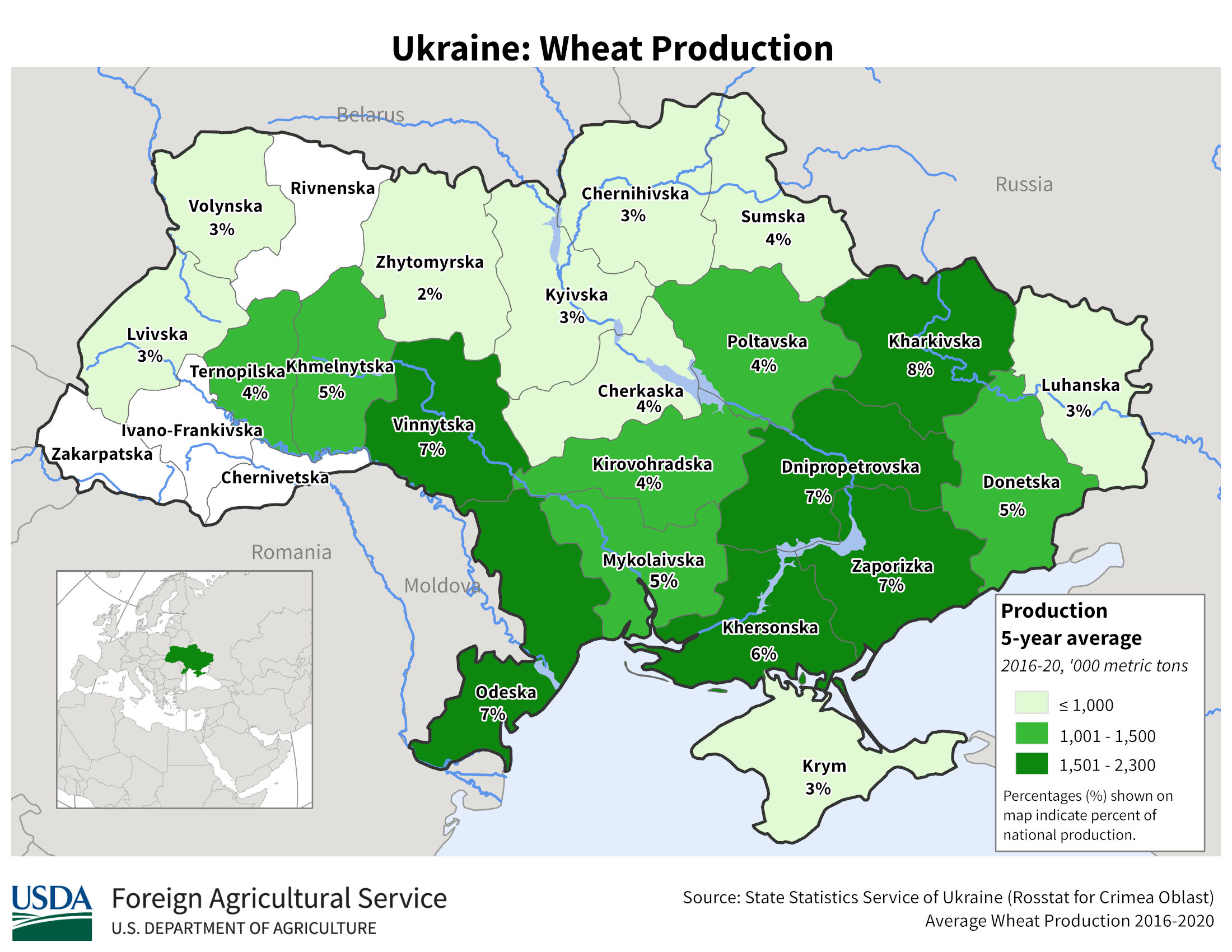
The character of the neo-imperialist “Great Game” over Ukraine has changed since 2014 – when the West intervened[40] to prevent the formation of the “Eurasian Union” propagated by Putin. With the battle over Ukraine’s southern and southeastern regions, which the Kremlin wants to incorporate into its rotten empire, an archaic-looking resource war is now also taking place. These swaths of land have the highest agricultural yields.[41] Moscow, which has failed to modernize the Russian economy, is thus expanding its strategy of an “energy empire,” which seeks extensive control of the “value chain” of energy resources, to include other “scarce” resources: basic foodstuffs. Russia not only wants to be a nuclear-armed gas station, it also wants to be a granary – precisely in anticipation of the climate crisis.

The Russian invasion of Ukraine thus provides a glimpse of the coming period of crisis, in which a capitalist world system in the process of disintegration will no longer allow for a fixed hegemony or bloc formation due to increasing economic and ecological devastation, while openly warlike confrontations over essential resources are likely to increase, even between the great powers that are increasingly sealing themselves off from the periphery. In a sense, everything will become oil – especially since the crisis process does not adhere to the reified form in which it appears in bourgeois crisis discourse, and the individual moments of this dynamic, which are separated in public discourse into “economic crisis,” “climate crisis,” “political instability” or “supply shortages,” will increasingly interact with each other. The vanishing point of this new quality of the crisis on a geopolitical, “neo-imperial” level is ultimately the nuclear exchange of blows, which is becoming more and more likely with the increasing intensity of ecological and economic crises, with ever new, more violent “crisis impacts.”

Authoritarian State Formation and State Collapse

Since de-globalization is accompanied by the collapse of the global deficit economy, which will lead to the devaluation of the neoliberal debt mountain, the most severe economic and social dislocations, as they devastated large parts of the periphery in the form of debt crises and economic collapses in the neoliberal era, seem likely to occur in the centers as well this time. If the capitalist functional elites have no further method of delaying the crisis at their disposal, the crisis process, which has been advancing in stages from the periphery to the centers since the 1980s, would thus reach its logical end point. It is not only the USA, which is groaning under an absurd private and state debt burden, that is facing the economic abyss in view of the necessary turnaround in monetary policy on interest rates; it is precisely export-fixated economies such as that of the FRG that are highly dependent on the global deficit economy by means of their export surpluses, which in fact represent an export of debt – and which could now be hit particularly hard by de-globalization.

Thus, at first glance, a tendency that was already apparent in the final phase of the neoliberal era seems to be advancing to become a central moment of the new crisis period: The state as an economic actor, which in recent years seemingly stabilized the system with stimulus packages and excessive money printing in the context of the last great liquidity bubble, is likely to become a central actor in the new crisis period.[42] The state, which seemingly stabilized the system in recent years with economic stimulus packages and excessive money printing in the context of the last great liquidity bubble, is likely to become the dominant economic actor in the short term due to the new quality of the crisis process – even if these state capitalist reflexes no longer have any prospect of success.

In general, the capitalist state, which already in its absolutist early form in the context of the European “economy of firearms” (Robert Kurz) acted as the most important impulse generator of the initialization of the valorization process, acts as a central economic actor in times of war and crisis. The state is not an alternative to the market, as it often appears in the truncated critique of capitalism, but a necessary corrective to the blind market dynamic, which tends to be auto-destructive. As soon as the contradictions inherent in capital valorization shake the system to its foundations through crisis or war, the state – which is always a capitalist state – must intervene to try to stabilize the system. Most recently, for example, in the period of crisis and war in the 1930s.

Even at present, in the face of climate crisis and war, there are voices calling for an open transition to rationing,[43] to state capitalism, to the war economy.[44] The state is not only supposed to support the “economy” through stimulus programs, the development of the new, “ecological” infrastructure and money printing, as in the final phase of neoliberalism; the state is also expected to be responsible for costly basic research, the subsidization of consumption or production and the organization of commodity distribution in phases of crisis. Strategic state decisions on industrial development are already part of bourgeois policy, for example in the FRG in the form of the promotion of “industrial champions” who are to conquer the world markets with state backing (here too the West is actually only following China and Russia).[45] Also foreseeable are, in reaction to coming crises, renewed nationalizations, especially in the ailing and crisis-prone late capitalist infrastructure sector.

This necessary role of the state as “crisis manager” is, however, undermined by the previously described exhaustion of the financial market-driven globalization of the deficit economy in the neoliberal age, which, in the face of dizzying mountains of debt, overheated financial markets and rapidly increasing inflation, drives politics into a dead end, a crisis trap: On the one hand, capitalist crisis policy should actually lower interest rates, print money and support the economy with stimulus programs in order to minimize the economic consequences of the war in Ukraine, but at the same time it would be necessary to raise interest rates and pursue a consistent austerity course in order to get at least some control over inflation.

This crisis trap, which is becoming ever clearer,[46] and marks the end of the credit-financed neo-liberal delay of the manifest breakthrough of the crisis in the centers, will, when it snaps shut, entail the most severe economic and social dislocations – especially in the centers, and especially in their middle classes. With the wave of impoverishment, the gradual brutalization of the bourgeois metropolitan societies, which has been going on for decades, will turn into open barbarization, driven by an escalating crisis competition at all levels, driving it into the anomic. The crisis-induced socio-political retreat of the state will reduce it to its original role as an instrument of repression. The new crisis thrust will thus entail a corresponding state reaction. Authoritarian state aspirations, present in neoliberalism in the form of the dismantling of democracy and the expansion of the surveillance state, will become openly apparent. The right-wing US President Trump was only a prelude in this respect. And in the Federal Republic, too, the latently fermenting fascist potential is only likely to become fully manifest when the civilizing effect of the high foreign trade surpluses, which compel Germany’s economic and political elites to take account of foreign opinion, disappears in the course of the crisis.

The war over Ukraine in particular makes this interaction of crisis dynamics, brutalization and authoritarian state reflex clear. Lukashenko, once called “Europe’s last dictator,” seems to be the forerunner of all those authoritarian tendencies that are currently spreading in the EU, for example in Hungary or Poland, in NATO, especially in the form of the Islamo-fascist regime in Turkey, or in Ukraine itself, which is already following in Russia’s footsteps with arrests of opposition members and party bans.[47] It is a fundamental mistake to interpret the war in Ukraine as a struggle between democracy and dictatorship, a view which could actually be corrected just by looking at the conditions in Warsaw, Budapest or Ankara. Consequently, the new phase of the crisis is more likely to be marked by the Orwellian struggle of authoritarian or fascist regimes for resources than by a new edition of the “Cold War.”

And yet this tendency towards authoritarian, and in the final analysis openly fascist, crisis management is a surface phenomenon, only externally linked to 20th century fascism. Total and totalitarian mobilization during World War II made the postwar Fordist boom possible, since there was effectively no demobilization after the end of the war and mass tank production passed into the automobilization, the mass production of cars, of postwar capitalist societies; but a similar regime of accumulation in which mass wage labor would be valorized in commodity production is not in sight this time. There is only the abyss of total over-indebtedness in the incipient climatic catastrophe, which gives a different course to the objective function of fascism as a terrorist crisis form of capitalist rule. The moment of fascism that has always existed as the rule of the rackets, that is, of competing communities of looters, as Critical Theory clairvoyantly stated, becomes dominant in the current systemic crisis.

The authoritarian formation of the state, which is increasingly becoming the prey of rackets, thus goes hand in hand with its internal erosion, which is already beginning to unfold in the Federal Republic in particular: especially with regard to the increasing right-wing extremist activities in the state apparatus.[48][49] In Ukraine this process has already progressed much further, where the oligarch rule after the fall of the government and the outbreak of the civil war already turned into right-wing extremist militia formation,[50] which could openly challenge the Ukrainian state in the run up to the war.[51] The disastrous course of the Russian invasion also revealed how far the tendencies towards state erosion had progressed even within the Russian state oligarchy, since even the army, essential for the Kremlin’s projection of power, was fully caught up in this. The division within the German right, which cannot clearly position itself behind the Ukrainian Nazis or Russian pre-fascism in the Ukraine war, points precisely to the omnipresence of these authoritarian-anomic tendencies in this conflict.[52]

A prime example of the fragility of authoritarian rule in capitalism and the transformation of dictatorship into anomie is provided by the Arab Spring, in the course of which seemingly monolithic dictatorships such as those in Syria and Libya collapsed and released their inherent centrifugal forces. Authoritarian structures are not a sign of the inner strength of the capitalist system, which prefers the optimization of the self-valorization of the wage-dependent within the framework of capitalist democracy, but rather its form of crisis, which is nowhere near as efficient at organizing the process of valorization as the typical published discourse in the centers of the world system on ways to optimize and increase growth – but which requires a certain degree of social stability to ensure its ideological foundations.

Amok or Emancipation

The era of openly authoritarian crisis management, which is now being heralded, for example, in the publicly articulated preference of Western oligarchs for right-wing populists,[53] will therefore not be able to bring about a decade-long post-war order in domestic politics either, as it prevailed at least in the centers during the neoliberal era, despite all the creeping processes of erosion and the increasing contradictions. The climatic, economic and geopolitical crisis impacts are coming with increasing frequency, which is why stabilization, which would herald a new historical period of crisis management, is hardly likely, even by means of authoritarian, dictatorial methods. Especially since, as already mentioned, the different moments of the crisis process are increasingly interacting, so that the climate crisis, for example, will have a growing economic and social fallout. The time of the monsters, as Gramsci called the breakthrough crisis to Fordism in the 1930s, no longer seems to have an end in sight.

It could even be argued that – with crisis imperialism and fascism striving towards the anomic as an open death cult[54] – in the phase of capital’s decline, moments of its expansionary dynamics briefly reappear, overlap, interact – entirely in the sense of a dialectical negation of negation, so that seemingly familiar phenomena at a higher stage of the capitalist development of contradiction follow a reversed logic of development driven by the contraction of the valorization process. These are blood-soaked early capitalist mementos from the ascendant phase of capital that the world system, which is passing into agony, once again unleashes upon humanity. Even the mercenary, who is currently celebrating a comeback in the neo-imperialist wars of distribution and collapse, is a product of early capitalism, when the first “wage earners” emerged en masse in the 30 Years War as an embryonic form of the wage-earner and terrorized the population.

Without an emancipatory overcoming of capital in its blind fetishistic flight towards world destruction,[55] the crisis has its final vanishing point in panic, in the capping of all libidinous bonds between the members of society triggered by escalating crisis competition, as already evidenced by the case of the individual run amok, which now occurs regularly.[56] In addition to global nuclear war, which is becoming an ever greater threat in crisis imperialism as the intensity of the crisis increases, it is the climate crisis that is likely to act as the greatest producer of panic: Specifically, the increasingly apparent uninhabitability of vast swaths of the global south,[57] which places objective limits on all, even the most brutal, openly terrorist forms of crisis management. This would mark the transition to sheer civilizational collapse.

From this systemic urge towards self-destruction, which is now blatantly obvious, grows the necessity of survival of the emancipatory overcoming of capital, which forms, so to speak, the last constraint with which the capitalist regime of constraint must be transformed into history. The struggle for the transformation of the system should thus be the central moment of left practice, instead of losing oneself in the jubilant cheering for NATO or Putin, which large parts of the German left are currently practicing in view of the Ukraine war.[58]


[1] https://oxiblog.de/die-mythen-der-krise/

[2] http://www.konicz.info/?p=4136

[3] https://www.xn--untergrund-blttle-2qb.ch/wirtschaft/theorie/stagflation-inflationsrate-6794.html

[4] https://de.wikipedia.org/wiki/Gro%C3%9Fer_Kladderadatsch

[5] https://www.heise.de/tp/features/Freihandel-und-Fluechtlinge-3336741.html

[6] https://www.mandelbaum.at/buch.php?id=962

[7] https://www.xn--untergrund-blttle-2qb.ch/wirtschaft/weltfinanzsystem-finanzmaerkte-notenbanken-6360.html

[8] https://www.xn--untergrund-blttle-2qb.ch/kultur/film/george_andrew_romero_zombie_4234.html

[9] https://www.xn--untergrund-blttle-2qb.ch/wirtschaft/theorie/stagflation-inflationsrate-6794.html

[10] https://www.mandelbaum.at/buecher/tomasz-konicz/klimakiller-kapital/

[11] https://www.xn--untergrund-blttle-2qb.ch/politik/theorie/die-klimakrise-und-die-aeusseren-grenzen-des-kapitals-6832.html

[12] https://www.lunapark21.net/das-kapital-als-weltverbrennungsmaschine/

[13] https://carnegieendowment.org/chinafinancialmarkets/86397

[14] https://www.co2.earth/daily-co2

[15] https://www.imf.org/-/media/Files/Publications/WEO/2022/April/English/text.ashx

[16] https://www.spiegel.de/wirtschaft/iwf-ukrainekrieg-kann-weltwirtschaftsordnung-fundamental-aendern-a-af821a51-222d-42d2-9038-d29180574e3d

[17] http://www.konicz.info/?p=4876

[18] https://www.dw.com/en/high-fertilizer-costs-threaten-farmers-amid-sanctions-on-russia/a-61163444

[19] https://www.reuters.com/business/indonesia-seeks-balance-international-local-palm-oil-demand-official-2022-05-11/

[20] https://twitter.com/spectatorindex/status/1525327269707022336

[21] https://www.heise.de/tp/features/Die-Urspruenge-der-gegenwaertigen-Wirtschaftskrise-4285127.html

[22] http://www.konicz.info/?p=1409

[23] https://www.heise.de/tp/features/Der-Aufstieg-des-deutschen-Europa-3370752.html

[24]  https://lowerclassmag.com/2021/04/13/oekonomie-im-zuckerrausch-weltfinanzsystem-in-einer-gigantischen-liquiditaetsblase/

[25] https://www.heise.de/tp/features/Politik-in-der-Krisenfalle-3390890.html

[26] https://www.xn--untergrund-blttle-2qb.ch/politik/europa/russland-ukraine-krise-konflikt-neoimperialismus-6830.html

[27] https://www.ft.com/content/e5735375-75df-4859-bbf0-ae22e4fe2ff6

[28] http://www.konicz.info/?p=4389

[29] https://www.versobooks.com/books/347-adam-smith-in-beijing

[30] https://www.washingtonpost.com/news/wonk/wp/2015/03/24/how-china-used-more-cement-in-3-years-than-the-u-s-did-in-the-entire-20th-century/

[31] https://www.heise.de/tp/features/Wachstum-der-Schuldenberge-3762292.html

[32] http://www.konicz.info/?p=4643

[33] https://oxiblog.de/klimakrise-und-china/

[34] https://www.buzzfeednews.com/article/kirstenchilstrom/china-flooding-photos

[35] https://www.youtube.com/watch?v=DOBntnuYCMA&t=5s

[36] https://unherd.com/2022/03/the-truth-about-ukraines-nazi-militias/

[37] http://www.konicz.info/?p=4566

[38] https://www.streifzuege.org/2021/das-globale-agrarsystem-wahnsinn-mit-methode/

[39] https://www.tagesschau.de/ausland/asien/sri-lanka-ausnahmezustand-101.html

[40] https://www.heise.de/tp/features/Ost-oder-West-3363061.html

[41] https://ipad.fas.usda.gov/rssiws/al/crop_production_maps/Ukraine/Ukraine_wheat.jpg

[42] https://lowerclassmag.com/2021/04/13/oekonomie-im-zuckerrausch-weltfinanzsystem-in-einer-gigantischen-liquiditaetsblase/

[43] https://www.ft.com/content/d8e565b0-c769-46cc-9be3-4ed9a806d8e8

[44] https://www.spiegel.de/wissenschaft/mensch/ukraine-krieg-und-gas-dann-eben-kriegswirtschaft-aber-richtig-kolumne-a-532bb9fa-15e4-4b9b-8e50-d6e082a93f04

[45] https://www.zeit.de/wirtschaft/2019-05/nationale-industriestrategie-2030-peter-altmaier-industriepolitik-faq

[46] https://www.heise.de/tp/features/Politik-in-der-Krisenfalle-3390890.html

[47] http://www.konicz.info/?p=4832

[48] https://www.heise.de/tp/features/Braun-von-KSK-bis-USK-4355668.html

[49] https://www.heise.de/tp/features/Inflation-der-Einzelfaelle-4259590.html

[50] https://www.streifzuege.org/2014/oligarchie-und-staatszerfall/

[51] https://consortiumnews.com/2022/03/04/how-zelensky-made-peace-with-neo-nazis/

[52] https://www.endstation-rechts.de/news/die-deutsche-rechte-und-ihr-umgang-mit-dem-krieg-der-ukraine

[53] https://winfuture.de/news,129707.html

[54] https://www.heise.de/tp/features/Der-alte-Todesdrang-der-Neuen-Rechten-4509009.html

[55] https://www.heise.de/tp/features/Die-subjektlose-Herrschaft-des-Kapitals-4406088.html

[56] https://www.heise.de/tp/features/Fluchtpunkt-Amok-3263142.html

[57] https://www.spiegel.de/wissenschaft/mensch/extremwetter-und-klimaforschung-klimakrise-macht-hitzewellen-in-indien-100-mal-wahrscheinlicher-a-aa4a67a0-96f2-4be0-911f-a83f33abcaec

[58] Read more: https://www.konicz.info/?p=4868.

Originally published on konicz.info on 05/24/2022

Glory and an Ear of Corn

Tomasz Konicz

The fact that parts of the world are facing a devastating famine cannot be attributed solely to the consequences of the Ukraine war.

Putin did it! This exclamation, which the Kremlin ruler’s auburn-haired German fan base likes to use with a wink to ridicule any criticism of their surrogate leader, actually seems to apply perfectly in the case of the worsening hunger crisis in the global South. Since Russia’s invasion of Ukraine, staple food prices have really skyrocketed. The food index of the Food and Agriculture Organization of the United Nations (FAO), whose calculation takes into account the price of cereals, dairy products, meat, cooking oils and sugar, has risen significantly since the beginning of the war.

Ukraine and Russia, as important exporters of staple foods such as wheat, corn or sunflower oil, supply mainly peripheral states. Belarus and Russia also produce a large share of fertilizers for the global agricultural economy. According to the Federal Office of Economics and Export Control, Ukraine’s wheat production accounts for 11.5 percent of the global market. In 2021, about 33 million tons of wheat were harvested in the country, which has particularly fertile soils, of which 20 million tons were destined for export. This year’s harvest is estimated to be 35 to 42 percent lower due to the war, and exports have already fallen to a third of last year’s volume in May. The food crisis is thus triggered on the one hand by the war in Ukraine and the Russian blockade of Ukraine’s Black Sea ports, and on the other hand by globally looming crop losses due to fertilizer shortages. Russia and Belarus produced around 37 percent of the potash fertilizer used worldwide in 2019.

Before the outbreak of the war, Russian and Ukrainian grain exports went mainly to those peripheral regions that are particularly vulnerable to famine. Among the largest importers of wheat from Russian and Ukrainian production are Egypt, Bangladesh, Nigeria, Yemen, Sudan and Senegal. Of the 25 African countries that source more than a third of their wheat imports from Russia and Ukraine, 15 countries actually met more than half of their import needs from Russia and Ukraine. In the case of Somalia, Egypt, Benin, Sudan, the Democratic Republic of Congo, Senegal and Tanzania, the figure was more than two-thirds. East Africa in particular, where the worst drought in 40 years has already caused a severe famine threatening some 23 million people, to which statistically one person falls victim every 48 seconds, is a major buyer of wheat from the war zone. Since the EU sanctions do not affect Russian sunflower oil and grain exports, and the most important importing countries have not imposed any sanctions against Russia, the price increase and the resulting increase in hunger and malnutrition must be attributed to the imperialist war of aggression which Putin – provoked by Western expansionism in the closest Russian sphere of influence – unleashed in his megalomania.

However, a look at the global development of hunger and malnutrition also shows that the war acts as a crisis amplifier that accelerates already prevailing trends. Indeed, Western public opinion is in part using the Russian invasion of Ukraine as a cheap excuse to distract from the deeper, systemic causes of the crisis.

According to FAO figures, the number of people suffering from hunger and malnutrition in late capitalism has been increasing almost every year since 2014 due to episodic outbreaks of social and environmental crisis. The increase in hunger was most pronounced in 2020, the year of the pandemic – 768 million people were affected. The fight against the pandemic led to a massive collapse in demand in the core countries, which led to an overproduction crisis and a corresponding explosion of misery in the periphery. According to a report in the FAZ, for example, sales of textiles in Europe and North America collapsed by around 16 billion dollars in 2020, which was reflected in income reductions of around 21 percent in the Southeast Asian textile industry. Since wages in the industry in countries such as Bangladesh, Pakistan or Burma are at the subsistence level, millions of workers simply had to go hungry – or get into debt.

According to surveys, 75 percent of the workers were forced to take out loans in order to ensure adequate access to the necessities of life. The market-mediated capitalist destitution mechanism, which had its destructive effect not only in the textile industry during the pandemic, transforms the falling demand of the centers of the world system into empty stomachs in the periphery. The rise of hunger thus affected millions of wage-earners in 2020 precisely because too much material wealth was produced that could no longer be valorized in commodity form. Those wage-dependents who are still allowed to sew clothes for Adidas, Puma and Co. have been “lucky,” according to the capitalist logic of valorization.

In capitalism, only that which directly or indirectly contributes to the valorization process of capital has a right to exist, that is, only that which promotes the boundless multiplication of money by means of wage labor. Natural resources and human life have no value in themselves for capital, but function only as a means to the insane end in itself of boundless capital accumulation. Commodities – and this includes the commodity of labor power – represent a mere cost factor if they cannot be valorized. Since, under capitalist conditions, the massive increase in hunger is accompanied by an equally massive decrease in the market demand for food, the pandemic year 2020 was consequently marked not only by a serious increase in hunger, but also by mass destruction of food. The US agricultural industry, for example, destroyed millions of tons of staple foods, while some 38 million US citizens suffered from “food insecurity” and the queues at soup kitchens and food distribution points, which were frequented by 60 million people in 2020, grew longer and longer.

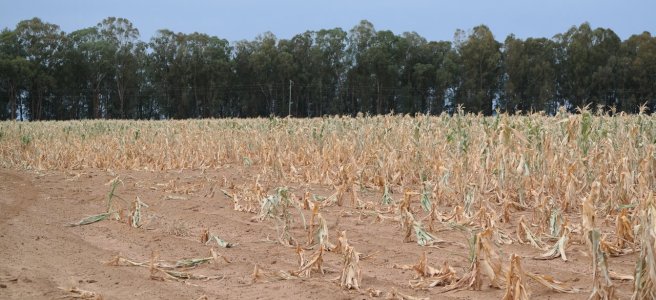
The destruction of foodstuffs that can no longer be pressed into commodity form is also taking place in this year of war and crisis, when, for example, farmers in Münsterland have their strawberry fields plowed under because the food trade is forcing prices below production costs. However, there are now also signs of famines caused by the climate crisis. This is illustrated by a look at India, for example. In the spring, the country was hit by a historically unprecedented, week-long heat wave with record temperatures of more than 45 degrees Celsius, which led to considerable crop losses. In key crop-growing regions such as Punjab, initial estimates put crop losses at around 25 percent. With India already using up a large part of its grain reserves during the pandemic-induced bouts of pauperization to prevent famine and riots as part of a welfare program, New Delhi decided to pull the emergency brake and impose a ban on wheat exports in the face of skyrocketing prices. India originally wanted to use the shortages triggered by the war in Ukraine to open up new markets, but in view of the collapsing crop yields, which are calling into question the government’s food program, which runs until September, the government felt compelled to resort to protectionist measures.

The climate crisis is thus reinforcing the protectionist tendencies that are already prevalent in the final phase of neoliberal globalization – at the latest since Donald Trump took office. And the impacts, which take the form of extreme weather events, are becoming more frequent: the severe heatwave that hit Spain in May endangered the harvest of several berry varieties. In the USA, prolonged drought in the Midwest is threatening yield losses of eight percent for winter wheat – despite an expansion of the area under cultivation. In Morocco, crop losses of 70 percent are expected due to drought, while Canada and France are also facing significant losses due to unusually warm and dry weather conditions in the spring. And China could also see yield losses due to severe flooding. Overall, according to estimates by the US Department of Agriculture, wheat yields are expected to fall by 0.6 percent in the 2022/23 season, and global reserves by as much as five percent.

The skyrocketing world market prices for staple foods, which are likely to contribute to the 193 million people at risk of starvation worldwide, as stated by the Global Report on Food Crises for 2021, will continue to rise this year, only anticipate future market demand in the face of war and the climate crisis. And it is not only India that is responding to this killer market movement with protectionism. Due to massively rising prices and looming supply shortages, Indonesia, for example, issued a short-term export ban on palm oil in April, which further exacerbated the supply situation, especially in the global South. The export restrictions on the environmentally harmful oil, 60 percent of which is produced in the South Asian island state from oil palms grown in monocultures on the soil of deforested rainforests, were only lifted at the end of May.

Just as the failed global fight against pandemics, due to the unequal distribution of vaccines, leads to the emergence of new mutants and resistances in the periphery, the late capitalist world system is at the same time the cause and intensifier of the hunger crisis, which is gaining momentum. The growth compulsion of the capitalist economies, itself only an expression of the process of valorization, is causing global CO2 emissions to continue to rise in spite of all the ideological assurances of green politicians, which will put ever greater pressure on the food supply of humanity. At the same time, the late capitalist agricultural system is incapable of reacting adequately to the increasing distortions, since it follows only the end in itself of achieving the highest possible profit.

The lamentations of the green political swamp, according to which “we” should finally eat less meat and fill up less biodiesel, ignore precisely this irrational end in itself of capital, which turns the basis of human existence into the mere material of the real-abstract valorization process. The demands raised by the agricultural mafia in the face of the unfolding hunger crisis to lower environmental standards and abandon organic farming after all, in order to push the ecologically disastrous industrialization of food production to the extreme, only illustrate the fundamental inability of the late capitalist agricultural sector to reform, as was already expressed in 2020 in the EU agricultural reform, which was softened beyond recognition by lobbying associations (see konkret 12/20).

In the course of the famine crisis, the internal and external barriers of capital interact with each other – this becomes very clear in the upsurge in prices, which is, after all, not only fueled by war and the climate crisis, but also by the consequences of the massive over-indebtedness of the entire capitalist world system. The gigantic global debt burden – the consequence of a missing accumulation regime simulated in the neoliberal era by credit-financed growth – which also crushes many countries in the global South threatened by famine and makes adequate crisis reactions difficult, could only be maintained in recent years by steadily increased money printing by central banks. Long before the outbreak of war, this “expansive monetary policy” manifested itself in rising inflation, contributing to increased food prices and heralding the inevitable devaluation of global debt mountains. And it was precisely these increasing economic as well as ecological contradictions that put the West and Russia on a collision course in Ukraine. 

The nature of the neo-imperialist Great Game over Ukraine has consequently changed since 2014 – when the West intervened to prevent the formation of the Eurasian Union, propagated by Putin at the time, by means of a government overthrow carried out by Nazi militias. With the fight over Ukraine’s southern and southeastern regions, which the Kremlin wants to incorporate into its resource empire, an archaic-looking resource war is now also taking place. The disputed areas have the highest agricultural yields of cereals such as wheat and rye. Moscow, which failed to modernize the Russian economy, is expanding its strategy of forming an “energy empire”, which seeks extensive control of the “value chain” of energy sources, to include other “scarce” resources: in this case, basic foodstuffs.

Russia not only wants to be a nuclear-armed gas station, it also wants to become the granary of the late capitalist world lurching into climate catastrophe, thereby gaining another geopolitical lever of power. The visit of representatives of the African Union to Moscow in early June to discuss the food crisis illustrates the Russian strategy. Senegalese President Macky Sall said he was “very pleased and very happy” with the exchanges with his Russian counterpart, after the three-hour meeting with Vladimir Putin, as the latter was aware that “the crisis and the sanctions would cause serious problems for weak economies like the African ones.” The New York Times described the meeting as “something of a diplomatic victory” for Putin. It is doubtful, however, that the late capitalist world system, in its current state, even knows such a thing as a victor.

Originally published in konkret in 07/2022

Mountains of Debt on The Move

Tomasz Konicz

The wonderful world of bond markets – currently far more exciting than many functionaries in the state and financial sector might like.

Dull, dreary, mind-numbing – these are usually the words used to describe the bond markets of the core of the world system. When capital needs to be parked safely, when pension funds need to guarantee a secure, albeit low, return, when insurance companies want to park their money, then money flows into US government bonds or into German bonds, which are considered the stable foundation of the world financial system, the backbone of the neoliberal financialization of capitalism in recent decades.

When measuring the concrete on which the neoliberal financial house of cards has been built over the past decades, the trillion is the appropriate unit of measurement: with a volume of more than 22 trillion dollars, the American market for government bonds had the largest volume worldwide at the end of 2020, followed by China (20 trillion) and Japan (12 trillion).[1] Globally, a total of $128.3 trillion worth of bonds were traded during the period, of which 68 percent was public sector debt and 32 percent was corporate debt.

It’s usually more exciting to watch grass grow than to watch the US Treasury bond markets. Usually. The fact that the financial sphere is in the midst of what is, to say the least, an unusual crisis that is eroding its very foundations can be gauged precisely by the fact that bond markets in the US and the EU have been on the move and are in the midst of a nerve-wracking rollercoaster ride for investors large and small. There has seldom been so much tension and action on the bond markets, which are comfortable by capitalist standards and last came under similar pressure in the EU around ten years ago during the euro crisis.

The difference in interest rates, the so-called spread between German and Italian government bonds has risen sharply in recent weeks. Rome has to pay higher interest rates for its government bonds than Berlin, which threatens to make Italy’s enormous debt burden, which stands at around 150 percent of its economic output, unsustainable – and could blow up the entire Eurozone.[2] The ECB finds itself at an impasse due to galloping inflation and unsustainable debt burdens in the southern periphery of the Eurozone, because it would actually have to raise interest rates to fight inflation and at the same time lower them to keep the debt burden in the currency union bearable.

In the US, observers had to look further back to find parallels with the massive shifts in the sovereign debt market. In the market for US government bonds, for so-called Treasuries, a rare constellation known as an inverted yield curve[3] can be observed, which serves as a safe indication of a coming recession. Yields on long-term bonds, such as the 10-year Treasury note, have fallen below yields on short-term T-bonds, such as Treasuries with two-year or even three-month maturities.[4] Usually, long-term bonds carry higher interest rates than shorter-dated notes to compensate for the greater risk.

If bonds with short maturities are now considered just as risky as T-bonds with maturities of ten years, then this points to a coming major shock, to an approaching crisis push. Over the past 50 years, this market constellation has always preceded a recession. According to the Financial Times (FT), this inverse yield curve is as pronounced in the US bond markets as it was in 2000, when the global dot-com bubble burst with internet and high-tech stocks.[5] Thus, the US bond markets in particular seem to be sending a sure recession signal.

On average, US Treasuries, which trade at a market price similar to equities, have lost about nine percent of their value since the beginning of the year,[6] the biggest correction in this typically solid market in about 30 years. The US bond market is all but dead, lamented the Financial Times in mid-July,[7] as Washington’s long-term T-bonds are now being “shunned” by strategic investors such as pension funds, leaving their yields higher than those of 30-year bonds. This, too, is an inversion that is already attracting speculators such as hedge funds to the market to exploit these “distortions” (FT) – and further destabilize the market.

Moreover, the falling prices of US bonds are causing foreign investors to think very carefully about whether Washington’s Treasuries are still a fireproof investment.[8] Japan is now the largest foreign creditor of the United States – ahead of China – with Japanese investors holding $1.2 trillion worth of US bonds. As reported by Bloomberg news agency, net sales of US bonds in Japan have been taking place for seven months in the face of falling prices, setting a new record since record keeping began. The largest foreign creditor to the US is said to have dumped $2.4 billion worth of Treasuries in May alone, with sales as high as $17 billion in April. If these outflows accelerate and more of Washington’s foreign creditors do the same, the Fed could face a full-blown debt crisis.

Falling bond prices go hand in hand with rising interest rates, which tend to approach the interest rate level of the central banks. However, the Fed’s interest rate hikes, which are intended to help fight inflation, are also accompanied by an increase in the cost of servicing sovereign debt. The higher the interest rates, the greater the government’s interest burden. Even in the FRG, the cost of servicing the – relative to the south of the Eurozone – lower and cheaper mountains of debt has increased almost eightfold within a short time: from just under four to just under 30 billion euros.[9] The era of negative interest rates is finally over, although, as explained above, it is precisely the bond markets that are contributing to the destabilization of the currency union due to the increasing differences between the interest rates of the German core and those of the southern periphery of the euro area, and which could lead to it breaking up should the crisis escalate any further.

In the US, right-wing forces within the Democratic Party have already exploited the Fed’s interest rate turnaround to massively cut the Biden administration’s infrastructure and stimulus programs.[10] There is nothing left of the flowery campaign promises of a credit-financed Green New Deal. Conservative think tanks are already arguing[11] that even Biden’s minimal stimulus programs should be sabotaged, as they are pro-inflationary and a burden on the middle class. Inflation has already risen to 9.1 percent, the Heritage Foundation complained, due to the Fed’s “printing” of an incredible amount of money that adds up to some seven trillion dollars.

In addition to this conservative critique of the loose monetary policy of recent years (which was also practiced by the Trump administration) ignoring the environmental and pandemic factors contributing to the current wave of inflation,[12] it omits the simple fact that it was precisely the historically unprecedented period of expansionary monetary policy by central banks that kept the economy and the financial sphere afloat in the context of a gigantic liquidity bubble.[13] The capping of stimulus measures, as is happening in the US, is thus likely to deepen the coming recession.

This dead end of bourgeois crisis policy,[14] where central banks can only choose between recession and inflation, only between the concrete paths to the next episode of crisis, is now being openly addressed by leading officials in the financial industry. Analysts at Bank of America (BoA) stated in a market assessment at the beginning of July that it would take a very “deep recession” to contain inflation.[15] It would take “a long time” to “cool down the labor market” and contain “inflation driven by labor costs,” the BoA forecast said. In plain English, unemployment must rise significantly to depress wages, which rose in the era of “cheap money,” generating demand and exacerbating pandemic supply shortages. The “market equilibrium” between demand and supply, which was shattered by the pandemic and the climate crisis, is thus to be restored via the pauperization of wage earners – so that full supermarket shelves and shop windows can once again be wistfully admired by wretched figures.

The great flood of money from the central banks, which had actually already opened their floodgates wide in 2008 after the bursting of the real estate bubbles in the USA and the EU and hardly closed them since,[16] led to an inflation of securities prices in the financial sphere. And it was precisely this financial bubble economy that provided for the “good” economic development generated on credit, which is now “overheating” in inflationary terms. It is precisely the inflation of the prices of the speculative objects in the financial sphere that is at the core of the definition of a bubble. And since it was the liquidity of the central banks, with which the financial markets were flooded, that led to the formation of this “inflation of securities prices,” this speculative dynamic, which is now bursting, is called a liquidity bubble.

In the Financial Times[17] this connection between the flood of money and the financial market boom is now openly discussed: According to the paper, the liquidity pumped into the markets since the beginning of 2020 has had a “twofold to 2.5-fold” greater impact on the performance of the stock markets than the dismal economy. Investors are thus far more concerned about the drying up of liquidity in the wake of the interest rate turnaround than they are about the growth outlook.

The central banks’ turnaround on interest rates is not only causing the mountains of debt in the bond markets to move, but the stock markets,[18] the currency markets,[19] and the real estate market[20] are also all affected. The liquidity bubble of the central banks, which have been pursuing a zero interest rate policy almost without interruption since 2008 and have pumped trillions into the financial sphere by means of securities purchases, has in fact developed into an everything bubble, which has promoted the formation of bubbles in many areas of the financial sphere – up to and including the absurd excesses of swarm speculation with meme stocks such as Gamestop.[21]

The current upheavals in the financial sphere, the turbulence in many markets, which seem so confusing at a cursory glance, can certainly be reduced to a common denominator that makes these crisis dynamics understandable: the aforementioned liquidity bubble, which has been pumped up by central banks since the financial crisis of 2008. To prevent the economy from crashing after the 2008 and 2020 bouts of crisis, central banks pumped money into the financial sphere by buying up junk securities like mortgage securitizations or the government bonds of their sovereigns, leading the financial sphere into a long speculative boom accompanied by short bouts of shocks. This Everything Bubble is bursting after the outbreak of the pandemic and the war over Ukraine, as the liquidity held in the inflated financial sphere increasingly flows into the “real” economy, accelerating price inflation there, which could reach double-digit rates of increase in the US.

The global turnaround in monetary policy by the central banks is taking place – this is characteristic of capitalism – not in a coordinated approach, but in competition with each other, which is an expression of the usual late-capitalist crisis competition between “economic localities.” According to the Financial Times, there are increasing signs of a “reverse currency war” between central banks, with each country’s monetary policy seeking to contain the “import of inflation.”[22] The Fed’s interest rate hike has put many central banks “under pressure” to follow suit, as it has caused the US dollar to appreciate against the currencies of other currency areas, such as the Eurozone. However, a depreciation of the currency makes imports, such as of energy sources, more expensive, which fuels inflation. This is why the ECB recently decided to keep its key interest rate at 0.5 percent, despite the friction within the economically divided eurozone,[23] so as not to fall behind in the revaluation race with the USA.[24]

The central banks of competing countries must therefore follow suit in this revaluation race if they do not want to literally import inflation. This currency war is in fact the reverse of the devaluation races that were common in the late phase of neoliberal globalization, after the bursting of the real estate bubbles in 2008.[25] At that time, states sought to achieve export surpluses through monetary devaluations in order to literally export the systemic overproduction crisis of capital, following the German model. These devaluation races, in which China and the FRG were so successful, turned into open protectionism when the Trump administration took office.

How far can these revaluation races of the central banks, which begin with a period of inflation, be pushed? The functional elites who are in a dead-end situation,[26] who initiate this revaluation race, are well aware that it will bring great social and economic friction. Actually, monetary policy has no choice but to at least try to let the devaluation process run its course if inflation is not to get completely out of control. The “economy” and especially wage earners will suffer. The turbulences and distortions in the financial sphere are also far from over, the crisis is far from being “priced in.” Much, even the threat of state bankruptcies in the periphery,[27] can certainly be managed and sat out without the collapse of the capitalist world system as a whole. The social fallout of the crisis can, to some extent, be held in check militarily.

But the seemingly boring bond markets in the core of the world system – in the EU, Japan and the US – cannot simply collapse without the current push of crises taking a collapse-like course. That is the objective limit of all appreciation races and all inflation battles. The mountains of debt that have started to move must be prevented from burying the crisis-ridden core beneath them in an uncontrollable avalanche.

I finance my journalistic work mostly through donations. If you like my essays, then you are welcome to contribute via Patreon.


[1] https://www.icmagroup.org/market-practice-and-regulatory-policy/secondary-markets/bond-market-size/

[2] https://www.ft.com/content/2869a8f3-bf59-437f-a795-4a3fbdc35cd4

[3] https://www.ft.com/content/4f4c3414-9249-4347-91e1-6049081ec431

[4] https://www.bruegel.org/blog-post/inverted-yield-curve

[5] https://www.ft.com/content/4f4c3414-9249-4347-91e1-6049081ec431

[6] https://www.onvista.de/news/2022/05-05-anleihemaerkte-schlimmste-korrektur-seit-fast-30-jahren-als-quittung-fuer-die-lockere-geldpolitik-so-koennte-es-fuer-die-maerkte-weitergehen-19-25980629

[7] https://www.ft.com/content/e02705c2-a9b6-4c47-99e2-66924af55bc3

[8] https://finance.yahoo.com/news/exodus-treasuries-hits-record-japan-015240938.html

[9] https://www.handelsblatt.com/politik/deutschland/staatsverschuldung-die-zinsexplosion-warum-sich-lindners-kosten-fuer-schulden-fast-verachtfachen/28496844.html

[10] https://edition.cnn.com/2022/07/15/politics/biden-build-back-better-manchin/index.html

[11] https://www.heritage.org/budget-and-spending/commentary/bidens-newest-build-back-better-boondoggle-would-worsen-inflationary

[12] https://www.konicz.info/2021/08/08/dreierlei-inflation/

[13] https://www.konicz.info/2021/04/13/oekonomie-im-zuckerrausch-weltfinanzsystem-in-einer-gigantischen-liquiditaetsblase/

[14] https://www.konicz.info/2022/06/11/fed-und-ezb-in-geldpolitischer-sackgasse/

[15] https://finance.yahoo.com/news/deep-recession-needed-bring-down-143850758.html

[16] https://www.konicz.info/2015/06/27/auf-ein-neues/

[17] https://www.ft.com/content/c11cee9e-7a09-4bb6-bde0-87f5392e88c7

[18] https://www.nytimes.com/2022/07/15/business/stock-market-recession-half-year.html

[19] https://www.ft.com/content/07cbb91a-5e68-45da-a796-d800cfaf9a2f

[20] https://www.yahoo.com/finance/news/us-housing-market-entering-deep-090501768.html

[21] https://lowerclassmag.com/2021/01/30/hedge-fonds-gamestop-und-reddit-kleinanleger-die-grosse-blackrock-bonanza/

[22] https://www.ft.com/content/d189b2f2-808a-4a9b-a856-234181f98c2f

[23] https://www.konicz.info/2022/07/17/russischer-sieg-im-wirtschaftskrieg/

[24] https://www.tagesschau.de/wirtschaft/finanzen/leitzinserhoehung-ezb-101.html

[25] https://www.heise.de/tp/features/Der-Schwaechste-gewinnt-3397508.html

[26] https://www.konicz.info/2022/06/11/fed-und-ezb-in-geldpolitischer-sackgasse/

[27] https://www.bloomberg.com/news/articles/2022-07-21/warnings-of-sovereign-defaults-in-asia-frontier-markets-flare-up

Originally published on konicz.info on 07/22/2022

No More Trade Surplus

Tomasz Konicz

For the first time in over 30 years, Germany recorded a negative trade balance. The export-fixated German economic model is facing a crisis.

“Export world champion” is now a thing of the past: in May, the German trade balance recorded a deficit for the first time since 1991, albeit only to the tune of just under one billion euros. German industry, which had been spoiled by success and had been responsible for (almost always large) trade surpluses since the 1990s, is apparently facing major ­problems.

Two factors were decisive here: the rapidly rising prices for energy sources and raw materials and the continuing disruption of global supply chains, as a result of which companies in Germany ­lack components for ­manufacturing and prices for imports are rising. As a result, the cost of imports rose 27.8 percent year-on-year to 126.7 billion euros, while exports rose only 11.7 percent to 125.8 billion euros. Compared with April, the new trend becomes even clearer: the value of German exports increased by only 0.5 percent, while imports rose by 2.7 percent.

Germany’s business representatives ­seem to be bracing themselves for the fact that the era of high German ­trade surpluses, which had already fallen from 224 to 173 billion euros annually between 2019 and 2021 due to the pandemic, is threatening to come to an end. Volker Treier, responsible for foreign trade ­at the Association of German Chambers of Industry and Commerce (DIHK)­, spoke of a ­longer-term “export downturn” at the ­beginning of July.­ An end to the price increases and supply chain problems was not in sight. The Federation of German Wholesale, Foreign Trade and Services (BGA) commented that the “consequences of the Russian war of aggression and the disruptions in the international supply chains” would leave “much greater traces” in the German trade balance, especially if there were “a break in gas supplies from Russia.”

Newspapers such as the Tagesspiegel saw a “momentous trend reversal” due to the trade deficit, which endangered the “German model of prosperity.” Economic journalists from Die Welt even asked whether Germany’s “decline” would lead to a “social crisis.”

Indeed, the economic success of the Federal Republic in the 21st century was based on the fact that the foreign trade surpluses achieved for more than 60 years reached special heights during this period. For many other countries, this was devastating, because Germany’s high trade surpluses, which often reached more than 200 billion euros, in 2017 even 247 billion euros, correspond to equally large deficits in importing countries. In the ideologically driven economic debate in Germany, this ­connection is generally ignored, but it should be obvious to everyone that surpluses and deficits in foreign trade balances must equalize on a global scale. Germany’s prosperity – the unequal distribution of which, ­by the way, is becoming ever more pronounced – was thus de facto based on the export of debt to the target countries of the German export offensive.

It is considered a great success in this country that Germany is still one of the leading industrial countries. The preservation and expansion of German industry has been at the expense of other countries, where deindustrialization has taken on enormous proportions and unemployment and debt have risen. For example, the huge exports of German industry have led to the decline of competing industry in southern Europe.

The clashes ­between the federal government and US President Donald Trump, who had promised his voters to reduce the US’s huge trade deficit, also ­resulted from this social context. Trump had taken office in 2016 promising to ­restore prosperity to ­the declining sections of US society ­by shifting industrial production back to the US, be it through protectionism or by putting pressure on the big surplus countries China and Germany, which on top of that took advantage of the relative weakness of the euro against the dollar. While ­threatening ­the German auto industry ­with tariffs, his administration imposed import tariffs on China that, ­tellingly, have not been withdrawn by ­the current US administration ­under Joe Biden.

These protectionist tendencies and trade policy conflicts, ­preceded by currency devaluation races, are a consequence of the systemic crisis of capital, which lacks a new accumulation regime in which mass wage labor in commodity production ­could be ­profitably ­valorized at the globally given level of productivity. Instead, competing capitals are engaged in an increasingly fierce struggle to keep the effects of the crisis at bay as best they can. This systemic crisis manifests itself concretely in a global debt that is growing faster than the world economy, and now stands at $296 trillion, 350 percent of world economic output. The ­hyper-productive ­system is running on credit, so to speak.

The crisis competition between the economic localities, in which the Federal Republic was so successful, thus amounted to ­passing on the debt constraint to other economies by means of trade surpluses.­ Germany’s high trade surpluses were a consequence of the introduction of the euro and the so-called Agenda 2010. The German current account balance, which takes into account services as well as trade in goods, was still balanced in the 1990s, showing only relatively manageable surpluses. It was the introduction of the euro that brought about Germany’s huge trade surpluses, especially vis-à-vis the other Eurozone countries. This is because the single currency prevented euro countries from reacting to the rapidly increasing German trade surpluses with currency devaluations, while the Hartz laws ensured the devaluation of labor in Germany.

This strategy of the soon-to-be-named world export champion was only possible thanks to the corresponding accumulation of government debt, especially in the southern Eurozone. The resulting speculation and debt bubbles burst in 2008. After the outbreak of the euro crisis, Germany – by means of the austerity dictate embodied by Finance Minister Wolfgang Schäuble (CDU) – was able to pass on its social consequences to the crisis countries in the southern periphery of the currency union. At the same time, due to the structural undervaluation of the euro in relation to the performance of German ­industry, a geographical realignment of German trade flows took place.

While the crisis in southern Europe weakened demand for German goods there, German trade surpluses in exports to non-European countries grew rapidly. The Eurozone, which initially had a balanced trade account, generated growing trade surpluses after the euro crisis, after the currency union had been turned into a “German Europe” by means of austerity policies and internal devaluation. But even that is now over: according to the statistics office Eurostat, the seasonally adjusted trade deficit of the Eurozone rose last April from 13.9 euros in the previous month to 31.7 billion euros. It is by far the highest foreign trade deficit since the creation of the currency union.

This is the systemic reason for the crisis in the German export industry: over the two decades in which global debt rose from less than 200 to more than 350 percent of world economic output, Germany was still able to pass on the litigious crisis to others through its export surplus, but now it is threatening to spread to the economic core of the Eurozone. The stable budgetary situation of recent years, with low, sometimes negative, interest rates on issued bonds, has also been based on years of debt exports, enabling the German government to mobilize hundreds of billions of euros to cushion the economic consequences of the Covid-19 pandemic and the Russian war of aggression.

All this is now at stake, even if German Finance Minister Christian Lindner (FDP) continues to promise to stick to the so-called debt brake. At least this should ­silence the economic chauvinist rhetoric in German public opinion against the debtor countries of the ­Eurozone, with which Europe’s biggest debt exporter is outraged by the mountains of debt it itself is forcing other countries to pile up.

However, this is likely to be the only positive domestic political consequence of the feared “export downturn,” should this crisis trend become permanent. The German functional elites will ­probably react to the export crisis in the same brutal way as they had initiated the foreign trade boom with the Hartz laws: By further devaluing the commodity of labor power domestically, the trade balance could be pushed back into positive territory in order to defend Germany’s crisis-ridden accumulation model. Moreover, the end of the export boom is likely to give a renewed boost to the extreme right and to euro-skepticism in the Federal Republic, if the Eurozone turns from a competitive advantage into a mere cost factor and concerns about an export-promoting image of the Federal Republic abroad recede into the background.

Originally published in jungle world on 07/21/2022

Elections with Reservations?

Tomasz Konicz

The Republican-hijacked US judiciary is on the road to post-democracy.

The smartphone is the best weapon against widespread police violence in the United States. The police killing of George Floyd,[1] which led to mass protests across the country in May of 2020 and reignited the Black Lives Matter movement, would not have been solved if it weren’t for clear video footage. There are hundreds of cases of police violence[2] that have been captured by courageous witnesses or activists and scandalized through social media.[3]

That, at least in Arizona, may soon be coming to an end.[4] A new police law in the western state bans all recordings of police arrests made from a distance of less than eight feet. According to human rights organizations such as the American Civil Liberties Union (ALCU), this rule in practice opens the door for abuse by police officers. Since all police officers in Arizona can now demand a distance of eight feet from filming witnesses, video recordings of arrests are likely to be prevented simply by the police officer walking towards the filming witness. The new requirements are thus even more repressive than the similar post-Democratic jurisprudence in the Federal Republic.[5] The ALCU in Arizona commented that “one of the most effective tools” against human rights violations has been compromised.

The new police law in Arizona is not only “a bad idea,” it is also “unconstitutional,” the ALCU criticized. Yet it is questionable whether such a statement is still meaningful, since the idea of what is constitutional in the US is undergoing rapid, reactionary change. The ALCU could be in for a surprise when it goes to the US Supreme Court on this issue, after the highest judicial body of the state revised decades of legal practice in the US with a series of spectacular landmark decisions, as well as previous landmark decisions.

The nine justices of the “Supreme Court” are nominated by the president and appointed for life by the US Senate – and the US right has managed to win a clear majority on the panel in recent years. Donald Trump, Joe Biden’s right-wing populist predecessor in office, was able to fill three Supreme Court seats during his tenure. For years, the increasingly right-wing Republicans pursued a deliberate strategy of reactionary politicization of the US judiciary, with reactionary judicial organizations, such as the Federalist Society, which has been called the “Constitutional Taliban,” elevating right-wing activists, sometimes even those with a lack of legal expertise, to key positions in the judiciary.[6]

This also applies to the Supreme Court. Currently, six of the nine justices are considered “conservative,” belonging to the right-wing of the political spectrum.[7] As the US media has pointed out, this reactionary majority is in fact trying to turn back the clocks of social development by waging a right-wing culture war.[8]

It appears that the justices’ conservative majority identifies with the America of the 1950s and 1940s, when the nation was “Christian, white and rural,” human rights activists commented in The Atlantic. The Supreme Court is thus attempting to reverse the profound demographic and cultural changes in the urbanized United States that shaped an “ethnically, religiously, and culturally diverse America.”

Abortions: Back to the Past

This has become especially evident in abortion law,[9] where, at the end of June, the right-wing majority overturned the Supreme Court’s 1973 and 1992 landmark decisions establishing a federal right to abortion. Now, it is again up to the states to regulate abortion law, which will lead to a massive restriction of the rights of many women in conservative regions. The three liberal judges who voted against the ruling noted in their minority opinion that in the future, “young women would grow up with fewer rights” than “their mothers and grandmothers.”

The verdict, which was accompanied by widespread protests, was only one building block in a reactionary strategy of outright judicial warfare,[10] in which a politicized judiciary is attempting to further restrict the leeway of the Democratic Biden administration, which has already been narrowed by lobbying and crisis dynamics. It almost seems as if the Republicans, who at the latest with Trump’s election developed into a right-wing populist force open to the extreme right, will continue to govern through the Supreme Court.

Rollback on Environment, Climate, Religion, Gun Rights

This is especially true in the case of environmental and climate policy, which in any case has been massively watered down by the neoliberal forces in the Biden administration in comparison to the promises made in his election campaign.[11] Another landmark Supreme Court ruling, coming just days after the de facto abolition of federal abortion rights, massively curtailed the powers of the US Environmental Protection Agency (EPA).[12] In the future, the EPA will no longer be able to set emissions standards for coal or gas-fired power plants. This effectively makes climate policy impossible. All limits on greenhouse gas emissions will have to be enacted into law, where Republicans have extensive means to sabotage climate change initiatives. It was conservative and Republican politicians from the coal state of West Virginia who brought this dispute to the conservative-dominated Supreme Court.

At the same time, the reactionary judicial offensive continues with blow after blow: The Christian right of the USA can be pleased about fundamental decisions – again handed down by the right-wing majority of 6 to 3 – which place religious acts of individuals at public secular events under the protection of religious freedom. A plaintiff sports coach felt his rights were violated because he wanted to pray publicly on a school’s athletic field after a football game. This public religious act, which was previously considered a private matter and not permitted during working hours, has now been legitimized by the highest court.[13] In effect, this legalizes prayer in public schools – and erodes the separation between church and state.[14] Shortly before, the Supreme Court also ruled that private religious schools were entitled to state subsidies.

The gun lobby in the United States – despite regular rampages and mass murders in the socially broken society[15] – can also count on the right-wing majority in the Supreme Court. In June, the “conservative” justices declared that a gun law in New York, according to which the concealed carrying of weapons can be authorized only with “probable cause,” is unconstitutional.[16] Again, the three liberal judges voted against the right-wing majority’s ruling that all US citizens may carry a gun in public for self-defense. This landmark decision is likely to make many regulations restricting gun rights obsolete. According to initial estimates, a quarter of all US citizens live in states where restrictions on the carrying and possession of guns could now be scrapped.

What is the Point of Elections if Congress is Already Filled?

In the meantime, legal attacks on the bourgeois-democratic constitution of the United States are also emerging, which even question the foundations of capitalist democracy – such as the right to vote.[17] At the end of June, the Supreme Court allowed the case of Moore v. Harper to be heard, which is ostensibly about the practice of so-called gerrymandering in the state of North Carolina, which is favored by the US right-wing. This involves redrawing electoral districts to give wealthy, white areas and suburbs greater electoral weight – which benefits Republicans.

The North Carolina Supreme Court ruled that this gerrymandering, which helped Republicans in the southern East Coast state maximize their electoral chances, was illegal because the changes created “extreme partisan advantage.”[18] North Carolina House Speaker Timothy K. Moore then went to the Supreme Court, using an exotic legal interpretation that at the state level all power comes from the state congress, the legislature, and that the courts, the judiciary, do not have the authority under the Constitution to nullify the state’s election laws – and this suit, based on the marginal “independent state legislature doctrine,” was promptly allowed to proceed.

The implications of this legal construct are far-reaching and fatal, as it involves more than just tailored voting districts. State constitutions would effectively cease to provide legally binding rules in the conduct of state and federal elections. The courts and governors would be deprived of their remedies to prevent manipulation of the electoral process or outcome that might be decided by the majority in the state congresses.[19] Even the flat-out ignoring of election results that don’t suit the – right-wing – majority in the state congresses would be possible under the nationwide establishment of the “independent state legislature doctrine.” Indeed, the Trump administration, invoking similar legal constructs, has sought to overturn the results of the last election it lost. As US media pointed out, it is hardly possible to “overestimate the danger” posed by this case before the Supreme Court.[20]

There Is No Going Back to the Past

The reactionary campaign of the politicized US judiciary would thus effectively call into question the introduction of universal suffrage should the Supreme Court, whose legitimacy is now doubted by leading US media such as the New York Times,[21] give its blessing to these anti-democratic efforts. But, of course, a reactionary return to the past, which is not only troubling the American right, is not an option.

The reactionary aspirations in US politics and the state apparatus, as they are also present in the FRG in a broad spectrum from AfD to Wagenknecht, do not, after all, engage with the increasing social and ecological disruptions and crisis processes, which make an indirect form of capitalist rule, democratically mediated through ideological consensus-building, increasingly difficult. In view of capital’s inability to effectively confront the economic and ecological crisis, the need for systemic transformation is becoming ever more apparent. Thus authoritarian, ultimately fascist efforts to maintain the status quo are gaining steam, which cannot even be stopped by the act of voting.

The forms of capitalist rule mediated by the market and the judiciary threaten to turn into direct, dictatorial maintenance of power in the unfolding cascade of crises. Little resistance can be expected from the Democrats, who are currently engaged in their latest neoliberal dance on the volcano[22] of a fractured US society. While the Biden administration has met the right-wing judicial offensive with a defensive posture and blank appeasement,[23] at times even disparaging feminist activists who urge decisive action as “unworldly,”[24] only the few left-wing Democrats in the House of Representatives warn of the consequences of this apathy.

The United States is experiencing a creeping “judicial coup,” left-wing politician Alexandria Ocasio-Cortez declared in late June, in which the Supreme Court is blatantly usurping “presidential and congressional powers” in flagrant violation of its authority. If the Biden administration does not act now against the right-wing majority on the Supreme Court and “put it in its place,” the chief justices will soon “go after the presidential election,” Ocasio-Cortez warned.

Supreme Court: Reactionary Continuities

It is a common misconception to think of the US Supreme Court as a principled progressive institution because of some progressive rulings on minority and women’s rights during the civil rights movement in the 1960s and 1970s. In the history of the United States, the panel has often played a reactionary role, with justices seeking to prevent fundamental reforms.

In the 1930s, the Supreme Court tried its best, and largely in vain, to torpedo the New Deal of progressive President Franklin D. Roosevelt. In the mid-19th century, the Supreme Court’s constitutional guardians opposed the Republican Party and its president, Abraham Lincoln, by attempting to use legal remedies to thwart the curbing of slavery.[25] The Supreme Court, which as recently as 1857 denied civil rights to African Americans by a majority of 7 to 2 in an openly racist landmark ruling,[26] was one of the last bastions of power of the slaveholding states in Washington. After the outbreak of the Civil War, by the way, Lincoln found a simple recipe against the reactionary judicial sabotage: he changed the composition of the Supreme Court by a law in such a way that the supporters of slavery and secession no longer found a majority in the body.[27]

I finance my journalistic work mostly through donations. If you like my texts, then you are welcome to contribute via Patreon.


[1] https://en.wikipedia.org/wiki/Murder_of_George_Floyd

[2] https://www.vox.com/2020/6/6/21282412/protests-viral-videos-police-violence-disciplinary-action-suspension-firing

[3] https://www.theverge.com/c/21355122/police-brutality-violence-video-effects-trauma-civil-rights-black-lives-matter

[4] https://arstechnica.com/tech-policy/2022/07/arizona-makes-it-illegal-for-bystanders-to-record-cops-at-close-range/?comments=1

[5] https://www.lto.de/recht/hintergruende/h/smartphone-polizei-beamte-einsatz-filmen-ton-staatsanwaltschaft-201-stgb-bverfg/

[6] https://www.konicz.info/2021/12/25/amerikas-justizkrieg/

[7] https://fivethirtyeight.com/features/the-supreme-courts-conservative-supermajority-is-just-beginning-to-flex-its-muscles/

[8] https://www.theatlantic.com/politics/archive/2022/02/supreme-court-conservative-rulings/622050/

[9] https://www.bbc.com/news/world-us-canada-61928898

[10] https://www.konicz.info/2021/12/25/amerikas-justizkrieg/

[11] https://www.konicz.info/2021/12/29/der-dealmaker-in-der-sackgasse/

[12] https://www.rollingstone.com/politics/politics-news/supreme-court-epa-climate-pollution-ruling-1376017/

[13] https://www.nytimes.com/2022/06/27/us/politics/supreme-court-coach-prayers.html

[14] https://www.theguardian.com/commentisfree/2022/jun/28/kennedy-v-bremerton-supreme-court-prayer-public-schools-football-coach

[15] https://edition.cnn.com/2022/07/05/us/victims-highland-park-illinois-shooting-fourth-of-july/index.html

[16] https://www.bbc.com/news/world-us-canada-61915237

[17] https://www.vox.com/23161254/supreme-court-threat-democracy-january-6

[18] https://www.scotusblog.com/wp-content/uploads/2022/03/20220317132500136_2022-03-17-Moore-Appendix.pdf

[19] https://www.vox.com/22958543/supreme-court-gerrymandering-redistricting-north-carolina-pennsylvania-moore-toth-amy-coney-barrett

[20] https://slate.com/news-and-politics/2022/06/supreme-court-dangerous-independent-state-legislature-theory.html

[21] https://www.nytimes.com/2022/06/30/opinion/dobbs-mcconnell-supreme-court.html?searchResultPosition=2

[22] https://www.konicz.info/2021/01/22/letzter-neoliberaler-tanz-auf-dem-vulkan/

[23] https://edition.cnn.com/2022/07/06/politics/anti-abortion-judicial-nominee-joe-biden-kentucky/index.html

[24] https://news.yahoo.com/outrage-erupts-white-house-calls-013222807.html

[25] https://www.theatlantic.com/politics/archive/2022/02/supreme-court-conservative-rulings/622050/

[26] https://teachingamericanhistory.org/document/dred-scott-v-sandford-2/

[27] https://theconversation.com/packing-the-court-amid-national-crises-lincoln-and-his-republicans-remade-the-supreme-court-to-fit-their-agenda-147139

Originally published on konicz.info on 07/13/2022

Fed and ECB in a Monetary Policy Impasse

A brief background on the aporias of bourgeois crisis politics in the transition of the world economy from pandemic to war-related crisis.

Tomasz Konicz

From pandemic to war – the world economy is obviously not coming to rest. On its website, the Tagesschau sees the world economy threatened by “multiple crises.”[1] But when it comes to the economic fallout of the rapidly advancing erosion of the capitalist world system, the question now arises whether it makes any sense at all to speak of a pandemic or war-related economic crisis, or whether it would not be more consistent to finally understand the successive economic shocks as stages of one and the same systemic crisis process.

In its latest assessment of the global economy, the World Bank had to revise its earlier growth forecast downwards significantly.[2] As of now, the global economy is expected to grow by only 2.9 percent this year, while the World Bank was still forecasting 4.1 percent growth in January. This would almost halve global economic momentum, which reached a whopping 5.7 percent in 2021 due to the gigantic, debt-financed stimulus measures implemented by many countries. For many developing and emerging countries, which can only achieve social stability with high growth rates, this economic slowdown is dangerous – especially against the backdrop of skyrocketing food prices. Moreover, the World Bank has warned of the growing risk of a prolonged period of stagflation, similar to the crisis phase in the 1970s, when economic stagnation was accompanied by double-digit inflation (see also: “Back to Stagflation?”).[3]

The OECD made similar corrections, according to which global economic output is expected to grow by only three percent this year.[4] At the end of 2021, the forecast was still 4.5 percent. For 2023, the association of 38 industrialized countries forecasts economic growth of 2.8 percent instead of the previously assumed 3.2 percent – if there is no new crisis push, of course. According to the OECD, the economic slowdown in the coming year will also be accompanied by an easing of the wave of inflation, which is expected to fall from 8.5 percent this year to 6.0 percent in 2023.

The massive revisions that had to be made by the OECD and the World Bank within half a year not only illustrate the futility of economic forecasts in the manifest systemic crisis into which late capitalism is entering, they also reveal an increasingly clear connection between inflation and economic growth. At the latest since the outbreak of the pandemic, to which politicians reacted with massive money printing, to finance government stimulus measures in the USA and the EU, the dynamic of increasing inflationary has taken root. This is not only due to the war – it is not pure “Putin-flation” – and the disrupted global supply chains, but also to the expansionary monetary policy of central banks.[5]

A Flood of Money and Inflation

This connection between the great pandemic-related flood of money and global inflation was most recently discussed, for example, before the US Senate Finance Committee, which the Biden administration’s Treasury Secretary Janet Yellen had to face in early June.[6] The accusations of the Republican opposition, according to which the White House triggered inflation and the “overheating” of the economy through its 1.9 trillion dollar stimulus program, are dishonest in several respects: on the one hand, Donald Trump introduced similarly costly support measures, which, however, mainly included tax breaks for the rich and corporations, while with Biden – despite all the cuts – it was possible to push through some relief for the middle class and low-income groups. And it is precisely this circumstance that the White House has now been reproached for, for example by the identification of social subsidies for children as “inflation drivers.”

A look at the past year helps to put things in perspective: Accelerating inflation, which now exceeds eight percentage points, was accompanied by GDP growth of 5.4 percent – the highest level since the 1980s.[7] This expansion, in which the Federal Reserve effectively used freshly printed money to buy up the debt incurred by the US government to stimulate the economy, was in response to the tremendous economic collapse that followed the outbreak of the pandemic, which caused US GDP to contract by 3.4 per cent in 2020. Conversely, one might ask what the US economy would look like now if Washington had foregone these stimulus programs.

US economic policy has effectively averted a depression, albeit only at a price that wage earners must now pay at the supermarket checkout: the price of inflation. Central banks have bought up bonds and debt instruments in previous crises, for example after the bursting of the real estate bubble in 2007/08, but on the one hand the dimensions of this “quantitative easing” are many times greater now than they were back then,[8] and on the other hand, the financialization of capital seems to have reached its limits, as the previous phases of expansionary monetary policy led to an inflation of prices on the already bloated financial markets – and thus contributed to the rise of new speculative bubbles.

Central bank money printing thus represents – along with collapsing globalization and the full-blown climate crisis – one of the three most important factors contributing to the current wave of inflation (see also “Triple-Threat Inflation”).[9] In the meantime, the Fed has raised key interest rates to between 0.75 and one percent in order to get this inflation under control – despite a 1.5 percent contraction of the US GDP in the first quarter of this year.[10]

In the US, the right-wing opposition blames the Biden administration and its already stunted approach to social policy for inflation.[11] In Europe, the ECB is at the center of criticism, mainly from Germany. In the EU, the disputes over the course of monetary policy are overshadowed by the divergent interests of the southern periphery and the German center.[12] In Berlin, resentment of the ECB’s ultra-loose monetary policy is growing, while the south of the eurozone, which has suffered from Germany’s trade surpluses since the introduction of the euro, relies on zero interest rates and ECB bond purchases to finance stimulus measures and keep its high debt burden sustainable. In Italy, government debt now exceeds 130 percent of GDP. There is a good indicator of the potential for crisis in the eurozone: it is the so-called “spread,” the interest rate difference between German and Italian government bonds,[13] which rises with every impending crisis in the EU, as capital flees to “safe havens” such as the FRG or the US. This spread has just climbed to its highest level since the outbreak of the pandemic.

That is why the European central bank is much more hesitant than the Fed in raising key interest rates – a new euro crisis, in which rising interest rates could cause the mountains of debt in the south of the currency union to collapse, must be avoided at all costs.[14] In “German Europe,”[15] two decades after its founding and a decade after the first euro crisis, the monetary impasse that threatens to blow up the currency area is once again emerging: the ECB should actually raise interest rates quickly and significantly in order to curb inflation, which now stands at more than eight percent.[16] But at the same time the “guardians of the currency” would have to keep interest rates low to prevent a new debt crisis in the south. Italy, whose public debt ratio is 134 percent of GDP, is the third-largest economy in the eurozone.

The Crisis Trap of Monetary Policy

Again, the European Central Bank could, on the one hand, fight inflation by raising interest rates rapidly and significantly, but in doing so it would risk a debt crisis in southern Europe and, in effect, the disintegration of its currency area. On the other hand, the ECB could continue to give priority to economic policy and keep interest rates low in order to prevent a new euro crisis. But this would give inflation a further boost, so that there would be a danger of the Eurozone following Turkey’s example,[17] where “interest rate critic” Erdogan has repeatedly lowered key interest rates despite the rapid rise in prices in the country – which has now driven inflation in Turkey to an impressive 73 percent.

The political class can either choose the option of further indebtedness up to hyperinflation or take the path of harsh austerity programs that lead to recession with the onset of a deflationary spiral, as exemplified by Schäuble’s austerity sadism during the euro crisis in Greece. In the permanent capitalist crisis, bourgeois monetary policy would in fact have to lower and raise interest rates at the same time, which is only an expression of the aporia of capitalist crisis policy, an impasse in which the capitalist “administration” of the systemic crisis finds itself at the end of the neoliberal age.[18]

This crisis trap[19] does not only apply to the euro area, it is effective in all capitalist core countries, which have so far been able to postpone its snapping shut by the expansion of the financial sphere, by permanently rising mountains of debt and ever new financial market bubbles.[20] A look at the long-term development of key interest rates shows this self-contradiction of monetary policy, which has unfolded further and further with each push of the historical crisis process.[21] Both the ECB[22] as well as the Fed[23] have historically tended to continuously lower their policy rates since the 1980s, with the major financial crisis episodes of the 21st century acting as the triggering moments of each low or zero interest rate phase. Key interest rates in the euro area, sometimes in negative territory, were more than three percent when the euro was introduced. After the bursting of the dot-com bubble (2000), the housing bubble (2007) and the outbreak of the euro crisis, they have gotten lower and lower. Since 2014, the eurozone has had a de facto zero interest rate policy, accompanied by ever more money printing.

The situation is similar with the Fed, which pursued a very expansive monetary policy after the outbreak of the real estate crisis in 2007 and thereby contributed significantly to the formation of the gigantic liquidity bubble, which had to be laboriously stabilized with further injections of trillions of dollars throughout the course of the pandemic.[24] The distortions on the inflated financial markets, which began even before the outbreak of war, indicate that this financialization of capitalism can hardly be maintained. The increasingly massive global financial house of cards is threatening to collapse. At its core, this was a debt dynamic that raised the debt burden of the world system currently choking on its own productivity to 351 percent of global economic output.[25]

Should the capitalist crisis management no longer succeed in initiating a new bubble formation on the world financial markets in reaction to the “multiple crises” – a phrase used by leading German media to describe the capitalist systemic crisis – currently being faced, then a gigantic devaluation push is inevitable. Not only would many “financial market goods,” which circulate in the financial sphere in the most diverse forms – as shares or derivatives – be devalued, but also the financial market junk, which has been accumulated in the balance sheets of the central banks (mostly government securities and mortgage or loan securitizations).

The collapse of the financial markets, for example in the form of a European debt crisis, would spill over into the “real” economy, which is highly dependent on lending and the credit-financed demand generated in the financial sphere. This would lead to the devaluation of production capacities in the form of company bankruptcies, of resources that can no longer be sold, and of the commodity of labor, which would suddenly become superfluous. And only here is there still “room for maneuver” for bourgeois crisis policy: as described above, it can determine the form that this devaluation process will take. Either monetary policy can follow Erdogan’s example and march in the direction of hyperinflation, or it can follow Schäuble’s example and take the path of deflation through austerity.

For a progressive, emancipatory left, however, there is only one perspective left if it still wants to act in the crisis according to its concept: the perspective of categorical critique. Instead of concentrating opportunistically on immanent pseudo-alternatives or bourgeois trivialities[26] it would rather be a matter of denouncing as such the monstrous end in itself of capital. This remains the fundamental prerequisite for making an alternative to capitalism and thus a system transformation conceivable at all.

Support the author at Patreon.com


[1] https://www.tagesschau.de/wirtschaft/weltwirtschaft/iwf-weltbank-fruehjahrstagung-konjunkturprognose-101.html

[2] https://www.tagesschau.de/wirtschaft/konjunktur/weltbank-konjunktur-103.html

[3] https://www.konicz.info/?p=4616

[4] https://www.spiegel.de/wirtschaft/unternehmen/weltwirtschaft-oecd-senkt-wachstumsprognose-deutlich-sieht-begrenztes-stagflationsrisiko-a-1cc0db29-8efa-451b-86ca-82bf9db06355

[5] http://www.konicz.info/?p=4389

[6] https://www.nytimes.com/2022/06/07/us/politics/inflation-yellen.html

[7] https://tradingeconomics.com/united-states/full-year-gdp-growth

[8] https://lowerclassmag.com/2021/04/13/oekonomie-im-zuckerrausch-weltfinanzsystem-in-einer-gigantischen-liquiditaetsblase/

[9] http://www.konicz.info/?p=4389

[10] https://www.handelsblatt.com/finanzen/geldpolitik/beige-book-fed-us-wirtschaft-moderat-gewachsen-inflation-und-zinsen-machen-sich-aber-bemerkbar/28393622.html

[11] http://www.konicz.info/?p=4591

[12] https://www.heise.de/tp/features/Der-Aufstieg-des-deutschen-Europa-3370752.html

[13] https://www.ft.com/content/2869a8f3-bf59-437f-a795-4a3fbdc35cd4

[14] https://www.zeit.de/wirtschaft/2022-06/ezb-leitzins-inflation-notenbank-wende

[15] https://www.heise.de/tp/features/Der-Zerfall-des-deutschen-Europa-3370918.html

[16] https://www.spiegel.de/wirtschaft/statistisches-bundesamt-inflation-im-mai-erreicht-7-9-prozent-a-1ee957d1-5a15-463e-a58c-a6f423225cc5

[17] https://www.tagesschau.de/wirtschaft/weltwirtschaft/tuerkei-leitzins-erdogan-101.html

[18] http://www.konicz.info/?p=4892

[19] https://www.heise.de/tp/features/Politik-in-der-Krisenfalle-3390890.html

[20] https://www.xn--untergrund-blttle-2qb.ch/wirtschaft/theorie/stagflation-inflationsrate-6794.html

[21] https://lowerclassmag.com/2020/04/27/corona-krisengespenster-kehren-zurueck/

[22] https://www.ft.com/content/2869a8f3-bf59-437f-a795-4a3fbdc35cd4

[23] https://tradingeconomics.com/united-states/interest-rate

[24] https://lowerclassmag.com/2021/04/13/oekonomie-im-zuckerrausch-weltfinanzsystem-in-einer-gigantischen-liquiditaetsblase/

[25] https://www.reuters.com/markets/europe/emerging-markets-drive-global-debt-record-303-trillion-iif-2022-02-23/

[26] https://exit-online.org/textanz1.php?tabelle=autoren&index=46&posnr=613&backtext1=text1.php

Originally published on konicz.info on 06/11/2022

Time is Murder

Robert Kurz

That time is money and nothing else, capitalism knew long before Karl Marx. The abstract fluid time of business management corresponds to “abstract labor,” the expenditure of “brain, nerves, and muscles” optimized for the end in itself of the valorization of money capital – all the while remaining indifferent to the content of this expenditure and to the health of the working people. The capitalist social machine also turns man into a machine. Already in the times of the economic miracle people noticed that the rhythm of working time spills over into “leisure time.” The general obsession with time has become the hallmark of a postmodern acceleration society. The philosopher Paul Virilio spoke of a “frantic standstill.” In Japan, “Karoshi,” which is sudden death due to overexertion at the sacred workplace, became the talk of the town.

The world crisis of the 3rd industrial revolution is taking performance mania to the extreme. The more mass unemployment and underemployment spread, the more unrestrained the extraction of energy from the proud occupants of the workplace became. Whether in the factories of the corporations or in the cleaning crews of the service companies, whether in the privatized postal service and railroads or even in the temples of finance capital: everywhere, one person is supposed to do what three or four did before. In the U.S. and Argentina, it was revealed that retail groups have diapers distributed to cashiers so that they don’t “steal time” from management by attempting to satisfy their elementary physical needs. A heavy workload goes hand in hand with humiliation, all in the name of the need for profit.

But the obsession with performance by no means affects only the lower ranks of the global value chains. Since it is not only about the “muscles” but also the “nerves and brains” of the human combustion engines, the “officers and NCOs” of the much-invoked society of knowledge are not exempt. When a young finance lawyer from the renowned law firm “Freshfields Bruckhaus” threw himself from the seventh floor of London’s Tate Modern museum at the beginning of 2007, it was lamented that: “The city feeds on its children.” Working 7 days of 16 hours each, the aspiring elitist had been unable to endure the “up or out” imperative, despite the prospect of a soon-to-be £1 million annual salary. At the same time, a series of suicides at Renault’s technology center became public. A leading computer scientist threw himself to his death, a highly qualified engineer drowned himself in a nearby pond, and another hanged himself in his apartment. The background is believed to be the “Renault Contrat 2009” restructuring program, which amounted to psychologically terrorizing top executives with negative evaluations in the presence of their colleagues.

Such incidents, discussed in the media in all their helplessness, are only the tip of the iceberg. Time is money, and therefore murder. We may soon see exemplary managers putting on their diapers early in the morning so that they don’t waste their valuable brain time with a superfluous trip to the toilet. Pampers and “Karoshi” for everyone, then perhaps the extreme income inequality will be easier to bear and the “upswing” can continue. The fact that mishaps and catastrophes will accumulate in the process is to be accepted, because concrete realities are no longer important in virtual capitalism anyway. For a universal culture of incineration, the duty to bravely self-immolate also applies.

 Originally published in Neues Deutschland on 04/05/2007

Between Self-Reference and Solidarity?

Covid In The Void Of Capitalism

Herbert Böttcher/Leni Wissen

1. Monitor – A Spotlight In Covid Times

At the beginning of December 2020, on the WDR television program ‘Monitor,’ two phenomena were linked that can be understood as a spotlight on the social situation during the Covid-19 pandemic: the insistence on freedom and democracy in right-wing movements and the intensified repression of refugees. The example of Bautzen was used to show how the right-wing, in its association with conspiracy fantasists and Covid deniers, had found a ‘new self-confidence’ and has firmly established itself in urban society. Into the picture comes a children’s toy store in the city center, where a superhero on a poster on the door indicates that people without masks are also welcome here. Right-wing reading material is displayed in the shop window. Even the entrance scene is threatening: the viewer’s gaze falls on a 50km-long stretch of road, where people equipped with Reich flags and German flags express their displeasure against the ‘Covid dictatorship’; and this despite massively increasing case numbers in their own region.

The following segment was about the EU’s new asylum and migration pact: After the closure of the Mediterranean route, people are taking the riskier route across the Atlantic. The places of arrival are the Canary Islands. The fear is that people will be put in camps with conditions similar to Moria. The problem of the lamented excessively long stays in detention centers could be ‘solved’ by facilitating deportations. Perhaps – according to the commentary in the segment – Spain is already executing what the EU is planning on a grand scale: a new asylum and migration pact. At its heart – as it says – is ‘robust management’ at the EU’s external borders, as well as ‘fair’ and ‘efficient’ procedures. It is primarily about accommodating refugees near the borders. They may also be detained ‘if necessary.’ Determining ‘need’ is at the discretion of member states. ‘Robust management’ is already being practiced in the fight against rescue ships, which aid organizations use to save refugees from distress at sea. They are detained for the most absurd reasons, e.g. on the grounds that a ship has too many life jackets on board.

The two spotlights make clear opposites that collide and at the same time get confused in the disputes about Covid: Freedom and state of emergency, self-reference and solidarity, social Darwinism and humanity. ‘Angry citizens’ who rehearse the democratic uprising against the state of emergency of a so-called ‘Covid dictatorship’ have no objection to the democratically executed state of emergency against refugees, or have even insisted on it and demonstrated their political will to do so by setting fire to refugee shelters – in times when the focus was not yet on Covid, but on the supposed threat posed by refugees. The protests of the ‘decent,’ who defend freedom and democracy, are different from and yet close to the protests of the ‘angry citizens.’ The ‘angry citizens’ and the ‘decent’ are similar in that they both chase ‘illusions’ and avoid confronting them with reality. Closely connected to this is the common tendency to ‘self-reference’ in the sense of an inability to perceive the world outside one’s own universe. Ultimately, for both, ‘solidarity’ ends where limits to one’s freedom – whether real or imagined – are feared. It is about one’s own freedom as self-assertion. The ‘decent’ differ from the ‘angry citizens’ in that they maintain democratic decency and abide by the rules of the game. But the state of emergency is an integral part of these rules. It is imposed to protect democratic freedoms against those who flee from conditions in which the freedom to live and the freedom from repression are deprived of their basis – not least by the freedom of the ‘decent’ who insist on the right to ‘free travel for free citizens,’ not only with regard to car traffic, but above all to the forms of traffic of capitalist normality, which cannot be separated from the destruction of the basis of life.

That leaves the ‘humane’ and the ‘in solidarity.’ The FDP, of all people, which is anything but averse to social Darwinist selection, discovered in its pleas for relaxation the social disadvantage of poorer children in the closing of schools and the social inhumanity of contact restrictions. Alongside them in the confused and errant mix are those who want to remain ‘good people’ or feel the need to ‘wash their hands of the matter.’ Humanity and solidarity already blossomed in the welcome culture of 2015 and the willingness to hospitably take in refugees. But it quickly evaporated when it became clear that such reception was not so easy to ‘manage’ in the face of worsening crisis conditions. The Chancellor’s slogan “We can do it” then quickly turned into an intensification of repression against refugees (cf. Böttcher 2016). Against this, only a few protests arose. Just as quickly, the humanity and solidarity initially shared in the Covid crisis disappeared from large parts of the population when it became clear that the restrictions would drag on for a longer period of time. These concepts were now being claimed primarily by politicians who had sung the high song of ‘personal responsibility’ for decades when it came to dismantling the welfare state and programming individuals to be ego-agents. Now there is great lamentation when it is discovered that the lever cannot simply be turned from ‘homo economicus’ to solidarity, and the pressure demanding a return to capitalist normality and its ‘natural’ selection mechanisms as quickly as possible is growing stronger. “One could not, after all, paralyze the whole economy and stop public life just because the elderly did not want to die” reported the Kölner Stadt Anzeiger on November 21/22, 2020, about statements made in hate mail sent to the SPD health expert Karl Lauterbach. Those superfluous for the valorization of capital should die. Some can drown in the Mediterranean, the others – depending on their social situation – can perish in intensive care units or on the street. This is just as ‘natural’ as it is cost-efficient.

2. The Conditions, They Are Not So…

Appeals to values and morals remain helpless. Solidarity comes up against objective limits. But even the recourse to individual rights of freedom accompanied by a habitus of self-reference or the open approval of social Darwinist selection offers no way out. The Covid crisis acts as a fire accelerant and makes clear what is inherent in capitalism and its crisis. To be sure, the economic crisis still remains in the background of consciousness, given the apparent inexhaustibility of state bailout activities. The simulated multiplication of capital via debt mechanisms and money transactions seems inexhaustible again – unclouded by the logical and historical barrier to the production of value and surplus value associated with the superfluousness of labor. Around the world, central banks prop up financial systems. Governments are borrowing exorbitantly to prop up the economy. Accordingly, financial markets and stock exchanges boom on the basis of simulated money multiplication, of “money without value” (Kurz 2012).

It doesn’t take much imagination to envision what is likely to happen in the longer term – whether still ‘with’ or ‘after Covid’: The bill for anticipating future production will be presented – in the form of collapses and/or measures that, climate or no climate, will focus on growth and will be associated with intensified social cuts. Then the loud liberal complaints about the inhumanity of social divisions and the social deprivation of children will fall silent. Social cruelty will set the agenda and be repressively enforced. The state of emergency rehearsed under Covid can be brought to bear democratically against the superfluous as well as against possible protests, without the liberal conscience taking a significant stand against it.

If the intensifying economic dimension of the crisis is currently still lurking in the background, the crisis of capitalism shows itself decidedly drastically in the crisis of its subjects. With the logical and historical barrier of capital valorization and the form of reproduction that goes with it, the subjects lose their basis. Their freedom and autonomy – philosophically speaking, the self-execution of their freedom – is tied to the basis of the valorization of labor as human capital. With dwindling labor substance, not only capital but also the subject gets into a valorization crisis of its human capital. The competition for the valorization of one’s own labor power becomes fiercer and produces losers who are passed down the elevator. Social security is being dismantled as no longer affordable or as counterproductive for the valorization of capital. Once again, subjects are to become ego-agents and learn to assert themselves as ‘entrepreneurial selves’ to the point of exhaustion (cf. Bröckling 2007, especially 46ff; cf. also Ehrenberg 2004). This is all the more hopeless the more the foundations for it collapse. Nevertheless, the strategies of self-optimization are unfinishable. They do not come to an end because they can no longer be connected to a realizable goal as an object for which the efforts would be ‘worthwhile’ and with which they would be ‘rewarded.’ The efforts reach nowhere. Even still the failure falls back on those who have exerted themselves beyond the limits of their burdens. It is their own fault. The fact that they fail because of the circumstances must not be discussed and remains invisible. The reason for failure can only be their own inability or insufficient effort. And so the cycle must begin anew – unless it is interrupted by exhaustion.

Comfort and relief are offered in the markets of event and experience, therapy and esotericism. Events offer entertaining relief from the dull monotony of everyday repetition of the same. Seemingly immediate experiences imagine authenticity. A self that has become socially groundless and unsustainable is to be strengthened therapeutically. With the illusions of esoteric spirituality, a self is built up that experiences the emptiness of its circumstances as its own emptiness. In the imperative ‘Become yourself!’ therapeutic and spiritual offers converge. They double and exaggerate the self-reference that intensifies with the crisis and at the same time fails because of the insubstantial emptiness of the conditions as well as of one’s own self. These ‘services’ are also not independent of the process of valorization; they, too, have to be financed by the state, health insurance companies or out of one’s own pocket. If financing collapses here due to empty public and private coffers, it is no longer possible to buy on this market either. What remains here is wildness in ‘private spirituality,’ which costs nothing and nevertheless – like conspiracy theories- offer an illusory support to individuals.

3. Between Self-Reference And Solidarity

With the Covid measures, people are once again thrown back onto themselves. Some people were still able to see positive aspects of the first lockdown in the spring of 2020. The more privileged saw it as a chance to slow down and spend time at leisure, while others had to suffer from impending or worsening poverty and were forced to live in cramped and thus infectious spaces. The longer the lockdown dragged on, however, the more voices calling for a relaxation were heard, i.e., calling for a gradual return to capitalist normality. In this phase, a sense of unity initially still existed, which was nourished by what the chancellor had propagated in the so-called refugee crisis: “We can do it!” However, the clearer it became that the Covid crisis could not be overcome with a one-time and temporary lockdown, the “we-feeling” was increasingly counteracted by the fact that people in Covid times are thrown back onto themselves and – as they have learned in neo-liberal capitalism – must look out for themselves first. The background for this is not insignificantly the experience that hitherto familiar places where togetherness could be experienced are collapsing (Grünewald 2021). The family has become fragile, as can be seen in children’s fears of its disintegration. Such fragility becomes more and more difficult to endure with the Covid-conditioned confinement. Thus, there are already many indications that violence in families has once again increased as a result of the Covid-19 pandemic. In any case, women once again have to bear the greatest burdens. They are responsible for home office and children, and have to work in permanent on-call duty. In the world of work, the experience of working with colleagues is increasingly being replaced by the experience of being outsourced or dismissed as an employee. The imperative, ‘save yourself if you can,’ is practiced. The experience of being thrown back onto oneself and being so alone could be compensated and repressed ‘before Covid,’ not least through illusions of being digitally networked with everyone, or of being able to make extended use of the freedoms offered in capitalist normality (which appear as one’s very own freedom) through access to experience, event, entertainment and – for more sophisticated demands – spirituality services. With the long-lasting Covid crisis, communinitarian reliefs are now as limited as the reliefs offered by the entertainment and culture industry. At the same time, excessive demands are growing due to the lack of childcare as the workload continues and social isolation intensifies.

Whereas during the initial lockdown, under the pressure of the devastating images of the sick and dying in Italy, the restrictions were still accepted and perceived in relation to the catastrophes associated with the spread of the virus, this relation recedes into the background as the pandemic progresses. The thousands of deaths that caused horror at the beginning of the pandemic disappear in the statistics. Their stories of suffering are hardly told anymore. It no longer seems bearable to deal with them in view of the intolerability of one’s own emptiness and that of the circumstances, and the longing for “normality” is correspondingly intense, as is the rage due to the personal deprivations that have to be endured. Of course, this must not be openly expressed to the outside world; one does not want to be accused of not showing “solidarity.” The concern for the children and the youth is just the right thing, so that one can be distracted from one’s own ‘sensitivities’ and still make one’s own interest in easing the situation known.

Now there is no denying that Covid situations exacerbate not only social but also psychological stresses – not least in hospitals and nursing homes. It is striking, however, that demands that come to the fore  are oriented to one’s own situation and are not related to what is happening in the intensive care units of hospitals. There seems to be a silent agreement that an indefinite number of sick and dead should be accepted in order to return to capitalist normality. “The ease with which the life expectancy of the elderly has sometimes been demanded in exchange for the right to go on vacation bodes well for the future” (Liessmann 2020). That life is not the most important consideration was, after all, also known to Bundestag President Schäuble – with the support of theologians and ‘ethics councils’ – quite early on in contributions to the discussion about ‘relaxations’ that would pave the way for a return to capitalist normality.

The ‘self-referentiality’ to which individuals are increasingly urged, or rather which is virtually required in order to be able to assert oneself in this world as a Me Inc. [Ich-AG], corresponds to the actions of corporations. Under the pressure of competition, they too must assert themselves. In times of crisis, their room for maneuver also becomes narrower and the fear of being thrown out of the race greater. So it is not surprising that in the crisis, which has been exacerbated by Covid, they defend the freedom to produce – of course without reference to the situation of those who are endangered.

Retail chains and shops are insisting on the right to ensure that the shopping experience, including its meaningful power, remains possible – all the more so before Christmas. Although chains of infection can no longer be traced, soccer officials know that Bundesliga operations are so hygiene-secured that they could continue to run even with spectators. And fireworks on New Year’s Eve are probably also a right of freedom, if not a human right. And what will become of the fireworks industry if there is no fireworks? It would be as miserable as the armaments industry if weapons were no longer sold and wars no longer fought. In the event and culture industry, which is trimmed to experience and entertainment, it is discovered that culture is ‘more’ and ‘higher’ than entertainment, that it has, so to speak, a meaningful added value to offer…

Now it would be far from the mark to brand such self-references as egoism from a high moralizing horse and to preach conversion to solidarity. This would be as illusionary and obfuscating as Kant’s purely formal morality and its contentless categorical imperative – illusionary because it is about social problems that cannot be solved with individual morality, obfuscating because moral ‘solutions’ shift the problem from the social to the individual level and withdraw its social character from reflection.

4. Government Policy As An Expression Of Solidarity?

It would be far from the mark to misinterpret the observation of self-reference as a simple apology of government policy or to label it as solidarity. There is plenty of reason to criticize, for example, the lack of protective equipment in hospitals and nursing homes, in daycare centers and schools, the lack of plans for homeschooling and, last but not least, for the protection and care of homeless people. Like people who have to live in cramped housing conditions or solo self-employed people such as artists, they suffer particularly from the state’s restrictions and are hardly reached by state cushioning measures.

Despite all the contradictions, however, the contact restrictions contribute significantly to interrupting the spread of the virus and protecting the old and sick as well as other risk groups, i.e. the ‘superfluous’ in capitalist normality. This is an effect that should not be underestimated. Government officials repeatedly use solidarity as a legitimization and appeal to citizens to show ‘self-responsible’ solidarity – in contrast to the previously valid neo-liberal ‘credo’ that the perception of one’s own interest is the best social measure. However, this has nothing to do with solidarity in the sense of thinking and acting in the context of all people with a special consideration of the weak. The state Covid measures aim at what the capitalist state is there for: to secure the functioning of capitalist relations. The functioning of the health care system and the majority of the economy is to be maintained so that people can continue to work and consume, while the restrictions in private areas as well as in the gastronomy, event and cultural sectors are to slow down the virus and protect the health care system from overload. In the case of the lockdown imposed at the turn of the year 2020/21, it is striking that the contact restrictions relate primarily to the private sector and the corresponding service industries. The world of manufacturing, on the other hand, was largely left out. Only in the first weeks of 2021 did the world of work come into play with demands for an obligation to work from home. Despite all the talk about education, the opening or reopening of daycare centers and schools as quickly as possible is also less about education or ‘the children’ and more about keeping them safe so that their parents can go back to work.

Thus, it is neither a matter of attacking the governmental measures with the demands for individual liberties, nor of misunderstanding them as ‘solidarity’ measures. Fundamentally, they aim at maintaining at least some semblance of a functioning capitalism. Statists and libertarians argue about how this should be done (Hauer, Hamann 2021). “Common good or egoism, freedom or paternalism, generality or individuality” (ibid.) are put into position as good or evil, while the role of the state within the framework of ‘societal totality’ is ignored in a deliberate and illusionary way. The fact that in the Covid crisis the state is increasingly faced with the dilemma of having to simultaneously protect citizens and maintain as much capitalist normality as possible can then also no longer come into view. In the context of the Covid crisis, political actors are also resorting to a means that seemed to have already proven its worth in the management of the normal capitalist crisis: the opinion of experts. These opinions seems to stand above the parties and to offer an ideology-free, objective and alternative-free, ‘post-political’ way out. The fact that  there are different opinions in science now comes as a great surprise to politicians and citizens alike. The consequence is legitimization by ‘the’ science and its delegitimization at the same time. In the case of the latter, the formal reference that there are different opinions seems to suffice. The way is paved for moralization, articulation of the political will as ‘angry citizens’ – all this in a false immediacy, whose ‘self-reference’ can no longer develop any understanding of the fact that a hard ‘lockdown’ could be more sensible in the interest of the capitalist general public and its free normal operation than the insistence on the right to freedom accompanied by the compulsion to downplay and/or deny the health risks.   

To attack the measures to contain the virus with false immediacy, or to speak of the Covid regime or Covid dictatorship, fails to recognize the dangerous nature of the virus as well as the role of freedom, democracy and human rights in capitalism. Even before Covid, measures in Western centers became more repressive and controls more comprehensive as the crisis has progressed. In this country [Germany], the Hartz legislation in particular aimed at disciplining and controlling the ‘superfluous’ and making work even more precarious (cf. Rentschler 2004). The catalog of measures here was so ‘harsh’ that even the Federal Constitutional Court in 2019 declared the sanctions partially unconstitutional. Overall, the legislation aimed at forcing people to work, which no one is allowed to evade. All are urged to keep themselves in constant readiness for work and to optimize themselves as ‘entrepreneurial selves’ for this purpose. The more capitalist normality collapses, the more states at all levels will try, as long as they can, to stop the disintegration with authoritarian and repressive measures.

In this perspective, it would be naïve to believe that the measures practiced under Covid would not also be used beyond Covid in the further course of the crisis. Wilhelm Heitmeyer, among others, points this out: the state as the “great power winner … could be tempted to perpetuate the control measures introduced after the pandemic has (temporarily) subsided,” especially since “political and controlling institutions … are designed to maintain competencies once they have been acquired” (Heitmeyer 2020, 296). However, it is problematic to reject the current measures outright for this reason, since, in addition to the goal of keeping the entire shop somewhat operational, they are also (this time) protecting people’s lives in real terms. Of course, this does not mean that there is no reason for criticism (see above).

5. ‘Self-Reference’ And ‘Solidarity’ At The Same Time?

In the Covid crisis, ‘solidarity’ is not only a slogan of government policy, but also finds resonance in parts of the population. It is important in social movements as advocacy for the victims: for the opera of the pandemic as well as for the victims of capitalist crisis normality, from refugees to victims of sexist, racist, antiziganist and anti-Semitic violence. But again, the limits set by capitalist normality are not questioned. Justice is to be done to the victims within the framework of the system. Those excluded by it as superfluous should find recognition and be able to participate within the framework of the conditions. Ultimately, it is a solidarity of the ‘decent.’ They want to remain decent within the framework of a deadly system, to belong to it and yet to act in solidarity. ‘Self-reference’ and ‘solidarity’ are by no means mutually exclusive here. The recognition as system-conforming decent people remains and is even rewarded by a good feeling. In this way, individuals can supposedly relieve themselves of their own ‘guilt’ through small acts of solidarity, making themselves believe that they belong to the ‘good guys.’ However, it is simply impossible for individuals to ‘get out of debt’ in view of the overall context. Everyone is under the compulsion to carry out and reproduce the abstract categories of the value-dissociation society in their actions and thoughts on a daily basis, if they do not want to catapult themselves ‘out,’ i.e. into poverty and nothingness. No individual living under capitalism gets through this ‘guilt-free.’ Nevertheless, individuals are always expected to act morally and ethically in accordance with ‘higher’ moral values, especially those of democracy and human rights. Robert Kurz has described these contradictory demands on the subject thus: The “people (are) supposed to be at the same time self-interested and altruistic, at the same time assertive and helpful; competitive and solidary … at the same time (they are) supposed to be … poor and rich, … thrifty and wasteful, … fat and thin, ascetic and hedonistic” (Kurz 1993; quoted in: Scholz 2019, 50).

This insanity imposed on the subjects becomes analytically understandable if it is seen in connection with the self-referentiality of capital. The self-referentiality of capital cannot place itself in any other relation than to itself. The commodities it produces count not in their material content, but as the quantitative objectification of value and surplus value. Capital serves no other purpose than the irrational end in itself of the multiplication of itself. This could be obfuscated in the ascendant and high phase of capitalism by social prosperity, by partial ‘prosperity’ and the mythologies of a steady progress “in knowledge and in the consciousness of freedom” (Hegel). In crisis, the deadly irrationality of capitalist self-reference, of capitalist normality, becomes ‘apparent’: capital “must empty itself into all the things of this world in order to be able to present itself as real: from the toothbrush to the subtlest mental stirring, from the simplest object of use to philosophical reflection or the transformation of entire landscapes and continents…” (Kurz 2008, 69f)… It must thus divest itself in order to return to itself and its irrational self-purpose of multiplication for its own sake and to be able to begin anew with it.

6. Form And Subject

The connection between the irrational self-valorization of capital, which becomes insubstantial and thus empty as the crisis progresses, and the subject has been described by Robert Kurz as the “self-referentiality of the empty metaphysical form ‘value’ and ‘subject’” (ibid., 69): “The form ‘value’ and thus the form ‘subject’ (money and state) are self-sufficient according to their metaphysical essence and yet must ‘divest’ themselves into the real world; but only in order to always return to themselves. This metaphysical expression of the seemingly banal (and in sensual-social terms actually horribly banal) movement of valorization forms the actual theme of the entirety of Enlightenment philosophy […]. In this self-sufficient, nevertheless necessary divestment movement and ultimate self-reference of the empty metaphysical form ‘value’ and ‘subject’ is founded a potential for world annihilation, because only in nothingness and thus in annihilation can the contradiction between metaphysical emptiness and the ‘compulsion towards representation’ of value in the sensuous world be solved. The lack of content of value, money, and the state must divest itself into all things of this world without exception in order to be able to represent itself as real” (ibid., 69f).

The collapse of the real-categorical supports of capitalist socialization can be compensated less and less by the fact that once the market was made strong against the state, as at the beginning of the neo-liberal phase of capitalism, the state was made strong again, as after the financial crisis of 2008/09, or in repressive measures against refugees and the ‘superfluous’ in the societies of the centers, in military interventions, etc. The change between the polarities of politics and economy, market and state, planning and competition, subject and object occurs ever faster and across a variety of measures. The same is true with regard to the questions of freedom and repression, of self-assertion and solidarity, of ego and we-feeling. The contradictions are confusing and cross-cutting into groups and subjects and can hardly be sorted out any more. People are supposed to be everything at the same time.

In this way, however, subjects become untenable, threaten to fall into emptiness, and find no support in themselves either, because the social emptiness reproduces itself in them as well and can only be appeased or anesthetized in the form of illusionary buildups and exaggerations of the self. After all, the intolerability of the emptiness of content “calls for an identity that is substantially meaningful, that makes sense” (Kurz 2018, 161). Despite their emptiness, people cannot simply leave behind the subject form bound to the emptiness of money in which they are banished and act “as if” the subject form “did not” exist-analogous to the acting “as if not” that philosopher Giorgio Agamben recommends, following his interpretation of Paul, as a messianic way of life: buying as if one did not own, making use of the world as if one did not use it (cf. 1 Cor 7:29ff) (cf. Böttcher 2019, 143ff). “Since one’s own zero identity as a money subject may not be questioned, it can … only ever be a matter of synthetic pseudo identities, untrue in themselves and a priori, laboriously padded up and then evaporated again by the restless nirvana of money, by the actual zero identity” (Kurz 2018, 161). Neither with pseudo-Messianism nor with pseudoidentities is it possible to escape the collapse of the forms of value-dissociation socialization. On the contrary, the crisis and the experiences associated with them must be processed in and with the subject form associated with this socialization. This suggests the search for identitary forms of processing, which can find expression in racism and sexism, in anti-Semitism and anti-gypsyism, as well as in authoritarian self-establishment or in cross-fronts, which in their confused constellations can also still go through one’s own thinking and feeling, up to the back and forth between changing identities, if they only promise support and secure ground under one’s feet for the moment.    

7. The Socio-Pyschological Matrix of The Bourgeois Subject

The dynamic of the disposal of all ‘content’ in favor of a ‘metaphysical emptiness’ mediated by the form of the value-dissociation must also show up in the subjects themselves. Even if the socio-psychological modes of processing are not simply derivable from the form of value-dissociation, they are also not simply ‘freely’ selectable. The “(bourgeois) subject and its socio-psychological matrix are thereby centrally based on the dissociation of the feminine, the phantasm of the mastery of nature and the imagination of self-establishment. They are also essentially linked to the internalization of the work ethic. Corresponding to this is a drive dynamic in which, when drives surge, the libido skyrockets in joyful anticipation of the ‘reward for this failure.’ This ‘trick’ of the libido to deal with drive refusals also lays the track for drive sublimation processes.” (Wissen 2017, 39). Freud assumes that the bourgeois subject is driven by two kinds of drives: eros and thanatos. In their mediation, they significantly shape psychological temporality and processuality. The life instincts show themselves mainly in the form of narcissism and object libido and aim at the production of larger entities (reproduction),[1] while the death instincts aim at the “repetition of a primary experience of satisfaction” (Freud CW XVIII, 3760):[2] something that, however, cannot be achieved in real terms, since it would mean one’s own death. Freud writes: “one group of drives rushes forward in order to reach the final goal of life as soon as possible, the other rushes back at a certain point on this path in order to make it again from a certain point and thus to prolong the duration of the path” (ibid., 3759). In this respect, the death drive must not be equated too directly with death wishes. It first aims at restoring a lost state of ‘oceanic oneness with the world.’ This state, however, is not to be had in reality and therefore lies ‘beyond the pleasure principle.’

In addition to the constitution of the subject, the real courses of the crisis must be taken into account and from here it must be asked how the disappearing possibilities of a ‘successful sublimation,’ in the sense of a successful constitution of the subject as a usable subject, who also feels ‘recognized’ and ‘important’ (narcissism) in what he does, are processed. In the course of the capitalist crisis processes, with the disappearance of work as a substantial basis for the production of value and surplus value, the subjects continue to lose their hold, because the forms of social production and reproduction (work, family, state) collapse as supports. The crisis phenomena are accompanied by processes of individualization and flexibilization, which brand failure in reality as individual failure. This is reflected not least in depressions, in which people are primarily occupied with permanently accusing and judging themselves. Thrown back on themselves, they become their own accuser and judge at the same time.

The proximity of narcissism and depression should not be overlooked; both find it difficult to relate to the world of objects, they revolve around themselves, and cannot find the way to the objects. Making oneself big when ‘one’ actually feels small is, besides depression, the other variant of dealing with the unbearable (narcissistic) permanent threat of not ‘getting it.’ Here, one’s own experiences of powerlessness, dependency and mortification are denied, repressed and one’s own genius is imagined in narcissistic delusions of grandeur. Analogous to the quoted analyses of Robert Kurz, it can be said with regard to the socio-psychological level: the last anchor of the bourgeois subject is its ‘narcissism,’ here the subject withdraws to itself. But: “After the bourgeois, enlightened subject has stripped off all its covers, it becomes clear that NOTHING is hidden under these covers: that the core of this subject is a vacuum; that it is a form which ‘in itself’ has no content” (Kurz 2003, 68). And there we are again with the phenomenon of depression, in which not the world but the ego has become empty (cf. Freud CW XIV, 3041)….

In relation to the question of death and life drives, it can be concluded that life drives are made more and more difficult, and that it must be assumed that the forces that can be opposed to the death drives are weakening. Here the amok seems to have become a ‘good solution’: in the extended suicide, in which the annihilation of the world is imagined, the act of male self-establishment is carried out at the same time. Here life and death drives find a precarious ‘compromise.’ The shells which Robert Kurz speaks of could also be read as the ‘civilized coating’ of the bourgeois subject.

Against the background of the First World War, Freud dealt with the question of how ‘civilized’ modern man is. In the text ‘Thoughts for the Times on War and Death’ he describes that the disillusionment which the “low morality of the states” and the great “brutality” (Freud CW XIV, 3072) in the face of the First World War had caused in people was itself based on an illusion. Thus, “within the nations of the cultural community … high moral norms had been established for the individual, according to which he had to orient his conduct of life if he wanted to participate in the cultural community. These often over-strict regulations demanded much of him, an extensive self-restraint, a far-reaching renunciation of drive gratification” (ibid., 3068). This renunciation, however, was also connected with a certain ‘enjoyment’ insofar as the world cultural citizen, if the “circumstances of life” did not prevent him from doing so, could “assemble a new great fatherland out of all the advantages and charms of the cultural countries” (ibid., 3069). Then, however, came the ‘disillusionment’: “The war in which we had refused to believe broke out and it brought – disillusionment. Not only is it bloodier and more costly than any of the wars before, … it is at least as cruel, bitter, unsparing as any previous one… It tramples in blind fury all that stands in its way, as if there should be no future and no peace among men after it is over” (ibid., 3070f).

According to Freud, the fact that the disillusionment in the face of the First World War is based on an illusion has to do with the fact that it is often assumed that the “evil inclinations” can be eradicated through education and cultural environment. But this is not so: drives are elementary in nature and cannot be divided into good and evil anyway; rather, we classify them “according to their relation to the needs and requirements of the human community” (ibid., 3072). According to Freud, all of the instincts frowned upon as ‘evil’ are ‘primitive’ instincts that travel a developmental path: “They are inhibited, directed toward other goals and areas, become comingled, alter their objects, and are in some part turned back against their own possessor” (ibid., 3073). All in all, the “selfish drives” are transformed by the “admixture of the erotic components … into social ones” (ibid., 3074), whereby for this process the external factor of education, into which, of course, again social norms flow, is decisive. Through them, external coercion is constantly transformed into internal coercion, whereby Freud emphasizes that the individual is also subject to the influence of the cultural history of his ancestors. In the end, the cultural community, “which demands good conduct and does not trouble itself with the drive basis of this conduct(,) has thus won over to obedience a large number of people who do not follow their nature in doing so” (ibid., 3076). The “continued suppression of drives” expresses itself “in the most peculiar phenomena of reaction and compensation” (ibid.). Freud writes: “Whoever is thus compelled to react constantly in the sense of prescriptions which are not the expression of his drive inclinations, lives, psychologically speaking, beyond his means and may objectively be called a hypocrite, whether or not he has become clearly aware of this difference. It is undeniable that our present culture favors the formation of this kind of hypocrisy to an extraordinary extent” (ibid.).

Freud’s interpretations throw an illuminating light on the problems connected with ‘metaphysical emptiness,’ self-establishment and narcissism. He made these observations during a time when immanent development, and thus a halfway ‘successful subject development’ was conceivable. This is different today. The situation is becoming precarious: while the ‘rewards’ for the renunciation of drives have an ever higher price and are no longer noticeable for many, the demands on the individual are constantly growing. Now the male subject definitely cannot admit one thing: his own dependence and powerlessness, because this would mean his own end. This is where narcissism comes into play. It is used as a defense, so to speak, in order not to have to look one’s own nakedness, emptiness and insignificance in the face.

This applies, albeit in different ways, to both the uprising of the ‘decent’ and the uprising of the ‘angry citizens.’ While some try to wash their hands of the matter and to get out of debt (also as an anti-depressive measure), the others try to demonstrate their power and want to ‘establish themselves’ once again – no matter what the cost. The ones set on solidarity, strive primarily for human rights and don’t want to/can’t see that the value-dissociation society is also the basis of human rights. The more this basis falters, the more human rights erode or turn out to be a farce. The others seek salvation in ‘freedom’ and ‘autonomy’ and defend democracy as their political and normative basis. Because with the limits of the valorization of capital the basis for this is also dwindling, the struggle for ‘freedom’ and ‘autonomy’ threatens to become a social Darwinist struggle of all against all. The self-horrid bourgeois subject feels free and self-empowered, omnipotent. In its megalomania it cannot – as noted – admit one thing: its own powerlessness and dependence, and realize that within the framework of capitalist socialization not ‘everything is possible’ and also no ‘alternatives are possible.’ In these forms, there is simply nothing more to be done (Böttcher 2018). The apostles of illusionary possibilities, who are often invoked as emergency helpers in leftist circles, are of no help: neither Žižek’s “act” in his Lacanian Marxism nor Soiland’s feminist Marxism (Scholz 2020, 51), nor Badiou’s “event” nor Agamben’s “time that remains” with its advice to act “as if not,” that is, as if capitalism or even Covid did not exist (cf. Böttcher 2019).

8. Little Man – Big Despite Everything?

The erosion in the world of gainful employment and the accompanying disorientations generate fears of falling. They are connected with (male) fears of no longer being able to fill the ‘male’ role, of failing and of being ‘emasculated.’ The mortifying and unbearable weakness of not being master of oneself and one’s world, the experience of confusion provokes the need for unambiguity, in the experience of insecurity the need to regain a firm footing, to be master of oneself and master of how to proceed. “Crises are times of confusion and loss of control” (Heitmeyer 2020, 299). The ‘knowledge’ of who is behind the problems seems to provide clarity. Sickening powerlessness and loss of control seem to be compensated in powerful resistance. The delusion of conspiracies, or even the need to identify actors, is accompanied by a false immediacy that dispenses with reflection on social mediations. In this way, the world becomes clear and manageable. The man made small can once again exist in his greatness and power before himself and the world.

And then there are ‘the migrants,’ who show the ‘little man’ where to go if you don’t make it in reality (see also Scholz 2007, 215ff). There are threats from ‘above’ as well as from ‘below’: there is Bill Gates and the ‘Jewish conspiracy’ and there are the ‘superfluous’ who are best simply drowned in the sea – according to the will of a democratic head of public order in Essen, who in 2000 had already declared his political will to deport refugees no matter what – “even if we drop them from the airplane” (Ökumenisches Netz Rhein-Mosel-Saar 2000, 5). In view of the constriction by comprehensive threats, Covid restrictions are unacceptable: just there, where the ‘(masculine) autonomy’ has been eroded long ago and freedom means, first of all, a compulsion to valorization, the crisis subject inflates itself once more, wants to show politics, the media… and the world its potential, which can no longer exist or shows itself as the potential of further destruction.

Even if there has long been a crisis in the AfD, the ‘right’ seems to be well positioned overall in terms of ‘picking up’ the ‘little man’ and meeting his needs. It is precisely the ‘community,’ the ‘neighborhood,’ that the right-wing scenes ‘offer’ that make it so dangerous: because where more and more people are at risk of isolation and loneliness, such ‘projects’ are very attractive. It can be assumed that the Covid denier scene and its resistance is not least driven by a kind of ‘social need’ for togetherness and community, which is staged as a powerful demonstration of solidarity of the knowledgeable against the ignorant, of the little ones ‘below’ against the elites ‘above,’ of the ‘real’ democrats against the interests of the powerful – admittedly without ‘one’ admitting the real powerlessness and dependence. After all, ‘one’ wants to prove to oneself how ‘independent’ and ‘capable of action’ one is. These stubborn illusions are what make the desperate attempts of the male subject to assert himself so dangerous.

9. Return To Capitalist Normality?

During the first lockdown, there were voices pointing out that it was an opportune time to fundamentally reflect on undesirable societal developments, and even on what the outbreak of the virus had to do with societal relations – the domination of nature as well as capitalist forms of production and transport. The hope, however, quickly evaporated. Soon the need to return to capitalist normality broke out and demanded relaxations in the name of freedom and democracy. The virus lost its immediacy in everyday experience. So it was gone or on its way towards disappearing. When it returned with not the same, but rather – as would have been predictable with critical thought – even more intensity, the pendulum of the majority swung back to acceptance of the restrictions.

However, this has less to do with critical insight than with the hope of finally being able to return to capitalist normality in the foreseeable future by means of vaccinations. However, this normality was already a crisis normality before the outbreak of the virus, and it was this crisis normality that made the outbreak of the virus possible, paving the way for it. Biologist Rob Wallace (2021) sees the outbreak of the virus in the context of dwindling biodiversity, land overuse, and factory farming, or in other words, the conditions under which food is produced. They enable and encourage zoonosis, the spread of diseases transmitted from animals to humans. At the same time, these are phenomena that are an expression of the capitalist relationship to nature and its forms of production and transport, which have been deregulated, liberalized and globalized in order to compensate for the accumulation crisis of capital, so that they can produce more cheaply and open up new sales markets. In this respect, the ‘outbreak’ of the virus is related to crisis capitalism.

If a return to normality is currently being called for, in plain language this simply means: carry on as if the aporias of capitalist crisis normality did not exist. Even if the problems intensify with and after Covid, one may fear that they will not be seen in the context of the crisis. It is likely to continue to be denied and accompanied by the attempt to fight problems and supposed ‘perpetrators’ directly and with a focus on action. In this context, Freud’s reference to the ‘cultural hypocrite’ becomes interesting once again. The normality of the crisis drives the conflicts between adaptation and self-assertion psychologically upwards and forces people once again to live psychologically beyond their means. This is impossible without deceptions and illusions, which promise support where the circumstances have become untenable. For some, it is illusionary invocations of freedom and democracy that conceal the fact that the so-called liberal order and its normative values and human rights are bound to the framework of the capitalist mode of production and collapse with it. For the others, it is the values of solidarity. The fact that the struggle for survival in the emptiness of the capitalist valorization process comes to a social Darwinist head will not be stopped by any solidarity. The solidarity of the conspiracy maniacs is even a part of this struggle for the survival of the fittest. But even the solidarity of the decent comes up against the limits of the circumstances. It is not even possible to have enough solidarity to keep pace with the victims of crisis normality. Solidarity as a structure of social coexistence fails because the means required for it would have to be provided by the valorization process of capital. The illusions and deceptions associated with the insistence on freedom and democracy as well as with the demands for a world of solidarity certainly have the character of cultural hypocrisy. They live beyond the means of what the conditions make possible. With capitalism, the ‘civilization’ and ‘civilized’ man associated with it are collapsing. To want to counter the ‘savagery’ of the conditions and a barbaric social Darwinist struggle for survival with the claim of freedom and democracy is just as illusionary as are the demands for solidarity, which move within the framework of the unconsciously presupposed capitalist normality and are thus part of cultural hypocrisy.

When democracy and solidarity become recognizable as part of capitalist normality, Freud’s remark about the cultural hypocrites hits home: “In reality, they have not sunk as low as we fear, because they had not risen as high as we thought they had” (Freud CW XIV, 3077). This is meant by Freud as a certain consolation in view of the disappointment associated with disillusionment. Disillusionment in the sense of a correction of delusions seems indispensable if there is to be a way out of the crisis. Nothing less than a break with the relations that require illusions and the form of value-dissociation that characterizes them is needed. This will not be possible without conceptual analysis and critical reflection, which, however, must be able to take into account the different levels of the ‘reproduction’ of the relations and therefore knows that thinking alone cannot accomplish a break; because the abstract categories are reproduced in the thinking, acting and feeling of people and a break is also needed on these levels. This will not be available overnight, but one thing is already clear: without disenchantment with the masculine delusion of domineering self-establishment and the admission of the grievances that arise where self-establishment meets its limits, there can be no necessary break with the conditions.

10. Learning To Live With The Virus Or Bringing The Case Count To Zero?

The current discussion is centered around those who propose learning to live with the virus and those whose goal is to bring the virus to zero. In a sense, they are represented by the Expert Council of the state government of North Rhine-Westphalia on the one hand and an interdisciplinary group of scientists (cf. https://www.zeit.de/wissen/gesundheit/2021-01/Covidvirus-strat.; https://www.zeit.de/wissen/gesundheit/2021-01/no-covid-strategie) and the ZeroCovid campaign (https://zero-covid.org/) on the other. One group wants to integrate the virus as well as targeted protective measures into capitalist normality “in order to be able to live with this virus publicly and privately” – according to the NRW Expert Council. The others rely on a longer-term European strategy of a hard lockdown to stop the spread of the virus in order to then return to a state of capitalist normality.

It is striking that the demand for a longer-term hard lockdown as formulated by the campaign is met with criticism from a left spectrum around the Committee for Fundamental Rights and Democracy (http://www.grundrechtekomitee.de/details/einige-gedanken-des-grundrechtekomitees-zur-kampagne-zerocovid) as well as from Alex Demirović (social scientist and member of the scientific advisory board of Attac and Fellow of the Rosa Luxemburg Foundation) (https://www.akweb.de/bewegung/zerocovid-warum-die-forderung-nach-einem-harten-shutdown-falsch-ist/). Against this, the demands for democracy, human rights and freedoms are once again brought directly into view. Any reflection on the mediation of democracy, freedom and human rights with bourgeois-capitalist relations is missing. Not even a hint of the otherwise equally popular and abbreviated – because limited to the level of circulation – criticism of the neoliberal freedom of the market, to which individual freedom and human rights would be sacrificed, flashes up. The last refuge is once again the enlightened exaltation of the (male) subject and his freedom to establish himself – of course without taking note of the accompanying dissociation of the female connoted and inferiorized reproduction.

To a certain extent, this also applies to women. For they, too, have to play their part in the whole event. This usually means that they have to be both a ‘female’ subject and a ‘working’ subject, i.e. they have to take on two ‘roles’ and go through a corresponding socialization process. In this respect, women are not immune from joining in the invocation of freedom and human rights, or from making authoritarian unambiguities ‘their own,’ from wishing for a ‘strong man,’ etc. One thinks, for example, of the women who voted for Trump in the USA despite his open misogyny… Nevertheless, it must not be forgotten that women more often belong to the ‘losers,’ especially in crisis processes: as a rule, they have to cope with the everyday madness with children and gainful employment, work in precarious employment relationships more often than men, are exposed to male violence as a solution to narcissistic tensions, etc.

Demirović is certain: “A European lockdown is not realistic,” “an end to the pandemic … is not possible.” The political proposals are not feasible and the virus is considered an unquestionable law of nature. It “is a virus we recognize, with which we as animals live involuntarily in metabolism and will continue to live for a long time.” Zoonosis, however, is not a simple natural phenomenon, but is related to capitalist forms of production and transport. For Demirović, there is no capitalist totality, only complex capital interests. Correspondingly, there is also no state that “stands up for the interest of capital in general”; “for there is no such thing.” Thus, the level of the state and politics can become a place where conflicting interests are negotiated in democratic processes. Looking at Covid: the virus is set by natural law; democracy and the rule of law are normative. Thus, it is no coincidence that Demirović’s greatest concern is the democratic negotiation of how to deal with the epidemic, in short, the “dangers to democracy” that – according to his critique of the #ZeroCovid call – “fall under the table.” This boils down to the idea that “social relations, democracy and scientific knowledge should be further developed in this critical perspective, so that they are not invalidated in and by crises.” Crucial are the “authoritarian dangers” that lie in wait for democracy in a zero strategy with a temporary hard lockdown. He points out, “We retain our freedom and make choices that can be either authoritarian, liberal, social Darwinist, or autonomous socialist.” Almost anything can be freely and democratically negotiated. There is only one limit – not the logical and historical barrier of capital valorization or ecological limits, but “the recourse to natural laws that are valid in themselves” and the “authoritarian threat” associated with them.

Of course, it would be naive to assume that authoritarian state interventions, once enforced, would simply be withdrawn ‘after Covid,’ whatever that means (see above). It would also be naïve to believe that we only need one more hard lockdown and that’s it. But it can still be the case that such a hard lockdown seems to be the right thing to do and makes sense, if one is not so cynical as to put the current death rates, the overload of nursing and hospital staff, and viral mutations into perspective with the current conditions, especially in Manaus, but also in Great Britain and Ireland, etc., in such a way that they are no longer of any importance. Even in a world society freed from the capital fetish, measures could be taken when a local epidemic occurs, such as “rapid isolation to interrupt the chains of infection, care for the sick people with all the means available to society, while at the same time providing adequate protective measures for those helping” (Gruppe Fetischkritik Karlsruhe 2020).

The Fundamental Rights Committee is also concerned about the dangers of ‘authoritarian’ statehood. In addition, it criticizes the fact that a hard shutdown would perpetuate “inequalities and stigmatization in society.” In the context of capitalist crisis relations, Covid becomes the accelerant of all social problems. Therefore, a hard lockdown would hit poor, homeless, single, people in cramped housing conditions, people on the run and in camps, etc., harder than other population groups. On the one hand, appropriate assistance could and should be provided, such as housing the homeless and refugees in vacant hotels. On the other hand, it can already be seen that it is precisely these parts of the population that run the risk of being among the first victims when the virus spreads, not least because they lack the means and opportunities to protect themselves well against the virus (e.g. via medical masks, traveling by car instead of public transport, because of precarious employment in the service sector, because of cramped living conditions, etc.). Last but not least, the example of the USA shows that the virus is particularly rampant among the poor and black population and that mortality is particularly high in these population groups.

As justified as the reference to the social problems aggravated by Covid and the political measures and the claiming of help is, it is problematic and sometimes even cynical, however, to functionalize these problems for the delegitimization of strategies aimed at containing the virus and thus also at protecting lives, and to lead to considerations of “what number of infections seems acceptable to us: 50, 25, 7 or 1 per 100.000” (Demirović 2021) or even amount to an undifferentiated plea for as much relaxation as possible.

This raises the question of why the fear of “authoritarianism” is so great at this time, especially since the restriction of movement and freedom rights in Germany has turned out to be very harmless in international comparison. What is even more annoying in this context is that neither Demirović nor the Fundamental Rights Committee reflect on the history of the social and ‘authoritarian’ enough for them to point out that it was precisely the Hartz reforms, democratically negotiated and enforced by the crisis administration, that pushed people into an increasingly precarious situation, disenfranchising them and exposing them to an authoritarian regime. This is even more true with regard to the democratic police-state and military security, the state of emergency imposed on refugees, and internment in camps. It is striking that the criticism of measures to contain the virus is directly ignited by the authoritarian, and that this criticism just as directly calls for freedom and democracy. This, too, points to the connection, problematized in this text, between (male) delusions of freedom and self-assertion and the fear of one’s own limitation, of one’s own fall as a subject or the defense against this threat. The critique of the capitalist normality of the crisis, from which the virus emerged, within the framework of which it was able to spread and become an accelerant of the various social problems, is completely hidden. The return to this normality appears to be a saving perspective, but it is likely to turn out to be an illusion, with all the more severe consequences of economic, social, ecological and psychosocial distortions.

11. And In The End: Learning To Live With The Virus In Capitalist Normality

Demirović is – quite in line with other leftists – ‘realistic.’ Such realism has, after all, been sufficiently rehearsed in proximity to ‘realpolitik’ in recent decades. From this are derived the certainties that a European lockdown is ‘not realistic’ and an ‘end to the pandemic … not possible.’ So the watchword is ‘learning to live with the virus.’ This ‘learning to live with…’ moves in significant proximity to what has already been learned in capitalist normality: to live with world order wars, with the environmental crisis, with the always new impositions of crisis management. Only one thing does not fit into the picture of realism: the immanently unmanageable crisis of capitalism and its normality. Only if it is denied can the world views of freedom and democracy, which are exaggerated even without the deadly reality of the virus, be maintained. Criticism of capitalism is replaced by a negotiation in which the capitalist framework conditions are always already accepted. And those who do not accept them lose their place at the ‘round table’ of negotiators.

And so ‘in the end’ the realism and the commonality of ‘right’ and ‘left’ democrats remains against a radical and emancipatory critique of capitalism. It remains with the return of the same: negotiating democratically. In this, leftists find themselves together with the expert council of the state government of North Rhine-Westphalia, which above all advocates not paralyzing entire parts of the economy and fuels the illusion that so-called vulnerable groups can be protected without involving society as a whole. In ‘democratic negotiation,’ an aggressive tone against proponents of zero-based strategies is unmistakable. Stephan Grünewald, a member of the Council of Experts, went so far as to speak of a “final victory over the virus.” Jakob Augstein compares it to “a dangerous crusader mentality that will use any means in the war against the disease” (Freitag, issue 3/2021).

The full-bodied Attac slogan ‘Another world is possible’ obviously no longer even holds water in terms of strategies aimed at overcoming the virus. The return to capitalist normality and the illusions of ‘business as usual!’ can’t go fast enough- with or without the virus. As long as the ‘other world’ is sought in the immanence of the ‘commodity-producing patriarchy’ (Roswitha Scholz), it remains closed, trapped in the immanence of fetish relations. Self-reference and solidarity fail because of them. With the concept of solidarity and solidaristic practice, however, dimensions that point beyond the closed immanence could come into view. This implies a perspective on all victims of capitalism, from those who are deprived of their livelihood by ecological and social destruction processes, or the victims of the ‘world order wars,’ all the way up to the sick, the old, and the dead who are disposed of cheaply.

Just as Covid is currently proving to be an accelerant of the crisis, so it will be ‘after Covid’ or in a life ‘with Covid,’ specifically when the bill is presented. It will hit the unprofitable even harder, both in terms of the deprivation of their livelihoods and in terms of their management in a democratic state of emergency. No democracy will save them from this. On the contrary, it will negotiate and execute everything in a formally correct and parliamentary manner – as can already be seen in the examples of Hartz IV and the treatment of refugees.

Solidarity in the sense just mentioned would therefore have to focus on those who are unprofitable for the valorization of capital, who can no longer be integrated into the welfare state, and who are democratically excluded as unprofitable and at the same time locked up in work (Hartz IV) and in camps. Solidary practice would have to aim at using remnants of immanent margins “in order to ‘get something out of it.’ But this is only possible in the context of a broad social movement that is able to overcome universal competition and to push through a bundle of demands, even if the crisis rooted in the systemic contradictions of ‘abstract labor’ and its gendered structure of division cannot be overcome as such. In order for such a movement to become possible at all, a tenacious small-scale war is needed, even in everyday life, against social Darwinist, sexist, racist and anti-Semitic thinking in all its variations. Furthermore, the course of the crisis can open up to a new society if the immanent resistance finds the perspective of another mode of production and life beyond the commodity-producing patriarchy and thus also beyond the old state socialism. This opening is only possible through an opening of the intellectual horizon to a new radical critique of society – instead of “letting oneself be devoured skin and hair by the everyday life of crisis” (Kurz 2006). These challenges have not been denied by Covid. On the contrary, they have become all the more urgent.

References

Böttcher, Herbert: Need for action. Open letter to those interested in Exit! At the turn of the year 2015/16, in: exit! Krise und Kritik der Warengesellschaft, 13, Angermünde 2016, 15-22.

Böttcher, Herbert: Hilft in der Krise nur noch beten? – On the Philosophical Flight into Pauline Messianism, in: exit! Krise und Kritik der Warengesellschaft, 19, Springe 2019, 86-182.

Böttcher, Herbert: We Have To Do Something! Action Fetishism in an Unreflective Society, online at: https://exitinenglish.com/2022/02/07/we-have-to-do-something-action-fetishism-in-an-Unreflective-Society

Bröckling, Ulrich: The Entrepreneurial Self. Sociology of a Form of Subjectivation, Frankfurt am Main 2007.

Demirović, Alex: Warum die Forderung nach einem harten Shutdown falsch ist

Zur Kritik des Aufrufs #ZeroCovid, https://www.akweb.de/bewegung/zerocovid-warum-die-forderung-nach-einem-harten-shutdown-falsch-ist/, 2021.

Ehrenberg, Alain: Das erschöpfte Selbst. Depression und Gesellschaft in der Gegenwart, Frankfurt am Main 2004.

Freud, Sigmund: Thoughts for the Times on War and Death (1915), in: The Complete Psychological Works of Sigmund Freud, vol. XIV, W.W. Norton & Company 1976, 3068-3075.

Freud, Sigmund: Mourning and Meloncholia (1917), in: The Complete Psychological Works of Sigmund Freud, vol. XIV, W.W. Norton & Company 1976, 3040-3060.

Freud, Sigmund: Beyond the Pleasure Principle (1920), in: The Complete Psychological Works of Sigmund Freud. Vol. XVII, W.W. Norton & Company 1976, 3715-3762.

Grünewald, Stephan, Ichsucht oder Wir-Gefühl, in: Kölner Stadt-Anzeiger, 9/10 Jan. 2021.

Fundamental Rights Committee: Some Thoughts on the #ZeroCovid Campaign, http://www.grundrechtekomitee.de/details/einige-gedanken-des-grundrechtekomitees-zur-kampagne-zerocovid, 2021.

Gruppe Fetischkritik Karslruhe: Das Virus – Kritik der Politischen Pandemie, Teil I und II, http://www.exit-online.org, 2020.

Hauer, Johannes; Hamann, Marco: The Plague and the Monster, https://jungle.word/artikel/2021/01/die-seuche-und-das-ungeheuer

Heitmeyer, Wilhelm: Postskriptum: Corona-Pandemie, Verschwörungsideologien und neue Radikalisierungskonstellationen, in: ders., Freiheit, Manuela, Sitzer, Peter, Rechte Bedrohungsallianzen, Berlin 2020. 

Kurz, Robert: Weltordnungskrieg. Das Ende der Souveränität und die Wandlungen des Imperialismus im Zeitalter der Globalisierung, Bad Honnef 2003.

Kurz, Robert: Unrentable Menschen. Ein Essay über den Zusammenhang von Modernisierungsgeschichte, Krise und neoliberalem Sozialdarwinismus, 2006, online: https://exit-online.org/textanz1.php?tabelle=autoren&index=31&posnr=237&backtext1=text1.php.

Kurz, Robert: Geld ohne Wert. Grundrisse einer Transformation der Kritik der politischen Ökonomie, Bad Honnef 2012.

Kurz, Robert: Nullidentität, in Exit! Krise und Kritik der Warengesellschaft, 15, Springe 2018, 157-172.

Liessmann, Konrad Paul, Die gekränkte Gesellschaft, in: Neue Züricher Zeitung, https://www.nzz.ch/meinung/die-gekraenkte-gesellschaft-Covid…

Ökumenisches Netz Rhein Mosel Saar, Rechtsextremismus aus der Mitte der Gesellschaft, Koblenz 2000.

Rentschler, Frank: Der Zwang zur Selbstunterwerfung. Fordern und Fördern im aktivierenden Staat, in: Exit! Krise und Kritik der Warengesellschaft, 1, Bad Honnef 2004, 201-229.

Scholz, Roswitha: Homo Sacer und ‘die Zigeuner,’ in: exit! Krise und Kritik der Warengesellschaft, 4, Bad Honnef 2007, 177-227.

Scholz, Roswitha: >Die Demokratie frisst ihre Kinder< – heute erst recht! Überlegungen zu einem 25 Jahre alten Text und einige kritische Bemerkungen zu dem Artikel von Daniel Späth >Querfront allerorten<, in: exit! Krise und Kritik der Warengesellschaft, 16, Springe 2019, 30-60.

Scholz, Roswitha: Der Kapitalismus, die Krise… die Couch – und der Verfall des kapitalistischen Patriarchats, in: exit! Krise und Kritik der Warengesellschaft, 17, Springe 2020, 45-89.

Wissen, Leni: The Socio-Pyschological Matrix of the Bourgeois Subject in Crisis, online at: https://exitinenglish.com/2022/02/07/the-socio-psychological-matrix-of-the-bourgeois-subject-in-crisis/


[1] If Freud sounds somewhat biologistic’ here, ithas to do with his attempt to establish psychoanalysis as a (bourgeois) science. In other texts Freud also describes other ‘sexual goals.’ Nevertheless, the ‘desire’ of the bourgeois subject to perpetuate itself, to ‘reproduce’ itself, must not be underestimated.

[2] In Freud, the designation of the ‘primary experience of satisfaction’ appears in various texts, but also always remains somewhat open, perhaps it must, because here it is about something that moves on the edge of the pre-linguistic, the pre-subjective. It is about the emergence of the psyche in the context of life’s need: “In the form of the great bodily needs, the need of life first approaches it (the psychological apparatus, author’s note). The excitement constituted by the inner need will seek an outlet in motility (involuntary muscular movement, author’s note), which may be called ‘inner change’ or ‘expression of the movement of the mind.’ The hungry child will scream or fidget helplessly. The situation, however, remains unchanged…. A turn can occur only when by some means, in the case of the child through outside help, the experience of satisfaction (emphasis in the original) is made, which cancels out the inner stimulus. An essential component of this experience is the appearance of a certain perception (food, for example), the memory image of which from now on remains associated with the memory trace of the need satisfaction. As soon as this need occurs the next time, … a psychological impulse will arise that wants to reoccupy the memory image of that perception and to evoke the perception itself again, that is, actually to restore the situation of the first satisfaction” (Freud GW II/III, 471 [translators note: this citation is for the German original, translation mine]; see also: Kirchhoff 2009, 30ff).

Originally published in Netz-Telegramm in 01/2021.
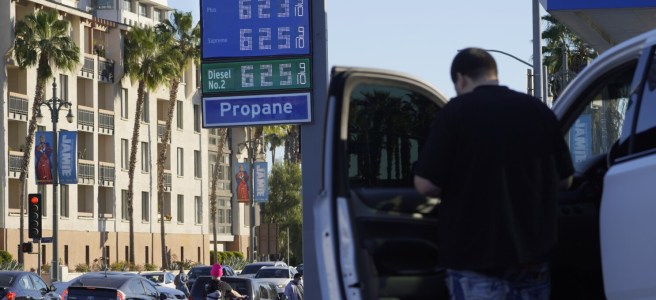
The Inflationary Bomb

Robert Kurz

The crisis is still considered to be over, and the global economy is said to be growing at a healthy rate that is expected to exceed pre-crisis levels in the near future. However, an advance of inflation is making itself felt on not so quiet legs, which seems to be replacing the deflationary spurts of the great slump. In recent months, the inflation rate in India and China, the world’s great economic hopefuls, has exceeded the 5 percent mark, and food prices have risen by as much as 15 percent (India) and 12 percent (China). The increase in key interest rates, which are now 5 percent or more above the European and U.S. rates in each case, has had little effect so far. A similar pick-up in inflation can be observed in many peripheral regions of the world. In the euro zone, too, inflation reached 2.4 percent in January, breaking out of the official target range. The same development in the USA, of course, only elicits a shrug of the shoulders there.

What would have been considered alarming not so long ago, at least in the EU, is now being talked down here as well. Both ECB President Trichet and Deutsche Bank CEO Ackermann have declared the global price increases to be a “normal” phenomenon in the economic boom, which will recede by itself with the cycle. In doing so, they succumb to an elementary confusion. A mere cyclical general price increase, which arises from a surge in regular demand due to increased profits and wages from real capital valorization, is a pure market phenomenon and has nothing to do with the value of money. It is quite different when government consumption and central bank money artificially fuel the economy. There is a huge difference between whether demand increases because the economy picks up on its own, and whether the economy picks up because capitalist irregular demand is created by government decree. In the latter case, the general price increase is based on a devaluation of money itself. This is the real inflation, and this is what we are dealing with now.

In fact, the states and their central banks have created credit money on a historically unprecedented scale to absorb the world economic crisis. In the U.S. alone, more than four trillion dollars were injected into the economy through various channels within two years. Everywhere, low or zero interest rate policies are spewing money like a fountain into the commercial banking system, which is allowed to deposit bad debt as “collateral.” Moreover, the U.S. Federal Reserve has been buying its own government bonds en masse for some time, because the Asians are increasingly spurning these bonds, which have become dubious. The ECB is playing the same game with the government bonds of deficit countries in the euro zone in order to save the common currency. Contrary to its announcements, it has not succeeded in siphoning off this liquidity through refinancing operations. As long as the flood of money is merely used to reschedule debts or drive up stock market prices, inflation will be kept in check. But to the extent that the purpose of the exercise is achieved, namely to create demand out of nothing, accelerated demonetization inevitably follows. It shows ignorance to deny this connection and to fantasize about a self-sustaining boom. The inflationary bomb will dissolve the illusory growth into thin air just as the deflationary one did before.

Originally published in Neues Deutschland on 02/07/2011

“Social Natural Disasters” and The New Climate Protection Movement

Thomas Meyer

1.

The rapid spread of the climate protection movement throughout the world is indeed remarkable (cf. Haunss; Summer 2020). Also remarkable is the hatred that this movement sometimes experiences, especially that directed towards Greta Thunberg. The bourgeois subject in crisis simply does not want to admit that its capitalist way of life has become unsustainable. Even the smallest changes in the set screws send the ‘concerned citizen’ into a fit of rage. Thus, the climate movement is not perceived as an occasion or opportunity for reflection. Rather, this is nipped in the bud by “hysterical defensive reactions” (cf. Hartmann 2020, 118ff.). ‘Toxic masculinity’ discharges itself in countless hate comments and in absurd and completely reactionary counter-movements such as ‘Fridays for Hubraum’ (which currently has about 500,000 members).[1] Those who see their big car as an extension of their dick apparently feel symbolically castrated by a teenager.

Although climate change has become unmistakable, it is stubbornly denied by right-wing populists and radicals (such as Donald Trump and Beatrix von Storch). Even where they don’t outright deny it, they deny the human contribution to climate change or they say that nothing can be done anyway.[2] The apologists of a capitalism that has run amok apparently only have a ‘freedom to die’ to offer. Of course, they also reject all measures against climate change, no matter how shallow and insignificant. Or they strive for environmental protection instead of climate protection.[3] Environmental protection as form of ‘homeland security,’ of course. Homeland security, as a racist defense against everything that does not fit into the völkisch image, includes the defense against (climate) refugees as a ‘climate protection measure.’ From this would follow all the more an exclusionary imperialism (cf. Böttcher 2016) with even more wall building and orders to shoot. Although in recent years fascists have not been able to gain a foothold in the newer ecology movement (e.g. in the protests around the Hambach Forest, Ende Gelände), this does not mean that it will stay that way.[4] This is made clear by efforts to (re)formulate ‘environmental protection’ from the right, as shown not least by the founding of new right-wing ecology journals (see in detail: Jahrbuch Ökologie 2020; cf. also Hartmann 2020, 135ff.).[5]

2.

It seems a little strange that Fridays for Future, in addition to all the hate, receives a lot of support from many different sides. This initially suggests that Fridays for Future does not really cause any offense: As Gerhard Stapelfeldt put it “Resistance that does not cause resistance is not resistance” (cf. Stapelfeldt 2019, 3). According to him, recent climate protests are more of a conformist rebellion: “In each case, overcoming climate change is sought in socially and economically conformist ways. This conformism is the starting point of the current protests – that is why it is ‘low-threshold,’ that is why the invitations to participants of the protests from governments, parliaments and parties are never ending” (ibid., 4, emphasis in original).

As Stapelfeldt points out, the protesters are all people who grew up under neoliberalism, so it makes sense that the protests have an individualistic character and display a “social illiteracy”: There is talk of a climate crisis at Fridays for Future, but not of a crisis of capitalist society. Politicians find it appealing to finally give the findings of climate research the attention they deserve and to act accordingly. But it is not asked why, despite all of our knowledge and all of the promises and climate summits etc. nothing effective has happened for decades.[6]

It is true that Fridays for Future partly points out that a fixation on the individual and his or her consumption habits is insufficient, since the individual by no means has a free choice.[7] However, to reduce Fridays for Future to an ‘individualistic sustainability protestantism’ (as is clearly evident in post-growth economists such as Niko Paech, cf. Meyer 2021) misses their actual core concern.[8] Thus, I think it is correct to state that the reflections and the demands of Fridays for Future move within capitalist immanence. On this level, however, perspectives for society as a whole are considered necessary and developed (whereas the demand for a CO2 price, for example, has long since proven to be complete nonsense, cf. Hartmann 2020, 65ff.). Nevertheless, ‘what the individual can do’ or should do, e.g. renouncing air travel and meat, is mentioned, especially in the ‘public discourse.’[9] The social and especially the mode of production do not come into view through such appeals. This arises from blindness to the social form. It seems as if everything is just a matter of the ‘right technology’ and the ‘right consumption habits.’ Especially in the ranks of the Olive-Greens,[10] who “do not want to shake” capitalism, but “only want to regulate and green it” (Hartmann 2020, 42), such thinking is widespread. “The magic word is green growth” (ibid.).

In any case, the public interest in Fridays for Future remains for the most part inconsequential. The impending climate catastrophe has been the subject of discussion for decades,[11] but climate protection measures continue to be simulated or blocked. All measures, however inadequate they may be from the outset, are always defused so that they fizzle out as ineffective. The ‘location’ always takes precedence. “If you want to protect jobs, you can’t be too squeamish about ecological damage” (Hartmann 2020, 16). The fabulous ‘climate protection package’ of the German “Groko-Haram coalition” (Martin Sonneborn) in the fall of 2019 also showed that nothing serious is to be done. Everything is to essentially remain the same.[12]

As has already been formulated several times in the context of the critique of value-dissociation, immanent protests are important: for example, against social cuts, rent madness, the care crisis, etc. In individual cases, they have the potential to prevent something worse. But if they remain in immanence, do not question the funding proviso, etc., then they either come to nothing or run the risk of becoming part of crisis management (see, e.g., Kurz 2006, Böttcher 2018, and Meyer 2019). The situation is similar with climate protests. Thus, it remains right to put pressure on all the crisis management regimes, as the climate change movement is trying to do, in order to push for an ‘ecological transformation’ “no matter how inconvenient and unprofitable it may be” (Thunberg 2019, 47, emphasis TM).

Here Greta Thunberg makes clear that profitability should be rejected. The necessary goal is to preserve the world as a liveable place. So to let something be calculated for oneself is not an option. However, a critique of the capitalist mode of production, the valorization movement of capital, etc., sometimes do not play a significant role in the climate protection movement. Nevertheless, Fridays for Future is not a homogeneous movement (During 2019, it became more diverse. While it is essentially a middle-class movement, i.e., a movement of the rather better-off, it has long since ceased to be ‘only’ one of students, cf. Haunss; Summer 2020). There are indeed some groups (such as ‘Change for Future’) that claim or attempt a critique of capitalism (although a critique of capitalism does not amount to a radical critique of its fetish constitution). However, for the most part, positions critical of capitalism do not play a key role in the movement. It is said, for example, that the climate crisis cannot be solved in the current economic system. The ‘system question’ is thus posed. But at the same time, some Fridays for Future activists think they can make a difference by voting or being elected.[13][14][15] Whether Fridays for Future will succeed in breaking its capitalist immanence and not fall into affirmation or opportunism remains to be seen (cf. Konicz 2020).[16]

3.

It certainly makes sense to criticize certain products and consumption habits and to stop their production. But it’s problematic if we stop there and think it’s enough to get rid of plastic bags and SUVs without taking a critical look at the mode of production itself. It is by no means only a problem of the ‘right’ technology. Above all, the “contradiction between matter and form” should come into view (cf. Ortlieb 2014). As in earlier debates about veganism or green capitalism, it is not realized that even a green or vegan capitalism must prevail in competition, so that ‘sustainable production’ can end up being not so sustainable after all, especially when solvent demand collapses and environmental regulations etc. prove to be dysfunctional and disruptive for further capital accumulation. The fact that high earners in the capitalist core states can stock up on all kinds of ‘eco-friendly products’ (and go shopping with their SUVs) should not obscure the fact that this is only possible because those social strata still belong to the world market winners.

So if it is claimed that less meat should be consumed so that less rainforest is destroyed for the production of soy as animal feed, why would a collapse in demand for soy then make soy production less destructive if soy is grown as human food? The rainforests would continue to be destroyed for the production of soy chips or biofuel. A green ‘critique’ that targets the individual and works concretely on individual consumer goods thus misses the destructiveness of the capitalist mode of production. Under capitalist conditions, a ‘Green New Deal’ is just another illusion of wanting to get rid of the destructiveness of capitalism without making it an issue and overcoming it. A Green New Deal would be the same thing in green (cf. Reckordt 2019). The destructiveness of capitalism would only be modernized. So if one complains about species extinction, industrial agriculture, and car mania, then the focus must be on how nature is being trimmed according to capitalist criteria of valorization and consequently destroyed by it. It is therefore necessary to make the domination and destruction of nature an issue and to question the reduction of nature to a mere raw material. In this context, reference should be made to the profoundly patriarchal character of the domination of nature by capital, as is evident, for example, in reproductive medicine (cf. Meyer 2018). However, this connection is not touched upon in the climate change debate, as Fridays for Future does not have a critical concept of the (natural) sciences (cf. Ortlieb 2019).

Robert Kurz emphasized that it is not possible for man, although a natural being, to exist ‘harmoniously’ with nature, because man is not ‘one’ with nature. The relationship to nature consists in entering into   a specific metabolism with nature, which also leads to nature being transformed and thus itself being changed (cf. Kurz 2002). Nature, then, is not something static. A conception of nature as something that is supposed to be something pristine and untouched is just the projective wishful thinking of the bourgeois subject that cannot or does not want to critically deal with its own relationship to nature and thus to itself. If there is talk about protecting nature, it has to be made clear which nature should be protected and why nature has to be protected at all: i.e. from whom or from what! It would have to be made clear why environmental destruction is the result of a certain mode of production and not the result of a certain technology or product alone, which the individual then consumes. Or in the words of Robert Kurz: “It would be too cheap to attribute the dynamics of the modern destruction of nature to technology alone. Certainly, there are technical means that intervene directly or indirectly in the interrelationships of humans and nature. But these means do not stand for themselves; they are the result of a certain form of social organization which determines both social relations and the ‘process of metabolism with nature’” (ibid.).

It therefore makes little sense to try to protect nature or the climate by merely banning certain products or practices. As we know, these bans are intended to reduce the emission of CO2.The alternative then is investing in products that promise lower CO2 emissions. However, the products are not considered as specific results of a mode of production, that is, as products in their sociality. In this context, the “form of social labor […] determines the specific purposes and driving forces of production and consumption and the type and extent of interventions in nature” (Böhme; Grebe 1985, 27). The ‘form of social labor’ (i.e., labor as a real abstraction) does not come into view in Fridays for Future. This form consists in abstraction from content and intrinsic qualities. Nature is only used as a substrate for the valorization of value, so that through labor, nature is also reduced accordingly, clearly noticeable, for example, in agriculture, where the industrialization of agriculture led to a massive loss of varieties (cf. Mooney; Fowler 1991). In addition, capitalism is not at all capable of using resources sparingly. If productivity increases, so that a single capital has to expend less labor to produce the same output of goods, this leads to the fact that due to the cheapening of products accompanying the increase in productivity, the single capital increases its market share, displaces competitors and increases its output of goods in total. If a productivity increase or product innovation leads to a (supposedly) more environmentally friendly version of the product winning out over competitors, then its environmentally friendly component is quickly overcompensated for when a single capital then floods the entire world with that product. The introduction of the catalytic converter in cars, for example, did not lead to more environmentally friendly mobility, but to even more personal transportation.[17] If the world market winners could possibly produce environmentally friendly and cheaply, the rest of the world would fall by the wayside and would then have to do without ‘environmental regulations’ all the more. Competition ensures that the cheaper product will always prevail. So if it is cheaper to destroy the environment, to ignore natural cycles and regeneration times, then competition will force us to do so even more in the crisis of capitalism. Due to the dynamics of capitalism, even a more environmentally friendly product leads to more environmental destruction, since resource consumption usually increases anyway. This is the so-called rebound effect, which was also noticed by bourgeois economists of the 19th century, but remained misunderstood.

Marx can be used to explain the rebound effect: If the total mass of value decreases with increasing productivity, because less labor has to be spent for the total amount of goods, then the number of products has to be increased in absolute terms in order to maintain the same mass of value. This is all the more true since it is not a matter of merely maintaining the mass of value, but rather that this mass itself must be constantly increased, i.e. production that does not yield       any surplus value is discontinued (cf. Ortlieb 2014, 91ff.).

So it is not ‘man’ or the use of nature that leads to the destruction of nature and to the climate catastrophe at all, but an irrational mode of production, which is about the production of abstract wealth, about the valorization of value. In this process, the ability to valorize is coming up against historical limits, which is evident in capitalism’s increased lack of restraint and destructiveness. However, hardly anyone wants to admit this. It is much easier to suppress the reality by pretending to be ‘green/sustainable’ or by putting the ‘blame’ on man ‘per se,’ i.e. when it is concluded that the existence of man himself is the real crime here! Verena Brunschweiger, for example, suggests in all seriousness that one should do without children for the sake of the climate (In her book: Kinderfrei statt kinderlos – Ein Manifest, for criticism: see Meyer 2020).[18] That way, one would save CO2. Here you can already see that the less the capitalist way of production and life is made an issue and radically criticized, the more denial of the problem and reality displacement take hold and lead to a situation in which human existence itself appears as a problem. Capitalism is assumed as an anthropological constant and seen as an inescapable fact of nature, so that it seems more realistic to make man himself disappear instead of facing the realization that the production of abstract wealth must be stopped. Without an understanding/critique of the social constitution of form, an ideological processing of the crisis, due to the erosion/feralization of value-dissociation socialization, will bring forth such barbarities.

References

Böhme, Gernot; Grebe, Joachim: Soziale Naturwissenschaft – Über die wissenschaftliche Bearbeitung der Stoffwechselbeziehung Natur-Mensch, in: Böhme, Gernot; Schramm, Engelbert (eds.): Soziale Naturwissenschaft – Wege zu einer Erweiterung der Ökologie, Frankfurt 1985.

Böttcher, Herbert: “Wir schaffen das” – Mit Ausgrenzungsimperialismus und Ausnahmezustand gegen Flüchtlinge, 2016, online: https://exit-online.org/textanz1.php?tabelle=autoren&index=17&posnr=554&backtext1=text1.php.

Böttcher, Herbert: We Have To Do Something! Action Fetishism in an Unreflective Society, 2018, online: https://exitinenglish.com/2022/02/07/we-have-to-do-something-action-fetishism-in-an-unreflective-society/

Cunha, Daniel: The Anthropocene as Fetishism, in: exit! – Krise und Kritik der Warengesellschaft No.13, Berlin 2016, 25-45. With revised epilogue (2021) also on exit-online.org.

Hartmann, Kathrin: Grüner wird’s nicht – Warum wir mit der ökologischen Krisen völlig falsch umgehen, Munich 2020.

Haunss, Sebastian; Sommer, Moritz (eds.): Fridays for Future – Die Jugend gegen den Klimawandel – Konturen einer weltweiten Bewegung, Bielefeld 2020.

Jahrbuch Ökologie: Ökologie und Heimat – Gutes Leben für alle oder die Rückkehr der braunen Naturschützer? , Stuttgart 2020.

Konicz, Tomasz: Klima für Extremismus, Telepolis on 05.08.2018.

Konicz, Tomasz: “Wir brauchen ein neues System!” – In Teilen der Klimabewegung reift die Erkenntnis heran, dass nur ein Systemwechsel den Klimakollaps verhindern kann. Doch was muss eigentlich überwunden werden?, in: Ökumenisches Netz Rhein-Mosel-Saar (Hg.): Bruch mit der Form: Die Überwindung des Kapitalismus in Theorie und Praxis, Koblenz 2020, 246–257.

Kurz, Robert: Gesellschaftliche Naturkatastrophen – Die synchronen Überschwemmungen und Dürren in der ganzen Welt kündigen eine neue Qualität der ökologischen Krise an, 2002, online: https://exit-online.org/textanz1.php?tabelle=autoren&index=31&posnr=74&backtext1=text1.php

Kurz, Robert: Unrentable Menschen, 2006, online: https://exit-online.org/textanz1.php?tabelle=autoren&index=31&posnr=237&backtext1=text1.php.

Meyer, Thomas: Zwischen Ektogenese und Mutterglück – Zur Reproduktion der menschlichen Gattung im krisenhaften warenproduzierenden Patriarchat, 2018, online: https://exit-online.org/textanz1.php?tabelle=autoren&index=35&posnr=583&backtext1=text1.php.

Meyer, Thomas: “Neue Klassenpolitik?” – Kritische Anmerkungen zu aktuellen Diskursen, 2019, online: https://exit-online.org/textanz1.php?tabelle=autoren&index=35&posnr=590&backtext1=text1.php.

Meyer, Thomas: Kinderfrei statt CO2 – Gebärstreik als Maßnahme für den Klimaschutz, 2020, online: https://exit-online.org/textanz1.php?tabelle=autoren&index=36&posnr=614&backtext1=text1.php.

Meyer, Thomas: Alternativen zum Kapitalismus – Im Check: Postwachstumsbewegung und Commons und die Frage nach der ‘gesellschaftlichen Synthesis,’ in: exit! – Krise und Kritik der Warengesellschaft Nr.18, Springe 2021. In publication.

Mooney, Pat; Fowler, Cary: Die Saat des Hungers – Wie wir die Grundlagen unserer Ernährung vernichten, Reinbek bei Hamburg 1991.

Ortlieb, Claus Peter: Zur Kritik des modernen Fetischismus – Die Grenzen bürgerlichen Denkens – Gesammelte Texte von Claus Peter Ortlieb 1997-2015, Stuttgart 2019.

Ortlieb, Claus Peter: A Contradiction Between Matter and Form: On the Significance of the Production of Relative Surplus Value in the Dynamic of Terminal Crisis, in Marxism and the Critique of Value, Chicago 2014.

Stapelfeldt, Gerhard: Klimawandel. Heiße Sommer, Trockenheit: Fridays for Future und Die Grünen als neue Volkspartei, 2019, https://www.kritiknetz.de/images/stories/texte/Stapelfeldt_globaler_Protest_gegen_Klimapolitik.pdf .

Reckordt, Michael: Dasselbe in Grün, in: oekom e.V. – Verein für ökologische Kommunikation (ed.): Green New Deal – Fassadenbegründung oder neuer Gesellschaftsvertrag? , Munich 2019, 46-52.

Thunberg, Greta: I want you to panic! – My speeches on climate protection, Frankfurt 2019.


[1] Cf. https://www.akweb.de/politik/gegenwind-fuer-die-klimabewegung/. Cf. also the lecture by Ricarda Lang of 21.3.2019: Feindbild Klimaschützerin: http://emafrie.de/audio-feindbild-klimaschuetzerin/?hilite=%27Ricarda%27%2C%27Lang%27. 

[2] Thus Gauland in the 2018 ZDF summer interview: “I don’t think there is anything we humans can do against climate change.” https://www.youtube.com/watch?v=HWUvTqlbsjg. From 2:31 min.

[3] Cf. Gauland Lecture: Sustainability is a Conservative Principle, youtube.com, Aug. 22, 2019, https://www.youtube.com/watch?v=TyxCIhhCVM0.

[4] Cf. https://www.freitag.de/autoren/elsa-koester/die-allzuvielen as well as Konicz 2018.

[5] Cf. https://die-kehre.de/.

[6] Cf. Stapelfeldt’s presentation: Climate and Protest, youtube.com, Aug. 25, 2020, https://www.youtube.com/watch?v=zS4h34A9jHc.

[7] For example, Fridays for Future activist Clara Mayer: https://www.youtube.com/watch?v=D9Eqf7UlNWo.

[8] Cf. https://fridaysforfuture.de/wp-content/uploads/2019/04/Forderungen-min.pdf.

[9] This is what is repeatedly referred to in interviews: Luisa Neubauer from “Fridays for Future” as a guest in the post-report from Berlin: https://www.youtube.com/watch?v=YFUb6wMIHxU. From 17:20 min.

[10] Bzw. Polizei-Grünen: Cf. e.g. Jörg Tauss: Brandmelder gelöscht: Grün, Olivgrün, Polizeigrün, Telepolis vom 20.7.2020, https://www.heise.de/tp/features/Brandmelder-geloescht-Gruen-Olivgruen-Polizeigruen-4847325.html.

[11] For example, the Spiegel of 11.08.1986 states “The world climate is coming apart at the seams“ https://www.spiegel.de/spiegel/print/d-13519133.html.

[12] See, for example, https://www.spektrum.de/kolumne/klimaschutzpaket-der-bundesregierung-springt-zu-kurz/1675002 and https://www.freitag.de/autoren/der-freitag/das-ist-unglaublich-fahrlaessig. Cf. also: Wolfgang Pomrehn: Groko verhöhnt die Jugend, https://www.heise.de/tp/news/Kohlevertrag-Groko-verhoehnt-die-Jugend-5024350.html.

[13] See the interview with Change for Future: https://www.heise.de/tp/features/Ein-Wirtschaftssystem-das-auf-Wachstum-und-Profit-ausgelegt-ist-kann-nicht-nachhaltig-sein-4401440.html.

[14] Cf. https://www.rnd.de/politik/klimaaktivistinnen-greta-thunberg-und-luisa-neubauer-an-eu-die-uhr-tickt-5HPDTQ4QWLEM2CXMAHFPNMXW2E.html.

[15] Cf. https://taz.de/Aktivisten-treten-zur-Wahl-an/!5704234/. Cf. also: https://www.klimaliste.de/.

[16] See also discussion between representatives of Fridays-for-Future, Gerhard Stapelfeldt and Dorothea Schoppek, youtube.com, 9/28/2020, https://www.youtube.com/watch?v=N5ytkTQQtvA.

[17] Cf. https://www.freitag.de/autoren/der-freitag/monster-unter-artenschutz

[18] Which, however, has nothing to do with Fridays for Future.

Originally published in Telepolis on 02/18/2020, updated and revised for publication on the Exit! homepage