And how does it differ from the classical imperialism of earlier eras?
Crisis imperialism is the state’s quest for dominance – carried out through economic, political, or military means – during an era of contraction in the valorization process of capital. The state apparatuses of the core of the world system strive for dominance in a systemic crisis fueled by constant advances in productivity, that, on the one hand, create regions of economic and ecological scorched earth – primarily in the periphery – and, on the other hand, make the emergence of a new regime of accumulation, in which wage labor would be valorized on a massive scale in commodity production, impossible. This crisis process is accompanied by a rise in debt that outpaces global economic output and leads to the emergence of an economically superfluous humanity, as illustrated, for example, by the refugee crises of recent years.
This also highlights the fundamental difference between crisis imperialism and the imperialism of earlier eras, since the latter took place during a historical phase of capital expansion – originating in Europe in the 16th century – that was driven precisely by the genocidal exploitation of labor. The plunder of resources – such as the gold and silver of Latin America – and the development of new markets in the Global South – sugarcane, spices, etc. – could only be realized through the mass valorization of “hands,” which in most cases could only be achieved through forced labor. The trail of blood left by this imperialist expansion of the capitalist world system – which integrated ever-new peripheral regions into the world market, often through military force – stretches from the genocide of the indigenous peoples of Latin and Central America, through the Atlantic triangular trade in African slaves and the British Empire’s exploitation of India, to the atrocities of Belgian imperialism in the Congo of the late 19th century, the effects of which are still felt today, when the failure to meet rubber quotas by forced laborers resulted in severe mutilations – such as the chopping off of hands.
The ultimately military drive for expansion by imperialist states is a consequence of capital’s valorization compulsion, whereby imperialist tendencies can gain momentum precisely in response to the internal contradictions of the valorization process: Overaccumulation of capital seeking investment, increasing social tensions intended to be mitigated through colonization, or capital’s demand for raw materials and energy sources that cannot be produced domestically often lead those states possessing sufficient means of power to pursue corresponding forms of imperialist expansion.
Following the 20th century, during which, due to the “Cold War,” practices of informal imperialism were more commonly employed – involving the installation of dependent, formally sovereign regimes in the periphery through economic pressure or intelligence-led coups – forms of direct imperialist aggression are once again gaining the upper hand in the 21st century, in conjunction with the imperial decline of the United States and the increasing tendencies toward state and social disintegration in the periphery. This also carries with it the danger of major wars waged between imperialist great powers.
During its historical phase of expansion, the capitalist world system was characterized by cycles of hegemony in which an imperialist great power was able to attain a hegemonic position that was, at least temporarily, tolerated by competing powers. The 19th century was marked by a British hegemonic cycle, and the 20th century by a U.S. hegemonic cycle of industrial rise and decline. The increasing number military conflicts today are an expression of the U.S.’s hegemonic decline, and the socio-ecological crisis of capital prevents the emergence of a new hegemonic power.
China, which is engaged in a global struggle for hegemony with Washington, is unable to succeed the U.S. as the “world policeman” due to the crisis-induced increase in internal turmoil (debt and real estate crises). The current phase of escalating military conflicts thus represents a bloody real-life satire of the talk of a “multipolar world order” demanded by all imperial rivals of the declining United States. The systemic crisis prevents the emergence of a hegemon, though many state apparatuses continue to strive – ultimately in vain – to become as powerful as the U.S., and the erosion of U.S. hegemony provides them with the necessary leeway for their own military adventures. Moreover, growing internal contradictions are once again fueling the drive for imperial expansion (e.g., Russia, Turkey).
A central concrete difference between today and the imperial quest for dominance in earlier centuries thus lies in the fact that the hunt for markets and “hands” that could be exploited through violent integration into the world market now plays hardly any role at all in the globalized world system due to the aforementioned systemic crisis of overproduction. In the late-capitalist crisis imperialism of the 21st century, the imperialist drive for expansion manifests itself in efforts to seal off the economically superfluous masses of the periphery – both in “Fortress Europe” and in the U.S. In this respect, expansion thus turns into the sealing off of the core from the periphery, which also plays hardly any role as a market.
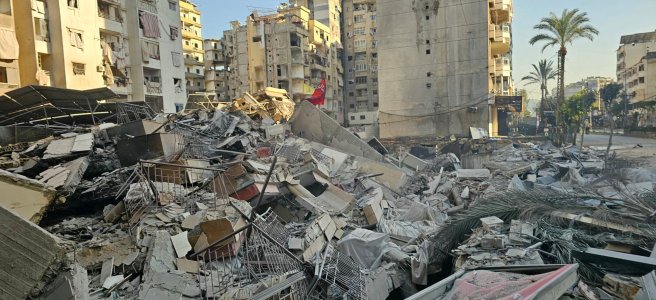
The collapsed periphery, with its “failed states,” now plays a role only within the framework of extractionism as a supplier of raw materials, building upon the forms of decay of 20th-century “informal imperialism” by – as in the case of cobalt mining in the Congo – organizing raw material extraction independently through local post-state power structures (militias, gangs, sects, etc.) who do this on their own initiative, only to then channel them to the world market through shadowy channels and middlemen. Militarily, the core countries interact with the “scorched earth” regions only within the framework of “world order wars” (Robert Kurz), in which the periphery is either to be stabilized through state-building processes (“nation building”) or at least militarily neutralized as a disruptive factor. The global drone campaign of the former “world policeman,” the U.S., in the “war on terror,” or the – consistently failed – Western interventions in Afghanistan and Somalia fall into this category of the imperial core’s futile struggle against the social consequences of the systemic crisis – originating from the core – in the periphery.
Thus, the current era of crisis imperialism is characterized by the interplay between the state’s quest for dominance and the crisis process of capital, which exhibits a market-mediated, fetishistic momentum fueled by the internal contradictions of capital (which, in market competition, tends to divest itself of its own substance, value-creating labor). The functional elites of the state apparatuses find themselves confronted with the consequences of the crisis, which unfolds, mediated by the market, “behind the producers’ backs” (Marx), as if exposed to an external, natural force, even though the increasing contradictions and distortions (debt, social erosion, economic and environmental crises, etc.) are the unconscious product of market actors in their pursuit of the highest possible capital valorization. Capital has thus brought forth a social formation that lacks control over this blindly unfolding dynamic and is ultimately driven by it into social and ecological collapse.
The state-level competition arising from this systemic crisis of overproduction consequently leads to the formation of an economically grounded imperialism that strives for the highest possible trade surpluses. Through the trade surplus, the crisis of overproduction – as well as the accompanying compulsion to incur debt – is exported to countries that are running ever-larger deficits. In this regard, the Federal Republic of Germany was particularly successful following the introduction of the euro. The political dominance of the FRG in the eurozone stems precisely from the extreme German trade surpluses between the introduction of the euro and the euro crisis, which led to the southern European debt crisis and to deindustrialization in the indebted states, while the industrial base of the German export industry remained intact. After the outbreak of the euro crisis, German Finance Minister Schäuble was able to unilaterally impose the consequences of the burst European debt bubbles – which were accompanied by German trade surpluses – on the crisis-stricken states in the form of strict austerity policies, amidst fierce political disputes. This widened the economic gap between Berlin and “its” eurozone – and cemented Germany’s claim to leadership, while states driven to the brink of bankruptcy, such as Greece, had to accept extensive losses of sovereignty. The protectionism that has been on the rise in recent years, and which has become openly apparent since the Trump administration, represents precisely a reaction to this crisis-driven urge to achieve the highest possible trade surpluses. Before the open trade wars that Trump ignited due to the extensive deindustrialization of the U.S., many countries attempted to improve their trade balances through currency devaluation races.
The objective crisis process of capital thus unfolds through corresponding crisis-imperialist conflicts between state actors – this, the execution of the crisis dynamic through economic, geopolitical, intelligence, or military power struggles, constitutes the objective core of crisis-imperialist practice. This applies not only to the eroding core countries (such as in Southern Europe), but also to the periphery of the world system, where the crisis process has advanced further and widespread social disintegration is giving way to state collapse. The imperialist interventions in Syria and Libya following the “Arab Spring” – where failed modernization regimes, having degenerated into kleptocracies, found themselves threatened by desperate uprisings – make it clear how crisis-induced upheavals first open up opportunities for imperial interventions. Social tensions in the post-Soviet space, where Russia’s hegemony rapidly eroded until the outbreak of the war in Ukraine, gave rise to a similar dynamic of protest, uprising, and external intervention. Putin’s Russia chose to wage a war of aggression against Ukraine precisely in the wake of the uprisings in Belarus and Kazakhstan.
At times, states with imperial ambitions also exploit the consequences of crises directly –Erdogan’s Islamofascist Turkey, for instance, used the refugee flows into the EU as a lever of power to extort concessions and money from Brussels and Berlin. And Ankara also justifies its imperialist expansion in northern Syria and northern Iraq by claiming it intends to concentrate refugees in these regions in the future. Imperialism must therefore be viewed not only historically as an ideological and practical precursor to fascist excesses – the same process is also unfolding in the current systemic crisis.
Imperialist striving for dominance also interacts with the ecological crisis of capital, which, due to its compulsion to grow, is incapable of establishing a resource- and climate-friendly reproduction of humanity. This includes, for example, the tensions in the far north, in the Arctic, where the rapidly melting ice cap is opening up new shipping routes and making new deposits of fossil fuels accessible – and over whose extraction the neighboring countries of Russia, the U.S., Canada, and the EU are in dispute. The conflict between Russia and the West over Ukraine, which began in 2013 as a struggle between competing economic blocs (the EU and the US versus Putin’s envisioned “Eurasian Union”), now also has a climate policy dimension. Ukraine possesses highly fertile black soil, which is rapidly gaining value as a geopolitical lever of power in light of looming, climate-induced food shortages and impending hunger crises – food could become the oil of the 21st century.
The crisis is thus driving the late-capitalist state behemoths into confrontation in both its economic and ecological dimensions. Crisis imperialism thus resembles – to stay with the image of the climate crisis – a cutthroat competition on a melting iceberg, or a struggle on the sinking Titanic. Since the socio-ecological systemic crisis cannot be resolved within the framework of the capitalist world system, crisis imperialism finds its vanishing point in a major war, which would have catastrophic consequences due to the destructive potential accumulated under late capitalism. Without an emancipatory systemic transformation, the collapse of civilization threatens to descend into climate catastrophe and nuclear war.
I finance my journalistic work largely through donations. If you appreciate my writing, you are welcome to contribute on Patreon.
Originally published on konicz.info on 06/23/22
 EXIT! in English