Remarks on the New Right-Wing Extremism
Robert Kurz
The Logic of Democracy
Historical victors cannot look like this. The monstrous stupidity and ugliness of the new right-wing extremism, however, did not originate on its own, but must be booked to the account of precisely that market-based democracy which has been proclaimed to be the final version of mankind. For this ideological AIDS cannot have fallen from heaven and been the work of extraterrestrials. Nor is there an unknown pathogen swimming in the blood of an isolatable group of people. Democracy refuses to admit that these are treacherous ulcers on its own face. It represses the banal truth that the phenomena of a society always emerge from within that society, from its own potential for contradiction. Democracy is itself the womb from which this crawled.
That one’s own intrinsically good order is threatened by external forces of darkness alien to the species and to one’s own nature was the standard phrase of the modernizing dictatorships in the West and the East, with which they denied their own potential for contradiction; and the repetition of this transparently defensive argument in the attempt by popular democratic thought to segregate the new right-wing extremism already points to the inner connection of the mature market-based democracy with its dictatorial predecessors. But because that which must not be cannot be, because modern Western democracy should not be exposed as the cause and breeding ground of burgeoning barbarism, democratic consciousness diligently searches for constructs that can justify it. For what irony: under the leadership of NATO’s torture partner Turkey and the Islamic Republic of Pakistan, a UN resolution was drafted in which the Western democracies, first and foremost the FRG, are put in the dock for racism and xenophobia. The Western diplomats, otherwise habitual censors in matters of human rights, speak excitedly like the emissaries of any banana- and oil-exporting obscurantist regime of “one-sidedness” and “distortion of the facts.” Western democracy is supposed to be the solution everywhere and not the problem, the good and not the evil. Wherever racism, right-wing extremism and ethno-nationalism carry out their murderous program in a world that has gone off the rails since the end of the bipolar post-war order, democracy is recommended as a historical superglue. So just don’t let the tables turn.
This pattern of blind defense of democracy is now also being applied to the developments in Eastern and Southeastern Europe, which do not at all correspond to the euphoric pictures of hope after the end of the “communist dictatorship.” “Social cannibalism” (an expression of Henry L. Feingold), increasing mafia rule, impoverishment of the masses, ethno-racism, anti-Semitism and civil war in the entire area of the former state socialisms must have nothing whatsoever to do with the market-based democracy that has just been “introduced” under the roar of humanity. The unmistakable and nascent barbarism is thus supposed to be a genie of the past, born of a lack of Western modernity and merely imprisoned temporarily in the state-socialist coercive vessel, which now escapes with the stench of sulfur after the bottle has broken, in order to finally evaporate democratically in the market-economic upheaval. Not much is missing, and some pogroms, minor genocides or insignificant massacres of those who are currently unimportant for the market economy, such as women, pensioners, children, the unemployed and other unprofitable people, are presented by the liberal intelligentsia as a kind of “cleansing thunderstorm,” in which the national fascist Balkan or Caucasian Beelzebub is allowed to let off a little steam before his democratic purification, because the poor man has been “kept under the lid” for so long.
This is an effective ideological construct. But how does the intelligent democrat explain right-wing extremism, pogroms, and racist manhunts in the humanitarian Western democracies themselves? Did, for example, the West German world market republic merely keep its fascist genie “under the lid” for forty years like every ordinary Stalinist dictatorship? And who then would be the democratic educator of the democrats who educate the democrats? Here only the indulgence in anthropological hopelessness helps: if even in the most democratic democracies, even in the Disneyland on the right bank of the Rhine, the same monster raises its repulsive head, then it must have risen from the primordial and abysmal depths of human nature as such. Democracy is thus endangered by the pre-civilizational, which slumbers “inherently” in the souls; and again, the democratic consciousness thinks itself off the hook. The new right-wing extremists must be a kind of civilizational-genetic accident that allows atavistic impulses to break through. Civil market-based democracy has nothing to do with this; on the contrary, it offers the only protection against such atavisms.
Such and similar argumentations, more or less reflective and refined, fan out in the public sphere, with which the democratic intelligentsia seeks to isolate the emergence of the new barbarism in East and West, which is embarrassing for its affirmative talk of market freedom and politics. The vanishing point of an essentially retrospective defense against and sham coping with the right-wing extremist gangs that suddenly burst onto the scene of the democratic victory parade is, of course, historical nationalism and fascism, especially German National Socialism. It seems as if a ghostly arm is reaching out from the long since filled grave of the past to go for the throat of democratic innocence. The hypocrisy is perfect because the inherently repressive character of democracy and Western rationality is a highly taboo subject across the intellectual and political spectrum. The undoubted emancipatory and positive elements of Western democracy in its long process of ascent are ideologically separated from its dark, negative downside. The standard of comparison must always only be the past, which must always be overcome anew, but never a possible future beyond Western rationality. The historical character of democracy is denied, because it should not be made historically finite, and because after it there must be nothing new under the sun. The idealistic total democracy of all parties pretends as if the enforcement process of the democratic system must go on forever, as if democracy can never have exhausted its task and turn its own repressive core outward, as if it is always the same fascist or communist “threat” that must be defeated and the same human inadequacy that must be overcome by “democratic education” (why not dictatorship?). If you think you have to fight against human nature itself, one might ask the democrats, why don’t you just give up?
No one will deny the historical necessity of democracy and its great importance for getting beyond the confines of the corporative agrarian society. But humanity cannot rest on these laurels forever. That democracy itself, as its name implies (people’s rule), is only the most modern kind of dictatorship of a compulsive social form over the development of human needs and relations, cannot be realized by democratic thought (even in its wildest dreams), which is totally caught up in this form. In this context, it would actually not be that difficult to decipher the so-called market economy as the repressive core of democratic domination, because the unconditional submission of human expressions of life to the logic and constraints of the market (whether “free” or “planned”) is the essential characteristic of all modern democracies. This connection, however, has remained obscured in the ideological consciousness of Western modernity until today, because in its process of ascent all factions within the logic of Western rationality have had to be self-affirming with regard to the common frame of reference. This also applies to the entire left and especially to a staid traditional left-wing radicalism, which today lays its weary head to rest. The leftist “radical democrats” of various stripes detached the democratic claim from its free-market economic form and externally juxtaposed the two sides of the modernization process. Democracy is, in this view, supposed to be the opposite of capitalism. This “politicalist” illusion tried again and again to isolate the abstract enlightenment claim of maturity, self-responsibility, “workers’ self-administration” (Trotsky), “discourse free of domination” (Habermas), “grassroots democracy,” etc. in emancipatory terms and to mobilize it against the unconceived other, repressive side of the same logic. In the seventies it was still a popular left-wing joke to denounce the capitalist enterprises with the slogan: “Here ends the democratic sector of the Federal Republic of Germany.” And one of the remaining left-democratic sects, the “Socialist Bureau” (SB), which gently slumbers in the Frankfurt Paulskirche of an eternally further-imagined 1848, knows nothing more about “socialism,” “except that it must be democratic.”
This left-democratic and old-fashioned left-radical ideology sees the supposedly “undemocratic” character of capitalism as rooted in the subjective power of the “capitalists” or management to dispose over the means of production, and imagines that the extension of the principles of political democracy to the “economic sector” (and to the bureaucratic institutions) would ultimately overcome the sufferings, evils, crises and catastrophes of capitalism through self-management and a discourse of equals. The same old boring slogan of “democratization,” which is presented with manic emphasis as a panacea, is the last word of the declining left, which no longer understands anything in the disintegrating late-modern society. This thinking is limited in a sociological and “institutionalistic” way, committed to the bourgeois subject illusions of the Enlightenment and itself a component of the modern fetish system. It ultimately traces the evils of the capitalist mode of production back to subjectivity and thus to the no longer derivable “free will” of some rulers, who supposedly develop a “will to exploit” and who do not want to be democratically talked out of their machinations. The degree of supposed radicalism is then measured solely by the vehemence with which one wants to attack these “rulers.” Completely disregarded, on the other hand, are the basic social forms inwhich the whole event takes place, and which for the conventional left no less than for its opponents are as self-evident and as neutral as the air we breathe.
These fundamental forms of “value,” commodity, money, wage, price, profit and profitability, which constitute the commodity-producing, market-economic system of modernity, have indeed, like the complementary democratic institutions, emerged historically through human-social activity and pass through human subjects as agents. But they have, in the course of a long process, become independent from them as the “second nature” of a subjectless system.[1] The supposed “will to exploit” is not a causal and independent quantity, but a completely dependent derived systemic function, a mere execution of subjectless systemic laws and criteria, which are also self-evident to the so-called exploited. The treacherous thing about the apparent left radicalism is that it raises its slogans, demands, programs, etc. in thebourgeois form itself, thus merely asserting an institutional counter-will within the unconsciously accepted “second nature” of the commodity-producing system.[2] The left-democratic illusion consists in the fact that this immanently sociologically determined development of the will (of the working class, the oppressed, the masses of the people, etc.) can, by means of appropriate institutionalization (grassroots democracy, etc.), overcome the crises, evils and problems that, after all, do not stem from the “wrong” will of the “wrong subjects,” but from the processes of the subjectless system of the modern (total) commodity form and its laws. The problem is not the will, but the social form of the will common to all participants.
Left-democratic thinking does not understand that the democratic form of discourse in all its conceivable institutionalizations does not by its very nature represent “freedom” (freedom of decision) per se, but only a compulsion to decide within the formal constraints of commodity society. Democratic freedom is identical with the dictatorial compulsion to assert the so-called “free will” to infinity, albeit in the form of a valorization process whose “laws” limit the democratic universe like the speed of light limits the physical universe. Freedom means that all resources and desires are mercilessly subordinated to the same subjectless money-form. This is the modern “fetish” of which Marx spoke, and this constitutes the essential characterofdemocracy as a form of domination. The corollary is the fact that democratic thinking of any hue never comes up with the idea of wanting to mobilize and organize resources and social wealth in any other way than in the commodity or money form; and that thus its supposed freedom and humanity always unconsciously sets the systematic laws of the modern commodity form itself as a hard limit. Democracy, then, according to its logic, is never a mature discourse of socially self-conscious people about the production and use of common wealth, but is nothing other than the collective idolatry of socially unconscious fetish servants, whose discourse is merely liturgical in nature, i.e., can refer only to the manner in which the blind system criteria are executed. Democracy is not the opposite of capitalism, but is rather the way in which the capitalistically organized “people” “rule themselves” according to capitalist criteria with blind, self-destructive fury.
Democracy and the market economy, alias capitalism, belong together as the two sides of the same coin; in this respect, the official democrats are undoubtedly right against their leftist stepbrothers. Official democracy says more than it knows when it positively identifies liberality, individuality and a market economy. Indeed: this freedom is the freedom to be able to buy and sell on the market as a commodity subject, and the freedom to be able to “negotiate” about the institutional regulation and the framework conditions of buying and selling (the legal system and laws, moderation of the representation of commodity-shaped interests, infrastructural and social transfers, etc.); but not the freedom to be a human being in any other guise than that of a commodity subject (a perpetual seller and buyer). Thus, by referring to the identity of freedom and the market, it is implicitly admitted that democratic freedom is defined by the market and thus limited. Therefore, it is entirely appropriate to speak of “market-based democracy” in order to emphasize this structural identity.
The market economy as a total system does not only comprise the market in the narrower sense as a place of buying and selling, but also the underlying process of the economic exploitation of people and nature. Official democracy, of course, glosses over the fact that the essential act in this drama of freedom is the double-edged freedom to “be allowed” (be forced) to sell oneself (one’s own labor power), and that only through this can the entire cyclical system of all other sales and purchases function. For only labor power that is economically activated (applied and used) after the act of sale, creates, in the process of “abstract labor” (productive activity, the actual purpose of which is stripped of any sensual quality), the abstract “value” that is realized as money on the market, and from which the profits as well as the wages and thus the purchasing power for other productions, sales, and purchases result. The abstracted drudgery, the contents of which one has absolutely nothing to do with, and to which one only submits in order to get at the money fetish that has become vital for one’s own reproduction, is the flip side of the freedom of consumption as a buyer.
But a reverse side is different from a counter principle. The front and back of “something” are determined by the one identity of this “something.” Modern bourgeois consciousness, its socialist and “grassroots democratic” left variants included, clings with its abstract concept of freedom to that of the market as abstract circulation, i.e. as that social sphere in which the acts of buying and selling are carried out by free and equal legal subjects (the process whereby commodities and money incessantly “change hands”). While official democratic ideology confines freedom and equality to the sphere of circulation to which they are actually structurally entitled, shrugging off the downside of submission to the sufferings of abstract labor as inevitable, the leftist noble democrats have always wanted to extend the principle of circulation to (economic) production in a contradictory way, because they could never grasp the structural identity of the two and falsely attributed the negative moment of abstract labor dictatorship to the mere subjectivity of “capitalists” (“power of disposal,” a downright stupid expression in systemic terms) instead of to the structural identity of the commodity-producing system.
But it is not only its reverse side in the form of abstract labor that constitutes the dictatorial character of freedom and democracy. The dictatorial moment also affects the sphere of circulation itself. For, first, the abstract freedom of abstract, monadized individuals, who must constantly “self-valorize,” implies the merciless competition ofall against all; and total competition, through common submission to the fetish of capital, forms the frame of reference of democratic discourse, the moderation of which determines its brutally limited scope. Second, in this context, the real capacity for action as free men and equals is limited to the ability to pay. Equality is a principle of form and thus formal by its very nature. Therefore, it is not only compatible with extreme social disparities, but also with the merciless exclusion of those who are no longer able to pay from their own livelihoods. Even those who starve for lack of purchasing power have the same right to buy whatever the market offers, and this is cynically granted to them. Social welfare payments, however, are not an essential feature of market-based democracy, but rather accidental; they depend on the success of a state on the world market and are therefore limited to a small number of rich countries. If market success fails to materialize, whole populations are driven into misery by the subtle pressures of anonymous mechanisms, while the figureheads make regretful gestures.
The democratic world is thus a world of “mute compulsion” (Marx), which makes itself felt in many manifestations as the law of the valorization of money. The great historical emancipatory achievement of democracy was that all people could become a “self” without class barriers;[3] but gradually it has become apparent that this “becoming of the self” has come at a terrible price. Submission to the personal “master” qua birth was replaced by submission to the impersonal and much more total domination of money. Everyone has the right to be what the total commodity society has made of him. Everyone is allowed to represent “his interests,” even if it is those “as” a homeless person; but it is already this category of the commodity-shaped “interest” itself that structurally chains him to his own misery. Democracy is the freedom to die, at least for a growing majority of humanity. This core of subjectless repression, this subjection of the life process to the abstract fetish laws of modernity, has from the beginning provoked criticism and rebellion. But as long as the taut spring of the modernization process had not yet slackened, as long as the mechanical clock of market-based democracy had not run out, critique and rebellion could only take place within the same enclosure, inhibiting or accelerating its automaton-like progress, but not bursting this enclosure and escaping from it. While left-wing critique always sought as desperately as it did futilely to extend Western rationality beyond its objective reach, right-wing (and “radical right”) critique always mobilized moments of irrationalism, which is, after all, only the dark flip side of Western rationality itself.
Now again, wild forms of immanent, limited pseudo-rebellion seem to be mobilized. The collapse of state socialism in the East, completely incomprehensible in its essence, and the revealed untruthfulness and incompetence of Western left-wing democratism have heralded the worldwide final victory of Western market-based democracy. What belongs together is growing together: democracy and total market, abstract freedom and mute compulsion, individual “self-realization” and mutual failure in competition. Now democracy is allowed to show its true face globally, and it is a horribly distorted grimace. Never have human impoverishment, destruction of nature and devastation of social structures been greater, and never has social neglect spread faster than since the overall victory of market-based democracy. Its final victory is also the final stage of Western civilization, which passes immediately into complete decay. And it is an ideological and historical constellation which, after the leftist swan song, once again opens up a last boom of right-wing extremism; a last burst of immanent, doggedly irrational pseudo-criticism.
The soil of the victorious market-based democracy reveals itself as a barren desert, and it is this soil itself in which the new barbarism grows. The democratic “self” of the abstract, commodified individual drastically experiences its nullity in the face of the blind system criteria that dement the “self” at the very moment when freedom seems to win its last and greatest victory. In truth, democratic freedom turns out to be a void as complete as it is voracious. Like Saturn, the free-market democratic totalitarianism of money devours its own children. The democratic market system’s inner logic of domination emerges repressively on the outside, and as a reaction itinitially generates not a new emancipatory critique but a murderous echo of itself. Democracy and right-wing extremism belong together like Siamese twins, internally connected by the bloodstream of the abstract process of valorization and its mute compulsions. Every democracy, at the end of the modernization process, produces with logical regularity the new right-wing extremism in some variation as an immanent reaction. The hypocritical mask of liberality invites us to join the fight; but it is the fist of the same sinister fetish-being that fights us in blind madness.
History Does Not Repeat Itself
The attempt of the Western democratic consciousness to externalize the emerging right-wing extremist barbarism corresponds with the attempt to define historical fascism as an enemy and foreign system external to democracy (just as, on the other hand, Eastern state socialism or “Stalinism” was understood as an un- or anti-democratic foreign system). This thinking is based on the peculiar ahistorical character of the bourgeois Enlightenment, which not only since Hegel (and not ending with Fukuyama) has understood history merely as the prehistory of itself and thus has abolished itself from history. The taboo on an emancipatory, progressive, abolitionist critique of democracy is identical with the taboo on a critically thinking history beyond the categories of commodified modernity.[4] The result is twofold. First, in the supposedly “post-historical” modernity, the historical process can no longer be recognized as a progressive continuum, but only as a sequence of mere events against the background of seemingly unchanging (ontologized) basic categories that are always the same. “Development” appears partly as mere technological progress, and partly as mere purification in terms of these already fixed basic categories (in essence, the categories of the commodity-producing fetish system). Secondly, the different unequal stages of development of this system’s historical continuum then appear as mutually external and supposedly opposed “principles” (and, of course, “good” and “evil” principles), which fight each other and suffer “victories” or “defeats.”
The democratic lack of history and thus of consciousness does not have to be an explicit one, as it was with the end-of-history theorists before and after Hegel; it is also expressed when the historicity of society is ostensibly invoked, but merely within the basic modern categories. If the left, in all its variations, conceived of a truncated and therefore ultimately misunderstood capitalism as a historical continuum[5] and as the social form to be historically abolished, but at the same time thought to postpone the historical limit of an essential moment of the same form, namely the general form of democratic rule, ad infinitum and to prolong it in eternally reeled-off demands for “realization,” then it simply represented an increasingly less original variant of democratic historical forgetfulness.
Thus, for the official postwar democrats as well as for their leftist and radical leftist stepbrothers and sisters, historical fascism had to be elevated to the rank of a hostile “principle”: a kind of spectre in the ahistorical fog of modernity that could reappear at any time. Either as a serious operational accident of democratic purification, which can always happen if one is not careful, or even as a transcendent event par excellence, as a singularity that remains incomprehensible and in this incomprehensibility could likewise return quasi-mutatively as a new singularity of horror. “Nip it in the bud!” or “Remember 33!” became all-purpose slogans across the political-ideological spectrum, and mutual suspicions of fascism became the sharpest weapon of denunciation. Thus it is no wonder that the new right-wing extremism was immediately perceived under the banner of the “return” of a hostile “principle.”
But history does not repeat itself. And if modernity itself can be understood as history and thus also as historically finite, then historical fascism should be determined as part of the historical continuum of commodity-producing modernity. This means, first, that it simply marks a certain temporal stretch of this continuum, i.e. that it does not fall out of it and thus cannot be repeated even in this banal sense. Secondly, however, it is not a “counter-principle” to democracy, but one of its historical precursors, or, to put it more pointedly: a historically possible embryonic form of democracy itself, which under certain conditions in certain countries could become effective as a special stage of its implementation. In Germany, fascism is misunderstood as a complete deviation from the path of the democratization process, as a mere aberration of terrible proportions between the Weimar Republic and the Federal Republic.[6] But Hitler’s “Germanic democracy” was by no means just a fanciful label for barbarism (of the sort that could still outrage a György Lukács); rather National Socialism set in motion definite changes to the social structure that were part of the process of democratization, if one understands democracy within the overall structural context of a market-based democratization, without excluding its repressive sides. Phenomenologically, this insight is not new. Ralf Dahrendorf, in particular, provided approaches to it as early as 1965 in his work Gesellschaft und Demokratie in Deutschland [Society and Democracy in Germany], and it is not without irony that in this way a liberal, of all people, (involuntarily) contributed a stone to the structurally conscious critique of democracy. Of course, nothing followed from this because the theoretical approach was still itself committed to the commodifying modernization process. For Dahrendorf, the explosive problem that shines through is solved by declaring the structural democratizing moments of National Socialism to be unconscious, “unintended side effects.” For an enlightened consciousness that understands subjective intentions (ignoring their unconscious commodification) as the essential thing, the necessary distance between fascism and democracy is thus superficially restored.[7] However, it being understood that, as a general characteristic of modernization, the structuring context of society is produced “behind the backs” (Marx) of the subjects comprising it – something constitutive of every system of fetishized relations – then it is precisely the overarching identity of this structuring process that is what becomes essential; and thus on this level fascism appears unreservedly as the precursor of democracy.
Of course, such a statement sounds like a provocation to democratic consciousness in general and to leftist “democratization” advocates in particular. Nevertheless, some facts cannot be ignored. World War I had reduced the corporative and semi-feudal relics of the Kaiser Reich to absurdity; but the Weimar Republic had only replaced the outward form of government, and had not structurally executed the societal results of the war. It was, as is well known, a half-hearted republic. If one now disrobes the problem of the ideological garments that have now finally become superfluous and regards it as a “systemic” or “structural” problem, then it was essentially a matter of the de facto overcoming of those estates-based, pre-modern, Wilhelmine structural relics that had become rotten but had not yet fallen. In this decisive respect, National Socialism was by no means backward-looking or reactionary; on the contrary. In its bestial way (and for this comparison one must ask the animals for forgiveness) it executed the results of the world war; in its forms, it mobilized the next stage of the market based democratic system process. Surely, this inevitable transformation, which was to take place in the interwar period, could have been accomplished by liberal, Christian democratic or socialist forces in a different, more civilized and less horrific way. But these forces were incapable of doing so. The left-wing radicalism of the Communist Party of Germany (KPD) unconditionally submitted to the Soviet Union’s policy of focusing on national economic interests, which was counterfactual and counterproductive for Germany, and thus was eliminated as an agent that could potentially bring the structural changes that were the order of the day in a highly developed western country. On the other hand, the whole spectrum of official Weimar Republic democracy, not excluding that of the Social Democrats, maintained a passivity bordering on dog-like devotion when it came to the Wilhelmine social structures that were supposed to be eliminated — nothing more than imperial-royalist democrats, a stiff, old-fashioned lot, nourished on honoraria, that would have puckered up their buttocks for the next hundred years to impress whatever Captain von Köpenick came along (this tedious, honorific old-fashionedness has, to this day, remained a special SPD trademark). In contrast, the murderous Nazi machine seemed hypermodern and propulsive, its protagonists ostentatiously and defiantly despising Wilhelminism. So it was they who formed the forces of restructuring; the catastrophic overall result could not yet appear in the general consciousness.[8]
In this sense, the debate about the positions of Erich Nolte and his students (such as Rainer Zitelmann) on the assessment of National Socialism would have to be critically re-evaluated. The idea of a “historicization,” as first formulated by Martin Broszat and taken up in their own way by Nolte and others,[9] is indeed fruitful, at least more fruitful than the obfuscating and mythologizing adherence to an allegedly “incomprehensible” singularity of Nazi barbarism that was not in line with the modernization process. Inflating the symbolic price per pound of the Holocaust so as then to be able to instrumentalize the immorality of mass murder in the interests of this or that position in today’s debates, can in any case be of just as little service to the interests of its real victims as can the postulate of its “incomprehensibility” be of service to anything but an interest in not wanting to comprehend it. What makes the version of “historicization thesis” promoted by Nolte et al. so repugnant is obviously enough that in this way National Socialism is made to seem “normal” and excusable and the meaning of German history leveled off to that of an allegedly new German-national great power politics. And indeed, Nolte’s position contains completely indiscreet moments. It requires some impudence to present the struggle of Hitler’s army in the East as “partly justifiable” in terms of a Western defense against “Asiatic barbarism” and to relativize the Holocaust against the European Jews as a mere “secondary act” and as an irrational reaction to the “Asiatic” Bolshevik terror.
Of course, Nolte and his students are careful not to directly and explicitly exculpate Nazi rule. Rather, it is placed in the historical context of modern “utopian” thought, as an extension of the theory of totalitarianism, so to speak, and the Nazi terror thus appears in a row with early modern eschatology, Jacobinism, Marxism, Stalinism, and so on. This part of Nolte is curiously complemented by the work of Zitelmann, for whom the “historicization” of National Socialism refers primarily to its modernizing achievements. As the essence of these combined efforts, a thoroughly insidious construct emerges: German nationalism is, so to speak, divided into two completely opposite moments; insofar as it has committed crimes, it belongs to non- or anti-Western “utopian collectivism” and unfortunately copies “Asian” traits; insofar as it contributed to modernization, however, it somehow belongs to Western modernity and is not to be equated entirely with the pure evil of “collectivism.” Nolte-Zitelmann’s relativizing effect towards National Socialism is thus not directly apologetic, but is to a certain extent backward and indirect. The criminal is externalized and camouflaged away as “actually Asian” and non-Western or non-capitalist, and there remains a residue compatible with Western “liberal capitalism” that can then be brought to the fore.
As little as this construct is justifiable as such, it nevertheless involuntarily contains an approach to a critical resolution that had to remain hidden from its radical and liberal democratic opponents, because such an approach would have led them away from their own self-understanding. The decisive point is that Nolte and Zitelmann no longer develop their apologetic arguments from an anti-Western and radical right-wing anti-capitalist thinking, as was still the case for the right as a whole in the Weimar period. Precisely because of the pro-Western and pro-capitalist or “pro-individualistic” thrust of their approach, it is explosive that on the one hand they decipher National Socialism structurally and historically in many respects as a modernization process and as a structural forerunner of the market-based democratic institutions of the FRG,[10] while on the other hand they themselves have a fundamentally positive and affirmative ideological attitude towards the concept and reality of modernization and market-based democracy.
If, however, National Socialism really was, after all, a structural precursor and forerunner of something supposedly positive, then almost inevitably, a reflection of this positivity also falls back on it. For the “ideal total” democrat [ideellen Gesamtdemokraten] and the pro-Western constitutional patriot (as well as for the rump of leftwing radical democrats), the “historicization thesis” of Nolte or Zitelmann is thus not so intolerable because this position defends National Socialism against democracy. Rather, it is intolerable precisely because they make a relativization just the other way around in the name of democracy, i.e. ideologically speaking, they basically argue from the same standpoint of unconditional, uncritical worship of Western market-based democracy as their patent democratic opponents. Nolte and Zitelmann are persona non-grata because they are (involuntarily) “treasonous,” because they unintentionally reveal an unspeakable secret of democracy, namely its inner structural and historical connection to, its compatibility with National Socialism. One merely needs to turn the tables to transform the affirmative analysis of Nolte et al. into a weapon of critique. But this is only possible from the point of view of an emancipatory, abolitionist critique of market-based democracy, i.e. a position with a critical distance to the entire modernization process, and thus also a critique of the leftist illusion of “democratization” within the incomprehensible basic forms of the commodity-producing system. But even the most left-wing democratism is neither capable of nor willing to make this critique, because it would itself be hit in the heart and its ideological identity would be destroyed. Thus Nolte (and soon after Zitelmann) had to become scapegoats and shooting range targets for the hypocritical left-democratic indignation, and the potentials of the “historicization thesis” remained untapped for a more far-reaching social critique.
In fact, National Socialism structurally advanced freedom and equality and overcame the corporative relics of Wilhelminism. This is not particularly surprising when the concepts of freedom and equality are detached from their blind ideological exaltation and understood as functional categories of the commodity-producing system. The Nazi state further developed equality by transforming the “people” into a faceless mass vis-à-vis the “Führer” and by democratically functionalizing the existing hierarchy, i.e., by purifying it of all feudal-patriarchal birth privileges, of local honorific seniority, of evolved special structures, and so on. It advanced, to speak in the diction of Ferdinand Tönnies, the abstract-general “society” against the old and unwieldy forms of patriarchal “community”; and this is ultimately what “democratization” is. This is true despite the terminology of the “people’s community,” which already as a term formulates a paradoxical opposition, because the large abstract space of the (national-economic and nation-state) “people” is in contradiction to the narrow familial and local space of the “community.” At the same time, National Socialism further developed freedom by expanding the individual’s reference system into this large abstract space, thus dissolving the old cultures based on status and class through the totalitarianism of the one party (“People’s Party”), making the access to the various functional and command structures more permeable for the individual, and thereby turning him more than ever before into an “abstract individual.”
In this systemic sense, one can say that the FRG democracy has continued and structurally completed National Socialism. The ideological contrasts, the retrospective reactions of disgust and distancing cannot hide this systemic coherence. Nevertheless, National Socialism and FRG democracy are of course not simply the same thing, but different stages in the development of something identical; the identity is not an immediate one, but a historical-genetic one. Therefore, the insight into the character of this identity is also synonymous with the insight that National Socialism cannot be repeated. From this, of course, follows anything but an “all-clear.” For from this historical-genetic point of view, National Socialism appears as a specific moment in the process of formation of modern market-based democracy, as one of its preliminary stages of implementation; and the crises at that time (world wars and world economic crisis) as the greatest of its implementation crises. Today, on the other hand, after the historically ultra-short (Siberian, so to speak) summer of post-war Fordist prosperity and the full development of democratic structures, we are dealing with the opposite: the historical crisis of decline and the barbaric disintegration of market-based democracy, which is reaching its absolute limits.
Again, this thesis may seem daring and offensive to democratic consciousness. And again, it is essential systemic structural changes that can serve as evidence here and that at the same time illustrate the particularities of historical National Socialism or the impossibility of its return. These structural changes have to do with the system of abstract labor and its organization, with the problem of dictatorship, with the character of the “people” and the concept of the people, with the coherence of national economy and political nation, and last but not least with the ability to mobilize and the forms of mobilization of racism and anti-Semitism. These structural elements and their concepts point to an inner coherence along which they are, as it were, strung out and interrelated. In this context, labor, people and nation form the central seams of the “dress” of system coherence into which society first had to “grow”: the last and most dynamic stage of this growing-into was the epoch of the world wars and the world economic crisis that lasted until the middle of the century. This “dress” only seemed to fit like a glove during the short summer of post-war Fordist prosperity; in the new crisis epoch, however, at least since the end of the 1970s, it has been bursting at the seams and hanging in tatters from a society that has outgrown it.
It has often been claimed that Western modernity is “universalist”; mostly in positive reference to human rights, the rule of law, democracy etc. This is always the abstract universalism of the commodity (the commodity-producing system), including all of its repressive moments. But the destructive character of this universalism, the destruction of social and ecological structures, the acceptance of immense misery, the enslavement of humanity to the subjectless dynamics of market processes and to the “development” of the economic logic of utility, all of this has been downplayed as the “price of progress” or the “price of modernization.” The abstract universalism of the commodity-producing system had been gnawing at the non-universalist structures of the old agrarian societies since the Renaissance (and especially, of course, since the Enlightenment and the beginning of industrialization). This fact tempts the observer a posteriori to operate with the background assumption of a nearly uniform “capitalism,” whether with critical or affirmative intent; an aspect of the self-affirmative lack of history in modernity, by the way. However, economic and free-market logic was far from being established in the sense that is taken for granted today, even in the most developed Western countries, until the 20th century, and the same applies to democracy in its contemporary sense.[11] The first half of the 20th century unleashed the market-based democratic dynamics for the first time, and the full form of this system in both its internal social structures and its form as a “world system” (Immanuel Wallerstein) only emerged very late.
The modernizing achievement of National Socialism thus consisted essentially in the fact that, in its specific way, it further embedded the abstract universalism of the commodity form into the existing social structures. In doing so, it continued a paradox that had already been apparent in all modernizing societies since the late 18th century: namely, the fact that universalism first had to merge itself with a “particularity of a higher order,” namely the people-nation system of abstract labor. In the face of the pre-modern particularities of the variegated familial, local and feudal internal structures, universalism attached itself to the new meta-particularities of the national-economic abstract space. Universalism thus retained and itself developed a non-universalist form, equality was distinguished from “other” forms of equality and freedom from “other” kinds of freedom; competition retained a formative moment of non-competition, but a moment derived from national meta-competition itself. By developing freedom and equality into this national economic space, National Socialism had to insist with particular emphasis on this formative moment.
The means were thus the “totalitarian” dictatorship (in contrast to the only semi-modern rule of the dignitaries and estates) and the “leader principle” [Führerprinzip], the modernizing forms of authoritarianism. It is evident that these were not specific to fascism and National Socialism, if one disregards the fanciful ideological connotations (Germanicism, etc.). A synthetic leader cult and the parallel formation of a uniform “mass” as the other side of the same process runs through the history of modernization of almost all countries to this day, completely independent of the ideological hue.[12] After the purpose hidden under ideological (and murderous) covers was achieved, the totalitarian wrapping and pupation could and had to be stripped off after the Second World War. As with any modernization push, the external, dictatorial element was not overcome, but internalized. The coercive, violent, “totalitarian” assimilation of people to the highly developed market-based democratic system of reproduction in its new, far more comprehensive form (only now did economic calculus take hold of the last traditional branches of production) was able to function “by itself” after World War II because the assimilation had succeeded. Quite in contrast to democratic ideology, the “totalitarian” moment did not disappear, but shifted to the inner self-discipline of the further developed commodity subject: from now on everyone could be his own Hitler or Stalin in the name of the subjectless democratic totalitarianism, i.e. of the commodity and money-form which had penetrated into the social pores. Having passed through this stage, the new structural crisis at the end of the 20th century of course does not simply lead back to the old modernizing dictatorships. The atomized commodity subjects face the total universalism of the commodity form, and they react violently and irrationally, but precisely as what they have become, i.e., as social atoms that can no longer be formed into a new dictatorial total context. The context is already there in the form of abstract universalism, i.e. the fully developed commodity-producing system, whose criteria of domination cannot be criticized immanently, but now can no longer be developed further either.
The forced Fordist formation of National Socialism represented the final thrust of a special “recuperative” path of modernization in Germany.[13] The ideological construction of the “people,” the roots of which go back deep into the 19th century (though hardly further, since in no previous epoch was the concept of the “people” used with this connotation), served as a bracket for the systemic remodeling of everything from technology to the structure of the subject in which the mechanized Fordist culture of production and leisure was implanted (“Volkswagen,” “people’s radios,” “strength through joy,” etc.): all elements that were further developed in civil and commercialized forms in the later FRG and thus first “came into their own.” In the process, of course, the ideological exaltation of the concept of the “people” had to evaporate. Just as the outward totalitarian dictatorship left behind the inwardly totalitarian democratic social atom, so the “national” [völkische] formation was a patchwork of segmented interests that had emerged precisely through Fordist mass production. According to its concept, the “people” are not a “community” but a synthetic product and transitional ideology of abstract socialization. The constructional element of the “people” also slipped into the abstract generality of the completed commodity form. In the crisis of this form itself, which is emerging today, the disintegrating structure of the modernized Fordist competition between various interests can no longer be held together in a “national” way, just as the forms of the modernizing dictatorship cannot be brought back.
The same problem arises with regard to the concept of “labor.” In this respect, too, National Socialism had a modernizing effect by ideologically steamrolling the corporative structures of Wilhelminism in parallel with the labor movement’s deification of labor, and by promoting the formation of society as a whole into a prison of abstract industrial labor and thus the expansion of economic rationality (especially in crafts and agriculture).[14] In place of the corporative factory lord and the individual property-owning citizen came the “industrial leader” committed to higher instances of abstract social space, who could then mutate into the modern manager in the FRG. The secular religion of abstract labor could thus enter its industrial stage of maturity, the stage of Fordist socialization. This last stage of commodity-based industrialism once again mobilized all ideological elements of the industrial glorification of work as these elements diffused between the force fields of the labor movement, anarchism and fascism, complete with clearly defined stereotypes of the enemy: namely “interest-bearing capital” and the classes of real or supposed “non-workers.” National Socialism amalgamated the labor-movement icon of the “honest worker” with the figure of the modernized “industrial leader” in the most advanced branches of production: the automobile and armaments industries. Together with the truncated critique of money in the form of interest, as it had been found in numerous variations since Proudhon in Rudolf Steiner, Silvio Gesell and others, this could be incorporated into Nazi ideology. The “creative capital” of a national-economically reformed industrial labor society was played off against the “rapacious capital” of the credit system, which was simultaneously biologized in an anti-Semitic way.[15]
This specific historical formation of the abstract labor system is even less likely to return than the associated moments of the Fordist modernizing dictatorship and its “national” foundation. Ironically, the totalitarian formation of labor has led to an inflation of the concept of labor. Even the functions of supposedly “rapacious” capital have been socialized and incorporated into the total labor universe, which has now even extended into the zones of intimacy and sexuality. But if almost all human social activities and expressions of life are “work,” or can be made into it, then the old enforcement ideology of “honest” (industrially based) work loses its meaning, because the criterion of demarcation becomes invalid, and in principle everyone is always already a “worker,” including management, hard-working speculators, politicians, actors or professionally “beautiful women.” Everyone “works,” and everyone “works on themselves” in the name of success within the labor society. At the same time, the forms of interest-bearing capital have penetrated into the everyday life and reproduction of the broad masses, both from the side of income from “invested” money and from the side of habitual personal borrowing, e.g. in the form of the massification of state securities (National Socialism itself triggered a historical surge in reproduction via “fictitious capital”), life insurance, and consumer credit. Thus, the development of the Fordist final stage after World War II made the militant ideology of “creative capital” and the industrially limited concept of labor pale in comparison to the old forms of “non-labor.”
We are now in the midst of the crisis of abstract labor itself, in which the new productive forces of microelectronics systematically devalue industrial human labor. At the same time, the ecological “destruction of the world by labor” becomes manifest, while the extension of the labor system (and thus of the commodity-shaped, industrial concept of labor) to the infrastructural areas of the “tertiary sector” (health care, social work, education and culture, etc.) threatens to fail because of the capitalistically “unproductive” character of these sectors, and therefore because of their “crisis of financeability.” So, on the one hand, everything is “work” (because everything is the “market” and thus money income or a matter of money), and on the other hand, “work at all” has become obsolete through and through (even deep into the mass consciousness). Everybody knows or at least suspects that this system and one’s own ability to survive in it are only maintained by the fictitious capital of state credit, by the apparent independence of money capital and by global speculation. One’s own assertion in total competition must take this into account. For the subjects socialized in such a context, their relation to “labor” has become as particularized and atomized as their relation to the “people.” In principle, one’s source of income matters just as little as their identification with a particular set of interests; both can change frequently in the course of life.[16] On this social ground, the old industrial ideology of work is fragile, and the celebration of “creative capital” is only more whimsical. In the “crisis of the labor society,” “labor” is no longer suitable as a mobilizing point of reference. The power to form society as a whole can no longer be gained in this way.
The reality and concept of the “nation” are also subject to the same historical-genetic logic. Just like “labor” and “the people,” the “nation” in today’s common sense hardly goes back further than the 19th century. The modern connotation of this term clearly refers to the formation of the abstract economic space of commodity-producing systems; the political and “folk” constitution of “nations” is the flip side of the constitution of market-based, industrial “national economies.” But while the most important Western European nations had already formed their modern, political-republican constitution for some time, Germany and Italy, as is well known, were latecomers in this respect. Wilhelminism anachronistically combined the pre-modern elements of a system of estates and aristocracy with the industrial constitution of a national economic universalism. In this respect, the Wilhelminian “fatherland” was a historical hermaphrodite in which the concept of nation still had a personal or feudal connotation. It was precisely in this respect that National Socialism thoroughly cleared away the nostalgic moments of the Weimar Republic and also modernized the concept of the nation. The replacement of “loyalty to the emperor” by “allegiance to the Führer” was far more than a mere outward change in a personal definition of the nation. The “Führer” no longer appeared as a personal, patriarchal father figure like the “Kaiser,” but as a remote, abstracted functional figure, as a synthetic being representing the system. Corresponding to this was the functionalization of the national-economic space as a “universalization” of the nation, in the sense that the nation was now modernized as a form of representation of the universalism of the commodity form. National Socialism thus eliminated the contradictory non-simultaneity of the Wilhelmine concept of the nation and finally transformed the nation into the frame of reference of economic rationality, abstract labor, state credit, and political regulation in the context of Fordist structures (and in this respect National Socialism was eminently social democratic; perhaps even more social democratic than imperial-royal social democracy itself, because it was more militant, modern, and consistent).
Today’s crisis, however, is no longer a crisis resulting from a lack ofnational economic coherence, but is rather a crisis of national economic coherence itself. For the same new (“post-Fordist”) productive forces that have made the system, concept and ethics of abstract labor obsolete have also caused the reproduction of the commodity-producing system to outgrow the national economic form. The keyword “globalization” denotes a qualitatively new form of the internationalization both of economic production (the global decomposition of individual production processes) and of financial markets and credit systems. Commodity production, whose character as a “world system,” analyzed retrospectively by Immanuel Wallerstein, was only a virtual one until the 1970s, has entered the phase of an immediacy of world capital and only now becomes a real “world system” in the proper sense. With it, however, all the relative social and economic “guarantees” that could be expected from the old national economic coherence cease to exist. Capitalist rationality and nationalism can no longer be mediated. As on all other levels, this development on the path of the market-based democratic process is inescapable, and consequently the “nation” in the old sense is just as impossible to bring back as all the other historical transitory forms of the commodity-producing system.
In summary, then, the attachment of the abstract universalism of the commodity form to the labor-people-nation complex has been dissolved (or at least is beginning to be dissolved in front of our eyes). Social cohesion along these lines is disintegrating. It is now apparent that the contradiction of abstract universalism and modern national economic particularity could not move toward equilibrium, but in its blind dynamics is driving toward the self-destruction of commodity-producing humanity. On the one hand, the systemic connection between labor, the people and the nation has been synthetically established by abstract universalism;[17] on the other hand, this connection is again torn apart by the same universalism at a higher level. The apparently fixed identity of the generality of the commodity form and national “particularity of a higher order” in the context of the abstract national economic space is bursting open. Abstract universalism is entering its final stage, not only in a spatial sense, in that it presents itself as the direct globalization of the commodity form, but at the same time as an independence from all regulatory mechanisms and as a detachment from all social assemblages and from all cultural amalgamations.
The universalism of the commodity, removed in this way, becomes a kind of “heavenly guide” without subjectivity, which only now finally advances to become the “inner master” of every isolated individual. The abstract generality of the commodity form and its laws becomes a totalitarian reference system of a new order, which is no longer subjectively “contaminated” (e.g. by politics, culture, social contexts, history). This “decoupled” universalism only now fully corresponds to its concept, it is now abstract in the pure sense, universalism sans phrase. Corresponding to this on the other side, on the side of the subjects, is the complementary totalization of incoherent particularity. Subjects fall out of the powerless fields of labor, the people, and the nation, which are no longer fed by the universalism of the commodity form. The weightless, decoupled particularities tumble and collide catastrophically, while they remain helplessly at the mercy of the force field of the disengaged total commodity form. As long as this field is not eliminated, there can be no historical formation and no regulable social cohesion. All ideologies, political forms, objectives, programs and procedures of the history of modernization may thus experience some kind of revival, as everything is tried out once again,[18] but none of it can be blown up to the point of overall social hegemony any more, and everything remains in the state of (more or less conspicuous and straining) particularity. For the goal has already been reached, the commodity-form can no longer become any more universal, just as the subjects can no longer become any more particular.
The new right-wing extremism must also be seen against this background. It is a crisis phenomenon, but under the new conditions it is a crisis phenomenon of the disintegrating market-based democracy itself. Precisely the total universalization of its basic forms leads it to contradict itself. The old right-wing extremism was a phenomenon of the crisis of ascent and implementation of the commodity-producing system, which still had a historical scope of development before it; it was a function of “growing into” the still unfulfilled dress of abstract universalism on the level of labor, the people and the nation. The new right-wing extremism is a phenomenon of the bursting of this dress, a phenomenon of the unravelling of the particularity of competitive subjects that can no longer be generalized, who are always confronted with the totalized abstract universalism of the commodity and money, which is no longer capable of integrative achievements. It is not possible to speak of a “return of the nation” (Günther Nenning), but only of the “return of nationalism” in a completely changed, itself particularistic form on the ground of the wild war of distribution.[19] Ethno-nationalist and völkisch slogans, just like the invocation of the “honor of labor,” can only serve to advance the implosion of national economies, develop elements of destabilization and give forms to the crisis, but they can no longer be developed into a state general unity.[20] In this context, racism and anti-Semitism also lose their power and become a generalizing irrational explanation of the world and the crisis. The recurring fragments of racist and anti-Semitic ideologies are integrated into the chaos of particularities in that, on the one hand, they are directly reduced to a (precarious) means of legitimation in total competition (instead of serving an itself irrational, bogus cancellation of competition), and in that, on the other hand, they appear alongside any other forms of processing in the increasingly arbitrary creation of identity: e.g. religious sectarian movements with an internationalized loyalty structure, whose influx seems to be greater than that of the new right-wing extremism; the development of criminal gangs and structures of mafia rule; subcultures of esotericism, long-term therapies, drug addiction and sexuality, etc. All these phenomena can overlap with right-wing extremism, but, unlike in the 1920s, they can no longer be dominated and over-determined by it, but can only step alongside it (and alongside Western democratic “politics” in general, one of whose products of decomposition and putrefaction is the new right-wing extremism) as indifferent forms on the same plane of arbitrariness. One could also say that irrationalist xenophobia, racism and anti-Semitism have themselves become a crisis function of market-based democratic rationalism, thus revealing the irrationality of Western rationalism in its final stage. In the fully developed market-based democracy, barbarism lurks always and everywhere.
It may seem frivolous to define the current crisis as a slide of the completed and decomposing market-based democracy into barbarism. Isn’t the real barbarism of modernity in the form of National Socialism behind us, and can there be anything more barbaric than the Holocaust? But that is not the point. The Holocaust as an industrial extermination of human beings organized by the most modern means can no longer be surpassed, and it will not be repeated in this form; in this respect, National Socialism does indeed have something singular about it. But as far as barbarism in general is concerned, its elements can be found in all throughout the history of modernization. Genocide and mass murder was never something alien to the “old Western democracies” in particular, even if they always had rationalistic motives (the irrationality of rationalism shone through from the beginning). Barbarism in modernization cannot be justified anywhere. The difference is only that in the past the civilizing moments in the positive sense could always emerge from the barbaric surges; the two-faced modernity still had room for the “civilizing mission of capital” (Marx) despite its murderous history of imposition. After all, even National Socialism has been replaced by the civil market-based democracy of the FRG, in which, after the tremendous sufferings and crimes, the harvest of Fordist prosperity could be reaped in that short Siberian summer of the postwar period. That is over now forever. There is no more civilizational thrust, and that is why barbarism looks different. Market-based democracy itself disintegrates because its horizon of “realization” has been exceeded, and it is itself becoming barbaric. Barbarism can no longer occur on the scale of “one people, one empire, one leader,” but as a function of the savage democratic competition and democratic identity crisis, it is establishing itself in the segments and subsystems of market-economic reproduction. Murder, terror, madness, racism, and snarling irrationality no longer march in lockstep to the East or elsewhere, but operate within the pores of everyday capitalist life and its reflection in the media. The new right-wing extremism is significant for its manifold generalization of barbarism within democratic structures, and from this barbarization there is no longer any path to free-market civility.
The Realms of Evil
To the same extent that the internal contradictions of market-based democracy, which are insoluble on their own ground, come to a crisis-like head and herald the historical end of modernity’s form of socialization, the democratic procedures themselves generate potentials for the new right-wing extremism. These potentials develop on different levels, and whether they can crystallize into an overall complex or into a “social camp” depends, of course, on the empirical character of these potentials. Ultimately, it contradicts the particularistic character of the new barbarism to once again consolidate itself as an overall social hegemonic project on the various levels of the social, economic, socio-psychological, ideological, political and organizational. The atomization of subjects and the segmentation of interests has progressed too far for that. But the various social constitutive elements of the new right-wing extremism must then be examined and observed even more closely. Ironically, these elements could be called the dawning “realms of evil” [Reiche des Bösen], which, even if they no longer flow together into a coherent and reproducible overall force, can be used to mark the transitions from the disintegrating market-based democracy to barbarism.
In a society that has been economized down to its pores, the economic crisis and its social consequences are of course central.[21] The terrible news from large parts of the former Third World, the collapse of state socialism and the so far slowly but inexorably growing structural crisis in the West itself have created a general climate of fear, which in the second half of the 1980s could only be concealed with difficulty by the party atmosphere of speculative casino capitalism and by the embarrassing carnival of the yuppie wave, but which is now violently breaking through into public consciousness. Even if structural mass unemployment does not mechanically and directly lead to right-wing extremist forms of processing among those affected, it does form the silent background against which the right-wing radical “flowers of evil” blossom. What is essential here is that the representatives of official society (management and politics) clearly indicate that they no longer have any prescriptions for the self-propelling development of the global market system and the constraints of competition, and that they are letting things drift. The growing fear and discontent in the segments of wage labor that are breaking away can no longer find an outlet through the democratic institutions, and the social pressure of the cauldron is rising. The general expectation is that things can only get worse, without any hope or alternative in sight, after the supposed Eastern counter-system (in reality a system of recuperative modernization and capitalization) has just gone down forever. Thus the systemic crisis of market-based democracy, which is becoming ever clearer, leads almost inevitably to the fact that the system criteria themselves are held on to all the more convulsively and even overemphasized, especially among the manifest losers (or among those who feel threatened in some way by the crisis process), but are occupied irrationally and increasingly aggressively for lack of the possibility of further “rational” pursuit of interests. The hypocrisy of the democracy-loving official publicists, sociologists and commentators consists precisely in the fact that they dutifully express their concern, but at the same time pretend not to recognize their own free-market democratic criteria (abstract thoughts of success, competition between different interests, the will to assert oneself on the market, etc.) in the expressions of right-wing extremism and barbarism. The liberal perfidy that has declared the market to be the only true idol, but at the same time brazenly expects a growing mass of non-marketable people to submit “civilly” to their fate and to the state’s administration of poverty, pours oil on the fire of racism and right-wing extremism.
And the social anxiety is all too well-founded. The absolute barrier of market-based reproduction, the “overturning” of the relationship between rationalization (scientification) on the one hand and the expansion of markets on the other, is leading to ever more rapid feedbacks on the system of abstract labor, and the uneven (and unevenly timed) course of the crisis is reaching deep into the international structures of the division of labor. The threat is approaching the German and Central European core sectors of wage labor from several sides at once. The collapse of the Eastern European economies after the fall of the “Iron Curtain” has already sharply increased the feedback of the global crisis on the former world market winner, the FRG, and on the whole of Western Europe. After the ridiculous illusions of a free-market “upswing” and “new markets” throughout the East have evaporated, the crisis-ridden societies of the East have begun a brutal process of social exclusion according to competitive economic criteria, which is provoking a mass exodus. According to surveys, in countries such as Poland, the Czech Republic and Hungary alone (not to mention Romania, Bulgaria, the former Yugoslavia, Albania and the greater CIS region), between 50 and 70% of the younger population are thinking of fleeing or emigrating. Here, the first contradiction of the Western, free-market democratic reaction to the collapse in the East becomes clear: on the one hand, the supposed Western model of success is stubbornly recommended or even enforced through economic and political pressure, and on the other hand, the West cannot cope with the catastrophic social consequences that soon follow. Immigration pressure alone is bringing about social destabilization to the West. The waves of refugees are melting Western social funds, increasing demand pressure on the housing market, which is already almost at a breaking point, and also increasing supply pressure on the labor market, which has long been precarious. While it is true that many miserable low-wage jobs in the commercial service sectors have so far been refused by Western wage earners, the mass influx will not only take away these jobs as the last “reserve,” but will at the same time put pressure on the general wage level or lower the threshold of what is considered “reasonable.”[22] Moreover, the inflowing supply has long been pushing into other sectors as well, especially in the construction industry. Legal construction crews (contractually authorized by the federal government) from Poland, Hungary, etc., and many times more illegal construction workers from Eastern Europe are outcompeting the domestic labor supply.[23] Meanwhile, the competing supply of highly skilled immigrants is increasingly moving into to the former high-wage sectors as well. Thus, it is simply a fact that the influx intensifies competition to the point of being unbearable with regard to social funds (whose coffers are emptying), the housing market and all of the labor markets. At the same time, the West has to allow a certain channeled and bureaucratically regulated influx of migrants if the developments in Eastern Europe are not to get completely out of control.
The same contradiction can be found in the export markets. While the import capacity of the Eastern European and Russian economies tends toward zero due to lack of competitiveness and thus lack of foreign exchange,[24] they try to dump their own export products on the Western European markets at low prices (which are highly subsidized by means of note-press inflation or exchange rate manipulation), in order to earn at least a minimum of foreign exchange for the most vital imported goods, to keep part of their employment and to avoid inciting their populations to fully revolt against the imported market-based democracy (there isn’t a shortage of ideological Western imports like there is of real goods). The Western European states, long since themselves caught in the knife of recession, vacillate between verbal encouragement garnished with neoliberal geriatric nonsense and real blocking of access to their own collapsing markets. The same reason that forces them to make certain concessions with regard to immigration, however, also requires a minimum of concession on the export question, so that at least a gap can be opened for eastern products. Through this gap, however, there is already an avalanche of cheap steel, cement, textiles, shoes, foodstuffs, etc., which will wreak havoc on the coal and steel industries, the textile and clothing industries, and the agriculture and food industries in Western Europe, all of which are already on their knees in the face of East Asian competition.[25] Under this desperate onslaught of cheap products from the East, further segments of employment in the crisis-ridden Western industries are collapsing.
The third major attack from the collapsing economies of Eastern Europe on Western European wage employment is via the offer of joint ventures, for which Western investment capital is to be lured to Eastern Europe, to Russia, to Ukraine, etc., with tough special conditions. In the typical manner of loser states or precarious newcomers on the world market, the Russians and Eastern Europeans are growing exclusively with the pounds of fiat wages, because they have almost nothing else to put on the scale. On the one hand, they have brutally depressed the wage level of the remaining employment through the beneficial liberal reforms and the resulting mass unemployment; on the other hand, as with exports, they benefit from the low exchange rate of their currencies, which has been beaten down precisely by their loser status and is often manipulated down even further in the desperate situation that has arisen.[26] It is becoming increasingly clear that the seemingly fantastic cost advantages in wages in Eastern Europe are eaten up by low productivity, dilapidated infrastructures, antediluvian banking systems and forms of accounting and, moreover, by political-military risks (ethno-nationalism); but nevertheless, and because here, too, the wish is the father of the thought, West German and West European management, squirming under the cost pressure, is eagerly looking with wide eyes for the supposed land of low wages. If a Russian is seventy times and a Hungarian still ten times cheaper than a German, then this offer seems tempting, at least in some subsectors. Thus, the flow of Western investment remains far below a volume that could lift the Eastern economies as a whole; but in combination with the other competitive factors, the cheap wage and component production outsourced sector by sector to Eastern Europe puts additional pressure on employment in the West.
The triple assault from Eastern Europe on Central European wage and employment levels is complemented by continuing competitive and cost pressures from Japan, from the Southeast Asian “tiger states” and from Southern China. Even if all this is not a historical shift of the capitalist centers of growth and wealth (as superficial observers think), but only a certain stage of the global crisis process, which will also rebound on the low-cost suppliers (in the case of Eastern Europe, the low-cost offers are already an economic disintegration product), the result of this pincer grip is the great structural crisis in Western Europe, whose further integration will thus again trigger downstream crisis processes. For under the pressure of lowering costs, new rationalization concepts and subsequent rationalization thrusts (“lean production”) will lead to high concentrations of capital and thus to new mass layoffs. The “hottest” candidates for the next mass die-off are, for example, suppliers to the automotive industry and financial service providers (banks, savings banks and insurance companies). Above all, the new rationalization concepts are putting not only ordinary wage earners but also large sections of the management middle class out on the street; at VW and Daimler-Benz, for example, thousands of department heads will have to jump ship. If one excludes all subsidies and sectors that are still commercially viable but already unprofitable, there’s potential for between 5 to 10 million unemployed, which could be even higher than during the Great Depression in the 1930s.
This threatening potential thus generates fear, even among those who are not yet affected, and the fear that is always rising from the normal state of competition condenses into a climate of fear for society as a whole, without any alternative or credible coping strategy being formulated from the “intellectual,” theoretical-conceptual sector of society. Thus, in thought as well as in action and behavior, a spectrum of exclusion developsagainst certain segments of society, each of which is defined as “the others.” The boundary between moderate and militant forms of processing is diffuse, running between the back-of-the-mind slogans “There’s still enough for us” and “There should still be enough for us.” This climate is certainly one of the causes of the new hatred of foreigners, racism and right-wing extremism. Especially the racist aggression against Eastern Europeans (with Roma apparently preferred as the most grateful object of hatred, incidentally also in Eastern Europe itself) recognizably follows directly the lines of social competition. In this respect, the open violence against asylum seekers is only the tip of the iceberg that has formed in the depths of the total free-market democratic competitive society. The ideal “realm of evil” that appears in this context is a social despair nationalism that is no longer fed by national sentiment and national culture as in the ascendant epoch of the commodity-producing system, but insists on the gratifications of the disintegrating national-economic regulatory space with arid economic slogans. This mood of postmodern nationalism is a sign of the openly reactionary tendencies of the old industrial working class and of the moral degeneration of its youth, who have no prospects.
The derivation of this old proletarian right-wing extremism from the distortions of the socioeconomic crisis must, of course, first of all be further differentiated. Many older and industrially long-established workers who were still able to eat the high-Fordist bacon (high savings, high pension entitlements, high-wage base even in the case of unemployment, possibility of early retirement, homes of their own, etc.) are not at all directly threatened and only spew out the latently ever-present proletarian philistinism and regulars’ racism as well as the penny-pinching avarice and hatred against social contributions. These pepper sacks [Pfeffersäcke] of the skilled working class agitate with rather cozy inhumanity against “asylum seekers” and develop in their allotments euthanasia fantasies against handicapped people who “leach,” or no less cozy mutilation fantasies against sexual minorities; but they do not want to put their sweaty “respectability” at risk and are strictly against uncontrolled outbreaks of violence by the “Assis,”[27] as they call them. More fiercely and closer to the readiness for violence, the racist hatred of exclusion is already blazing among the younger late and post-Fordist workers, who have not yet settled down, are in part considerably indebted via high standards of consumption (car fetishism, etc.) and can hardly cope with even a mere reduction in overtime. However, the actual thugs are recruited from an alcohol-fueled pool of unskilled individuals who have already “dropped out” of society, with a tendency toward antisocial behavior, who are looking for targets for their aggression anyway and therefore find the general racist sentiment appealing; they themselves most closely correspond to the murderous concepts of inferiority that determine the emerging general desire for exclusion.
Secondly, however, it must be noted that the truly shocking murderous attacks to date (Mölln and Solingen) appear to have been committed by disoriented lone individuals or small, socially ambiguous spontaneous groups with severely pathological traits, who are outsiders even to right-wing extremist groups and parties and are more comparable to the disturbed random and celebrity assassins of recent years (in Germany against Lafontaine and Schäuble).The extremist right-wing mood in the reactionary Fordist wage-earning class combines here with the freak-out of the general bourgeois subject form of hopelessly abstract individuality, as it presents itself in the most diverse segments of society. The open outbreak of right-wing extremist violence thus points just as much to the general psychological deformation of the commodity subject forced to permanent abstract self-assertion as it finds its quasi-conjunctural cause and its social breeding ground in the great crisis sectors of declining Fordist wage labor.
What remains decisive, however, is that neo-nationalism fed in this way can no longer, with the best will in the world, be reconciled with the development of big capital. This is an essential difference between today and the interwar period. The irreversible globalization of capitalist, business-oriented reproduction precludes any nationalist closing of ranks between “capital” and “labor.” The reactions of management, business associations and the business press leave no doubt about this. And it is foreseeable that the alert, mobile part of the workforce will try to attach itself to the process of internationalization and globalization of capital. The hope that “there is still enough for us” will be directed less against “foreigners” than against the immobile part of the industrial loser sectors, defined as “useless” and as social waste, at the cost of a hard social and regional segmentation across the previous nations on the part of the internationalized sectors (the type of the ponderous, traditionalist coal miner and blast furnace worker could mutate into a negative symbolic figure and figure of derision). The development process of capital itself, which has made national economic formation impossible, thus also divides the masses into representatives of “cosmopolitan” liberal hypocrisy on the one hand and of dull racist neo-nationalism on the other.[28] Under the new conditions of the highly developed world system, this is no longer a mere ideological opposition within a “nation” that could be decided one way or the other, but rather the hard objectivity of the world market reaching into the pores of social reproduction. The new right-wing extremism is gaining social potential, but not the ability to assert itself throughout society. To be a system-conforming (i.e. commodity) form of consciousness, it would have to be in line with capitalist development. Instead, it becomes the ferment of social disintegration and wars of distribution that lack any perspective.
Nevertheless, precisely this desolate and at the same time provocative form of processing the crisis could also gain supporters from that relatively broadly developed social sector which has so far fed a rather habitual and diffusely “left-wing” critique of society and still has emancipatory potentials. In the highly developed Western countries, a surplus of grammar school and academic education, which can no longer be “professionally” integrated, has long since developed, giving rise to countless social niche existences and subcultures at cross-purposes to the official institutions. To some extent, a kind of double life has taken shape here, in which often underqualified employment with reduced hours is used for a second, unofficial project beyond market success. Cultural and artistic, journalistic and social shadow structures have emerged in this context; the alternative movement of the early 1980s can be counted among them. Often, it is simply a personal lifestyle without any project character, meaning that the potential of these niche existences is likely to extend far beyond the spectrum of alternative projects. In this social space, however, demoralization has spread like an infectious disease since the end of the 1980s. Signs of fatigue, loss of socio-critical perspective, growing aimlessness and financial problems have had just as disintegrating an effect as the tremendous psychological and ideological pressure of the total market society and its abstract criteria for success, which had become almost overwhelming in the brief heyday of neoliberalism, “Reaganomics” and the yuppies. Many part-timers, ex-alternatives and ex-despisers of capitalism became “chic” and basked in the spiritless luxury ideology of the speculative epoch that was coming to an end, without actually being able to afford it. With the end of the illusions, however, cynical resentment could break out as a “realm of evil” specific to this social group.
People like to think they were born for better things. Many people who are still living like students in their 30s, 40s or even 50s and suddenly discover that they would have preferred capitalist success and a terraced house are in a state of gateway panic. The disappointment of the lost dreams and the feelings of failure turn into dull rage and a fear of life that can no longer be treated. Unreflective hatred of society replaces critical reflection; efforts to create alternative culture and non-commercial knowledge mutate into the resentment of the semi-intellectual and the semi-educated. In this climate, too, the new right-wing extremism can flourish. It is then a right-wing extremism against one’s better judgment, a cynical rhetoric in which racist and nationalist phrases are used playfully and with malicious irony in order to transform one’s own fear of life into provocation and crass boastfulness. If ordinary proletarian and philistine right-wing extremism is already resistant to argumentation because it does not spring from reflection but from the blind defense against incomprehensible impositions, this applies to an even greater extent to the right-wing extremism of a postmodern bohemia that produces racist repressions and projections (possibly even new anti-Semitic conspiracy theories) because it no longer has any productive dreams.
But even this “realm of evil” develops within narrow limits. Parallels to the mood of the 1920s can undoubtedly be discovered, yet the superficial similarity cannot hide the fact that the same extremist right-wing mood meets completely changed subject forms. The “failed existences” of the people in the 1920s with semi-intellectual pretensions had been outwardly torn by the world war from a traditional habitus with bourgeois life plans and career prospects, into which they could not find their way back after the front-line experiences. Such a phenomenon of uprooting an entire generation is by no means repeated today, because today’s sophisticated niche existences were not traditionally “rooted” in this sense. Their assessment or (secret) self-assessment as “failed existences” is no longer based on a traditional, coherent image of life (family, “respectable” profession, class pride, etc.), but only on abstract capitalist market success. Therefore, unlike in the interwar period, the ideological infusion of traditional values with racist and nationalist connotations is rather arbitrary and powerless among today’s drop-out intelligentsia. Most of those who suddenly discover “cultural racism” and national ontologism as intellectual titillation to shore up their fragile identities could do precious little with Germanic extended families, military drill, and Reich Party conventions in their real lives.[29] The greater part of the drop-out intelligentsia will not go down this road; and even anti-Semitism as one of the most stupid and repulsive disguises of social contradictions, which inevitably reappears in semi-intellectual and resentment-laden forms of processing, can only lead to a hooligan farce a second time after the historical great tragedy (which is bad enough).
The social fields on which the new right-wing extremism is proliferating are, of course, large enough to shift the entire political-ideological spectrum and to reproduce themselves not only on the “right-wing fringe” but also far into the so-called center, indeed actually across the entire “political class” (up to and including the Greens) as a shift in mood and opinion, as a change in the general political-ideological weather. The racist and nationalist vocabulary has long since found its way into all parties that operate on the political stage at all. This is also easy to explain. In contrast to management, the political class is not only dependent on the moods of the electorate, but must also operate at the level of state power (sought as opposition or held as government or governing coalition) with concepts for dealing with issues that affect society as a whole. These concepts do not and cannot exist, since it is the systemic crisis of market-based democracy itself that is at issue, i.e., the (immanently) unmanageable crisis of the general and unexamined reference system. Precisely for this reason, however, the social mood of crisis, which is charged with right-wing extremism, is reproduced particularly emphatically in the statements of the political class or in their journalistic background music. Cries for the supposed lifeline of “national reflection” are heard across the entire spectrum. Even from the PDS (or, in the West, the old DKP), which is classified as “left-wing” and “radical” in the West, there are statements that vie with the Republicans for the invocation of “national” economic interests (from the standpoint of “labor,” of course) against EU integration; publicists close to the Realo-Greens propagate the return to a “normal national sentiment” (a well-understood democratic and moderate one, of course); and “thinkers” labeled as independents indulge in sophistical differentiations between an “evil” nationalism and a “good” patriotism – all in the same wide-mouthed diction of knowing acquiescence to the prevailing free-market democratic “reality” that has brought the discourse of the so-called critical intelligentsia down to yawning boredom in the last ten years. There is no need to question that these new language rules of the assembled democratic busybodies are nothing more than the softly bleating acquiescence to the course set by the extremist right-wing sheepdogs. At best, the embarrassing haste with which the official and left-wing Democrats have attached themselves to the patriotism debate indicates the high temperature under their seats.
If the “left fringe” already operates with terms and slogans that have seeped in from the rising new right-wing extremism, then it can hardly come as a surprise that in the major political mainstream parties, nationalist and racist tirades are almost part of everyday speech. SPD managing director Karlheinz Blessing, himself a smart up-and-comer of the yuppie generation, has used primitive demagogy to berate German managers as “fatherless journeymen” because they invest abroad or in international speculative markets instead of creating jobs in the “German locality.” And the Bavarian CSU Minister of the Interior Edmund Stoiber (designated Bavarian Minister President after the expected resignation of “amigo” Max Streibl) not only railed against the dangers of a “mixed-race society,” but also openly attacked “the economy” in the Handelsblatt for its “internationalist illusions.” In the meantime, “right-wing” pressure has led to open speculation that the CSU is in the process of shedding its moderate wing in the superficial personnel dispute between Stoiber and Finance Minister Waigel over the question of Streibl’s successor. Such hairline cracks in an inherently “right-wing” party may seem minor to the outsider, but they hint at the impending split in society as a whole. The malodorous vocabulary in public speeches is not a slip, but betrays calculation, position and, to a certain extent, “attitude.”[30] There can be no doubt at all that the majority of the political class, including the journalistic corps, is in the process of transforming politics into a “realm of evil,” i.e., into a mediated function of the new right-wing extremism, for lack of real coping concepts in the first place.
What is remarkable about this trend is above all the openness with which managers or “the capitalists” are attacked across the political spectrum with slavering national populist slogans, as with Blessing or Stoiber. This is a completely new tone. Right-wing capitalist bashing did exist in the Weimar Republic as well, but the opposing sides were distributed differently. The confrontation took place within the political spectrum, and the capital associations or politicizing capitalists assigned themselves to the contending political parties and currents out of various interests, but also out of independent ideological motives.[31] In contrast to Weimar, the FRG is a highly “depoliticized” economic republic. The economic and social crisis, the force of which was underestimated for a long time because no one thought an end to capitalist normality was possible, reveals a completely new kind of confrontation: namely, the drifting apart of “politics” and “economics” altogether. Of course, the free-market internationalism of management is itself disreputable because it operates via social dumping and global impoverishment; and it is indeed illusionary insofar as the worldwide generalization of social dumping destroys purchasing power and can only aggravate the systemic crisis of the market economy, not to mention the risk of major outbreaks of violence. It is also illusionary for the narrow-minded management to believe that it can pass on the problems caused by the market process to politics and state administration as usual, and react with increasing anger and irritation to what it calls “the failure of politics.” However, this is no longer merely a matter of subjective failure, but rather a structural barrier to political intervention as such, which must be “financeable.” If the market process no longer offers sufficient scope for siphoning off funds (taxes and government credit), politics can no longer organize a safety net. Conversely, however, the wildly demagogic national populist slogans of Blessing, Stoiber et al. are all the more illusionary because they can no longer commit capital to national economic forms of reproduction. On both sides, the “constraints” of the market-based democratic system become effective in real terms, and they are mutually exclusive. Thus, the new confrontation of “capital” and “politics” will continue to intensify without any prospect of solution. For the faithful followers of a “primacy of politics” (which include both today’s right-wing extremists, themselves theoretically disarmed, and left-wing democrats) it may be unquestionable that in this confrontation the political “realm of evil” will somehow prevail, i.e. in populist demagogy. But the systemic crisis brings to light the fact that politics is, in the end, merely a derivative sphere and has no independent competence to intervene at all.[32] Laws and state measures which are not in accordance with the state of development of the subjectless market process either come to nothing or remain a piece of paper.
This small problem also arises when the innermost core of violence, and at the same time the ultima ratio ofmarket-based democracy, enters the scene, namely the armed powers of the state monopoly on violence. In an acute crisis situation, the police and military could get out of control even in the super-democratic FRG. There are already more than enough signs of this, and the reasons are also easy to name. The task, habitus and “way of life” of the military naturally have a certain affinity with “right-wing” ideologies and ideas of order. This hidden potential can become effective when NATO’s “crisis of meaning” associated with the collapse of state socialism leads to ideological fermentation processes in the officer corps and when, at the same time, the socioeconomic crisis conjures up an anomic situation. In addition, there are serious social problems among the soldiers and police officers themselves, who, like everywhere else in the world, tend to be underpaid, suffer from promotion backlogs, and push mountains of poorly paid or unpaid overtime ahead of them. Ironically, the crisis in the state’s finances is being dumped on the apparatus of violence just as much as on culture and the social clientele. The uniformed “realm of evil” is already shimmering through; the beginnings of a certain independence of the apparatus of violence and growing sympathy for the new right-wing extremism in the Bundeswehr and the police can no longer be overlooked.
Unilaterally trained and armed task forces or special units that clearly target “leftists,” the unforgotten large-scale quasi-military operations against the anti-nuclear movement, and the Munich orgy of beatings against encircled demonstrators who had merely protested verbally on the occasion of the G7 summit speak just as clear a language as the deliberate non-intervention of the police against right-wing extremist street terror in Rostock and in numerous other places, especially in eastern Germany. In the deployment of the Office for the Protection of the Constitution, political police and other state organs, the ratio of “left-wing radicals” to “right-wing extremists” is probably 10:1. As a rule, right-wing extremist perpetrators are tolerated with greater longevity, arrested less frequently and sentenced more leniently than left-wing radical perpetrators. Although post-Fordist subject forms with an internationalized culture are also spreading within the state and judicial apparatus as a whole, the apparatus of violence in particular has been touched by the “cultural revolution” of the 1968 movement about as much as the KGB. Behind the façade of legal equality, the structural right-wing extremism of the political class generates particularly strong resonant vibrations among those in uniform. The spectrum of behavior in which the affinity of police and judicial forces to right-wing extremism is evident ranges from unconscious and semiconscious favoritism to silent cronyism, clandestine approval, half-hearted acquiescence and obstruction of justice to clandestine aiding and abetting. In conflicts between left-wing and right-wing groups, the partisanship of state power often appears completely undisguised and, as it were, grinning. If one can assume that the press coverage of this entire complex in recent years has shown only the tip of the iceberg, then any confidence in the democratic-legal control of the apparatus of violence must already be called naive.[33] This situation will inevitably raise the question of self-defense if the social crisis worsens.
The other question, however, is against whom an out-of-control use of force should actually be directed in the long run and what it should enforce in the first place. The internal enemy has become just as dubious as the external one, because the clearly defined old front lines have long since become completely confused. To maintain and produce relatively arbitrary caricatures of the enemy, to proceed against people defined as “subversive” with arrest, rape, torture and murder, all this may be possible and is already part of “normal” police practice in many countries, but it brings little more than the satisfaction of sadistic cravings of perverted individual commanders and torturers. Alongside the pursuit of increasingly arbitrarily defined “subversion,” however, there seems to be an active extension of the anti-social collective hatred of exclusion against the weak by the apparatus of violence. In Brazil, as is well known, killing street children on behalf of businessmen is part of the recreational side hustle of policemen. Although it has not yet come so far in the FRG, the treatment of homeless people or gays by the German police speaks volumes, as does the widespread hatred of “asylum seekers” and foreigners.[34]
A social strategy and the perspective of a coherent (even if it is perverse) system does not arise from this, and a police brain that has gone berserk is likely to be even less capable of this than the brain of a politician that has been put to sleep. The apparatus of violence could even arrest all the “capitalists” and threaten them with shooting, and it would not thereby undo the end of national economic coherence. Just as the subjectless systemic process cannot be restricted by law, it certainly cannot be impressed by figures waving machine guns around. That is why a right-wing extremist general or police officer in the chair of the economic manager is only a ridiculous figure. The experiences of military dictatorships in Latin America, in Africa and in Asia were relevant everywhere in the last decade, and General Jaruselski in Poland had to learn the same lesson. The hasty retreat into the barracks, hailed as a “wave of democratization,” only served to reinforce the insight that the globalized market economy is not suitable terrain for military occupation. Thus, the notorious Latin American coup militaries also dropped the right-wing extremists’ favorite toy, “geopolitics,” for the time being, preferring to turn to the lucrative narcotics trade. And this insight is perhaps also the reason why the Red Army generals, who are now staunchly right-wing, are still hesitant and dithering about establishing a military dictatorship.
Whether or not there is a coup and military dictatorship, the apparatus of violence will in any case take on a life of its own at an advanced stage of the crisis, but then, in keeping with the circumstances, no longer as a sinister factor of order and power for society as a whole, but as a partial moment in the disintegration of coherent structures. Since the new right-wing extremism is not ideologically elaborated anyway and is constantly self-contradictory, it can presumably also live subjectively with the contradiction between “law and order ideology” and criminal gangs with fantasies of plunder, just as drunks often feel called upon to regulate traffic, violent pimps espouse militant moral values, and mafia bosses, like their hired guns, are often highly religious. The crisis process could thus make manifest the subterranean connection between police and crime, transform parts of the democratic apparatus of violence into roving gangs and mutually fighting mafia warriors, and finally make “Clockwork Orange” a reality in the FRG amusement park as well. Already (according to the FAZ and Welt, among others) cases of corruption, mafia connections and extortion of money on streets and highways are piling up in the German police. That the police themselves are becoming a violent gang of robbers and murderers, merely competing with non-uniformed crime, is nothing new for people in the former Third World, but now also in Eastern Europe and the CIS countries, and the same tendency seems to be emerging in the other core Western countries. The enrichment of these potentials with extremist right-wing ideology has only a weak legitimizing function here; as on all other levels, the new right-wing extremism is becoming the ferment of the process of disintegration into incoherent barbarism within the democratic apparatus of violence as well.
Alongside all these social and institutional potentials of the new right-wing extremism, there is also the moment of a generational and educational conflict at work, which is called up more intensely in the crisis of market-based democracy. In a strange way, a surprising ideological coalition of Nazi grandfather and Nazi grandson seems to be emerging against the middle generations of the “leftist,” anti-authoritarian ‘68 movement. Undoubtedly, the youngsters’ rebellion against the ‘68 and post-68 democratic left is by no means an insignificant aspect of the new right-wing extremism. It would be cheap, of course, to anthropologize this conflict as a primordial human-societal constant, and then to state that kids today have almost no choice but to become right-wing extremists, xenophobes and racists, or to choose hooliganism, policing or tank commanding as a career in order to emancipate themselves from the enlightened, anti-authoritarian home of their parents. Even if such vulgar psychoanalysis cannot claim any explanatory value, the moment of truth in the peculiar “generational box” must nevertheless be sought and traced back to its social causes.
The reactions of the 68ers and post-68ers to the new generational conflict, especially the reactions of the “established” leftists or ex-leftists immersed in the overall democratic basic consensus, are contradictory but complementary. Some angrily deny any responsibility, because the young agitators are not “their” children at all, but the offspring of backward parental homes of the West German lower class or of East German Stalinism, who have remained unaffected by anti-authoritarian and modern democratic education. There is as much truth in this argument as there is evasion; it falls decidedly short of the mark. For it is not just about the bearers of the immediate right-wing extremist street terror, but about the much more far-reaching spread of “right-wing” ideas among young people, nor is it just about the direct physical descendants of the 68ers, but about the overall social forms of reaction of the youngest generations to the democratic world long since “co-designed” by the 68ers (and this equally full-bodied and stupid term of “design” within the boundaries of the murderous fetish system has almost become the brand-name buzzword of the worn-out left-wing democrats).
The others, and that seems to be almost the majority, react to the racist outrages and shameful ideologies of the youngsters with the continuation of their long since habitual “mea culpa” cry. Just as one did not critically revoke one’s own earlier left-wing radicalism, but merely dismissed it as a “youthful sin,” one now remorsefully offers oneself as the bearer of responsibility for the apparently democratically misguided education of the bawling and murdering young monsters. Of all things, the little bit of “anti-authoritarian education” that has long since been amalgamated in advanced management concepts is supposed to be “to blame” for the new right-wing extremism of the youth. The consequences are unclear, but it is obvious that some ex-antiauthoritarian teacher types don’t hesitate to fantasize about the good and perhaps a bit violent “strong father,” regular church attendance, and possibly even the good old “school of the nation” with assault pack and all the chicanery. The wistful memory of burning palms after receiving small cane strokes, as they still belonged to the world of sensation of the West German elementary school system until the 1960s, may raise the question whether it might not have been precisely this beautiful childhood experience that quite unconsciously and incidentally inculcated the heroes of 1968 with solid democratic characters. The authoritarian-antiauthoritarian late reasoning would not even be completely wrong in this, even if in an involuntary (and unintentionally comical) way; for the repressive internalization of the market-based democratic constraints, which is necessary for the system, is perhaps even compatible with the cane as an initial experience. And the young neo-fascist monsters are virtually craving for the cane withheld from them so incomprehensibly,[35] so that the paradoxical intervention of the liberal, ex-antiauthoritarian and left-democratic worriers and defenders of democracy becomes the de facto executive organ of the new right-wing extremism not only in the political, but also in the pedagogical field: the democratic leftists, who are becoming more and more conservative, propagate the pedagogical “realm of evil” themselves with twisted eyes. One would almost like to wish that these state-supporting educational prophets would get a particularly juicy beating from their new pupils-to-be.
It does not seem to occur to any of the old anti-authoritarian discussants that it might not be the critical, radical impulse of 1968, but its opposite, the contradictoriness, incompleteness, half-heartedness and implausibility of the anti-authoritarian democratization project bent back into the bourgeois world that has contributed more or less decisively to the right-wing radicalization or speechless barbarism of today’s youngsters. Part of this contradictoriness is that the democratic institutionalization of anti-authoritarianism has itself taken on highly authoritarian and repressive features in the course of its “march through the institutions” (Rudi Dutschke). In the abstract, subjectless jurisdiction of market-based democracy, whose character had not even been touched upon by the theorems of 1968, the anti-authoritarian impulse could only realize itself as an institutional subsystem (corresponding to the commodified socialized individuals), i.e. in the form of additional social welfare and education bureaucracy, helper-expertise, a market for psychological and therapy services, motivation management, new advertising concepts, political animation, etc.[36] The implausibility of the ‘68 bourgeois breathing exercise must increasingly bore those born afterwards, especially since this exercise has now been enriched with the systematic suppression of real crisis potentials and crisis processes.
The shabby and sedate democracy posturing of people who have climbed their way into official positions is no longer an offer for social critique. The ‘68 total democrats can neither explain the crisis nor do they have a perspective that would resolve it. They only represent the elaborate agreement with the system criteria that can no longer be met by the youth. As teachers, professors, politicians, journalists, etc., they show the mask of domination to those born after them in a particularly provocative form. They block access to emancipatory critique, just as they block access to the better positions, which are limited by system-immanent restrictions. For the kids, the double standards of pseudo-critical adults must be hateful, who at the front rap leftist and green slogans, but at the back, with distorted faces, have long been paying homage to the capitalist mania for performance and success, which they also try to instill in their children with nasty democratic methods of “discussion” without any real alternative possibility. The youthful worship of ugliness in morals and outfits, bald heads and Springer boots, contempt for humanity and swastika smearing are only the echo of a stubborn youthful consciousness responding to the capitalist Armani chic of the well-oiled and soft-hearted left-wing democrats, whose bottomless postmodern designer philosophies have long since made a mockery of the harsh crisis conditions. In this respect, the new right-wing extremism of the youth is indeed a reaction to the anti-authoritarianism of ‘68, albeit to its affirmative, democratically institutionalized, system-conforming character. Admittedly, it is not a conscious reaction, otherwise its protagonists would be beating up Leggewie et al. today instead of foreigners’ children. Not only as a distorted image of anti-authoritarian forms of action, the cowardly right-wing extremist street mob is the speechless echo of an unredeemed 1968, which has become garrulous and assiduous.
The regressive intellectual and social climate has not only led to the “left wing” of free-market democratic society packing up shop and folding their hand. The feminist advance has also stalled and is beginning to take on features of a rearguard action. Quite a few of the former protagonists followed their male counterparts of 1968 into the democratic affirmation of market and state and have turned the critique of bourgeois gender relations into a shallow academic careerism and a social-democratized dirndl-feminism. The downshifting of critique was bound to be particularly fatal here, because the affirmed democratic frame of reference is intrinsically “male” determined, and the swaying of a significant portion of feminists to the objectified constraints of the market-state syndrome thus yields to the gravity of relations that are both historically and structurally male-occupied.[37] Out of this weakening, a multifaceted “roll back” of male social domination is forming, acting partly openly and partly covertly, adorning itself with capitalistically emancipated model women like Muammar Gaddafi’s female bodyguard. In the mass “private” crisis reality, however, the regressive pressure on gender relations becomes the potential of the new right-wing extremism.
For in the systemic crisis, at the latest, it becomes clear that the female role in the gender relations of the market-based democratic context has always had the function of a backstop for the social and psychological problems that cannot be grasped by the market and the democratic institutions. It was the “silent” and inferior lubrication and repair work of women that made the market-based democratic system process bearable in the first place and buffered its implementation crises in many ways. The absolute historical barrier of the system, however, is also the barrier of the reproduction of its gender relations. The immanently insoluble self-contradiction of market-based democracy is shown by the fact that, on the one hand, its mute, structural “condition of possibility” is the inferior, supporting role of women, which can neither be completely bureaucratized nor completely monetarized. And on the other hand, women as commodity subjects themselves become abstract individuals and no longer sufficiently bear the system-stabilizing role. The male “roll back” thus finds, blindly assuming market-based democracy, sufficient social “evidence”: widespread loneliness, the intolerability of gender relations based on androgynously monadized beings, the disintegration of the family structure, the inability to finance a socialization of the female role, a dilapidation of education, etc. The new right-wing extremism provides fragments of a legitimizing ideology for the attempt to turn back gender cultural history, too, by invoking allegedly ontological gender constants.[38]
Admittedly, the same applies to gender relations as to all other levels: the new right-wing extremism is gaining strength, not social generalization strength, but rather social decomposition strength. The structural change in gender can no more be turned back than the abolition of the national economic coherence of capital and the obsolescence of “labor.” Under the changed living conditions of the late market-based democracy, women cannot return at all to the unquestionability of the old gender roles. Certainly, there are many women who would like to retreat into the ascribed role in the face of the crisis. The tendency to suddenly develop an abstract (and ideologized) “desire for children” out of pure social anxiety and lack of prospects, in order to get into a kind of demanding position vis-à-vis society, may be partly responsible for the alleged temporary increase in the birth rate. But it is a retreat into a ruin. The subjectless demands of the market criteria cannot be rejected even in the supposed sanctuaries, and they stand in contrast to the required feminine mitigation efforts in the crisis process. Thus it turns out in a million practical ways that the gender problem is unsolvable in terms of market-based democracy, and that the gender struggle in the unresolved family ruin continues with undiminished ferocity. The masculinist “roll back,” which legitimizes itself by invoking the deficits of a system-immanent women’s emancipation that is stuck, wants to brazenly unload the burden of the crisis on women in every respect. Because this is practically no longer possible in the old way, the reaction is literally an orgy of violence in the pores of everyday capitalist life against women and children. This everyday male violence mediates itself with right-wing extremist street violence, and there is undoubtedly also a low-key male glee in the face of the mass rapes in the Yugoslav and Caucasian civil wars. Violence, rape and relevant “male fantasies” (Klaus Theweleit) form a separate moment of the new right-wing extremism; but even this gendered “realm of evil” no longer has a structure-forming effect, but in its own way accelerates the transition into secondary barbarism.
The decomposing right-wing extremist “realms of evil” gain a final illusionary plausibility in the process of decay of Western market-based democracy through re-nationalization in the collapsed societies of the East. It is precisely this development that the majority of Western intellectuals, who no longer analyze reality but merely ape it, have taken as a grateful occasion to discover for themselves a moderate patriotism. Ex oriente fasces. In fact, it is precisely the underdevelopment and “collapse of modernization” in the East that allows the new right-wing extremism to germinate particularly luxuriantly in the smoking ruins of state socialism. Right-wing extremist ideology still finds structural elements on this ground beneath the destroyed shell, elements that were decisive for Western societies in the 1930s, 1940s or 1950s. The historical industrialization thrust of the East only reached as far as crude Fordism. The East did not participate in the microelectronic revolution, and the “postindustrial” tertiarization also largely failed to materialize, so that industrially based “labor” and the associated forms of consciousness were able to retain their old status.
The same is likely to apply in a complementary way to gender relations. The much larger share of women in industrial employment compared to the West, and thus their greater financial independence, did not follow from a social push toward individualization, but was rather a byproduct of “recuperative industrialization” and its requirements. The quasi-warlike “battle of production” had to suck in women as well, much like in the Western armaments industries during the two world wars. This kind of integration of women into the production process, however, has something raw and external about it; it is not yet connected with corresponding subject changes in psychosocial gender relations. Just as the old workers’ movement adopted the (petty) bourgeois family structure and family ideology in general, so did eastern state socialism. The psychosocial role of women in bourgeois society was conserved to a much greater extent than it was in the West, despite the greater rate of gainful employment (now “naturally” cut back with brutality in the collapse economies). In the East, there were higher divorce rates due to women’s greater financial independence and stronger state involvement in child-rearing; nevertheless, the traditional role of women remained unbroken in comparison to the West and was merely reproduced “serially” in successive marriages. From the perspective of Western individuality, the psychosocial gender relations in the East are therefore backward and antiquated, which now seems to be proving itself in practice on a massive scale in the crisis with the loss of merely external independence (Eastern women have not yet provided evidence to the contrary).[39]
Thus, it is precisely structural backwardness that seems to give greater generalizing power to re-nationalization and the new right-wing extremism in Eastern Europe at various levels as a reaction to the collapse and to the absence of the market-based democratic “upswing.” The regressive mood of the West, staggering into its own crisis, even gives Eastern nationalism a certain paradoxical charisma. But this force is as deceptive as the new right-wing extremism in general. For despite the affinity of backward internal structures to “right-wing,” neo-nationalist ideology, the countries of the former Eastern bloc are of course even less able to turn back the process of capitalist globalization than the Western countries. As long as they are organized by the commodity-form, they are objectively measured against the standards of the world market, whether they like it or not. The ideological re-nationalization, which is particularly strong because of its capitalist backwardness, is running up against the wall economically and is just as incapable of forming coherent reproductive structures as in the West.[40] The greater ideological strength of the new nationalism and right-wing extremism in Eastern Europe thus only reflects the higher stage of development of the crisis of the “world system” there. The crisis is thus not resolved in a negative way, but only maintains its course; in some regions as a permanent “ethnic” civil war until complete exhaustion.
The Helpless Democracy Supporters
Democracy is breaking down on itself. In this logic of barbarization, which mediates itself with the socioeconomic selection mechanisms of competition and leads to an orgy of exclusion, democratic people are nevertheless not completely lost. The democratic resistance against racism and xenophobia, the organization of relief actions and even the candle-light vigils do not simply negate themselves, even if it is a false consciousness that has produced them. The abhorrence of open barbarism is credible and capable of development, but remains powerless and entangled in self-bondage as long as it regards barbarism as a merely external phenomenon, the fight against which is supposed to be possible using the same logic that produced it. If this connection cannot be uncovered, the defense against barbarism remains conspiratorial with the equally dull democratic reasoning based on interests, and the selective, exclusionary structural logic of market-based democracy asserts itself as the objective accomplice of the pogrom against all better impulses.
As long as the pain threshold of democratic self-awareness is not reached, all well-intentioned manifestations are of no use and the (not so) secret interplay of democratic discourse and murderous right-wing terror takes its programmed course. Democratic self-awareness should include the realization that the new right-wing extremist contempt for humanity has not only grown on the soil of the democratic system, but that it is also rampant in the liberal democrats’ own heads, even if not with the same openness. For the racist right-wing terror only openly expresses what is the true inner logic and consequence of market-based democracy itself, and what it is probably one of the most important tasks of normal democratic discourse to conceal bashfully. The unspeakable asylum debate has been fueled, as is well known, by official democratic politicians, with the evil populist eye on the quite correctly calculated democratic mass consciousness. In part, the placement of mass accommodations for asylum seekers can only be understood as a deliberate provocation by the authorities to inflame the mood (e.g. in Rostock). As above, so below: this ancient Chinese astrological wisdom also applies to the relationship between the political class and the common will of voters. The looming economic and social crisis is to be passed on, the damage is to be limited at the expense of the least resistant, people are to be excluded in the truest sense of the word. “We” are not responsible for the world’s problems. The infernal Federal German normality is to be solidified. Our democracy cannot be to blame. What do we care about the structural interrelationships of the world market and its production of masses of losers, the main thing is that “we” remain competitive and solvent. This clumsy rationale of democratic consciousness is not only completely illusionary, it also welds together top and bottom, political elite and “people,” liberal cosmopolitanism and racism into a single (albeit diffuse) will to segregate and exclude, despite all heartfelt mutual contempt. When things go bad in the name of the market economy and its lawful effects, let the “others” bleed, whoever this may be in the respective diction. The democratic discourse itself has the task of defining the inner and outer population to be excluded in each case and of clouding this vile endeavor in humanistic phrases.
The open right-wing extremist manhunt thus proves to be quite functional for this democratic discourse. The pogrom-like terror directed at asylum seekers, foreigners, the disabled, the homeless, gays, leftists, etc. brings the inner democratic logic to the surface; but by shooting beyond the formal rules of the game and showing the open grimace of barbarism, it can be externalized and defined as a supposedly isolated phenomenon. The murderous arsons carried out by primitive gangs of thugs thus acquires an important relief function for democratic discourse, which can now pursue the same goal in a moderate, formalized and efficient manner, while at the same time giving free rein to its indignation at the dissociated and externalized plain language of its own actions. The classic mechanism of projection snaps into place: the official democrat can condemn with utter conviction the morally depraved juvenile arsonists and man hunters (the very products of market economy democracy) for everything he finds unacceptable in himself but nevertheless considers “necessary.”
This unacknowledged democratic hypocrisy also weighs heavily on the escalating morality debate, which has dragged on ever more laboriously since the murders in Mölln and Solingen. At the end of 1992, leading representatives of socially liberal to conservative political and business circles (under the leadership of Marion Dönhoff and Helmut Schmidt) published a much-acclaimed manifesto with a quasi-oppositional claim under the title “Because the Country Must Change.” In this text, the attitude and state of mind of the already departed high-Fordist leadership elite with all its deficits is expressed particularly clearly. While Der Spiegel made fun of the high moralizing tone and the hollow phrases of demands without a concrete concept of how to cope, the criticism of a “money-grubbing society” found resonance even among the moralizing church and political left. That this manifesto is “well-intentioned” is beyond question; but this labeling is, of course, already a damning verdict. Supposedly “left-wing” phrases such as a critique of capitalist “greed” and the plea for solidarity are mixed with flat conservative phrases such as “reflection on the virtues of the past,” “self-restraint,” “renunciation,” etc. to form an unpalatable mash. The message is exhausted in the description of social decay phenomena, which are contrasted with an unmediated “should” and “must.”
The unpalatability of this manifesto, which merely exemplifies the futility and unpalatability of the entire ethical and moral debate, can be explained quite easily: it argues that the free-market democratic fur should be washed, but not made wet. Measured by scientific standards of structural and systems-theoretical reflection, this text is downright primitive and argues at the level of bar room politics. The lamented phenomena cannot be explained except by mere subjective attribution to a “wrong” and “misguided” will; the long refuted pedagogical illusion is flatly repeated at a level of reflection comparable to that of the 18th century. The fact that the criticized greed and generalization of corruption as well as the deplored “lack of bonds” between “young people” are not simply the products of subjectively wrong education, but a logical consequence of fully developed market-based democracy itself and its structures, does not enter the high mind of the manifesto’s authors. The same people who just recently celebrated the victory of the Western market system and its inevitability (and who explicitly declare it “indispensable” as an “economic principle” in their manifesto as well) now cry out when young people consistently orient themselves to this system’s criteria of success, self-assertion and competition, which are becoming barbaric under their real (post-Fordist) living conditions. The real socializing categories of the total money economy and its murderous consequences are to remain untouched, but the subjects are to behave like Jesus Christ; they are to embody with hanging tongue the capitalist efficiency of the 21st century and at the same time an ethic of Biedermeier coziness. Even the crude and dinosaur-like commodity-producing system of state socialism, despite its dictatorial form, had developed at least an inkling of an idea that subjects needed to be offered something like a “material incentive” for desired good behavior; but the manifesto’s authors, who strike a false note of archaic sentimentality, apparently imagine that accepting their unctuous sermon of renunciation is gratification enough, and that in a society structurally geared toward financial success, as the market-based democracy is, God’s reward could be accepted as the greatest gift. That monetary gratification is no longer tenable is, after all, part of the crisis of the entire system; and the quite justified demand for gratuitousness would first have to overturn the system criteria themselves and socially develop other forms of “material incentive” instead of retreating to implausible pedagogical sanctimony. The glorious authors want to counter the rise of right-wing extremism; but they do not even notice that exactly their sermon and its terms can already be found word for word in the tracts of right-wing extremism itself, which, just like them, superficially rages against late-modern “egocentrism” in order to regressively resolve the crisis of the commodity-producing system (via a sham suspension of the naked logic of money in the re-imagination of the national), and which develops its criminal energy precisely in this context.
It is treacherous here that the propagated ethical “values” can no longer be derived from a binding general, universal reference system at all, that there is no longer any identity of social form and ethics or morality, but only an external dualism of economic “value” (i.e. the murderous and self-destructive criterion of abstract profitability) on the one hand and incoherent moral “values” as arbitrary postulates on the other. Democracy’s complete emptiness of content is at the same time the emptiness of purpose of its subjects, who can only follow the abstract end in itself of money, which subjects all ethical-moral postulates to the abridgements of “instrumental reason” (Max Horkheimer) and therefore degrades them themselves to instrumental techniques. In other words: the demanded “virtues of the past” can increasingly appear in the context of the market-based democratic system process only as secondary virtues, detached from a binding truth; and today we are in the final stage of this instrumentalization. Years ago, Oskar Lafontaine, one of the few prominent representatives of post-Fordist capitalist hedonism in the otherwise rather tight-fisted, old-fashioned and work-ethical SPD, forebodingly accused the undaunted moral preacher Helmut Schmidt of being the representative of secondary virtues with which one could also run a concentration camp. This remark hit the mark. For it was indeed one of the modernizing “achievements” of National Socialism to advance the instrumental character of the “virtues,” and no one else has portrayed this aspect of democratization more horrifically than the commandant of Auschwitz.[41]
In contrast to National Socialism, however, “instrumental reason” has since detached itself from a merely external system of requirements and has penetrated more deeply into the subjects and thus also into everyday capitalist life. This means that today the murderous side of instrumentalism can no longer be related to an overriding purpose, even one as perverse as the extermination of the Jews. Rather, the crude immediacy of money and the success criteria or forms of self-representation derived from it has instrumentalized even the secondary virtues once again (in a “tertiary” way, so to speak) in a further process of passage, so that hardly more than survival techniques and ideologies remain. The vulgar social Darwinist philosophy of the late 19th century has become an unreflective everyday consciousness. When a young person beats another to death in order to steal his brand-name sneakers, which he cannot afford, he is in a sense demonstrating a system-conformist “virtue of self-assertion,” namely “risk-taking” and “perseverance” etc. in the competitive arena accessible to him. This is the last remnant of the “virtues of the past” that democracy still has left.
The inadequate and counterproductive character of Schmidt-Dönhoff’s virtue boasting is, of course, not only evident on the side of the democratically isolated individual, but also on the side of system reproduction. In a society that is geared towards and dependent on mass consumption, in which consumer advertising, as the last appropriate art form, devours growing portions of the social product and unleashes a barrage of idiotic enticements on the people, the slogan of “renunciation” and even the grandmotherly admonition to “thrift” can only elicit gales of laughter. The venerable old statesmen act as if we were living in the world of Charles Dickens. Unfortunately, the “indispensable” market economy has been past this stage for more than a hundred years. The austerity apostles always argue only from one aspect of the system crisis, namely from the barrier of monetary distribution and redistribution struggles; but they regularly forget the flip side of the same problem, namely the necessity of the highest possible monetary incomes for success in the marketing process. Today, the well-known capitalist self-contradiction has just entered its final, no longer transformable stage, and the absurdity becomes perfect: just as people are supposed to be simultaneously selfish and altruistic, simultaneously assertive and helpful, competitive and solidary, they are also supposed to be simultaneously poor and rich, simultaneously thrifty and wasteful, simultaneously renunciative and consumerist, fat and thin, ascetic and hedonistic. Clinical schizophrenia is elevated to a state goal in order to be able to continue despite the systemic barrier that is visible to a blind man. There is a method to this madness, and it is the vacuous structural logic of market-based democracy.[42] If the joint helplessness of the government and the opposition is raising calls, in all seriousness, from within the SPD to elect Helmut Schmidt once again, then the good people are falling prey to a legend. The coping skills of the former “doer,” as they appear in the Moral Manifesto, would have to be cruelly disgraced by the democratic reality of the 1990s.
It is hardly surprising that the political and journalistic honorary chief representatives of the system are unable to formulate any real social critique. The left, on the other hand, was “responsible” for social criticism only as long as the commodity-producing system of modernity was able to continue developing. Since the leftist critics are also all learned commodity fetishists, they have just as little to say in the historical system crisis as official politics and official science or as the old Frankish moral apostles, whose apish echo they become. The pitiful remnants of old left radicalism retreat into ghost battles with the past, which are projected into the present (old left “anti-fascism” against “Greater Germany,” “German imperialism,” etc.); but the bulk of the left proves to be domesticated by market-based democracy, whereby the pre-existing bias toward the categories of the commodity-producing system simply reaches its natural end stage, and in the midst of the global crisis it is mainly preoccupied with celebrating its own democratic conformity to the system and scrambling to prove its competence in capitalist crisis management. The vacuum left by the disappearance of social critique is being filled by a barbaric reaction to the crisis in the form of a new right-wing extremism, which is accelerating and negatively structuring the self-perpetuating transition of market-based democracy into secondary barbarism, i.e. into the violent disintegration of social coherence.
A new critique of society can only be formulated from the standpoint of post-democratic emancipation, as a critique and transcendence of the commodity-producing system. Without qualifying it with adjectives, we must say that democracy does not only produce contempt for humanity, in its socio-economic core it is itself contemptuous of humanity. The democratic age, which is identical with the totalization of the commodity form and the money economy, is coming to an end one way or another. The destructive criterion of economic profitability must be broken; essential resources must be released from the control mechanisms of market and state (money and power), on the international as well as on the regional level. The abolition of nation-states must be institutionalized, just as the abolition of the bourgeois blood family. The abstract universalism of the West, which is now unfolding its repressive side as a global crisis, must be replaced by a “sensual reason” that diversifies concretely according to social and ecological criteria, without selecting “ethnically” and irrationally. These problems are not negated by the demise of state socialism, which itself still belongs to the enforcement history of abstract universalism and could not even set itself to such tasks. The fixation on state socialism and on the old critique of capitalism only obscures the necessary new crisis consciousness.
In this respect, it is also true that only democrats can abolish democracy. I want to say: the achievements of enlightenment and democracy can only be preserved by abolition, by abolition of the socio-economic core of democracy. The democratic, money-making “self” of the commodity-shaped individual must be freed from its destructive form, so that it can remain a human “self.” This “should” and “must” is different from the moralizing, externally imposed “should” and “must” of the capitalist preachers of virtue. It appeals to the power of abolition within bourgeois, democratic society itself, which can no longer be suppressed. The democratic West must abolish itself in order to remain “civilized”; and a socio-critical abolitionist movement will recruit from all camps and institutions of the existing commodity-producing society. If the social conflict cannot be reformulated on this new level, Karl Marx will once again have the last word with his most pessimistic statement, namely the prognosis of a possible “common demise in barbarism.”
[1] If here and in the following, terms and statements borrowed from systems theory are used, this does not indicate an agreement with its ideological premises. On the contrary. Systems theory is helpful to name the subjectless character of the observed structures, but not for its critical overcoming. Rather, it affirms and ontologizes this subjectlessness and thereby proves itself to belong to the Enlightenment thinking it fights against, namely with regard to the lack of history in the Enlightenment. Thus, systems theory cannot conceive of itself as the historical product of a particular (and finite) historical social formation, on the ground of which the concept of a “system” could emerge in the first place; rather, like all Enlightenment thinking, it misunderstands its concepts and categories as supra-historical, ontologically valid, or “final” statements about general states of being. Thus, like any Enlightenment thinker, Niklas Luhmann disgraces himself when he ontologizes money as an ahistorical “medium of communication” for the “subsystem” of “the economy,” supposedly valid for any human society. Concepts and terms of systems theory can, however, be incorporated into a critical theory of society, especially for the determination of the (declining) actual state in the form of the commodity-producing system, if the critical-negative moment of Marx’s fetish critique is added, in the light of which the blindness and self-perpetuation of the systemic context, presented by systems theory as eternal inevitability, is deciphered as the essence of a certain epoch that is coming to an end and must be overcome.
[2] This is also the context in which the entire system of state socialism in the East is situated, which, like the Western left and the Western labor movement, has not yet been able to constitute an alternative to the commodity-producing system of modernity (which can only emerge from its crisis-ridden maturity at the end of the entire capitalist process), but was itself still part of the bourgeois modernization process in some societies that underwent “recuperative modernization.”
[3] Admittedly, this is still done today with a gendered, masculine reservation; for structurally, democracy has actually been tailored to the discourse of the male public sphere (democracy of the “heavily armed”) since its ancient predecessors, which systematically leaves out the space of the “private household” (and what happens there).
[4] The nonsensical concept of “postmodernism” carried, as I have repeatedly argued, only the vain hope to extend Western modernity beyond itself and to deny its end by covering it up with an insane babble of arbitrariness. If there is nothing more to say in the old (commodity-shaped) categories, but one still wants to continue talking beyond the stage of mild silence, it inevitably ends in childish babbling. In the meantime, this point has also been reached by politics, and by that, I mean all of politics, including (and especially) so-called left-wing politics.
[5] In Germany as the continuity of the Empire, the Weimar Republic, National Socialism and finally the FRG.
[6] Or, to refer once again to the leftist variants of the same thinking: fascism then appeared as a malignant proliferation of “undemocratic” capitalism between the imperfect “bourgeois” democracy of the Weimar Republic and the “socialist” democracy of the GDR (or in the Western leftist variant: the “true” socialist democracy that is still to come).
[7] Following and as a reaction to Dahrendorf, a certain debate on “structuralist” and “intentionalist” explanations of National Socialism developed, which, however, remained lame insofar as they could never leave the uncritical, affirmative starting point of postwar market-based democracy. But at the very least it was demonstrated that the moments of structural modernization in National Socialism could indeed be identified “intentionally.”
[8] Such a statement has not the least to do with wanting to “do justice” to National Socialism in any way, in the sense of an apologetic gesture or the like. But the all too cheap ex-post judgment about the social consciousness of the twenties, which in a logically inadmissible and actually ridiculous way always already operates knowing the historical results and thus merely distances itself from National Socialism in a most dutiful and outward way, itself avoids any possible understanding of the history that led to Nazi rule. Perhaps because the total democratic consciousness does not want to understand this history at all, lest the inner connection between democracy and fascism be accidentally uncovered.
[9] Rainer Zitelmann claims for himself and his comrades-in-arms to have overcome the controversy about the “structure” and “intentionality” of National Socialism, because the “question of modernization,” which they first asserted, is transversal and mediating. Of course, mere mediation is not enough as long as the concept of “modernization” itself remains empty or blurred and essentially affirmative or, at best, merely internally critical.
[10] The aspect of “modernizing potency” in scholarly investigations and controversies about National Socialism is nothing fundamentally new, at least since Dahrendorf; however, Nolte et al. have emphasized this aspect far more than earlier relevant contributions, and above all, they have brought the probing investigation closer to the places where the nerve of democratic consciousness is struck, namely to the innovative and prototypical character of the National Socialist upheavals for the later democratic institutions of the FRG. Thus, in the wake of Rainer Zitelmann’s approach, historian Jürgen W. Falter has by no means unjustifiably deciphered the NSDAP as the “first people’s party” and as a model for the later typical “people’s parties” with a broad spectrum of clientele in the FRG democracy. Incidentally, relevant arguments can already be found in Otto Kirchheimer’s analysis, which is contemporary with National Socialism, and which labelled the NSDAP as a “party of mass integration”; a remarkable achievement, even if, naturally, the relationship to the future democratic institutions of the FRG could not yet be established. In the sense of a structural analysis, it is quite correct to point out these historical-genetic connections, and the indignant howls only show how detached the democratic offenders are from the continuum that structurally links National Socialism and postwar democracy.
[11] It would be worth a separate investigation to trace the restrictions of suffrage, rule of law, freedom of movement and universalism, especially in countries like England, France and even the U.S. (the so-called “old western democracies” with allegedly exemplary character) in a democratic-historical and democratic-critical way into the 20th century. In detail, of course, there is material for this, not least the documents of the various civil rights movements (and their legal or police persecution); nevertheless, a coherent theoretical account is lacking, because the subject matter can ultimately only be adequately grasped from a “post-democratic” standpoint of emancipation.
[12] Even the details are curiously identical as they appear in the formation of the masses, in the militarization of education, etc.: for example, the habit of having uniformed schoolchildren or soldiers form “living” letters, slogans or symbols that can only be recognized from the air or from a great distance (e.g. in stadiums). One can see in it a “training of the abstract individual,” a training of universalism, in which the monadized subjects become molecules of the commodity-producing system.
[13] The term “recuperative modernization” applies for the 20th century above all to state socialism and to the post-colonial countries of the 3rd world. But there had also been uneven development paths in the 19th century; this first “recuperative modernization,” which could still end successfully under the world market and productivity conditions of the 19th century, took place most obviously in Germany, Italy and Japan. Fascism, National Socialism and the Tenno regime were the last dictatorial offshoots of these development paths, while England and France had already produced their central modernizing dictatorships in the preceding epochs; in the U.S., there had never been the problem of an internal enforcement dictatorship of the commodity-producing system against the pre-modern agrarian feudal society anyway; here, democratic violence could develop on its own foundations from the very beginning. This is the only reason why the Fordist formation in Western Europe and in the U.S. was fine without a dictatorship, despite ideologically related background music (including the vicious anti-Semitism of Henry Ford himself).
[14] By always remaining positively related to the system of abstract labor and industrialism, the workers’ movement could be nothing other than an immanent force of capitalist modernization itself. At best, an explicit critique of the commodity-form is found only in trace elements in the history of the workers’ movement, and even then this critique still operates from the standpoint of glorified “labor,” i.e., as in the external juxtaposition of capitalism and democracy, where one structural element of the commodity-producing system is played off against another without comprehension. This immanence of critique is a sign that the development of the system had not yet exhausted itself; today, conversely, such critique reaches its limits because the system itself is reaching its limits.
[15] Of course, National Socialism never actually realized its program of abolishing interest-bearing capital. This is not even possible in a commodity-producing system, because the problem lies on the level of abstract labor and its fetishistic “representation” in the money-form as such, which releases growing social and ecological destructive potentials as a result of economic rationality (profitability criterion). But modern bourgeois consciousness is not capable of penetrating to this fundamental reason for its own subjective form, so that today’s new world crisis once again brings with it an ideological revival of monetary mismanagement in the sense of Proudhon, Gesell and co. among some sects and reform tinkerers. The logic of the commodity-producing system as such remains unrecognized and unquestioned, but it is to be eclectically freed from its “negative aspects.” What they don’t say is that all such monetary mismanagement assumes an “individuality” of abstract labor as it was conceivable on the level of “simple” division of labor of independent (patriarchal) peasants and craftsmen, while the entire real socialization and scientification process of reproduction in the 19th and 20th centuries must be excluded from this ideological grid. The unleashing of interest-bearing capital and its repercussions on industrial production, however, cannot be separated from this process of socialization in the commodity-form. Thus, the National Socialist critique of “rapacious capital,” with its false promise of liberation from the sufferings of abstract labor, ran solely into the program of the extermination of the Jews.
[16] Thus, Germany, Europe and really the whole rest of the world, in more or less pronounced forms, reached a state that had existed in the “virgin” empire of the commodity-producing system in the U.S. from the beginning. The general “Americanization” is in reality only the generalization of capitalist criteria and subject forms, into which the rest of humanity also moves through many crises of imposition, admittedly only in order to experience together with this global generalization also the global crisis of the commodity-producing system and its limited, economic rationality.
[17] It is not rooted in deeper ontological layers, as the various currents of “right-wing” ideology suggest, which have mystified these historical, transitional forms and partly underpinned them with “racial” or biologically essentialist ideologies and systems of delusion.
[18] The same process is repeated at the levels of culture, painting, literature, etc., and now even in pop music. There is nothing new under the commodity sun anymore, only endless variations of puzzles and combinations of the long known. New things could only arise from an attitude toward life that would be identical with the ideal and real destruction of the commodity-form. But the eternally same “money-makers” can only literally bore each other to death. Only now has the contemptibility of money-making reached its end, an end in the subjects themselves, in which it is no longer even perceived as contemptibility. This perception will only reappear at a very late stage of the crisis collapse, and only if emancipatory and not just barbaric forms of reaction occur.
[19] This is already evident from the fact that the new nationalism in the disintegrating national-economic regulatory spaces not only has a segregating and excluding effect on the outside, but also on the inside, and does not develop a negatively integrative but, on the contrary, a disintegrative potential. It is no coincidence that it appears globally in a wave of separatist and ethnic movements, including absurd micro-identities that often turn into simple gang wars. Not a single one of the civil wars that flare up almost daily and none of the arbitrarily “ethnically” occupied “unrest” will lead to any national “empire” anymore.
[20] This is also evident in the few reflections of intellectual right-wing extremism as articulated in the FRG, for example, in the magazine Junge Freiheit. Whereas the old right-wing extremism still openly justified its racist ideology in biological terms, thus providing a powerful legitimation that appealed even to the primitive consciousness of the socially disadvantaged, the “cultural racism” based on the theorems of the French New Right (Alain Benoist et al.) appears, by contrast, merely as a weak intellectual construct whose communication to the barbarized crisis consciousness of the street gangs is doubtful (especially since national-cultural elements that can be distinguished can at best only be identified in folklore; the street and bar racist cannot and will not boast about Goethe or Hegel, just as he would not be credible as a “German Christian” or be able to cobble together a “German everyday culture”). In other respects, too, the new intellectual right-wing extremism lacks the independence and power of its interwar ideological forebears. The national-revolutionary currents of the Weimar Republic, which helped to launch fascism intellectually, but then rightly turned away in disgust from its reality, even possessed, in their sharp critique of Western rationality, free-market democratic “politics,” and economic even had strong, irrationally packaged moments of truth against the admittedly unrecognized social commodity form, which in their own language certainly touched on Marx’s critique of fetishism, but sought backward-looking national-ontological legitimations (as in Thomas Mann’s “Reflections of an Unpolitical Man,” Ernst Jünger, Carl Schmitt, and others). It is precisely these strong moments, however, that the young neo-right-wing extremists of Junge Freiheit seem to have abandoned, as can be seen from their quasi-programmatic statements. They assiduously subordinate themselves to democratic pluralism and want to be quite flatly “political,” explicitly conforming to the basic free-market consensus of the West; and this by no means merely for tactical reasons. This shows the bias in the particularism of the postmodern commodity subject. The only new thing about the new right-wing extremism is its lack of power to affect the social generality or critique it in its Western, market-based democratic form. In this way, Junge Freiheit, in its toothless and effortful rebellious elaboration, experiences the same type of embarrassment as an old woman who dresses youthfully and hopes to seduce young people.
[21] The political left democrats are always quick with the accusation of “economism” if they dislike the thematization of certain connections. In the FRG, after all, it is evident that the waves of right-wing extremism in postwar history, which had already flushed nationalist and racist parties into parliaments several times since the late 1960s, followed the beat of economic recessions amazingly closely. There obviously exists a certain potential that can be called up by just a “whiff of crisis.”
[22] Not to mention the fact that services represent derived economic sectors and cannot generate any independent capital accumulation at all, because for the most part money spent in them has to be earned elsewhere. A generalized low-wage level, as apparently envisaged by some economic idiots in the employers’ associations, would have to aggravate the systemic crisis considerably, since it would reduce social purchasing power, which in the context of the global crisis can no longer be compensated by exports.
[23] The fact that some Eastern European workers accept unbelievably low hourly wages can be explained primarily by the exchange rates of the collapsed economies against the DM. With one working season in the FRG, for example, a Polish seasonal immigrant at home can feed his whole family for a year or even longer or buy a house. Such possibilities through the sometimes bizarre course of the global crisis on the level of currency relations are certainly only temporary, but it would be a miracle if they were not perceived.
[24] This, in turn, has effectively led to the collapse of the East German export industry, which in the long run remains dependent on the East European and especially the Russian markets. Since costs and prices have appeared in DM as a result of the incorporation of East Germany into the FRG, East German products have naturally become prohibitively expensive for the CIS and also for the East European reform states. The already clinically dead East German export structures are only laboriously subsidized through by the Federal Government without any perspective. Of course, those who are referred to in West German political jargon as “the people in the country” are acutely aware of this.
[25] In the case of the cement industry, a direct link can be established to the immigration pressure of cheap labor, because it is often the leaders of cheap (legal or illegal) East European construction worker squads who simultaneously act as sales managers for cheap East European cement on a quasi-part-time basis. It is particularly piquant that state authorities and semi-public institutions in the West are not infrequently the first to take the bait, and that their own industry or labor force is booted out, because they are left with empty coffers and come under cost pressure when it comes to public construction investments. The fact that this approach leads to a further reduction in tax revenues, increased unemployment, higher social costs, etc., is part of the crisis spiral. The irrationality of economic cost calculations in society as a whole is also (and especially) evident in public institutions.
[26] Of course, subsidized export dumping, cheap wages and manipulated exchange rates are not elements of a serious market-economic strategy that can be sustained in the longer term, in Eastern Europe just as little as in most of the highly praised supposed “export miracles” of Southeast Asia. Ultimately, these are one-sided economic kamikaze attempts that represent no more than episodes in the global process of collapse of the market economy.
[27] TN: Assi is a derogatory German slang word meaning someone who is uneducated, unemployed, or from a low-income neighborhood.
[28] Since ideology floats more freely than socioeconomic conditions, racist and market-liberal forms of reaction cannot, of course, be assigned mechanically in individual cases. However, this does not change the fact that the economic crisis process and the intensification of social competition form the background of the growing conflict potential.
[29] Incidentally, this also applies to cultural forms of expression. Folk dances and Wandervogelgeschrummen belong to the “national” popular culture, and if this cannot be reactivated, then this is only a sign that the ontology of the national stands on weak legs. The specific pop music of the Skins (“Pogo” etc.) would of course have been immediately banned by the Nazis as “degenerate,” and quite rightly so according to nationalist standards, because according to them it is a cultural product of internationalization and “miscegenation.” So we are not dealing with a “modernization” of nationalist forms of expression, but with screaming internal contradictions of the new right-wing extremism. The individual skin or neo-Nazi may be able to live with such contradictions, because he is not able to formulate a coherent thought anyway, but for the social mediation and assertiveness of the new right-wing extremism such contradictions are paralyzing in the long run.
[30] The word “attitude” seems antiquated, because in the unleashed market economy there are actually only “opinions” or “positions” left, which are always already occupied with, so to speak, conjunctural reservations. The right-wing intellectual critique of democracy in Weimar Germany therefore spoke of the “mindlessness” of democratic politicians, and its representatives such as Ernst Jünger turned away from the Nazis in disgust not least because they sensed in these “lemurs” (Jünger) an enforcement potential of precisely that democratic mindlessness which developed elements of an instrumental relationship to its own facade ideology. This assessment cannot be denied a strong element of truth, albeit one distorted by the right-wing conservative grid. Today’s crisis of the political provides the final confirmation, insofar as such a confirmation was still necessary. In the ritual of democratic elections, which have become completely meaningless in terms of content and in which nothing of substance is up for election, politics has, as is well known, degenerated into marketing for representative soaps. In this soap business, the economic calculation of Stoiber and his right-wing extremist or right-wing clerical camarilla may be to cut off the Reps’ water through racist populism and to hold on to their own majority. This strategy is so primitive that it promises to backfire. The CSU will lose its liberal-conservative clientele, while it is more than questionable whether it will be able to win back the clientele drifting to the far right.
[31] That “capital” would have unanimously and enthusiastically backed Hitler and his party is a leftist legend based on merely particular facts. In accordance with the historical stage of development and the problems of transformation, the Weimar Republic was highly “politicized” in all social groups, and the sympathies or opinions of the representatives of capital were spread over a large and controversial political spectrum. Coming to terms with the victor after the National Socialist seizure of power was something else; however, such attempts at arrangement occurred not only among the capitalists and capital associations, but also among the NSDAP’s previous political opponents and, as is well known, even among the trade unions.
[32] This barrier to politics is, of course, particularly evident among the open right-wing extremists themselves, whose economic and social programs are either non-existent or simply unworkable and usually even more nebulous than those of the official parties. And there is no hidden trump card up their sleeves either. Thus, it is almost amusing to see how, for example, the snappily right-wing intellectual Junge Freiheit suddenly gets into an embarrassing stutter when it comes to the central economic issues and often takes diametrically opposed positions in one and the same issue; for example, on the one hand you find the usual trade union agitation of the middle-class cutthroats, while on the other hand they possibly want to mobilize a common front of “German” trade unions, “industrious middle-class people” and pro-German hard-working immigrants to save the “German locality.” Before things get too dicey, they prefer to save themselves in “geopolitical” indulgences, which roughly correspond to a leg amputee’s dreams of winning the high jump world championship.
[33] As if the security apparatus wanted to hurry to confirm this assessment, news arrived during the flag corrections of this book of the scandalous events surrounding the “terrorist manhunt” of the BKA or GSG 9, who are suspected of having literally “executed” RAF member Wolfgang Grams during an operation in Bad Kleinen in eastern Germany.
[34] One can learn more about the mood of police forces on the occasion of anti-racist demonstrations than from official and public statements, when it is clear from spontaneous exchanges of words or shouts from the law enforcers (or from insults against arrested demonstrators, which of course cannot be proven) that at least a certain part of them must be on the level of skinheads mentally, morally and in terms of attitude. This is also made clear by individual reports in the press by the “Association of Critical Police Officers” (representing a tiny minority), who were cut off by colleagues and in some cases called neo-Nazi names. One can only conjecture about the extent of this sentiment. Certainly, the police apparatus, like all other social institutions, reflects the tendency in the population as a whole; but its special character and its selection process, which favors “right-wing” sentiments over critical thinking, must also be understood as a special potential of right-wing extremism and of the prolonged or self-perpetuating state power against the weak as the crisis process progresses. It fits into this picture that the 1993 annual report of Amnesty International contains serious accusations against the German police for mistreating and insulting foreigners.
[35] Just as, by the way, the deeply felt desire for sadomasochistic sexuality is increasingly expressed in the advertising columns of the democratic and not least the alternative press, and in the meantime even concentration camps are part of the leisure activities of the democratic creative space.
[36] Phenomenologically, this problem has long been raised and dragged through the sociological and socio-psychological literature. From “disenfranchisement by experts” (Illich) to the “colonization of the lifeworld” (Habermas), the keywords have been supplied. But nowhere has reflection penetrated as far as the system critique of Western market-based democracy, whose abstract universalism is not perceived in its essentially repressive character. As long as this character remains hidden, teachers, social pedagogues and parents, who have been shaped by the experience of ‘68, think that they do not have to feel decisively affected.
[37] At best, democratic career feminism secures the bourgeois success of a quasi-middle-class minority, while the mass of women, who are by no means freed from the structural constraints of the asymmetrical gender relationship, are given up clandestinely. This tendency is suspiciously reminiscent of the trade unions’ equally clandestine policy of exclusion of those who have fallen out of society in order to push through demanding concepts for qualified core workforces. The market-based democratic career feminists thus resemble the “career and model negroes” in apartheid societies.
[38] It is almost tragic that even parts of the remaining radical feminism itself have retreated to an ontologization (and partly even biologization) of gender roles. In particular, a militant-positive interpretation of the role of motherhood and “having children” attempts to subvert the prevailing attributions to women in an emancipatory way, whereby the militant and “isolationist” gesture is apparently intended to compensate for the precarious nature of the whole approach. But since human society will always consist of men and women, and a “single-sex” (feminine) population is not possible except in fantasy novels, such approaches, despite feminist zealotry, ultimately abet the masculinist “roll back” and even the new right-wing extremism. Some statements of militant maternal feminism and “difference” ontologists are themselves already suspiciously reminiscent of blood and soil ideology or approach the ideologies of eco-fascism. A radical critique of gender roles (instead of a pseudo-critique through their ontologization), which on the other hand does not want to get stuck in bourgeois equality feminism, must pass through the radical critique of market-based democracy and its reproduction criteria.
[39] Again and again, it surprises the visitor from the West to see with what apparently unconscious matter-of-factness, in the case of East European couples of the same age, even among intellectuals, the woman leads a kitchen-children-household existence in addition to her occupation and fulfills an unbroken secondary, logistical function for the man, while her own intellectual interests seem to have more of a hobby character. Households and relationships “function” better as a result, but only on the outside and in the old way of functioning; they are not yet ruins ravaged by the war of the sexes, but at the expense of the woman, whose obvious double burden (with which mere financial independence is dearly paid) is gleefully presented as successful emancipation. This corresponds to a political justification of left-wing Eastern women, which often argues quite naively with the unbroken psychosocial gender role of the female and claims “recognition” precisely from this role. Of course, all this also exists in the West, but no longer in such an unbroken and self-evident way.
[40] Statements like the above may offend some Eastern Europeans and East Germans as the supposed arrogance of the “better Westerners.” First of all, however, it is not a question of disqualifying people, but of analyzing structures. And even some apparent “Ossihassers” who attack Eastern consciousness with biting criticism are perhaps still more helpful than those false free-market friends who, with the grins of car salesmen, take Easterners much less seriously than those who make themselves unpopular with analytical criticism. Second, there is a big difference between dismissing the capitalist backwardness of the East from a capitalist standpoint itself (in that many Easterners today tend to have self-hatred problems because they measure themselves against Western standards) and, conversely, a broader critique of capitalism on a new meta-level that includes the problem of Eastern capitalist backwardness and treats it in a very different way. Third, capitalist backwardness in no way means that East Germany and Eastern Europe would now have to mechanistically catch up with the capitalist development of the 1970s and 1980s before they could develop their own approach to a more far-reaching critique of society. East German writers such as Friedrich Dieckmann and Heiner Müller pointed to the “chance of underdevelopment” and “slowing down” as the possibility of a completely different exit from the state-socialist ruin. The transcendence of the commodity-producing system does not necessarily have to start from its very last (Western) stages of development alone, which also contain structural dead ends; the extent to which this affects the problem of gender relations could only be clarified if the social situation in the East is also presented from within with a new perspective of critique. Despite their capitalist backwardness, East Germany and Eastern Europe possess a sufficient level of development and socialization to be able to move directly from their problematic situations to the abolition of commodity society. However, this requires a theory and an analysis that critically rather than affirmatively reappraises the capitalist backwardness of the East and recognizes the crisis of commodity-producing modernity in its common foundations. State-socialist nostalgia, jingoistic market economy and neo-nationalism are equally unsuitable and counterproductive for the necessary problem-solving.
[41] This assertion, too, may again appear to the democratic consciousness as a mere provocation. But at least, after a long period of flatly democratic fascism theory blindly affirming Western modernity, recent sociological publications are beginning to suggest an open discussion of the connections that have always been repressed; for example, in Zygmunt Bauman, Dialektik der Ordnung/Die Moderne und der Holocaust (Hamburg 1992), in Wolfgang Sofsky, Die Ordnung des Terrors: Das Konzentrationslager (Frankfurt/Main 1993), and probably also in Gerhard Armanski, Maschinen des Terrors/Das Lager (KZ und GULAG) in der Moderne (Münster 1993, announced). It seems undoubtable to me that the recent findings and works on the Holocaust will benefit an uplifting radical critique of Western modernity, the commodity-producing system, and democracy.
[42] Helmut Schmidt apparently provided a widely circulated example of gifted absurdity while he was still in office. He is said to have stubbornly insisted on the loan nature of the funds and on their repayment as part of general student financial aid, even though it was calculated that the bureaucracy involved in collecting the money would cost more than the state would gain from its repayment. with the supposed educational value of the grotesque folly whereby the student body finances the jobs of a small group of civil servants all the more securely the lower their repayment morale is. On the one hand, the pathological self-purpose character of basic social logic is shown here on a side stage; on the other hand, such absurd events are counterproductive to the highest degree, both in terms of national economic competitiveness and even in terms of the self-promoted “thriftiness.” The fact that the friends of the “virtues of the past” lead themselves ad absurdum could probably be demonstrated in many areas in the wonderful world of the market economy.
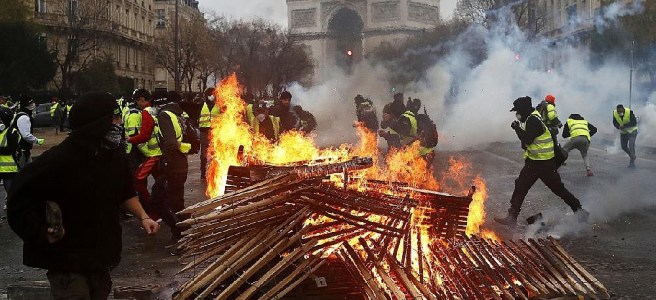




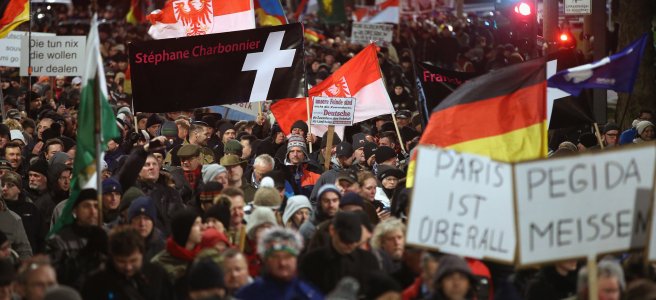


 EXIT! in English