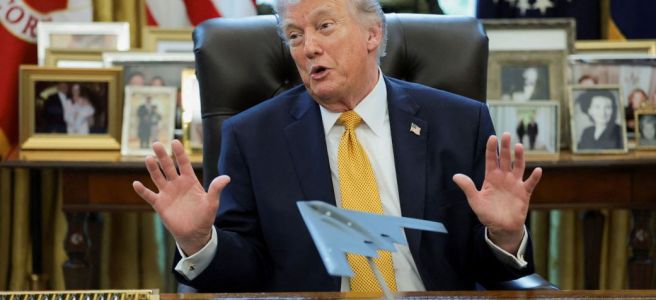
The Fear of the Roma Among Ordinary People

Antiziganism and Feeling Superfluous

Roswitha Scholz

In today’s left-wing circles, class struggle and traditional Marxism are all the rage. They pander to the average Joe willing to work and imagine a working class that has long since ceased to exist. In this predicament, they present themselves as representatives of “the 99%.” And all this at a time when AI is on the verge of swallowing up more and more jobs. Yet “unproductive” people are viewed with suspicion by this left. One group in particular rubs the average Joe – whom they populistically fawn over – the wrong way: Sinti and Roma – the largest minority in Europe.

Anti-Gypsy attacks and intensifying anti-Gypsy propaganda in the media have been observed in this country since the early 1990s. In 1992, pogroms took place in Rostock-Lichtenhagen, where the hatred was initially directed against Roma seeking asylum. Since then, reports have focused on crime, begging, and hygiene issues; in recent years, there has been an increased emphasis on organized welfare fraud and similar topics. Today, people prefer to speak of “Romanians and Bulgarians” because the term “Gypsy” is considered politically incorrect. However, this does not prevent anyone from drawing on the same stock of common anti-Roma stereotypes under this new label. Structural issues surrounding poverty and the housing crisis are ignored in the process. The right-wing shift over the past decade has only exacerbated this. Yet anti-Gypsy discrimination and persecution have a long tradition.

Modernity and Antiziganism

Sinti and Roma first appeared in Central Europe at the beginning of the 15th century. At the end of the 15th century, they were declared outlaws for the first time, a fate that would befall them repeatedly thereafter. The early modern period brought about profound changes. Feudalism entered a crisis, nation-states gradually took shape, and the Protestant work ethic came to the fore. From then on, nomadic groups were regarded as difficult to control and economically unproductive. For this reason, they were oppressed and persecuted, by no means only in Germany.

Until the Enlightenment, the image of the “Gypsy” fluctuated with that of the beggar, the vagabond, and “vulgar” traveling people in general. In the 18th century, a clear “racialization” of the stereotype took place. As is well known, the view prevailed during the Enlightenment that only the “white race” was capable of civilization. “Gypsies” were now declared a “primitive race.” As a result, social and racial discrimination became significantly intertwined in the Gypsy stereotype, which also encompassed romantic elements. “Gypsies” stood, in a diffuse way, for uninhibited freedom. This romantic dimension was fueled not least through music and dance (keyword: “Carmen”). As for the gendered connotations of antiziganism, the “Gypsy woman” was constructed as the antithesis of the chaste housewife, wife, and mother, who was conceived as complementary to the ideal of the disciplined wage laborer in the realm of reproduction. The “Gypsy woman” was primarily imagined as sexually seductive and witch-like.

Anti-Gypsy Measures in Germany

In the 19th century, “Gypsies” were considered “persons of inferior rights.” As early as the mid-19th century, files on “Gypsies” were systematically created. From the beginning of the 20th century, the aim was to register as many Sinti and Roma as possible, with photographs taken and fingerprints recorded. Under National Socialism, based on racist assumptions, it was assumed that “Gypsies” were no longer “racially pure.” Arising from the intermarriage of Gypsies with “racially inferior” Germans, “Gypsy half-breeds” in particular were deemed predominantly asocial. Sinti and Roma were forcibly sterilized and declared “socially mentally deficient.” The Nuremberg Race Laws, which initially applied only to Jews, were extended to them. In 1935, Sinti and Roma began to be interned in so-called “Gypsy camps.”

In 1938, Himmler ordered the “final solution to the Gypsy question […] based on the nature of the race.” In December 1941, it was decreed that “Gypsies” should be treated the same as Jews. Decisions regarding the manner of their extermination were left to the commanders of the Security Police and the Security Service, with the result that many Sinti and Roma were shot on the spot. In July 1944, the last gassing took place in Auschwitz, to which Sinti and Roma had been deported from numerous countries since early 1943.

In the postwar period, Sinti and Roma were frequently housed in dilapidated emergency shelters or settled on the outskirts of towns. So-called “Gypsy experts” were hired by government offices; likewise, records from the Nazi era were used – the special registration of Sinti and Roma continued. In various cities, policy documents were issued to prevent the presence of “Gypsies” (now called “Landfahrer”) at all costs.

The assessors of Sinti and Roma restitution claims were former employees of the Reich Health Office. In the 1980s, new guidelines were issued and modest reparations were granted. At the same time, some Sinti and Roma were no longer granted German citizenship. A precondition for these reparations was protest actions by the Sinti and Roma themselves, which also led to their recognition as an ethnic minority in Germany.

Anti-Semitism, Antiziganism, and Other Forms of Racism

In modern times, “Gypsies” are associated with a lack of ties and a refusal to work. But what, then, is the difference between antiziganism and antisemitism, which stands for similar things? In capitalism, Jews are primarily associated with power, domination, and a destructive civilization; “Gypsies,” on the other hand, are viewed as inferior and rooted in nature because they remind us of a possible life beyond the accursed labor society. Holger Schatz and Andrea Woeldike, commenting on this, write: “What they have in common, however, is the mechanism whereby the exclusion and physical persecution of the ‘non-identical’ supposedly provides psychological relief while simultaneously allowing repressed desires to be projected outward. What one cannot have oneself, no one else should possess either. The ‘idea of happiness’ must be driven out.”

We should emphasize here that, unlike antisemitism, antiziganism is a form of “romantic racism” (Wulf D. Hund). One might even consider to what extent “the Gypsy” corresponded far more to the (repressed) notions of happiness held by the masses – at least under Fordism – than “the Jew” did. Much of what is associated with the Gypsy stereotype – the soulful folk song, the fairground, the circus, the “coming and going” – was certainly closer to the feelings of happiness of “ordinary people” in the Fordist phase than the stereotypes regarding Jews, who were imagined as rich and powerful and also stood for a foreign, bourgeois culture, even if the common denominator can be found in the accusation of being “work-shy parasites.” In contrast to other “savages” (Native Americans, South Sea islanders, and so on), who are likewise equated with nature, the “Gypsy,” however, has long been an integral part of the culture and society in which one lives. For this reason, and because – unlike the “Black” person – they cannot be enslaved, they are persecuted; this is linked to the ever-present fear of one’s own descent into “asociality,” a fear of which the “Gypsy” is also a constant reminder.

Homo Sacer and the Gypsies

Giorgio Agamben’s legal-theoretical reflections can be fruitfully applied to the analysis of antiziganism. He is concerned with the relationship between rule and exception: “It is not the exception that eludes the rule; it is the rule that, by suspending itself, gives way to the exception; and the rule establishes itself as a rule by remaining in relation to the exception. The particular ‘force of the law’ derives from this ability to remain in contact with an outside.” Here, the individual is reduced to a mere body, to “naked life,” while it is the sovereign who rules over the state of exception. A decisive role in Agamben’s work is played by the “Homo sacer,” a concept derived from Roman law that gave his book its title. The Homo sacer is an outlaw who falls outside the law (but is precisely for that reason enclosed within it) and can be killed with impunity.

Something similar was expressed in the structures of persecution and internment of modernity, taken to an extreme in Nazism. Agamben sees the state of exception emerging once again today in the disintegration of state organizations, the establishment of camps, and “illegitimate assaults” (such as mass rapes). In such phenomena, which according to Agamben are precisely a fundamental precondition for the law, he sees an omen for the entire world. In these crisis-ridden processes of decay, all are thus potentially homines sacri.

Robert Kurz takes up Agamben’s reflection on the relationship between legal form and exclusion and links it to considerations regarding the “constitution of politics and the economy, of abstract labor and the state apparatus” in modernity. The space of “excluding enclosure, of reduction to naked life” was still called the “house” in early modernity: “The poorhouse, workhouse, prison, asylum, slave house – the ‘houses of horror’ in which, as an example for society as a whole, the training in externally determined abstract labor took place, a process intensified in the camps of the later modernizing and crisis dictatorships. This original state of exception has become the modern normal state that underlies all rule of law.”

The global crisis of the third industrial revolution today differs from earlier crises in that sovereignty itself is beginning to “dissolve, because the space of enclosing exclusion is also dissolving. […] Sovereignty, to the extent that it still exists, reacts reflexively with its customary crisis measures, even though these come to nothing.” Forced labor, low wages, the camp, the management of people, and so on are now being reactivated for the superfluous in the crisis of the working society at a new level of decay. Yet the general threat is expressed in differences in the exclusionary measures and ideologies. Even today, “enclosing exclusion […] takes place in the polarized pattern of racism and anti-Semitism” (Robert Kurz).

These discussions, however, fail to address the specific anti-Gypsy syndrome. Alongside the Jews, it was precisely the “Gypsies” who were not only regarded as foreign in race, but who, over the course of centuries, were repeatedly declared outlaws in the very sense Agamben describes. In modern times, a permanent state of emergency was effectively imposed on Sinti and Roma, insofar as they were constructed as the absolute antithesis to the modern disciplinary process and to “Protestant ethics” within one’s own society. Although the “Gypsies” are “Homines sacri” par excellence, as their history of persecution proves, they are generally forgotten even in critical accounts of racism; and it is precisely in this act of forgetting that the fact is expressed that the “Gypsy” represents, so to speak, the Homo sacer of the Homo sacer. Constructed as the embodiment of “asociality” and “foreignness,” regarded as the “scum of humanity” (as the Enlightenment “Gypsy expert” Heinrich Moritz Gottlieb Grellmann put it in the 18th century), and thus representing the quintessential cautionary example for the “normal” person: He shows them where they will end up if they do not conform and comply, but instead behave “like the Gypsies.” Even integrated Sinti and Roma are buried under a mountain of stereotypes in everyday life if they “admit” to belonging to this group.

Structural Antiziganism

Quite a few Roma work in the low-wage sector under precarious conditions and/or are dependent on basic social assistance, including the prospect of “forced labor,” as this now increasingly threatens “ordinary” people as well. In the context of the new mass migration, refugees who need “welfare” are already in the classic “Gypsy position.” The problem of “undocumented status” is also already anticipated in anti-Gypsyist policies.

Here, general and specifically anti-Gypsy measures of crisis management intertwine with a mass anti-Gypsy ideology. The more the middle classes face the danger of social decline, the more they recognize themselves in the prototype of the superfluous and outcast in European societies: the “Gypsy.” Just as one can speak of a structural anti-Semitism that manifests itself not least in attacks on the financial markets and in the imagination of a global conspiracy, even when Jews are not mentioned at all, so too can one speak of a structural anti-Gypsyism when, in the fear of one’s own downfall, decline in status, and a slide into antisocial behavior and criminality, the antiziganist stereotype implicitly comes into play, even when “Gypsies” are not mentioned at all. The oscillation between social discrimination and racist exclusion makes the Gypsy stereotype particularly suitable for this purpose.

Structural antiziganism, however, is harder to recognize than structural antisemitism because it is rarely addressed or, at best, treated only marginally. After all, the modern subject would have to recognize itself in the mirror with its Homo Sacer fear. That is why it looks away from the start. On the other hand, it has always known that the “Gypsy” is the “very last,” as surveys show.

Contemporary antiziganism is also a reaction to the massive crises of capitalist collapse. The impending decline of the middle classes is now compounded by galloping inflation, a housing shortage, and so on. Linked to this is the spread of racist ideologies from both “above” and “below” – that is, an “alliance of mob and elite” (Hannah Arendt).

Today’s regressive mainstream left, with its traditional focus on the respectable and decent wage laborer, implicitly targets the so-called lumpenproletariat as the “dregs” of society – and thus also the “Gypsies,” who, in the racist narrative, rank even lower than the “native” lumpenproletariat.

Originally published in Konkret No. 3 in 2026.
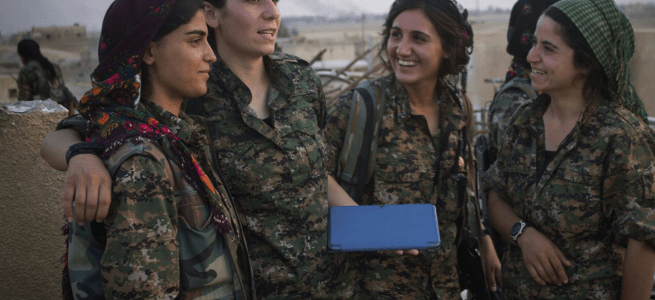
Betrayal on Principle

A look back and ahead at the crisis-imperialist constellations within which the self-administration in northern Syria’s Rojava region must assert itself.

Tomasz Konicz

To understand the current catastrophe facing the Kurdish freedom movement in Rojava, it helps to look back at its geopolitical context during the height of the Syrian civil war. The United States, in the midst of its hegemonic decline, was the central factor here. There were two interventionist approaches toward Syria, which was sinking into civil war, that competed with one another within U.S. foreign policy. During the Obama administration, this conflict was also played out relatively openly.[1] While the CIA sought to instrumentalize “moderate” Sunni Islamist militias, the Pentagon relied on the Syrian Kurds in the emerging Rojava to break the advance of the Islamic State (IS).[2]

As is well known, the Pentagon prevailed. And this happened for one simple reason: The Kurdish self-defense forces were highly effective in the fight against the genocidal Islamofascism of the IS, as they were fighting for an emancipatory society.[3] Neither of these qualities could truly be said of the CIA’s Islamist-influenced militias, which mostly viewed IS as mere competition. The intense, militarily successful phase of cooperation between the Pentagon and Rojava spanned from the defense of Kobane in September 2014 to the liberation of Raqqa in October 2017.[4] This took place amid constant tensions with Ankara, as Turkey acted as one of IS’s most important supporters and was determined to destroy Kurdish autonomy in Syria.

Yet Washington’s support for the Kurds of Syria had always been fragile, rendering their geopolitical situation precarious. Even during the Obama administration, the decline of American hegemony was already underway, a process that Trump is now carrying through to its bitter imperial end. The deployment of American forces against the Islamic State took place during a phase in which Washington, as part of its pivot to Asia intended to focus more intensely on the struggle for hegemony against China and the containment of the People’s Republic in Southeast Asia.[5] Washington thus only reluctantly assumed its role as “world policeman” in response to the regional collapse in Syria’s “war of state decomposition” (Robert Kurz).

Washington’s reluctance had its reasons: The disastrous U.S. invasion of Iraq, perpetrated by the neocons as part of their intended democratization of the Middle East, constituted the most significant tipping point, which immensely accelerated the gradual process of erosion of American hegemony. The rapid military victory over Saddam Hussein’s poison gas regime was followed by state collapse and a murderous civil war between Sunnis and Shiites. The neocons’ idea of cementing American hegemony in the oil-rich region through democratization backfired – accelerating the decline of American hegemony.

The crisis-driven surge of state decomposition in the region, in which Libya and Syria also collapsed in the wake of the Arab Spring, was thus effectively initiated by the U.S. invasion of Iraq. Western hegemonic nation-building, which was forced through as part of the “wars for world order” (Robert Kurz) of globalization, failed across the board, as the global crisis of capital had long since stripped the ailing ruins of modernization in the periphery of their economic foundation: from Somalia, through Afghanistan and Libya, to Iraq. However, the chaos of state collapse also opened up spaces for the only significant emancipatory impulse that was able to hold its ground in the general process of disintegration in Northern Syria. What the neocons failed to achieve in Iraq suddenly seemed to be working in Rojava.

The remnants and ideological vestiges of this democratization approach within the U.S. state apparatus consequently supported Kurdish self-administration for tactical reasons, but these forces very quickly lost all relevance due to the disaster in Iraq. Rojava was only significant to the U.S. in the context of containing the Islamic State. Especially since the neocons’ democratization strategy was a democratic means to a hegemonic, imperial end aimed at the region’s fossil fuel resources: Democratization – which would effectively have been financed by oil exports – was intended to go hand in hand with the region’s integration into the United States’ hegemonic system, which meant Washington’s indirect, mediated control. This was intended to cement the dominance of the petrodollar. Rojava, with its marginal local oil reserves, could not serve this purpose; all that remained was the ideology of democratization, without the economic foundation of the neocons’ hegemonic calculus still being in place.

An Early Farewell to Human Rights Imperialism

In other words: The geopolitical value of the Syrian Kurds was rapidly declining following their victory over the Islamic State, especially as the old hegemonic mindset within the U.S. ruling elites gave way to a new, openly imperialist calculus personified by Donald Trump. As early as May 2017, Trump had his then-Secretary of State Rex Tillerson deliver a keynote speech on foreign policy in which human rights were rejected as an ideological factor in American foreign policy, so that American interests could henceforth be pursued openly without the “ballast of human rights.”[6] Much of what Trump is currently practicing in terms of naked imperialist policy was already announced in 2017.[7] The betrayal of former geopolitical “partners” is thus the new principle of American power politics, whose open imperialism no longer needs to take into account the institutional and democratic façade of the old U.S. hegemony (under Obama, Washington still made an effort to appear as a “reliable” power factor in foreign policy in order to find willing proxies in the future as well).   

About six months after this speech by the U.S. Secretary of State, which effectively initiated the U.S. transition from hegemonic policy to naked crisis imperialism – a transition completed by early 2026,[8] Turkey, with NATO backing attacked the Syrian Kurds in Afrin,[9] which was then under Russian influence. Shortly thereafter, a second Turkish invasion followed in the American sphere of influence in Rojava. The self-governing regions in northern Syria were practically sold off in an imperialist haggle: in early 2018, Vladimir Putin gave the green light for the invasion of the canton of Afrin, which was within Russia’s sphere of influence.[10] In October 2019, Donald Trump gave free rein to Turkey’s expansionist ambitions in northeastern Syria, allowing Ankara to establish another occupation zone in Rojava.[11]

These two military campaigns by Turkish Islamofascism in northern Syria, which were accompanied by ethnic cleansing, illustrate Erdogan’s imperialist expansion strategy, in which he played a high-stakes game, oscillating between Russia and the West to extract concessions from both sides for further land grabs.[12] Erdogan’s imperial leverage, as the controller of a strategically important country, is far greater than that of the Syrian Kurds, who were needed only to contain the Islamic State and serve as a counterweight to the Assad regime. Putin sold out the Kurdish region of Afrin for a nuclear and pipeline deal; with Trump, it was likely just an affinity for authoritarian figures and an effort to keep Ankara within the Western alliance.

With the collapse of the Assad regime in late 2024, the regional balance of power shifted further to Rojava’s disadvantage. The Islamist alliance – backed by Turkey, the U.S., and, to a limited extent, Israel – which swept away the shell of the Syrian state apparatus within days, achieved a strategic objective of the West and Israel in the region. The Shiite corridor, through which the Iranian mullah regime had been able to project its military power to the border of Israel, was severed; Hezbollah’s logistics were severely disrupted, and following its defeat by Israel, it was thus no longer capable of intervening in Syria.


In effect, this is where the CIA’s intervention strategy – mentioned at the outset – prevailed, as the agency ultimately struck a deal with the ideological and/or organizational successors to al-Qaeda in order to achieve a geopolitical objective. With the remnants of the Syrian state, the Islamists merely destroyed what was already in the process of disintegrating due to the crisis. And they were also so successful because they did not have to fight against their own kind, against the Islamic State, which had previously been defeated by the military forces of Rojava at great cost.

The al-Qaeda State

About a quarter of a century after the attacks on the World Trade Center, organized by an al-Qaeda leader named Osama bin Laden who had been nurtured by the CIA in Afghanistan, the United States brought the political heirs of this Islamofascist terrorist group to power in Damascus. For the U.S., this is part of its struggle for dominance against China. Washington views al-Qaeda’s Sunni extremism as a bulwark against Shiite Iran, which is part of the Eurasian alliance system centered on Beijing. Russia has indeed been pushed out of the region, and Iran has been weakened.

The biggest beneficiary of this al-Qaeda state – which will be just as unstable as the Assad regime – is Turkey, which has been able to massively expand its power base in the region as a result. The Europeans (especially Berlin), in turn, hope to soon be able to deport refugees back to Syria. That is why Berlin remains just as adamantly silent about the massacres and ethnic cleansing currently taking place in Rojava as it did previously regarding the jihadist mass murders on the Alevi coast or in the Druze region in the south. The country would thus become an open-air prison guarded by Islamists for the region’s economically superfluous population.[13]

There is no longer any talk of democratization or free elections in Syria; the human rights imperialism of the neoliberal era has also receded into the background in Europe. Brussels, Berlin, and Paris are following Washington with a time lag. The only goal now is to ascribe some sort of legitimacy and stability to the emerging al-Qaeda in Syria in order to be able to deport people there. In effect, this constitutes collaboration with fascism in its Islamic-clerical form; it is an effort to somehow pacify the crisis-ridden region through the murderous terror of the jihadists, to bring about a deathly silence. And – this prediction can already be made – of course, this European hope for Islamist graveyard silence will be shattered by Islamist terror (one might even ask whether Washington does not in fact intend this destabilizing factor as part of its now relatively open struggle against the EU).

After December 2024, there was effectively only one regional power left with an interest in Rojava’s existence: Israel. Tel Aviv appeared to support the overthrow of the Assad regime, at least tactically, yet at the same time, Israel immediately sought to limit the power of the Islamists in Syria. Sunni extremism was to be largely neutralized by autonomous regions controlled by minorities: the Druze in the southwest, the Alevis on the coast – and the Kurds in the north and northeast. Support for the Kurds thus stemmed primarily not from political or ideological sympathies, but from geopolitical calculation. Moreover, Israel finds itself in confrontation with Erdogan’s Turkey over supremacy in the region, where Ankara seeks to expand in the tradition of the Ottoman Empire. By the end of 2025, for instance, Greece, Cyprus, and Israel had formed an alliance clearly directed against Ankara, intended to neutralize Turkey’s quest for dominance in the eastern Mediterranean.[14]

So what has happened? Why is Tel Aviv now silent as an unstable, Islamist state closely intertwined with Ankara forms on its northeastern flank? For one thing, Washington has simply prevailed – it is U.S. soldiers who are stationed in Rojava. And Trump already sided with Erdogan and against the Kurds during his first presidency. The fascists in the White House feel closer to Erdogan, with his authoritarian hybrid ideology of nationalism and Islamism, than to the Kurdish self-administration focused on emancipation. Especially since Turkey, as mentioned above, represents an important – albeit increasingly problematic – link for the US and the EU in the region. Just how quickly the Kurds are being sold out to secure other concessions was made clear, for example, by French President Macron’s email to Donald Trump, which the latter simply made public. Macron, who had often spoken out publicly in support of the Syrian Kurds, suddenly found himself on the same page as Trump regarding Syria and Iran – only to then contradict him during the Greenland conflict.[15]

Iran as the new Syria?

Iran is the key word here. Today’s Iran exhibits a structure similar to that of Syria during the Arab Spring: an authoritarian, internally hollowed-out state in ruins, effectively in the throes of economic and ecological collapse (which is why it was easy for Israeli intelligence agencies to comprehensively infiltrate this eroding state apparatus). The last major wave of uprisings and protests, which could only be crushed through state-sponsored mass murder, claiming the lives of likely tens of thousands of demonstrators, was supported by broad segments of the population.[16] In addition to the usual suspects – the liberal bourgeoisie, which has long hated the moral terror – impoverished wage earners and small business owners, who are suffering from the currency collapse and inflation, also participated in the protests.[17] In parts of the country, the water supply is collapsing simply due to the manifest climate crisis.[18]

Washington – and Israel in particular – therefore want to seize the moment and overthrow the mullah regime. Although “overthrow” might be the wrong word, given the U.S. approach toward Venezuela.[19] There is no talk of democratization or elections in the case of Iran either; instead, the archaic institution of the Shah of Persia (of all things) is to be revived – that is, precisely the repressive, murderous regime that swept away the 1979 revolution, which failed due to fundamentalist mass terror.[20] The U.S. effectively wants to replace a hostile Islamic-fascist regime with one subservient to the U.S. After Venezuela, Iran would thus neutralize another of China’s supply hubs. For Israel, however, a central security policy objective is at stake. The regime that has elevated the annihilation of the Jewish state to a state doctrine, that publicly cheered and militarily supported the Hamas pogroms and massacres of October 7, could be overthrown.

And this regime reshaping, this regime design – as was made clear in the case of Venezuela – is far more cost-effective than the resource-draining efforts of the neocons to establish democratization and U.S. hegemony in the region through regime change. The goal is simply to eliminate the fundamentalist forces within the Iranian regime, while at the same time making appropriate offers to factions and cliques willing to cooperate in order to retain power.[21] The mass murderers within the Iranian repressive apparatus, on whose orders thousands of demonstrators were recently shot down, could thus retain their positions of power even after the intended “overthrow of the government,” provided they show themselves to be cooperative.

The crisis-induced erosion of state structures makes this approach toward individual cliques within the apparatus conceivable, after all – Venezuela serves as the blueprint for this new form of U.S. crisis imperialism, which has long since forgotten its isolationist campaign promises. Yet this by no means implies that this approach, which has been successful in Venezuela (at least in the short term), will also work against a regional power like Iran – at least not without war.

This “regime design” intended by the U.S. – the reshaping of the Iranian regime to align with U.S. interests – would most likely not proceed without prolonged military conflict. A brief Delta Force operation, like the one in Caracas, will not suffice. And this is precisely what Washington appears to be working toward. Shortly after the Syrian state Islamists launched their attacks against Rojava, representatives of the Kurdish self-administration reported that they had been urged by U.S. officials to fight against the Shiite militias in Iran, which would be mobilized in the event of a conflict. A mobilization of Iranian-Kurdish forces is already underway for a potential conflict in Iran, forces that would have to navigate between their geopolitical instrumentalization and the Kurdish struggle for liberation.

And this is precisely what brings Turkey into the picture, as it acts as one of the most important regional opponents of an overthrow of the mullah regime, since Iran – like Syria – has a large Kurdish minority, whose autonomy or self-governance, modeled after Rojava, Ankara seeks to prevent. It thus appears that Trump’s repeated betrayal of the Syrian Kurds is a geopolitical price paid to soften Ankara’s resistance to the intended overthrow of the regime in Iran. Furthermore, it can be assumed that Turkey has also been promised a buffer zone on Iranian territory, similar to its occupation zone in northern Iraq.[22] Once again, the Kurds are paying the price for imperialist deals between great and regional powers.

The crisis of the capitalist world system unfolds as a historical process in waves; following the wave of state decomposition triggered by the Arab Spring, Iran now stands on the brink. The Trump administration’s new crisis imperialism could be understood as a form of crisis adaptation by late-capitalist functional elites, in which economic upheavals in the semi-periphery are exploited to justify military intervention by the core.[23] Driven by unbearable socio-ecological contradictions, a new violent upheaval is looming in the region, though its outcome remains fundamentally open – just as it was in Syria and will continue to be, provided the Rojava project can somehow be kept alive. Those opposition forces in Iran that managed to survive the recent wave of massacres could thus soon find themselves in a situation where they are confronted not only with the eroding mullah regime, but also with crisis-imperialist efforts to establish a new dictatorial Shah regime amid the chaos.

The disintegration of the late-capitalist world system, the systemic transformation, and the resulting struggle for transformation are, however, inevitable. For what remains of the Left –  despite all regression, repression, and opportunism – there is consequently no alternative to the struggle for an emancipatory course of this transformation process. In Rojava as in Iran. And in the core whose neo-imperialism is fueled by the same crisis process that is ravaging the semi-periphery.

I finance my journalistic work largely through donations. If you appreciate my writing, you are welcome to contribute – either via Patreon or Substack.


[1] https://www.latimes.com/world/middleeast/la-fg-cia-pentagon-isis-20160327-story.html

[2] https://www.kritiknetz.de/images/stories/texte/Islamischer_Staat.pdf

[3] https://www.telepolis.de/article/Allianzen-Almosen-Massaker-3366580.html

[4] https://archiv.telepolis.de/features/Kobane-in-Truemmern-Tuerkei-in-Flammen-3367844.html

[5] https://www.cnas.org/publications/commentary/obama-tried-to-pivot-to-asia-in-2011-we-must-succeed-this-time

[6] https://www.telepolis.de/article/Abschied-vom-Menschenrechtsimperialismus-3713257.html https://www.konicz.info/2017/12/11/abschied-vom-menschenrechtsimperialismus/

[7] https://medium.com/@ascentreact/everything-must-burn-862b983914a6

[8] https://exitinenglish.com/2026/03/19/what-is-crisis-imperialism/

[9] https://ednews.net/en/news/politics/240234-turkey-has-right-to-act-in-self-defense-in-afrin-nato-chief-stoltenberg-says

[10] https://www.konicz.info/2018/01/21/afrin-erdogans-werk-und-putins-beitrag/

[11] https://www.konicz.info/2019/10/26/der-krieg-der-neuen-rechten/

[12] https://www.konicz.info/2022/12/29/das-vergessene-morden/

[13] https://www.telepolis.de/article/Outsourcing-der-Barbarei-3336631.html

[14] https://www.dw.com/en/greece-cyprus-israel-military-cooperation-explained-turkey-reaction/a-75394974

[15] https://www.politico.eu/article/emmanuel-macron-decoded-text-message-donald-trump/

[16] https://www.t-online.de/nachrichten/ausland/krisen/id_101098128/massenproteste-im-iran-neue-opfer-zahlen-offenbaren-dramatisches-ausmass.html

[17] https://news.sky.com/story/why-are-people-protesting-in-iran-everything-you-need-to-know-13490639

[18] https://www.theguardian.com/world/2026/jan/15/how-day-zero-water-shortages-in-iran-are-fuelling-protests

[19] https://www.konicz.info/2026/01/11/die-herrschaft-der-terror-clowns/

[20] https://therealnews.com/how-irans-theocrats-allied-with-and-then-crushed-the-left

[21] https://www.msn.com/en-us/politics/international-relations/as-us-forces-build-up-trump-weighs-limited-strikes-to-shake-iran-s-regime/ar-AA1V1Ksq

[22] https://www.konicz.info/2022/12/29/das-vergessene-morden/

[23] https://exitinenglish.com/2026/03/19/what-is-crisis-imperialism/

Originally posted on konicz.info on 01/28/26

War as a Catalyst for Crisis

If the Iran conflict escalates, the region faces the threat of another wave of statelessness.

Tomasz Konicz

Trump went way back, all the way to the 1979 embassy takeover and the 1983 Beirut bombing against U.S. troops, to justify the U.S. and Israeli attack on Iran in an initial statement.[1] Even though the U.S. president’s public statements have an increasingly short half-life, and Trump could claim the opposite as early as tomorrow, he did ultimately name two military objectives of the current bombing campaign: the extensive disarmament of the Iranian regime, particularly regarding its nuclear program, and – optionally – its overthrow, should opportunities arise. Washington and Tel Aviv appear to be planning a multi-day intensive bombing campaign against key officials, the state apparatus, and its infrastructure, which would significantly weaken the regime, in the hope that this would spark an uprising that – supported by the CIA, Mossad, and special forces – would bring an end to the mullahs’ rule. On the evening of February 28, Trump also kept all options open in a brief phone interview with Axios: from short-term bombing to hinder the Iranian nuclear program to regime change.[2]

The talk of regime change is strikingly reminiscent of the murderous disaster the neocons under George W. Bush wrought during the invasion of Iraq—but this time, appearances are indeed deceptive. This is not only due to the simple fact that no significant ground forces are ready for an invasion. The neocons did indeed have the democratization of Iraq in mind, with the aim of subsequently integrating the country into the U.S. hegemonic system; they made no compromises with the remnants of the swiftly defeated Saddam regime in order to rebuild state structures from the ground up. The bloody consequences are well known: anomie, state collapse, a bloody civil war, and its “freezing” into a sham state fractured along ethnic and religious lines. The U.S. easily won the Iraq War against the crumbling Iraqi regime, but it lost the peace after the anomic centrifugal forces in Iraq were unleashed.

No “Democratization”

Trump’s imperialism, on the other hand, has a completely different thrust; Washington has long since shed the ideological veil of human rights imperialism as practiced by Western centers during the neoliberal decades.[3] The Islamofascist mullah regime, which had thousands of demonstrators massacred just a few weeks ago, is to be replaced by a regime subservient to the U.S. This approach is easier to carry out, as large parts of the state and repressive apparatus can simply be taken over. The precedent here is the case of Venezuela, whose head of state was effectively handed over to the U.S., while the power structures characterized by racketeering otherwise remained untouched . The offer of “total immunity” that Trump made in his speech to the officials of the Iranian regime clearly points in this direction.

The authoritarian alternative to the mullahs, the Shah’s son Reza Pahlavi, seems to have been dug straight out of the CIA’s dustbin of history.[4] His father’s genocidal regime was swept away in the wake of the 1979 revolution. His supporters are currently attempting to gain dominance within the Iranian opposition through nationalism, intimidation, and threats, while specifically targeting leftist and feminist movements. A miniature dictatorship is already taking shape. Meanwhile, tensions are also coming to light between the Pahlavi camp and Kurdish opposition groups, which have been accused by the monarchists of separatist aspirations.[5] Even U.S. officials have told media representatives that the Pahlavi monarchists are causing them “fear.”[6] The would-be Shah has already held official talks with members of the Trump administration, such as Steve Witkoff.

Crisis and War

Venezuela, the Al-Qaeda state of Syria,[7] and now, prospectively, Iran – crisis imperialism is merely returning to its roots in its twilight years by once again relying on authoritarian regimes.[8] The human rights imperialism of the neoliberal era thus represents only a brief historical episode. The novel aspect, however, is the crisis process of capital, which, in its economic and ecological dimensions, shapes geopolitical developments as well as concrete imperialist aggression. Without the crisis, there would be no American attempt at regime change.

This is not an abstraction; the global crisis of capital is manifesting itself in very concrete ways. Iran is already on the brink of ecological collapse. In parts of the country, the water supply has collapsed; even in the capital, Tehran, with its ten million inhabitants, the water is occasionally cut off. According to the British newspaper The Guardian, an evacuation of the Iranian capital is now even being considered should no substantial rainfall occur by the end of the year, as its population can barely be supplied with water.[9] The increasing extreme weather events, the lack of rain, and the ever more frequent heat waves are all leading to slumps in crop yields in Iran, which already has to import food.[10]

Iran has been subject to various forms of sanctions for decades; the regime has experience in circumventing or mitigating this economic pressure. However, the decisive tipping point was the current ecological and economic escalation of the crisis dynamics. The sanctions imposed on Iran have exacerbated the escalation, but did not trigger it. The protests were triggered by a massive devaluation and a surge in inflation caused by the suspension of subsidies for basic foodstuffs. At its core, the uprising against the mullahs – which was brutally suppressed – was economically motivated, as even basic foodstuffs became unaffordable for an increasing number of Iranians. The rising demand for imports (and foreign currency) is met with dwindling revenues: China is the Iranian oil industry’s most important customer, yet Beijing purchased the energy resource at a steep discount due to sanctions, further exacerbating Iran’s economic situation.

Reasons for War

The timing of the attack is likely indeed linked to the mass murderous suppression of the protests. It is a window of opportunity that the U.S. and Israel wish to exploit, during which the regime is weakened and has lost its legitimacy among large segments of the population. The time lag between the Iranian uprising and the Israeli-American attack is due to the logistics of war: The U.S. had to assemble its forces in the region, secure their supply lines, etc., which takes weeks. The mullahs’ rule does indeed appear rotten, porous, and highly corrupt, as evidenced by the extensive penetration of the Iranian state by Israeli and Western intelligence agencies. The Israelis were not only able to eliminate part of the Iranian leadership during the 2025 bombing campaign; they have now managed once again to take out Supreme Leader Khamenei on the first day. Netanyahu is said to have been shown images of the body shortly after it was recovered.[11]

In Israel’s case, the reasons for war are obvious: Tel Aviv wants the end of the mullah regime out of pure self-preservation. Israel wants the government overthrown, since the “Islamic Republic” of Iran has elevated the destruction of Israel to a state doctrine. Since October 7, 2023 – the mass-murderous terrorist attack by Hamas on Israel, which was cheered by Iran and militarily supported by Hezbollah attacks – regime change appears to have become the guiding principle of Israeli policy toward Iran. Israel wants to prevent, at all costs, a repeat of an attack such as the one carried out by the Iran-backed Hamas. The current right-wing government in Jerusalem would likely favor a reactionary, U.S.-aligned regime under Reza Pahlavi, yet regime change appears to be the top priority – regardless of the succession debate. Israel’s minimum objective, intended to secure the survival of the Jewish state in a hostile region, consists of permanently preventing Iran’s nuclear program.

In the case of the U.S., domestic political reasons are usually emphasized: Trump wants to divert attention from the pedophilia scandal involving members of the U.S. ruling elite. Meanwhile, there is growing evidence that the president himself may have molested girls and children. The attack on Venezuela was already interpreted as an attempt by Trump to divert attention, similar to Reagan’s invasion of Grenada in 1983, which was intended to divert attention from the Iran-Contra affair. The military triumph in Caracas also simply led to the fascists in the White House – here, above all, Trump’s close confidant Steven Miller – taking a liking to the use of military force without consequences. They have simply gotten a taste for blood.

Yet at the same time, it is evident that the Trump administration is targeting China’s second “gas station” in Iran. Beijing is (and has been) the most important customer in both Caracas and Tehran. The deployment of the colossal U.S. military machine – following Trump’s dismantling of the remnants of American hegemony – effectively constitutes the last significant lever with which Washington can maintain its global dominance.[12] Precisely because the crisis is also breathing down the Trump administration’s neck, as the dollar increasingly loses its role as the world’s reserve currency and Washington faces mounting budgetary problems. The attacks on oil-producing countries that have broken away from the U.S. orbit also appear intended to consolidate the dollar’s role as the world’s reserve currency, as the “petro-currency.”

Moreover – and this must not be overlooked in the era of oligarchic brutalization in the U.S.—Trump was encouraged to attack Iran by the Gulf despotisms, which showered his clan with “gifts” and deals worth billions. Saudi Arabia, in particular, pressed Washington in secret talks to carry out the bombing, while officially maintaining a neutral stance.[13] Iran’s attacks against the Gulf states are a direct consequence of this tactical acquiescence and support for the U.S. attack, which would also neutralize a key Shiite rival of the Saudis for the time being. Riyadh hopes to rise to become the leading regional power in the wake of the war.

Outlook and Prospects

Without substantial deployment of ground forces, the bombing campaign against Iran is likely to peter out after a few weeks without bringing about regime change. The regime is ailing; it is corrupt; and it can apparently be easily penetrated by intelligence agencies that can simply buy information. But it still has hundreds of thousands of supporters and fighters under arms, particularly in the militias, who will remain loyal without substantial military pressure for one simple reason: the regime provides them with material support. Their children are not malnourished; they can make ends meet for their families in the midst of a socio-ecological crisis in which this is no longer possible for ever-larger segments of the population.

Consequently, the organizational structures are likely to remain intact despite the barrage of bombs, the chains of command continue to function, and unreliable elements within the repressive apparatus were neutralized anyway during the brutal counterinsurgency at the beginning of the year. The machine guns stand ready in case spontaneous protests flare up again, which could easily be drowned in blood once more. The backbone of the regime is too strong to be broken by airstrikes and demonstrations alone.

There are hardly any significant, powerful opposition groups that could challenge the regime militarily. The People’s Mujahideen, a left-wing Islamist splinter group of Iranian state Shi’ism, resembles a sect with some 3,000 followers that sporadically organizes attacks in Iran.[14] The Shah’s son, Pahlavi, has no significant battle-tested forces at his disposal. What remains are the minorities: the Kurds, through the Iranian successor organization to the dissolved PKK, have significant combat units; separatist aspirations – which could potentially be encouraged by Turkey – exist among the Azeris in northwestern Iran, as well as in Iranian Baluchistan in the southeast of the country.

However, these groups would likely strengthen Iran’s centrifugal forces, fueling instability and state collapse – while the U.S. would prefer to install a stable, U.S.-aligned regime in Iran. Turkey’s initial opposition to an attack on Iran stems precisely from Ankara’s fears that Iranian Kurds might fight for independence or autonomy (Washington’s betrayal of Rojava, in which the Kurds were sacrificed, which was overcome by Ankara’s resistance).[15] This scenario of a renewed wave of state decomposition in the region also seems most likely in the event of an escalation. The country, with a population of 90 million, could disintegrate into a gigantic, second Syria. In this case, however, it would not only be Iran where conflicts could erupt along ethnic or religious lines.

Iraq would also be affected; following the freeze in the Sunni-Shia civil war, it is little more than a hollow shell of a state, where militias effectively hold sway depending on the region. And Shias constitute the majority of Iraq’s population. Shia militias, most of which are backed by Iran, have already threatened attacks against U.S. military bases and other facilities. A resurgence of the civil war seems quite likely in the event of an escalation.[16] The Syrian Islamist regime, which emerged from the Sunni terrorist network Al-Qaeda, is already massing troops along the border with Iraq.[17] Turkish interventions are also conceivable, aimed at occupying the Azerbaijani regions of Iran or attacking the Kurds as part of Erdogan’s neo-Ottoman imperialism.

And finally, the conflict could very quickly trigger global economic upheaval if Iran blocks the Strait of Hormuz, which could happen simply through the threat of drone or missile strikes – a navy is not necessary for this. This would shut down one of the most important shipping routes for fossil fuels. As is so often the case with Western wars over the world order (Robert Kurz), the war would thus simply become a catalyst for crisis, accelerating the crisis process of capital in fits and starts—both in the region and globally.

I finance my journalistic work largely through donations. If you appreciate my writing, you are welcome to contribute—either via Patreon or Substack.


[1] https://x.com/WhiteHouse/status/2027654336138924410

[2] https://www.axios.com/2026/02/28/trump-iran-war-israel-off-ramps

[3] https://www.konicz.info/2026/01/28/verrat-aus-prinzip/

[4] https://www.politico.com/news/magazine/2026/02/24/reza-pahlavi-iran-trump-00793877

[5] https://apnews.com/article/iran-iraq-kurds-pahlavi-6beae57e9fdc3546a61ec8f1432eef4b

[6] https://www.politico.com/news/magazine/2026/02/24/reza-pahlavi-iran-trump-00793877

[7] https://www.konicz.info/2026/01/28/verrat-aus-prinzip/

[8] https://exitinenglish.com/2026/03/19/what-is-crisis-imperialism/

[9] https://www.theguardian.com/world/2026/jan/15/how-day-zero-water-shortages-in-iran-are-fuelling-protests

[10] https://www.tehrantimes.com/news/507241/Climate-change-significantly-impacts-food-security-in-Iran-expert

[11] https://www.timesofisrael.com/liveblog_entry/natenyahu-said-shown-picture-of-khameneis-body-retrieved-from-compound/

[12] https://medium.com/@ascentreact/everything-must-burn-862b983914a6

[13] https://www.washingtonpost.com/politics/2026/02/28/trump-iran-decision-saudi-arabia-israel/

[14] https://esut.de/2025/04/fachbeitraege/58620/der-geist-der-volksmudschahedin/

[15] https://www.konicz.info/2026/01/28/verrat-aus-prinzip/

[16] https://www.thenationalnews.com/news/mena/2026/02/28/iran-backed-militias-in-iraq-say-us-israel-attack-kills-at-least-two-fighters/

[17] https://x.com/ScharoMaroof/status/2027754904991781276

Originally published on 03/01/2025