Understanding JD Vance

Why is the globalization process turning into protectionism and deglobalization?

Tomasz Konicz

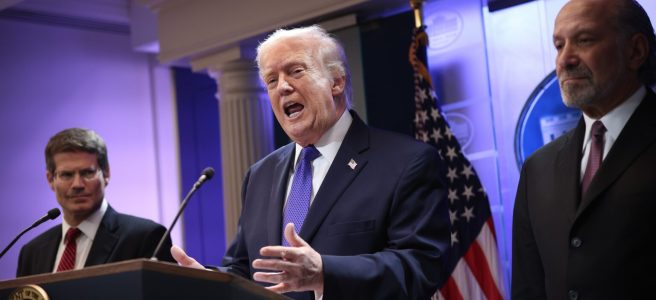
Olaf Scholz was moved to tears. The taz published a glowing review. Netflix has made it into a movie. We are talking about Hillbilly Elegy, by the incumbent Vice President of the United States, JD Vance.[1] The autobiographical book describes the social disintegration suffered by many peripheral regions of the United States in the course of the waves of deindustrialization of recent decades from a socially conservative and culturalist perspective: drug addiction in the family, family violence, release for adoption, as well as the luck of getting an expensive law degree as a hillbilly kid, formed the stages of the vice president’s career.

JD Vance was therefore incredibly lucky, as the social hurdles for rising from the lower class in the US are similarly high as in Germany. After this, the usual reflexes of demarcation set in, with which upstarts from the lower class often try to distinguish themselves from their class of origin. Cultural deficits of the hillbillies, a lack of work ethic and abuse of the welfare state were listed by Vance in the Hillbilly Elegy in order to ideologically process the capitalist crisis process that has deindustrialized large regions of the USA since the 1980s – and it was precisely this right-wing perspective that probably made the book a bestseller in late neoliberalism, which was acclaimed from the FAZ to the taz.

But the social disruption in the crisis regions of the US, which Vance described and which shaped him, has solidified and created veritable ghost towns in the southern United States. In the meantime, an entire YouTube genre has emerged in which Youtubers popularize the morbid charm of decaying settlements. Whether in Georgia,[2] South Carolina,[3] Oklahoma[4] or Arkansas[5] – the decay is visible everywhere.

The vice president’s social background from the lower class, which is largely left to its own devices in these crisis regions, comes to the fore time and again. His impulsive public reproach of Ukrainian President Zelensky, when he pointed out that he never thanked Trump, can only be understood against the backdrop of the improbable rise of an authoritarian character who overcame all social barriers, in the course of which the future vice president has certainly had to thank Trump countless times for the mercy of not having to sink into misery. In moments such as the public exchange of blows between Trump and Zelensky in the Oval Office, the authoritarian reflex breaks out openly – Zelensky is supposed to be just as compliant as Vance had to be.

Jackson, Kentucky, the town where JD Vance grew up, is still lucky with a poverty rate of 20%, while in many regions mass poverty and depopulation have long since become the norm.[6] Many settlements and small towns evoke memories of the famous post-Soviet wastelands – with the difference that in the US it is hardly possible to view the ruins undisturbed, as is the case in Russia, because even in state of decay, they are still considered “private property” and jealously watched over.[7]

US Deindustrialization and the Inner Barrier of Capital

The cause of the pervasive decline that has gone unnoticed for decades is currently haunting the right-wing US administration of which JD Vance is a member. For more than 40 years,[8] employment in the industrial sector in the United States has been declining, from nearly 20 million industrial workers in 1978 to about 13 million in 2023.[9] Between 2002 and 2022, the number of industrial establishments in the United States fell by 45,000, a decline of about 14% within two decades.

In the 1980s and 1990s, the US industrial workforce shrank only slowly, interrupted by periods of stagnating employment. However, much of the job losses in the US industrial sector occurred in the 21st century. The bursting of the stock market bubble in the US high-tech sector in 2000 marked the first massive job losses, with the number of industrial workers shrinking from more than 17 million to around 14 million in 2003. The deflation of the great transatlantic real estate bubble together with the subsequent recession triggered the second massive wave of layoffs from 2009, as a result of which the industrial workforce shrank to 11.5 million, only to rise to just under 13 million in the following years in the wake of economic stimulus measures, where it has stagnated ever since.[10]

The crisis process of capital has thus been leaving behind a clear empirical trace for decades, which has so far been ignored by public opinion. This is the manifestation of the inner barrier of capital (Robert Kurz), which, in a fetishistic crisis process, gets rid of its substance, the labor that creates value in commodity production, due to competition-mediated surges of rationalization.[11] This inner, moving contradiction of capital, which outwardly appears as an “overproduction crisis,”[12] forms the decisive, central contradiction of the capitalist mode of production.[13] Capital must therefore move, fleeing from its internal contradiction into ever new markets and branches of production in which masses of wage labor are valorized, which bourgeois economics perceives as industrial structural change.

The social disruption of the United States, the rust belts, ghost towns and social hotspots in which JD Vance grew up are an expression of the failure of this “industrial structural change” due to the tremendous rationalization surge in industrial production triggered by the IT revolution. The rise of the IT industry also created jobs, but at the same time every new branch of industry interacts with the economy as a whole, and the effect of the computer and telecommunications industry was a huge surge in rationalization that led to a massive reduction in wage labor in the production of commodities – and thus undermined the foundations of the capitalist labor society. This is also clear from the employment figures quoted above.

The inner barrier of capital is more than just an “overproduction crisis” that could be overcome by the “creative destruction” (Schumpeter) of overcapacity. Capital has become too productive for its own good, so to speak; due to the high level of global productivity, no new markets or labor-intensive fields of exploitation are emerging, meaning that there can no longer be any “adjustment crises” – and it is this inner contradictory development of capital that is leaving socially and ecologically scorched earth in its wake. It is this crisis process that propelled Trump into the White House and helped him to a second presidency after the US Democrats failed to find an answer[14] to the pauperization and deindustrialization of the US.[15] Supporters of Trump’s protectionism like to refer to economists such as David Autor, whose calculations show that around 2.5 million American industrial jobs were lost to China between 1999 and 2013.[16]

However, the relationship between job losses in the industrial sector and the actual output of industry makes it clear that it was not only the relocation of industrial jobs abroad that led to the deindustrialization of the US. Between 1980 and 2000, during the same period in which the industrial workforce in the United States fell from just under 19 million to 17 million,[17] US industrial production roughly doubled (according Fed data, in inflation-adjusted prices from 2017).[18] Rising industrial production with declining employment in the industrial sector is therefore an expression of the rationalization push in the production of goods in the course of the IT revolution from the 1980s onwards; this is the empirically verifiable consequence of the aforementioned inner barrier of capital. Even in the 21st century, when the US industrial workforce shrank massively (from 17 to just under 13 million), the output of this shrinking industrial workforce stagnated without a corresponding decline (the crisis-related slumps in industrial output in 2009 and 2020 were quickly reversed).[19]

According to the National Association of Manufacturers (NAM), value added in the United States amounted to around $2.93 trillionin 2024 (adjusted for inflation in 2017 prices, it was 2.4 trillion), with the United States paradoxically growing primarily in foreign trade.[20] Manufacturing exports have more than doubled over the last two decades, from $622.3 billion in 2002 to $1.63 trillion in 2024. What is Trump and his entourage upset about? Well, in the same period – the heyday of globalization – the volume of world trade has more than tripled: from $4.9 trillion in 2000, to $9.8 trillion in 2010, to $15.7 trillion in 2023. The American share of world trade has thus fallen – to 7.9% in 2023.

In addition, the economic weight of industry has rapidly diminished in the age of neoliberal globalization, which has been accompanied by the financialization of capitalism and the formation of a credit-driven financial bubble economy in the US. The share of industry in the gross domestic product of the United States fell from 15% in 2000 to just over 10% in 2021.[21]

These opposing trends in the capitalist production of goods – job losses with rising output – were also noticed and addressed by US monetary policy. As early as 2014, the US Federal Reserve noted that industrial production in the United States was continuing to grow (with the exception of short-term slumps caused by the crisis), while employment was not, meaning that “industrial growth is not synonymous with industrial job growth.”[22] The Fed offered “productivity growth” and a shift in sectoral focus towards “computers and electronics” as explanations.

Scientific and technological progress continues to create new industries, such as the renewable energy sector, but these new industries can no longer absorb the redundant workforce from obsolete industries due to the general level of productivity achieved.[23] The precarization of working life, the emergence of miserable jobs in the service sector, the erosion of the middle class, the emergence of a US prison industry for the purpose of repressive crisis management, the socioeconomic decoupling of entire regions of the US mentioned at the beginning – they are the result of the manifest inner barrier of capital, which is reaching the limits of its development both socially and ecologically.

Trump’s Protectionist Response to the Crisis

And it is this crisis, latent for decades and ignored or normalized by the dominant neoliberal mainstream for decades, that the Trump administration needs to somehow alleviate or overcome—precisely because it has crossed the Rubicon toward fascism. In many policy areas, the White House is already operating beyond the rule of law to consolidate authoritarian structures and reinforce new methods of repression – such as the unlawful deportation of people to maximum security prisons in Central America. The same applies to corruption charges and possible internal deals in the chaotic disputes surrounding US customs and trade policy.[24] In a sense, a large part of the Trump administration can no longer afford to be voted out of office, as they would find themselves in court very quickly after losing power due to the massive violations of the law.

In order to consolidate the post-democratic path already taken and establish a stable authoritarian regime, the US right must somehow confront the crisis that flushed Trump into the White House in the first place. Historically, all fascist regimes have only been able to consolidate their power by finding repressive or expansionist responses to the crises of capital that washed them into power without touching the foundations of the system – this also applies to the Nazis with their Reich Labor Service and the armaments policy that inevitably led to the Second World War.

In all likelihood, presidential elections will still be held in the United States four years from now, and despite all the possibilities of manipulation, the post-democratic, authoritarian right in the US must enjoy a certain level of support in order to win even rigged elections and complete the fascization of the US. In other words, the Trump administration must provide social relief to its voter base to avoid ending up in jail in four years. Trump could be spared such a fate due to a Supreme Court ruling that effectively guaranteed the president immunity from prosecution in office. But members of the government like JD Vance cannot count on this.

For the majority of the profiteers, racketeers, and networks of influence operating in the shadows of the US government apparatus, there is no turning back.[25] They must try to realize the authoritarian – ultimately fascist – option, to finish the authoritarian path they have taken – and this is precisely what makes the situation in the US so dangerous. Since a policy of redistribution, as preached by Bernie Sanders, is out of the question for the post-democratic US right for the time being, the only remaining option is trade war and protectionism.[26]

And, from a narrow-minded national perspective, the connections are clear: the deindustrialization of the United States goes hand in hand with the creation of massive trade deficits with China and German Europe in the age of globalization. Last year, the United States posted a new record trade deficit in goods of $1,211 billion (the aggregate deficit in goods and services was $918.4 billion),[27] which is well above the highs during the US housing bubble in 2006 ($786 billion) and the post-Covid era in 2022 ($971 billion).[28] Last year, the US recorded a deficit of $295 billion with the People’s Republic of China alone,[29] while the figure for the EU was $235 billion, of which Germany accounted for $84 billion.[30] The large US deficit with Mexico is in turn the result of Washington’s nearshoring strategy under Biden, in which the US’s southern neighbor was turned into an extended industrial workbench in order to reduce dependence on China.[31]

Trade surpluses are used to export deindustrialization and debt, which also formed the core of the German beggar-thy-neighbor economic model in the heyday of globalization.[32] This connection is also manifested in the share of industrial production in total GDP,[33] which in 2023 was around 26% in China, 18.5% in Germany and only around 10% in the US (in the 1970s it was still just under 25%).[34]

From the narrow-minded national perspective of the American right, which cannot perceive the crisis process outlined above due to its ideological blindness, it appears to be a simple fraud – China, as well as the alleged “partners” in Western Europe, is expanding its industries at the expense of the US. The sheer hatred towards the EU that JD Vance expressed during his scandalous appearance at the Munich Security Conference,[35] and the open hostility towards Europeans that became evident in the leaked Signal discussions by the Trump administration, with its amateurish communication, can be easily explained – a glance at the trade balance between the EU and the US is enough.[36] The misery, the social neglect that Vance experienced in his youth can be projected onto an imaginary enemy – and it is precisely this socialization in the lower class that makes him forget all diplomatic manners in his attacks against the European “trade cheats.”

The efforts of the economic locations to rehabilitate their own industry in the crisis by means of trade surpluses at the expense of their competitors is only logical – as long as no systemic alternative emerges, this is actually inevitable within the logic of the crisis. It is the logic of last man standing.[37] The simple economic fact that trade surpluses must lead to deindustrialization and deficit formation in the deficit countries has been invoked for years against Germany, the world champion of trade surpluses – for example by the Obama administration or by France, which criticized Germany’s export surpluses during the euro crisis. Back then, in 2017, the then Economics Minister Zypries forbade any criticism: there was no need to “apologize” for the fact that the German economy was “one of the strongest in the world.”[38]

Now that Trump wants to put an end to Germany’s longstanding beggar-thy-neighbor policy with the mallet of sheer protectionism, people in Berlin have suddenly become meek. Europe has the short end of the stick, headlined the Frankfurter Allgemeine Zeitung (FAZ) in reaction to Trump’s “tariff orgy” at the beginning of April. A tariff conflict is not arm wrestling and the Europeans would do well not to instinctively react to Washington’s new trade barriers with counter-tariffs.[39] The difference between this and Berlin’s stance in the euro crisis, for example, toward deficit countries such as Greece, is almost laughable – what a difference a few thousand nuclear warheads can make. However, top German journalism, as cultivated by the FAZ, is characterized by the fact that it does not even mention Germany’s trade surpluses, even if they are the basis of the upcoming trade conflict. This is precisely why Trump actually has the upper hand – because in the course of a trade war, the trade balances will tend to even out, which would reduce Germany’s surpluses and America’s deficits.

But why did it take so long to escalate? The deindustrialization that is now being lamented took place over decades—even during Trump’s first term, his protectionist impulse could be contained—but this time it will not be the case. Protectionism and tariffs are here to stay. And, most importantly, why does Trump keep backtracking, why does he seem to back down only to impose new tariffs a few weeks later?

Nonstop zigzagging! What’s the point? Although there is a tendency to erect ever higher trade barriers, this is happening in the context of seemingly chaotic disputes that are simply the result of the underlying systemic contradictions.

The Era of Neoliberal Crisis Postponement

And it was precisely the financialization of capitalism, together with the corresponding globalization process, that was able to prolong this internal contradiction of capital in the neoliberal age and enabled the late capitalist world system to run on credit, so to speak. Until well into the 21st century, the prevailing view in the core was that an industrial society was an obsolete relic of the 20th century, that capitalism had now evolved into a service or financial services society, or even an information society. These discourses, which have been thoroughly disgraced in the wake of the crises of recent years, were based on the deficit conjunctures of the neoliberal era.

Since the implementation of neoliberalism, global debt has risen faster than global economic output, mainly as a result of increasing financial bubbles. The figures are clear: In the 1970s, global debt amounted to around 110% of global economic output. At the end of the neoliberal era, when the great liquidity bubble burst after the outbreak of the pandemic in 2020, the global debt burden amounted to 258% of global economic output.[40]

In addition to a number of regional speculative manias and financial crashes, the globalized, financial market-driven capitalism of the neoliberal era gave rise to three major bubbles: the dotcom bubble that burst at the turn of the millennium, in which the hope of a new regime of accumulation (“information society”) led to feverish speculation in high-tech stocks; the great transatlantic real estate bubble in Europe and the US,[41] which ran out of speculative steam between 2007 and 2008; and the gigantic liquidity bubble of the central banks,[42] which was only brought to an end by the pandemic along with the inflationary surge of 2020.[43]

As long as the dotcom bubble was on the rise, as long as the United States was caught up in real estate fever, the erosion processes in industry hardly seemed to be noticed – after all, the economy was doing well, the construction sector was booming, cheap money was flooding the financial sphere, and the great financial flood was lifting all boats. Thus, declining industrial regions and marginalized and precarious wage earners could be easily ignored and hidden from public view in core societies. The repressive crisis administration did the rest.

The US was at the center of this globalized financial bubble economy – the inflated financial market of the United States produced the aforementioned bubble-driven deficit economies, while at the same time Washington’s trade deficits reached ever new record levels: from $77 billion in 1990, to $381 billion in 2000, to $740 billion in the crisis year 2008, to a peak of $951 billion in 2022. Last year, in 2024, the US trade deficit amounted to $918 billion dollars (figures for goods and services).[44] So-called deficit cycles emerged: export-fixated industrialized countries such as China, Japan or the FRG exported their surpluses to the US, while a ghostly flow of American securities and debt instruments to Beijing or Tokyo moved in the opposite direction.[45] Japan and China, which run large surpluses vis-à-vis the US, are consequently also the largest creditors of the United States.

Globalization is in fact based on these global deficit cycles.[46] Export-oriented economic areas thus maintain sales markets, while the USA experiences deficit cycles. (Incidentally, a similar deficit cycle developed in Europe after the introduction of the euro, where the Federal Republic was able to sell its export surpluses until this European debt bubble burst).[47] The dollar, in its function as the world’s reserve currency, enabled Washington to borrow de facto without restrictions at very low cost, which is why consumer spending accounts for a large part of the United States’ GDP (in 2023 it was 68% of GDP!).[48]

The figures here are also clear, as illustrated by the long-term development of interest rates on ten-year US bonds: The interest rate on these Treasuries fell from around 8% at the beginning of the 1990s, to over 5% at the turn of the millennium, to sometimes less than 2% in the second decade of the 21st century.[49] In the crisis year 2020, extensive central bank purchases were even able to push the interest rate on these government securities into the per mille range for a short time. To visualize the success of this financial bubble economy, it is sufficient to contrast it with the national debt of the US, which rose from $3.5 trillion (1990) to $5.6 trillion (2002) and $23 trillion (2020) to $36.2 trillion in the fourth quarter of 2024.[50]

The apparent magic of the global financial bubble economy running on credit becomes glaringly apparent here: Washington’s credit conditions became ever more favorable, while the mountains of debt could be driven ever higher. The United States as the world’s financial center thus still resembles a black hole in the global economy, which absorbs a large part of global surplus production through trade deficits – and thus has a stabilizing effect on a global economy suffering from structural overproduction.

This financial bubble economy, which was growing in size and instability, thus gave rise to the aforementioned deficit booms, which also simply created sales opportunities for the commodity-producing industry through credit-generated demand. However, as soon as a speculative bubble burst, the states had to stabilize the system through interventions and economic stimulus packages, which encouraged further deficit formation and the development of new deficit booms and financial bubbles. The economic policy measures that served to alleviate the consequences of the crisis also gave rise to new speculation – the speculative fire was extinguished with gasoline.

The Liquidity Bubble and The Impending Shift to Protectionism

The costs of stabilizing this gigantic financial sphere continued to increase as each bubble burst.[51] And this is precisely the cause of the end of this global financial bubble economy. The bursting of the last bubble during the pandemic-induced crisis forced crisis policymakers to turn off the money tap for the global deficit economy.

In 2000, when the dotcom bubble burst, the brief recession was quickly overcome by a phase of very low key interest rates – which in turn made mortgages attractive and provided the initial spark for the real estate bubble.[52] With the crisis surge in 2008, when the major real estate bubbles in Europe and America burst and the US plunged into the worst recession in post-war history, zero interest rates were no longer enough. Monetary policy switched to buying up all the junk securities that had sent the financial sphere into a state of shock following the collapse of Lehman Brothers. This emergency measure, which was used to buy up the infamous mortgage securitizations, developed into a permanent monetary policy that ultimately amounted to sheer money printing.[53]

The central banks bought up securities in order to inject further liquidity into the financial sphere and stabilize it. This absurd central bank financial capitalism was able to maintain the liquidity bubble over a period of around a decade.[54] This can be clearly seen in the balance sheets of central banks, especially the Fed.[55] In 2007 – on the eve of the housing crisis – the Fed held securities worth less than $880 billion. Just two years later, in 2009, it held $2.2 trillion, which swelled to $4.4 trillion by 2014. This high level was maintained – maturing securities were replaced by new purchases – only to almost double the balance sheet total to almost $9 trillion after the outbreak of the pandemic through extreme money printing.

And this money printing did not trigger a surge in inflation, mainly because the liquidity it generated remained in the financial superstructure – the prices of financial market goods shot up to ever greater heights as part of the liquidity bubble that formed a veritable everything bubble, in the final phase of which even speculative excesses with meme stocks such as Gamestop became common.[56]

Low bond yields, low key interest rates, swelling central bank balance sheets and a global mountain of debt that seemed to be able to grow faster than global economic output forever – the 2020 crisis put an end to this financial market-driven central bank capitalism.[57] The surge in inflation that followed in the wake of the pandemic forced central banks to make a drastic U-turn and the expansionary monetary policy had to be discontinued: Key interest rates skyrocketed (from almost 0 to more than 5%), bond-buying programs were discontinued or drastically reduced, with the result that central banks’ balance sheets are now shrinking again (from just under $9 trillion in 2022 to $6.7 trillion at the beginning of 2025 in the case of the Fed).[58]

The price of this turnaround, which at least curbed double-digit inflation: the stagflation period of the 1970s has effectively returned at an even higher level of crisis – precisely because it is fueled not only by the unfolding of economic contradictions, but also by the ecological crisis of capital, the climate crisis and the increasing destruction of the ecological foundations of the process of civilization.[59] Monetary policy can hardly combat this inflation fueled by the capitalist climate crisis.[60][61]

Skyrocketing interest rates also put the US bond market – practically the foundation of the global financial house of cards – in a difficult position.[62] The decades-long trend of increasingly low interest rates, which enabled debt bubbles in the United States, was reversed starting in 2021, as already mentioned.[63] Bond interest rates have risen to more than four percent – and they have since remained at the relatively high level that makes debt service the largest budget item in the US.[64] The United States has thus already partially lost its strategic financing advantage resulting from dollar hegemony, and its interest rate level corresponds to that at the beginning of the 21st century – with the difference that debt is now much higher. Washington’s extraordinary privilege now only applies to a limited extent.

This major turnaround in monetary policy by the central banks, which they were forced into by inflation, effectively led to an end to the global deficit economy. According to figures from the International Monetary Fund, global debt in relation to economic output has been falling for three years. After peaking at 258% of global GDP in the pandemic year 2020, when gigantic economic stimulus measures had to be initiated, the debt burden had fallen to 237% in 2023.[65] This phasing out of the deficit economy is reflected in the corresponding economic slowdown in many economic areas – especially in the export-dependent FRG.[66][67]

And it is precisely the end of the global deficit economy – which is increasing faster than global economic output – that must lead to protectionist reflexes, as this increases the tensions and contradictions within the global deficit cycles to an intolerable level, simply making them politically untenable due to their social fallout. The economic slowdown in many regions and economic areas is intensifying the efforts of the capitalist functional elites to rely more heavily on exports. This is why the trade deficits of the United States are constantly reaching new highs in a crisis phase in which Washington’s interest burden is increasing and the deficit economy of the US can hardly be maintained due to the skyrocketing costs of servicing the debt.

The global constellation is therefore quite comparable to the euro crisis – until the European debt bubbles burst, Europe saw itself as one big happy family, only to fall over each other after the crisis broke out, with Germany’s Finance Minister Schäuble in particular standing out with his uninhibited austerity sadism towards southern Europe – which made him one of Germany’s most popular politicians.[68]

Trump & Vance as Blind Executors of the Crisis

Viewed from the narrow-minded nationalist perspective of the full and semi-fascists in the White House,[69] the protectionist U-turn – coupled with the brutal austerity program that Musk tried to implement in order to reduce the deficit – therefore seems to make perfect sense.[70]  Washington’s objectives are clear: deindustrialization is being halted and reversed, the tariffs are generating revenue, the social situation of its own electorate is being stabilized and the US military machine is ensuring that the transition from hegemony to empire, which in fact wants to demand tribute by means of tariffs, is not accompanied by a serious loss of power.[71]

In fact, Trump no longer wants to pay the rising costs of US hegemony. The hegemonic position of the United States in the post-war period was based on the Fordist boom, on the post-war prosperity that brought good economic development to all core countries.  From the 1980s onwards, when neoliberalism prevailed in response to the stagflation period of the 1970s, the hegemony of the US was based on global deficit cycles. China, Japan and German Europe accepted US hegemony because they were also able to derive economic benefits from it – specifically in the form of the trade surpluses they achieved vis-à-vis the US.[72] Against the backdrop of the global crisis of capital outlined above, Washington’s hegemonic costs must therefore also include the deindustrialization of the once leading industrial country.  

Only now can JD Vance, who criticized Trump for his protectionist tendencies as recently as 2016, be understood: The Vice President actually seems to believe that he can use protectionism to improve the situation of the economically disadvantaged sections of the population in which he experienced his early socialization. In response to the temporary court ban on a number of troop tariffs at the end of May 2025, the Vice President reiterated the nationalist line of argumentation that the White House was responding to a socio-economic emergency in large parts of the US with its tariff policy.[73] Even on cursory forays through the socio-economic crisis regions of the US – including Minnesota,[74] Iowa,[75] or North Dakota[76] – this description of the situation cannot simply be dismissed out of hand. In contrast to the southern euro states – where there are similar social wastelands – the US has the means to counter the internal crisis with external aggression.

The American vice president sometimes says quite openly that maintaining the US dollar’s position as the world’s reserve currency is no longer a political priority for Washington.[77] Vance wants a weak dollar in particular, as this should promote exports and the reindustrialization of the US. The export-focused economic models of China, Japan and Germany clearly serve as role models in such arguments. Germany’s past successes on non-European sales markets can be explained precisely by the fact that the euro is structurally undervalued in relation to Germany’s economic output.

The advantages of the greenback as the world’s reserve currency are melting away with rising bond interest rates and Washington’s exorbitantly high debt service, which has now outstripped military spending in the US budget. At the same time, trade deficits are reaching new highs after the pandemic – precisely because global borrowing beyond the US is slowing down.[78] Washington’s hegemonic position is slowly turning into a bad deal in the eyes of the dealmakers in the White House. To American nationalism – which is just as blind to the crisis as all other varieties of late bourgeois ideology – this worsening of the crisis must appear to be a betrayal of America by malicious foreign countries. The post-democratic right in the US provides little more than the ideology for the new phase of the crisis, in which the era of globalization gives way to deglobalization and protectionism.[79]

The White House responded to the legal setbacks experienced by Trump’s tariff regime – which was effectively enforced as emergency legislation – at the end of May 2025 by searching for new legal loopholes in sometimes decades-old laws in order to gain further options for erecting trade barriers.[80] In addition, Trump raised the US steel tariffs to 50%.[81] The clashes between free trade and protectionism are thus already forming a new front in the internal capitalist crisis management, similar to the eternal, dull shadow boxing between demand-oriented Keynesians and neoliberal austerity fetishists.

Trump & Vance are therefore actually hoping to use protectionism to attract more industrial production back to the US – in effect, they want a bigger slice of the cake again. This is the actual motive behind the new protectionism made in the USA. And this is precisely the manifestation of their miscalculation resulting from crisis ignorance – the global production value pie is not static, it is not a fixed quantity. It was the deficit economy of the last few neoliberal decades that managed to inflate the global industrial production value “pie” so much, to continue with the image. Protectionism will only accelerate the end of this deficit economy, which could lead to a crisis of unprecedented intensity. The white nationalists in the White House are, in fact, only tearing down what is already falling.

The socio-economic emergency in which he grew up and to which JD Vance refers is a consequence of the world crisis of capital, whose inner barrier is now becoming manifest, as the era of financial market-driven neoliberal crisis postponement is breaking down due to its contradictions. However, this socio-economic emergency resulting from the systemic crisis could only be overcome within the framework of an emancipatory transformation of the system.[82] The nationalist protectionism on which Washington relies, on the other hand, acts as a promoter of the crisis.

In fact, Trump is only executing the crisis dynamics. And the maneuvering of the White House with regard to trade policy, the permanent protectionist advances and retreats – they are due to the open contradictions of the current final phase of globalization outlined above: The extreme trade deficit, the far advanced deindustrialization, they effectively compel the nationalists in Washington to protectionism; at the same time, protectionist measures are out of the question due to the turmoil on the bond markets, where interest rates on government bonds shoot up after every round of Trump’s tariffs – which is, after all, also a consequence of the unwinding of US hegemony, as countries and economic areas such as China, Japan or the EU hardly see any economic advantages in accepting the role of the US dollar as the world’s reserve currency.[83]

Simply dumping the government bonds that have been acquired in exchange for trade surpluses in recent years – that is the economic nuclear option, the threat of mutual economic destruction, as is currently being openly expressed in the protectionist disputes. Japan, the largest creditor of the United States, has already threatened to sell Treasuries en masse.[84] This would plunge Washington into a full-blown financial crisis, the US would turn into a weaponized and nuclear-armed Greece – and at the same time the exporting countries that currently still export their surpluses to the US would also sink into severe economic crises, which would only be the prelude to further geopolitical, military conflicts. The protectionist, fascist 1930s would virtually return under the crisis conditions of the 21st century.

The era of financial market-driven globalization is inevitably coming to an end. Transformation is inevitable. What comes next is an open question and the subject of a transformative struggle.[85]

I finance my journalistic work mainly through donations. If you like my texts, you are welcome to contribute – either via Patreon or Substack.


[1] https://en.wikipedia.org/wiki/Hillbilly_Elegy

[2] https://www.youtube.com/watch?v=OfhPAHTOkJE

[3] https://www.youtube.com/watch?v=wiCNLVy7aKw&t=1s

[4] https://www.youtube.com/watch?v=5XQUmVjjrZw

[5] https://www.youtube.com/watch?v=J5pU6M8yrpw

[6] https://www.youtube.com/watch?v=5hoq6gNVrAo&t=1s

[7] https://www.youtube.com/watch?v=2i3aS6T6Nng

[8] https://www.bls.gov/opub/btn/volume-9/forty-years-of-falling-manufacturing-employment.htm

[9] https://www.visualcapitalist.com/the-decline-of-u-s-manufacturing-by-sector/

[10] https://www.konicz.info/2006/11/30/keine-weiche-landung/

[11] https://www.konicz.info/2022/10/02/die-subjektlose-herrschaft-des-kapitals-2/

[12] https://www.nd-aktuell.de/artikel/1190139.welthandel-worum-es-in-trumps-zollkrieg-geht.html

[13] The distribution struggles fetishized as class struggle by old Marxism and left opportunism alike, on the other hand, represent only an internal capitalist surface phenomenon in which the variable capital (proletariat) fights for its share of the valorization process.

[14] https://exitinenglish.com/2025/02/26/a-country-for-old-men/

[15] Around 68% of US citizens stated in around 2024 that they would no longer be able to build up reserves and would have to scrape by from paycheck to paycheck. See: https://www.cnbc.com/2024/04/09/most-of-americans-are-living-paycheck-to-paycheck-heres-why.html

[16] https://www.faz.net/aktuell/wirtschaft/wie-donald-trump-den-handel-gefaehrdet-110414669.html

[17] https://fred.stlouisfed.org/series/MANEMP

[18] https://fred.stlouisfed.org/series/IPMAN

[19] https://fred.stlouisfed.org/series/OUTMS

[20] https://nam.org/mfgdata/facts-about-manufacturing-expanded/

[21] https://www.macrotrends.net/global-metrics/countries/USA/united-states/manufacturing-output

[22] https://fredblog.stlouisfed.org/2014/12/manufacturing-is-growing-even-when-manufacturing-jobs-are-not/

[23] https://www.konicz.info/2011/07/05/die-okologischen-grenzen-des-kapitals/

[24] https://www.theguardian.com/us-news/2025/apr/10/donald-trump-ignites-insider-trading-accusations-after-global-tariffs-u-turn

[25]

[26] This does not mean that Sander’s social democratic policy prescriptions could overcome the systemic crisis, but they could possibly have established a new dynamic that would have enabled an emancipatory course of the inevitable systemic transformation.

[27] https://www.bea.gov/news/2025/us-international-trade-goods-and-services-december-and-annual-2024, https://www.fool.com/research/us-trade-balance/

[28] https://www.macrotrends.net/global-metrics/countries/USA/united-states/trade-balance-deficit

[29] https://ustr.gov/countries-regions/china-mongolia-taiwan/peoples-republic-china

[30] https://www.fool.com/research/us-trade-balance/

[31] https://www.konicz.info/2023/11/20/neue-kapitalistische-naehe-2-0/

[32] https://www.konicz.info/2012/12/21/der-exportuberschussweltmeister/

[33] https://ourworldindata.org/grapher/manufacturing-value-added-to-gdp

[34] https://fred.stlouisfed.org/series/USAPEFANA

[35] https://www.youtube.com/watch?v=urXXIQMzUoY

[36] https://www.bbc.com/news/articles/c204vl27n2qo

[37] https://www.konicz.info/2011/11/20/gerangel-auf-der-titanic/

[38] https://www.diepresse.com/5203733/deutsche-handelsueberschuesse-muessen-uns-nicht-entschuldigen

[39] https://www.faz.net/aktuell/wirtschaft/eu-reaktion-auf-trumps-zoelle-am-kuerzeren-hebel-110398208.html

[40] https://www.imf.org/en/Blogs/Articles/2023/09/13/global-debt-is-returning-to-its-rising-trend

[41] https://www.konicz.info/2006/11/30/keine-weiche-landung/

[42] https://lowerclassmag.com/2021/04/13/oekonomie-im-zuckerrausch-weltfinanzsystem-in-einer-gigantischen-liquiditaetsblase/

[43]https://exitinenglish.com/2024/04/29/crisis-beyond-the-bubble/, https://exitinenglish.com/2024/02/29/schizophrenic-monetary-policy/

[44] https://www.macrotrends.net/global-metrics/countries/USA/united-states/trade-balance-deficit, https://www.bea.gov/news/2025/us-international-trade-goods-and-services-december-and-annual-2024

[45] https://www.konicz.info/2010/09/18/zerbricht-chimerica/

[46] https://exitinenglish.com/2022/08/12/a-new-quality-of-crisis/

[47] https://www.konicz.info/2015/10/05/aufstieg-und-zerfall-des-deutschen-europa-2/

[48] https://fred.stlouisfed.org/series/DPCERE1Q156NBEA/

[49] https://www.macrotrends.net/2016/10-year-treasury-bond-rate-yield-chart

[50] https://fred.stlouisfed.org/series/GFDEBTN/

[51] https://www.konicz.info/2020/10/27/vergleich-der-krisen-2020-vs-2008/

[52] https://www.konicz.info/2007/03/05/vor-dem-tsunami/

[53] https://exitinenglish.com/2023/05/25/keynesianism-in-crisis/

[54] https://www.konicz.info/2022/12/09/geldpolitik-vor-dem-bankrott/

[55] https://www.federalreserve.gov/monetarypolicy/bst_recenttrends.htm

[56] https://lowerclassmag.com/2021/01/30/hedge-fonds-gamestop-und-reddit-kleinanleger-die-grosse-blackrock-bonanza/

[57] https://fred.stlouisfed.org/series/fedfunds

[58] https://fred.stlouisfed.org/series/fedfunds

[59] https://www.konicz.info/2021/11/16/zurueck-zur-stagflation/

[60] https://www.konicz.info/2022/01/14/die-klimakrise-und-die-aeusseren-grenzen-des-kapitals/

[61] https://www.konicz.info/2021/08/08/dreierlei-inflation/

[62] https://exitinenglish.com/2022/08/12/mountains-of-debt-on-the-move/

[63] https://www.macrotrends.net/2016/10-year-treasury-bond-rate-yield-chart

[64] https://budget.house.gov/press-release/interest-costs-surpass-national-defense-and-medicare-spending

[65] https://www.imf.org/en/Blogs/Articles/2024/12/02/persistent-fall-in-private-borrowing-brings-global-debt-down

[66] https://exitinenglish.com/2022/08/12/no-more-trade-surplus/

[67] https://jungle.world/artikel/2025/14/autoland-ist-abgebrannt

[68] https://www.buecher.de/artikel/buch/aufstieg-und-zerfall-des-deutschen-europa/42973311/

[69] https://www.konicz.info/2017/08/07/politische-oekonomie-des-krisennationalismus/

[70] https://exitinenglish.com/2025/02/26/a-country-for-old-men/

[71] https://medium.com/@ascentreact/everything-must-burn-862b983914a6

[72] https://unrast-verlag.de/produkt/aufstieg-und-zerfall-des-deutschen-europa/

[73] https://conservativejournalreview.com/vice-president-jd-vance-says-america-facing-emergency-requiring-trump-tariffs/

[74] https://www.youtube.com/watch?v=qdl1S_Da_hU

[75] https://www.youtube.com/watch?v=L883pwCPOwE

[76] https://www.youtube.com/watch?v=59hzueQkmok

[77] https://nymag.com/intelligencer/article/why-jd-vance-wants-a-weak-dollar-is-that-a-good-idea.html

[78] https://www.bea.gov/news/2025/us-international-trade-goods-and-services-december-and-annual-2024

[79] https://www.konicz.info/2017/08/09/zur-wiederkehr-der-nationalistischen-ideologie/

[80] https://www.msn.com/en-us/politics/government/two-laws-that-trump-could-use-to-re-impose-his-tariffs-and-why-he-might-do-them-both/ar-AA1FIX6r

[81] https://www.youtube.com/watch?v=IpKiZOS6ADU

[82] https://www.untergrund-blättle.ch/politik/theorie/emanzipation-in-der-krise-7306.html

[83] https://www.faz.net/aktuell/wirtschaft/trumps-kurswechsel-bei-zoellen-was-war-der-knackpunkt-110410883.html

[84] https://www.msn.com/en-us/money/markets/japan-threatens-to-offload-its-1-trillion-us-treasury-holdings-if-trump-trade-talks-don-t-go-well/ar-AA1E2Wkn

[85] https://arranca.org/ausgaben/nichts-zu-verlieren/den-transformationskampf-aufnehmen

Originally published on konicz.info on 06/01/2025

Trump at the Inner Barrier of Capital

The reindustrialization of the USA, which Trump wants to force through his protectionism, is being undermined by automation trends in industry.

Tomasz Konicz

What does Donald Trump want? Since the so-called “Liberation Day” at the beginning of April, when the right-wing populist announced the introduction of comprehensive tariffs for almost the entire late capitalist world, Washington’s specific regulations, tariff rates and exemptions have been changing almost on a weekly basis. The economic uncertainty that Trump’s protectionism brings with it is considered by economists to be an important factor that could contribute to an economic slowdown or even recession in the US. Companies and corporations cannot calculate reliably, the flow of trade between the US and China has largely come to a standstill, and supply bottlenecks in the US can hardly be avoided despite the latest postponement in the trans-Pacific trade war.

First and foremost, it is around seven million industrial jobs that Donald Trump wants back. For more than 40 years, employment in the industrial sector in the United States has been declining, from just under 20 million industrial workers in 1978 to just under 13 million in 2023.[1] Between 2002 and 2022, the number of industrial companies in the United States fell by 45,000, which corresponds to a decline of around 14% within two decades.[2] This deindustrialization of the US has led to the very social disruption that has once again propelled Trump into office – and the White House must confront this misery, precisely because the increasingly authoritarian Trump administration can hardly afford to be voted out of office without ending up in prison due to multiple obvious violations of the law. The consolidation of an authoritarian regime in the United States can only be achieved by socially immobilizing broad sections of the population, similar to what Putin was able to do in Russia.

And, from a narrow-minded national perspective, the connections are clear: the deindustrialization of the US goes hand in hand with the creation of massive trade deficits with China and German Europe in the age of globalization. Last year, the United States recorded a new record deficit of $1.21 trillion,[3] which is far above the highs during the US housing bubble in 2006 (786 billion) and the post-Covid era in 2022 (971 billion).[4] Last year, the US recorded a deficit of $295 billion with the People’s Republic of China alone,[5] while the figure for the EU was $235 billion, of which Germany accounted for $84 billion.[6] Trade surpluses are used to export deindustrialization and debt, which also formed the core of the German beggar-thy-neighbor economic model at the height of globalization. This correlation is also manifested in the share of industrial production in total GDP,[7] which in 2023 was around 26% in China, 18.5% in the FRG and only around 10% in the US (in the 1970s it was still just under 25%).[8]

So is this a big scam, as the Trump administration is postulating in order to legitimize its protectionism? The relationship between job losses in the industrial sector and the actual output of US industry makes it clear that it was primarily competition-mediated productivity increases that led to the deindustrialization of the US. Between 1980 and 2000, during the same period in which the industrial workforce in the United States fell from just under 19 million to 17 million,[9] US industrial output roughly doubled (percentage figures from the Fed, in inflation-adjusted 2017 prices).[10]

Rising industrial production with declining employment in the industrial sector is an expression of the rationalization push in commodity production in the course of the IT revolution from the 1980s onwards; it is the empirically verifiable consequence of the inner barrier of capital – the competition-mediated tendency of the capitalist valorization process to get rid of its own substance, the value-forming labor in commodity production. Even in the 21st century, when the US industrial workforce shrank massively (from 17 million to just under 13 million), the output of this shrinking industrial workforce stagnated without a corresponding decline (the crisis-related slumps in industrial output in 2009 and 2020 were quickly reversed).[11]

What’s more, according to the National Association of Manufacturers,[12] value added in the United States amounted to around $2.93 trillion in 2024 (in 2010 it was just under $1.8 trillion, in 1997 only $1.38 trillion),[13] with the United States paradoxically growing primarily in foreign trade. Manufacturing exports have more than doubled in the last two decades, from $622.3 billion in 2002 to $1.63 trillion in 2024. What is Trump and his entourage upset about? Well, in the same period – the heyday of globalization – the volume of world trade has more than tripled: from $4.9 trillion in 2000, to $9.8 trillion in 2010, to $15.7 trillion in 2023. The US’ share of world trade has thus fallen – to 7.9% in 2023.

The opposing trends in capitalist commodity production – which lacks new labor-intensive fields of valorization – were also noticed and addressed by US monetary policy. As early as 2014, the US Federal Reserve noted that industrial production in the United States was continuing to grow (with the exception of short-term slumps caused by the crisis), while employment was not, meaning that “industrial growth is not synonymous with growth in industrial jobs.”[14] The Fed offered “productivity growth” and a shift in sectoral focus towards “computers and electronics” as explanations.  

Trump’s protectionist policy thus appears to be failing due to the increasingly clear inner barrier of capital, the relentless melting away of the mass of spent labor in commodity production as a result of competition-mediated rationalization (the idea that capitalism could be reproduced as a financial market-driven service society was already disgraced in 2008). This is particularly evident in the development in China, where Trump’s protectionism believes it has recovered its lost industrial jobs. Even in the state capitalist workshop of the world, which owes its economic rise to millions of mercilessly exploited cheap workers, automation tendencies are spreading ever faster.

China is now the global leader in the installation of industrial robots. By 2023, the People’s Republic had already overtaken Japan and Germany in the automation of goods production: 470 industrial robots per 10,000 wage earners were in use in China, compared to 419 in Germany and 429 in Japan.[15] The dynamics of this automation push are dizzying: in 2023, more than twice as many robots were put into operation in the People’s Republic than in the next five industrialized countries combined. The world’s automating workshop accounted for more than 50% of global demand for robots in 2023.[16] Meanwhile, forecasts predict that the People’s Republic will become the center of robotics, with more than half of humanoid robot production predicted to be based there this year.[17]

And it is precisely Trump’s protectionism that is tempting capital to further boost automation in reshoring in the United States. According to the US automation service provider Formic, which specializes in the leasing of industrial robots, the general uncertainty caused by the trade disputes led to a 17% increase in the use of robots at the beginning of 2025. The new settlements of industrial companies, which Trump’s capricious customs regime is intended to provoke, would also be built at the globally applicable productivity level, which would entail a high degree of automation. Chinese robotics manufacturers in particular are likely to sense new market opportunities here. Trump’s crazy idea that millions of US wage earners would manufacture smartphones by hand is becoming obsolete, even in China, due to rapidly advancing automation.

Ultimately, however, Trump’s reshoring fantasies are milquetoast calculations that overlook the connection between declining industrial production and the inflated global financial markets. Hyper-productive global industrial production – especially in China – was dependent on a global deficit economy with the US at the center of deficit cycles in which global debt has risen faster than global economic output since the 1980s. And it is precisely this deficit economy, realized by means of increasing financial bubbles, that has been extinguished since the major inflationary surge of 2020, after the central banks had to curb their expansive monetary policy. According to the IMF, global debt fell between 2021 and 2023, contributing to the global economic slowdown, the widening of the US deficit and the increasing destabilization of the globalized world economy through deficit cycles.[18]

The erratic, contradictory behavior of the White House mentioned at the beginning is above all an expression of this contradiction: the US trade deficit is exploding because its trading partners are having to rely more heavily on exports due to the economic slowdown, while Trump’s protectionist measures are jeopardizing the dollar’s position as the world’s reserve currency and causing turmoil on the US bond markets. Trump expected turbulence with his protectionist turnaround, which is why he wanted to initiate it as soon as he took office – but it was the rapid rise in interest rates on US government bonds that forced him to reverse course. In the meantime, US trading partners such as Japan are threatening to sell US government bonds during negotiations.[19] It is effectively the nuclear option in the trade war, which also highlights the absurd state of late capitalist commodity production, whose production surpluses are exported to the US, which can borrow in the world’s reserve currency as the measure of value of all commodities.


[1] https://www.bls.gov/opub/btn/volume-9/forty-years-of-falling-manufacturing-employment.htm

[2] https://www.visualcapitalist.com/the-decline-of-u-s-manufacturing-by-sector/

[3] https://www.bea.gov/news/2025/us-international-trade-goods-and-services-december-and-annual-2024

[4] https://www.macrotrends.net/global-metrics/countries/USA/united-states/trade-balance-deficit

[5] https://ustr.gov/countries-regions/china-mongolia-taiwan/peoples-republic-china

[6] https://www.fool.com/research/us-trade-balance/

[7] https://ourworldindata.org/grapher/manufacturing-value-added-to-gdp

[8] https://fred.stlouisfed.org/series/USAPEFANA

[9] https://fred.stlouisfed.org/series/MANEMP

[10] https://fred.stlouisfed.org/series/IPMAN

[11] https://fred.stlouisfed.org/series/OUTMS

[12] https://nam.org/mfgdata/facts-about-manufacturing-expanded/

[13] https://www.macrotrends.net/global-metrics/countries/USA/united-states/manufacturing-output

[14] https://fredblog.stlouisfed.org/2014/12/manufacturing-is-growing-even-when-manufacturing-jobs-are-not/

[15] https://archive.ph/bL8tt#selection-1101.15-1101.47

[16] https://ifr.org/downloads/press2018/2024-SEP-24_IFR_press_release_World_Robotics_2024_-_China.pdf

[17] https://www.asiamanufacturingreview.com/news/china-to-manufacture-half-of-world-s-humanoid-robots-by-2025-nwid-1613.html

[18] https://www.imf.org/en/Blogs/Articles/2024/12/02/persistent-fall-in-private-borrowing-brings-global-debt-down

[19] https://thediplomat.com/2025/05/how-japans-1-1-trillion-in-us-treasuries-became-a-strategic-lever-in-the-new-tariff-war/

Originally published on konicz.info on 05/26/2025

Russia Is in No Hurry

The chances that the Russian-Ukrainian talks in Istanbul will lead to a quick or even fair peace are slim.

Tomasz Konicz

The fact that peace talks between Kyiv and Moscow were able to take place in Istanbul highlights just how bad the military situation in Ukraine is. On May 10, four European leaders, who had traveled to the Ukrainian capital in a gesture of solidarity, joined their counterpart Zelensky in calling for a 30-day ceasefire as a precondition for any talks. This unconditional, comprehensive ceasefire would give “diplomacy a chance,” Zelensky demanded in the presence of British Prime Minister Starmer, French President Macron, Polish Prime Minister Tusk, and German Vice Chancellor Merz.

The Kremlin remained unmoved by the EU’s threat of sanctions linked the ceasefire that are aimed at taking stronger action against Russia’s shadow fleet – there will be no ceasefire because it is not in the Kremlin’s interest. The Russian-Ukrainian talks, on the other hand, began under fire, as this strengthens Russia’s negotiating position. In addition, as usual, the Europeans were excluded from these negotiations, which were conducted with the participation of the U.S. administration. By excluding the Europeans, Putin obviously wants to further divide the West. Finally, the Kremlin did not agree to Zelensky’s demands to hold direct talks with Putin.

Realities of the War of Attrition

Russia was thus able to dictate almost all of the preconditions for the negotiations in Istanbul. Ukraine, on the other hand, has little choice but to negotiate, as the war of attrition in the east will inevitably be won by Russian imperialism, which has greater resources (material, technology, manpower). Ukraine’s last major offensive, the advance into the Russian region of Kursk, ended in strategic failure. Kiev’s calculation was to dig in and hold the Russian border region in order to have a bargaining chip in any negotiations – now Russia occupies parts of the Ukrainian border region in the Sumy Oblast. Both sides suffered heavy losses in the fighting in Kursk, which also involved North Korean units. However, the Kremlin is better placed than Kiev to compensate for this through successful recruitment campaigns.

Western think tanks sympathetic to Ukraine, after years of whitewashing, are now being forced to acknowledge the realities of the war of attrition on the front lines. In a recent assessment, the Institute for the Study of War (ISW) assumes that Russia will not only be able to mobilize enough new forces to compensate for losses on the front, but also to “increase the size of army groups in Ukraine.” The Russian army leadership thus has more manpower at its disposal, even though, according to the ISW, Russia has recently suffered “significant losses with limited gains.” The growing imbalance could serve to “put pressure” on Ukraine in negotiations. In addition, Moscow appears to be in a position to build up a considerable “strategic reserve” through successful recruitment, according to the ISW.

The Atlantic Council is already warning of a major Russian summer offensive that threatens to become “the deadliest of the war so far.” Here, too, the admission of impending defeat can be read between the lines. Although the Russian army continues to suffer losses in “costly frontal attacks,” this tactic is constantly evolving, with these attacks being supported by “drone strikes, glide bombs, and artillery,” which is making Ukraine’s defensive measures more difficult. Russia currently holds the initiative on the front and is “advancing on several points” (Sumy, Kharkiv), with the Russian army leadership planning a major offensive in the Donbas – around Pokrovsk – in the coming months, according to the Atlantic Council. Ukrainian offensive plans have therefore long been a waste of time. The only question now is whether the front can be held in the face of Russian attacks and possible offensives. The summer threatens to become a “test of endurance” full of “brutal fighting” for “war-weary Ukraine” – especially in view of dwindling American military aid.

Direct military intervention by the Europeans against the nuclear power Russia – which was at times publicly debated in the EU – is now considered virtually impossible, despite all public expressions of solidarity. In mid-May, Macron stated that despite all its support, France did not intend to start “World War III” over Ukraine. Shortly before that, Polish government officials denied statements by U.S. envoy to Ukraine, Keith Kellogg, that Warsaw was prepared to deploy army units to Ukraine. Within Germany’s governing coalition, there is controversy over whether Kiev should be supplied with the advanced Taurus cruise missiles at all. While Deputy Chancellor Merz wants to maintain “strategic ambiguity” on this issue, SPD parliamentary group leader Matthias Miersch has explicitly spoken out against the delivery.

A Caricatured Imperialist Deal

Given this military and geopolitical constellation, which is favorable to Russia, the Kremlin can enter negotiations from a position of strength to push through its core demands, which ultimately aim to legalize its imperialist aggression and claim even more Ukrainian territory than is currently held by Russian troops. The logic behind such a deal is clear: to achieve inevitable military conquest through negotiation. Putin’s minimum territorial demands are likely to include the legalization of the annexation of the entire regions of Crimea, Luhansk, Donetsk, Zaporizhzhia, and Kherson. Russia’s marginal gains in the Kharkiv and Sumy regions are likely to be used as bargaining chips.

Added to this are the restrictions on Ukrainian sovereignty, which the Kremlin is selling under the label of “denazification.” On the one hand, this amounts to preventing Ukraine from becoming part of the Western sphere of influence, which could be achieved through neutrality commitments and arms restrictions for the Ukrainian army, as well as a “regime change” in which new elections would be scheduled in Ukraine. Russia does not want to occupy the entire country, but rather to bring it back into its imperial orbit. In the medium term, the Kremlin hopes to maneuver the “remaining Ukraine” into a state of sham sovereignty, similar to that currently enjoyed by Belarus. Formally independent, the former Soviet republic is in fact already part of the Russian Federation, both economically and militarily.

Russia therefore has no need to rush the negotiations, and one must wonder whether or not they are being held purely for propaganda reasons. Kiev, on the other hand, has few cards left to play in this imperialist poker game, which is why Zelensky had to agree to send his delegation to Istanbul on Putin’s terms—the longer he waits, the worse his position will become. In addition, tensions are rising on Ukraine’s western border, where the Ukrainian secret service has arrested two Hungarian citizens who are alleged to have been spying for the Orbán government in Budapest – they are said to have been gathering information on military installations, the mood among the population, and the defense capabilities of the Transcarpathian region, which is inhabited by a Hungarian minority. Since then, relations between Hungary and Ukraine have been frozen, with both countries expelling diplomats from the other side. The authoritarian head of government Orbán, from whose circle there are repeated calls for the annexation of Transcarpathia, is considered close to Russia.

Kiev’s only chance to retain some leverage seems to be to effectively capitulate to Trump’s extractivism: Kiev has had to sign a humiliating resource agreement with the U.S. in order not to lose its support completely. Kiev’s calculation: this caricature of an imperialist deal, signed at the beginning of May, would only make sense if Ukraine’s resource-rich eastern territories remained under Ukrainian – well – sovereignty. Kiev is hoping that Washington will back up its interest in extracting raw materials with military force. This would effectively tear Ukraine apart between East and West.

At least the Financial Times claims to have noticed a “quiet shift” in favor of Ukraine within the bluntly imperialist U.S. administration as early as mid-May. Speaking at a public meeting in Washington, Vice President JD Vance said that his administration was aware of a number of Russian demands that would make it possible to end the war: “We think they are asking for too much,” Vance said. At the same time, however, the vice president pointed out that despite “widespread criticism” of Putin, it was necessary to understand the Kremlin’s point of view in order to understand the “motivation of the other side.” Vance believed that Russia remained “interested in a solution.”

What might this solution look like? The Kremlin also has the upper hand in Ukraine’s resource poker game: Back in late February, when Kiev was still blocking the sale of its natural resources, Putin offered his American counterpart to jointly exploit the resources of eastern Ukraine and sell them to the U.S. A large part of the natural resources are already under Russian control anyway.

Tomasz Konicz is an author and journalist. His latest book is Climate Killer Capital: How an Economic System is Destroying our Livelihoods. More articles and donation options (Patreon) can be found at konicz.info.

Originally published in analyse & kritik on 05/16/2025.

Protectionist Revenants

The lessons that the bourgeoisie learned from the great systemic crisis of the 1930s have long been forgotten in Trump’s Washington.

Tomasz Konicz

Want some more? When it comes to tariffs and trade barriers, the U.S. president is known to be extravagant. In response to the EU’s announcement of retaliatory measures for the U.S. tariffs on aluminum and steel, which include alcoholic beverages, Donald Trump responded by threatening astronomical punitive tariffs of 200% on European wine and sparkling wine. So far, this escalation strategy has worked: when Canada’s Ontario province announced a 25% tax on electricity exports to the United States as part of the North American trade war, Trump immediately threatened to double U.S. tariffs on all Canadian metal imports to 50% – Ontario then withdrew its export tax.

The U.S. actually has a strategic advantage in these trade wars because of its huge trade deficit ($918.4 billion in 2024). This is likely to tend to decrease in the course of the trade wars, while most of America’s trading partners are likely to see shrinking exports. Trump is speculating that he can ride out the short-term turbulence that the major protectionist turnaround will bring in order to achieve the hoped-for long-term return of a re-industrialization of the U.S. before the next election. In fact, the U.S. wants to reindustrialize itself at the expense of those countries and economic areas for whose export industries the U.S. trade deficits have thus far served as a credit-financed economic stimulus program.

In fact, the world economy, which is increasingly running on credit, also functioned like this in the neoliberal era: the U.S. resembled a black hole of the global economy, absorbing surplus industrial production and being able to borrow in the world’s reserve currency, the U.S. dollar, on the rapidly expanding financial markets. In the context of ever-growing deficit cycles, gigantic export surpluses flowed into the U.S. as the center of capitalism’s neoliberal financialization, while a flow of debt instruments and bonds began in the opposite direction, making China, for example, the largest foreign creditor of the U.S. for many years (currently it is Japan). The global total debt, which in the neoliberal era has increased faster than global economic output (from around 110% at the beginning of the 1970s to more than 250% in 2020), was the lubricant of globalization precisely through these deficit cycles.

This neoliberal construction of towers of debt, which gave rise to the illusion of financial-market-driven growth in the United States, spawned a veritable global financial bubble economy that became unstable with the bursting of the real estate bubble in 2008 and unsustainable with the inflationary surge that began in 2020. Trump is thus a product of the crisis, whose protectionism is supposed to provide an answer to the processes of social disintegration that accompanied deindustrialization and the collapse of the financial bubble economy. And it is no coincidence that the whole thing resembles the protectionism of the 1930s, when the world system was hit by the greatest crisis to date.

The internal barrier of capital, which gets rid of its own substance, wage labor, through market-mediated rationalization, is now openly apparent: since new economic sectors that would valorize mass wage labor are nowhere to be found, each economic area must try to protect its remaining industrial capacities, as everyone is trying to support their industries through exports. Trump wants a qualitative break with the credit-fueled crisis delay methods of the neoliberal era – and the contradiction is almost tangible, for example in Trump’s eternal zigzag. The system can only run on credit – and at the same time the consequences of this global deficit boom are no longer socially, economically and, above all, politically sustainable.

But what does Trump want? Ultimately, the White House is currently destroying the system of American hegemony established in the post-war period, since the U.S. can no longer or no longer wants to bear the costs of this hegemony. Instead, Trump is setting about building a U.S. empire that no longer relies on a global network of institutions and rules in the exercise of power, but will presumably assert itself through direct and ultimately military force. And that is not a sign of strength, but of weakness. Trump’s narrow-minded crisis-imperialist calculation, which perceives the deindustrialization of the U.S. as a result of fraud by foreign competitors, will be exposed as such when these competitors no longer see any reason to accept the U.S. dollar as the world’s reserve currency. The systemic cause of the geopolitical upheavals that are now shaking what is left of the “West” is the openly apparent internal limit of capital.

Originally published on konicz.info on 03/28/25

Into the Crisis One Tariff at a Time

With its protectionist tariff policy, the new U.S. government is ushering in the end of the age of neoliberal globalization.

Tomasz Konicz

Protectionism is likely to become the new normal. The first foreign policy reflex of the new U.S. administration was to instigate trade wars. At the beginning of February, just a few days after taking office, President Donald Trump imposed punitive tariffs on goods from China, Canada and Mexico.

At 25%, the import duties on goods from Mexico and Canada were much higher than for China, whose goods were subject to additional import duties of just 10%. The U.S. is by far the most important trading partner for all three countries, with each of them recording trade surpluses.

However, while the tariffs against China actually came into force, Trump suspended the implementation of protectionist measures against neighboring countries to the north and south of the U.S. for 30 days on February 3rd. At this point, the U.S. government entered into negotiations with Mexico and Canada, during which the threat of punitive tariffs remains in place. In fact, Trump has already been able to secure significant concessions: both Canada and Mexico agreed to tighten controls on their borders with the U.S. Mexico wants to mobilize around 10,000 troops to secure the border so as not to jeopardize the economic position of its northern border region as an extension of the U.S. workbench.

In fact, Trump’s alleged economic protectionism is a geopolitical instrument of power that can be used to extort concessions. In the case of Mexico, which is particularly susceptible to economic pressure from the U.S. because of its increased economic dependency on them as a result of the U.S. nearshoring strategy, the aim is for better defense against migration movements. Canada, on the other hand, is apparently actually being forced to integrate more closely into the U.S. economy – the foreseeable struggle for the resources in and trade routes through the rapidly thawing Arctic make Trump’s bizarre annexation demands regarding Canada and Greenland at least understandable.

China immediately announced retaliatory measures: Tariff increases now introduced there include 15% on energy sources and 10% on agricultural machinery, spare parts for trucks and similar products from the U.S. However, the Chinese government has the short end of the stick in such trade wars. In 2024, the U.S. trade deficit amounted to the gigantic sum of $918.4 billion, of which China alone accounted for $295.4 billion. Even if both sides initially suffer economic disadvantages in a trade war, especially in the current stagflative crisis phase, for example in the form of higher inflation, an escalation would always hit the economy with the export surpluses harder than the deficit country, which can at least hope to substitute imports burdened by tariffs through increased domestic production.

The European Union is in a similar situation, having aligned itself with the export-focused German economic model since the euro crisis and achieving a trade surplus of 235.5 billion euros with the U.S. in 2024. Around 20 percent of all EU exports go to the U.S., its most important sales market. The special tariffs of 25 percent on steel and aluminum, which Trump issued in mid-February, were immediately described by the EU as illegal. It saw “no justification for imposing tariffs on its exports,” according to the EU Commission, which threatened countermeasures to “protect the interests of European companies, workers and consumers from unjustified measures.”

Only Trump’s First Salvo in the Transatlantic Trade War

This was effectively only Trump’s first salvo in the coming transatlantic trade war, as only a few manufacturers in the EU are substantially affected by this. The EU’s trade surplus is primarily generated with cars made in Germany, machinery and pharmaceutical products – on February 18th, Trump consequently threatened punitive tariffs of 25% on cars, semiconductors and pharmaceutical products. Added to this is the EU’s agricultural sector, which is incurring the wrath of the U.S. government due to some EU trade restrictions – for example against the infamous chlorinated chicken. The EU agricultural sector knows exactly what to expect. At the turn of the year, agricultural exports from the EU to the U.S. climbed to their highest level in 15 years. “Mountains of butter, pyramids of cheese and lakes of milk” are currently being laid out for export in anticipation of the coming trade barriers, reported the Austrian newspaper Der Standard.

Trump has already indicated to media representatives that his government is working on a comprehensive protectionist offensive that is likely to hit the EU particularly hard. In principle, the upcoming U.S. tariffs are to be imposed on individual EU countries and not on the entire economic area in order to promote divisive tendencies in the EU, make a joint EU counter-strategy more difficult and reward countries governed by Trump’s ideological allies, such as Hungary, with exemptions. The U.S. Department of Commerce is currently drawing up a list of countries that use “unfair trade practices” in order to impose “reciprocal tariffs” on them.

It is almost certain that Germany’s beleaguered car manufacturers will face new burdens, as the EU car import tariffs of 10% are far higher than those in the U.S. (2.5%). The spreading panic was already evident in the public announcement by VW CEO Oliver Blume that he intends to hold direct talks with the U.S. government. The German mechanical engineering industry is also likely to face tariff increases. If the trade conflict with the U.S. escalates, forecasts predict an additional economic slump of up to 1.5% of gross domestic product for Germany in particular.

What Retaliatory Measures Remain for the EU?

Bourbon, jeans, Harley-Davidsons, peanuts – what retaliatory measures are left for the EU? Brussels and Berlin are certainly aware that the EU is at a disadvantage in trade disputes due to its export surplus. So far, leaders have signaled a compromise proposal and a counter-threat to the U.S. government. The EU appears to be prepared to buy larger quantities of liquid gas from the U.S. and to reduce tariffs on U.S. vehicles in order to reduce the U.S. deficit.

Building on the protectionist experience gained during Trump’s first presidency, the EU had already issued a regulation at the end of 2023 that allows for swift retaliatory measures should “economic coercion” be used against the currency area. This time, it is not just about the import of goods, but also services. This could cause difficulties for U.S. IT giants such as Alphabet, Meta and Amazon in particular, who have very quickly come to terms with Trump’s authoritarian efforts.

However, in terms of economic policy, one can hardly speak of an about-face turn in U.S. policy. It is more a further intensification of the previous restrictive trade tendencies, as Joe Biden’s administration also continued the protectionist measures from Trump’s first term in office in a modified form – especially in the form of the economic stimulus programs that benefited domestic producers. And it is precisely in the increasing protectionism that the crisis process becomes evident. The fight for trade surpluses is a concrete expression of the inner barrier of capital choking on its productivity, which has so far been overcome within the framework of neoliberal deficit economies, especially in the U.S.

Trump now appears to be ushering in the final break with the era of neoliberal globalization, which gave rise to gigantic deficit cycles fueled by speculative bubbles. The U.S., with the dollar as the world’s reserve currency, forms the center of this financial bubble economy, in which U.S. trade deficits act as a global economic stimulus program – until the accompanying deindustrialization led to widespread social disruption and political instability in the U.S., which in turn elevated right-wing populist forces to the White House. In their second attempt, they now seem more determined than ever not only to drive forward fascization in domestic policy, but also to stage a revival of the devastating protectionism of the 1930s, which exacerbated the crisis at the time.

Originally published in jungle world on 02/27/2025

The AI Revolution Devours its Children

The Chinese AI company Deepseek is shaking up the business model of the emerging industry.

Tomasz Konicz

The shockwaves that the Chinese AI model DeepSeek sent through the American high-tech industry also produced ironic, downright comical moments. ChatGPT developer OpenAI, which is backed by Microsoft, accused the Chinese startup of data theft and espionage. The business model of the American AI pioneer was built on “stealing data from the entire internet” and now they are “crying because DeepSeek may have trained on the outputs from ChatGPT,” as tech critic Ed Zitron said to PC Gamer.[1] The team led by AI guru Sam Altman is now being given a taste of their own medicine, Zitron ranted. OpenAI had designed a “plagiarism machine” and was now complaining that its plagiarisms were being used to generate new plagiarism machines.

Knowledge distillation is what the industry calls this process, in which a lot of money and resources can be saved by using the output of a large language model specifically to train a smaller, cheaper model. It is no coincidence that OpenAI is complaining loudly about the low-cost Chinese competition, which allegedly completed its model for just under six million dollars – ironically, the pioneer of the AI industry, which likes to aggressively propagate its potential to bring about total economic rationalization, simply seems to be losing its business model. The proprietary, closed AI systems were actually intended – due to their gigantic training costs –to be monopolized and sold by the tech giants of Silicon Valley, since machine learning has so far been able to devour billions of dollars. OpenAI would, however, become obsolete in its current form once the innovations of the Chinese language model, which is largely open source, are generalized.

DeepSeek triggered a disruptive shock in which proprietary software is beaten by the open source principle, which enables far faster, global collaboration and innovation (only the latecomer Meta has also pursued an open source approach with its large language model Llama –precisely because Facebook & Co. are not dependent on revenue from the AI business).[2] The dreamed-of software profits of the AI industry giants would thus be largely shattered, because soon every medium-sized company will be delighting its customers with similarly annoying AI tools, as Microsoft has done with its already much-hated Copilot – essentially the Clippy[3] of the AI age – at a cost of billions of dollars.[4]

An analogy from the market for operating systems can illustrate the disruption that is now unfolding: The AI industry wanted to pursue a model like the one Microsoft has practiced with its Windows operating system since the 1990s, in which the software itself is the monopolized product. With DeepSeek, the software becomes free and/or cheaper, while now the services and customizations, the “service” so to speak, must be monetized – similar to what Red Hat does with its Enterprise Linux. This is a realistic business principle, but this potential volume of the AI market is much smaller, even before its widespread realization.

However, the hardware manufacturers whose computing capacities made the AI boom possible also saw their share prices plummet after the DeepSeek shock. The graphics card manufacturer Nvidia not only discovered a goldmine with its computing cards adapted for AI processes, but also largely monopolized it to increase its share price almost tenfold within two years. After the release of DeepSeek, however, its share price slumped by 20 percent. The entire AI boom, which is effectively only keeping the U.S. financial market in a speculative boom (the EU is already largely decoupled), is in danger of running out of steam. What if the hopes for a new accumulation regime, new markets and job-generating economic sectors burst as abruptly as they did during the deflation of the dot-com bubble at the turn of the millennium? One of the most important pillars of the U.S. economy, which is actually only able to maintain its exceptional position thanks to the U.S. dollar, has been clearly cracked by a stock exchange massacre of around one trillion dollars in February.[5]

DeepSeek is not only undermining the U.S. financial market boom, the AI tool also poses a geopolitical and military challenge to Washington’s dominance, which can now only be maintained thanks to the power of the U.S. military machine. This is why the White House – aside from Trump’s empty phrases about the innovation-promoting effect of competition – immediately moved to minimize the app’s reach and simply ban its use in government agencies.

The timing of the publication of DeepSeek was probably also intended to humiliate the terawatt gigantomania of Trump and his techno-oligarchs, who a few days earlier announced Stargate, a 500 billion dollar AI investment program that now looks simply ridiculous.[6] The signal that Chinese state capitalism is sending out is clear: Chinese efficiency beats the American brute force approach. China has also demonstrated the ineffectiveness of American sanctions on high-tech products, which were intended to prevent the development of competitive Chinese AI against the backdrop of the hegemonic struggle between Washington and Beijing – precisely because of the frightening potential of military applications of AI systems.

On the contrary, DeepSeek claims to have made a virtue out of necessity, with several innovations in the training phases of AI leading to the use of Nvidia chips being limited to older 2048 H800 models (DeepSeek has not confirmed the alleged knowledge distillation that scandalizes OpenAI).[7] In the meantime, however, a study by the IT think tank SemiAnalysis has cast massive doubt on precisely these cost advantages of the Chinese competition.[8] According to the study, the Chinese hedge fund High-Flyer, which financed DeepSeek, has computing farms of around 60,000 Nvidia cards, and the expenses for the highly qualified personnel and the development of the new training methods are not included in the DeepSeek creators’ cost calculation. So the true expenses of the hedge fund High-Flyer in the “People’s Republic” are said to amount to one billion dollars.

Even if large parts of this western cost counter-calculation were to correspond to reality, its implicit logic is wrong. DeepSeek is open source, its development costs play no role in its further use, the process innovations that went into its development are not kept under wraps, they have become common property – and they inevitably lower the price of the AI-based services that America’s IT industry wanted to monopolize. The AI pie is melting away. And these innovations are real, they are not just a cheap copy, as the MIT Technology Review acknowledged – U.S. competitors are now working hard to copy these innovations, which are being promoted by Washington’s sanctions.[9] New compression methods such as multi-head latent attention have reduced memory consumption and minimized bottlenecks resulting from inadequate memory bandwidth.[10]

Another key innovative step that DeepSeek has taken is the extensive automation of the multi-stage training phase of the automation machines. According to the Financial Times (FT), DeepSeek’s “major innovation” is to minimize the use of human labor in the correct “labeling” of data.[11]  This technique, which is used in the final training phase and is known within the industry as “reinforcement learning from human feedback” (RLHF), is expensive and time-consuming, according to the FT, as it requires a “small army of human data labelers.”[12] The day laborers of the AI age, most of whom are paid less than two dollars an hour and recruited in peripheral regions such as Latin America or Africa, spend their working day repeatedly tagging digital data with appropriate labels for the AI – not unlike the captchas of traffic lights, bicycles or dogs that used to be requested when passwords were entered.

And these slum jobs, which number in the hundreds of thousands and whose exploitation in the context of the RLHF is bringing the high-tech industry of the 21st century back to life in the 18th century, will soon become obsolete. According to the FT, DeepSeek was able to automate reinforcement learning through digital reward mechanisms that are activated when the AI system gives the right answers. As soon as this process is repeated often enough, the large language model begins to “spontaneously solve problems without human supervision” once a tipping point is passed. An “aha moment” occurred when DeepSeek began to evaluate questions again and adapt its computing time to the different questions, according to the financial journal, echoing reports by Chinese AI researchers. To replicate this, it no longer needs AI day laborers, but only “its very strong, pre-trained model” and a very good infrastructure to carry out “this reinforcement learning process at a large scale.”

AI is also devouring its miserable children. However, the wage earners on the periphery of the late capitalist world system, who are now at risk of losing even their precarious slum jobs, will soon be followed into obsolescence by millions of employees in the core. Although AI will radically transform the societies of the core in a similar way to the internet and the first phase of digitalization, this will not bring about a long-term economic boom in the sense of a new accumulation regime that would valorize masses of labor power in the production process of capital.

The opposite will be the case. The desubstantialization of capital and the displacement of wage labor from the production of goods and the service sector will continue. This is why fears of a slump in demand for AI chips are unfounded; at least Nvidia will continue to enjoy healthy demand. Wherever “experienced people still press the same buttons in a race” (FAZ), the market-mediated rationalization pressure will prevail.[13] The price reductions for training units for large language models will only lead to an accelerated adaptation of this technology in the valorization process of capital, which has already been able to maintain its zombie existence for decades thanks to the production of credit-generated demand and fictitious capital on the world financial markets. The last echo of this global bubble economy of the declining neoliberal era is the AI bubble in the U.S.

I finance my work mainly through donations. If you like my texts, you are welcome to contribute – either via Patreon or Substack.


[1] https://www.pcgamer.com/gaming-industry/the-brass-balls-on-these-guys-openai-complains-that-deepseek-has-been-using-its-data-you-know-the-copyrighted-data-its-been-scraping-from-everywhere/

[2] https://www.nytimes.com/2025/01/29/technology/meta-deepseek-ai-open-source.html?searchResultPosition=6

[3] https://9to5mac.com/2017/04/26/clippy-microsoft-office-mac/

[4] https://www.zdnet.com/home-and-office/work-life/the-microsoft-365-copilot-launch-was-a-total-disaster/

[5] https://www.dqindia.com/news/deepseek-sparks-1-trillion-tech-stock-meltdown-8662575

[6] https://apnews.com/article/trump-ai-openai-oracle-softbank-son-altman-ellison-be261f8a8ee07a0623d4170397348c41

[7] https://www.dw.com/de/deepseek-ki-aktie-b%C3%B6rse-nvidia-v3/a-71434687

[8] https://winfuture.de/news,148575.html

[9] https://www.technologyreview.com/2025/01/24/1110526/china-deepseek-top-ai-despite-sanctions/

[10] https://towardsai.net/p/artificial-intelligence/a-visual-walkthrough-of-deepseeks-multi-head-latent-attention-mla-%EF%B8%8F

[11] https://www.ft.com/content/ea803121-196f-4c61-ab70-93b38043836e

[12] https://www.cbsnews.com/news/labelers-training-ai-say-theyre-overworked-underpaid-and-exploited-60-minutes-transcript/

[13] https://www.faz.net/aktuell/feuilleton/medien/bullshit-oekonomie-deepseek-und-die-maerchen-der-ki-branche-110266144.html

Originally published on konicz.info on 02/16/2025

For a Piece of Land

Trump’s move will probably lead to an end to the war, but how much will Ukraine have to pay?

Tomasz Konicz

Are the imperialists in the Kremlin on the home stretch of their war of aggression in Ukraine? With right-wing populist Donald Trump taking office, Ukraine’s already hopeless military situation appears to have deteriorated abruptly on a geopolitical level. Immediately after taking office, the Trump administration froze all foreign aid – including aid programs for Ukraine. Trump has now entered into direct talks with Vladimir Putin.

He has now also specified what a geopolitical “deal” to end the war could amount to: Russia receives large parts or even all of the claimed territories in Ukraine (he is not particularly interested in which territories Putin gets, Trump said), the U.S. gets access to the mineral resources of the attacked country, the Europeans are to take care of security guarantees, and NATO admission for Ukraine is off the table. The EU states reacted with alarm and demanded to be included in the negotiations. However, the Trump administration does not appear to be willing to grant it a role in the negotiations, nor Ukraine.

Putin’s strategic calculation – which was based on a protracted war of attrition and Trump’s election victory – therefore appears to be working. The last time Russia’s head of state was challenged was back in November, when long-range Western missile systems were deployed against Russia. Putin declared this a “red line” in the fall of 2024, which would effectively drive the Kremlin into a state of war with NATO.

But Putin did not escalate at the end of 2024 because he believes he is on the road to victory in his war of aggression against Ukraine. And this in two respects. On the one hand, the protracted war of attrition means that Russia’s greater resource potential is increasingly coming to bear. It has already become apparent in recent months: Russia’s territorial gains in the east are accelerating, while the Ukrainian army is barely able to mobilize enough manpower for the front. Drones and information technology function as the great equalizer on the battlefield of the 21st century, making offensive warfare more difficult – similar to the machine gun during the First World War.

What remains is the firing of material and people on the largely static front until one of the warring parties collapses. This is why Russia’s gradual successes in the east are so decisive, as the best-developed defense lines in Ukraine have been overcome. Every other Ukrainian front line is weaker. Since the West will in all likelihood not intervene directly in Ukraine, the bloody law of war mathematics dictates that Kiev must lose the war of attrition if it is fought to the last consequences.

Logic of Escalation and a War of Attrition

The only realistic chance of a military victory for Kiev was a shake-up of the Russian power vertical, i.e. the loss of important decision-makers below Putin. This possibility briefly emerged during the revolt of the Wagner group around the mercenary leader Prigozhin. However, he has since been removed by the Kremlin, meaning that the opposition within the Russian elite lacks a military-organizational core that could spark an oligarch uprising against Putin’s disastrous war – which is also a socio-economic and demographic disaster for Russia.

The Kremlin is speculating along similar lines. Russia’s winter terror campaign against the Ukrainian infrastructure, especially against Ukraine’s energy sector, aims to erode the morale and resilience of the Ukrainian “home front” in order to minimize and ultimately destroy the mobilization capacity of the Ukrainian army and society. The increasing desertion in the Ukrainian army shows that this tactic is successful in the context of the war of attrition.

What both sides – realistically speaking – can aim for is the erosion of the statehood of the opposing warring party. Another form of victory, especially against Russia, is hardly conceivable. The enemy state should become a failed state – this war aim is indeed realistic because it is woven into the crisis-ridden course of events. The crisis of capital causes the brutalization and disintegration of state apparatuses – war only accelerates this tendency. Military conflict, as the ultimate form of geopolitical crisis competition, is the means by which this crisis process will be consummated.

However, the Kremlin has its sights set on victory primarily due to Donald Trump’s new term in office. During the election campaign, Trump repeatedly stated that he would be able to end the Ukraine war quickly through negotiations. For the Kremlin, the prospect of a victorious peace at the negotiating table therefore seemed realistic – especially since the U.S. is now entering into open fascization, complete with a reactionary political climate and an oligarchic power structure, which is also characteristic of Russia under Putin. It is obvious that the crisis of capital in the Western core has now progressed so far that they are approaching the shattered power structures of the post-Soviet semi-periphery. A dirty geopolitical deal on the corpse of Ukraine, concocted by authoritarian leaders of highly corrupt, fascist, oligarchic statesmen, is what the Kremlin is hoping for this year, and it now seems closer than ever to this goal.

Which brings us back to the Kremlin’s aforementioned red lines, which were crossed by the West at the end of 2024 in the form of long-range missile strikes on the Russian hinterland. From Moscow’s perspective, it seemed that these attacks only had to be accepted until January 20, when Trump took office. Why risk a nuclear war when victory seems so close? In the West – in Washington as well as in many EU capitals – the panic of closing the door was spreading. Much of the foreign policy initiated by Washington or the EU after Trump’s election served to make geopolitical processes and developments irreversible. The new faces, who are now allowed to live out their nationalism and imperialism in Washington, should be deprived of as many options as possible. Ukraine was supplied with weapons for the last time and its negotiating position was to be improved through far-reaching military options.

New Cuban Missile Crisis

In fact, however, it is only a matter of damage minimization, as the West’s defeat in the battle for Ukraine has long been openly discussed, even in the West. How much of Ukraine will have to be thrown at Russian imperialism in order to end the war – this is now the logic that is finding its way into Western think tanks. The only question still being discussed is whether it will be possible to give the “rest of Ukraine” any kind of sovereignty.

The crossing of Putin’s last red line, the release of missiles that can reach Russia’s territory, was a clear escalation at the end of 2024 that was sought by the U.S. in the interregnum between Biden and Trump. In practice, it only served to drive up the price that Russia had to pay for its victory in Ukraine. It was a kind of nuclear Russian roulette that both sides played at the end of November 2024. Largely unnoticed by the Western public, the world was on the brink of nuclear escalation for days. The difference between this and the the Cuban Missile Crisis, however, was that in 1962 the world held its breath in shock, while in 2024 Putin’s threats were merely annoying and barely noticed. Putin threatened nothing less than the use of nuclear weapons.

The new volatility in the geopolitical sphere, the increasing tendency towards war as a means of politics, even in the core, and the willingness to take ever greater military risks are an expression of the new crisis phase into which the capitalist world system is entering after the exhaustion of the neoliberal deficit cycles. The crisis era of neoliberalism with its construction of global debt towers, the corresponding speculative bubbles and its world wars in the periphery is finally coming to an end with Trump’s re-election. What now follows is a phase of open authoritarian crisis management, state erosion and military conflicts at all levels – including between the world’s political and economic centers. Putin’s state-oligarchic Russia, authoritarian Belarus – both manifest the future of crisis management in their unstable authoritarianism.

Originally published in analyse & kritik on 02/18/2025

Cancel Culture USA

The purges and deportations threatened by Trump have already begun.

Tomasz Konicz

It seems that what follows neoliberalism is based on the methods that neoliberalism used in previous decades to implement its infamous structural adjustment programs. They are fascistoid decay products of neoliberalism that are now unwinding the neoliberally deformed constitutional state in the U.S. The shocking implementation of controversial neoliberal austerity programs, taking the public by surprise with far-reaching deregulation measures; these tactics find their equivalent in the shock strategy that Trump and Musk are now using to eliminate any potential for opposition in the state apparatus. It’s all happening in quick succession – and these are just the first steps.

Immediately after taking power, in its first week in office, the Trump administration abolished all equality programs (DEI or Diversity, Equity and Inclusion) and introduced a whistleblower system in the U.S. administration.[1] Not only have all programs that were intended to give minorities greater representation in the state apparatus been abolished without replacement. The White House has also set up an email address where whistleblowers can report incidents that “circumvent” the new regulations, as the New York Times (NYT) put it.

What does this mean in concrete terms? The DEI programs, hated by the racist U.S. right, ultimately amounted to giving preference to candidates from socially disadvantaged or underrepresented minority groups in applications, provided they had the same qualifications as their fellow applicants. If this continues to happen, it could be interpreted as a continuation of the DEI measures, which could prompt losing applicants to report this to the Trump administration. Ultimately, this means that it is safer for decision-makers in the U.S. public administration and state apparatus to hire white men in the future in order to avoid career-damaging accusations of “woke” activities.

It is a thinly disguised racist regulation designed to expand the dominance of white America in its power apparatus. At the same time, it creates an atmosphere of tattle-tailing and suspicion based on racism, which is conducive to the control of large power apparatuses. At the beginning of February, lists of “targets” in the public sector were published online, containing names and photos of mainly black public sector healthcare employees who are accused of “woke” thought crimes, such as using pronouns, supporting Democrats or working on DEI initiatives. It is unclear where these right-wing denunciation sites (“DEI Watch List”) get their information from.[2]

The fight against the “woke” DEI measures functions as a versatile ideological vehicle for the return of racism – and climate change denial. Meanwhile, in response to climate disasters (fire in Los Angeles) and accidents (plane collision in Washington), the White House has even established the narrative of blaming the DEI programs.

Everything Must Go!

On the surface, Trump and Musk want to implement an extreme form of neoliberal austerity policy. The Orwellian construct of the “Department of Government Efficiency” (DOGE), led by Elon Musk in a legal gray area, wants to cut the U.S. budget, which totaled 6.7 trillion dollars in 2024, by two trillion dollars.[3] To this end, the Trump administration has sent emails to all 2.3 million public sector employees asking them to look for “higher productivity jobs” and to accept a severance package by February 6th that provides for continued pay until September 2025.[4] Shortly before the deadline, only 20,000 employees agreed to this arrangement.[5] In a first step, ten percent of public sector jobs – more than 200,000 jobs – are to be eliminated, which points to tough disputes in the coming months that are likely to provide the Trump administration with further opportunities for the reactionary politicization of the shrinking state apparatus.

The richest man in the world also had his crosshairs on the U.S. aid organization, USAID, which Elon Musk described as a “viper’s nest of radical-left marxists.”[6] For decades, USAID not only acted as a humanitarian aid organization, it also flanked U.S. interests globally as part of a standard “soft power” approach. The imperialists in the White House clearly want to do without this in the future. Nearly all 10,000 employees of the U.S. government’s aid agency have been laid off, and most programs in developing countries have been discontinued.[7] The U.S. State Department will now only directly control and manage a few selected aid programs.[8] In addition, around 60 U.S. foreign policy front organizations involved in promoting civil society and democratic structures in authoritarian states such as China, Russia, Iran and Hungary have lost their funding, according to the NYT.[9] Hungarian ruler Viktor Orban in particular – who was granted an audience with Trump in mid-September – has vehemently criticized these projects.

Another priority of the Trump administration is the education sector and the Department of Education, which he wants to deprive of most of its funding – not that it is particularly necessary. According to the report, the Department of Education is not only to be stripped of funding, but all its functions that are “not explicitly stipulated in its statute” are expected to be distributed to other departments, according to reports in the U.S. media.[10] This is expected to happen as early as the end of February. In addition to alleged cost-cutting constraints, the Biden administration’s programs for equality and tolerance in education appear to be the main motivating factors behind this move. Trump seems to be seeking a fundamental, authoritarian-reactionary new beginning here.

U.S. universities, which often have a liberal reputation, are also already in the Trump administration’s crosshairs. Hundreds of millions in state funds are on the hit list, so university leaders are avoiding public criticism of the previous revision of equality programs. Professors and university leaders prefer “not to provoke the president,” according to the NYT, as the financial screws are already being tightened.[11]

Hand on the Money Lever

Elon Musk’s biggest coup to date came in his capacity as a “special government employee” (the White House’s official term for the oligarch) in his attack on the Treasury Department’s payment system, which handles a large proportion of U.S. payments.[12] The so-called Bureau of the Fiscal Service is a mere executive body run by civil servants who are not political appointees. It handles nearly 90 percent of all federal government payments, such as social programs and tax refunds. It stores data on more than 100 million U.S. citizens and most government employees, which previously only a “handful of top non-political officials” had access to, according to the Independent.[13]

But now Musk has managed to access the data stream using his DOGE construct, and he has the support of Trump’s Treasury Department. The oligarch seems to be less concerned with the efficient processing of payments than with controlling them and possibly blocking any payments. This would simply mean that Congress, which provides the legislative basis for the payment office, would be undermined by the Trump administration. Musk has wanted to gain access to the payment system since December, but was refused by the now resigned head, with his team exploring the possibilities of payment stops in particular. In disputes with recalcitrant parts of the state apparatus, in repression against “ideological enemies,” as Rolling Stone put it, the Trump administration and its oligarch are now in the driver’s seat.[14] Anyone who doesn’t do their part is – without an ounce of bureaucracy – cut off.

If Musk’s actions are reminiscent of oligarchies such as Ukraine or Russia, where it is common to abuse state power to enforce particular interests, then this is because late capitalism in the United States is entering its oligarchic stage as part of crisis-induced brutalization.[15] In the meantime, a number of lawsuits have been filed against these actions by – let’s say – the Trump administration,[16] but these proceedings will be carried out in a judicial system that has been deliberately infiltrated by Republicans and right-wing groups for many years by means of political appointment campaigns.[17] The staunchly right-wing Supreme Court, which has already granted Trump general immunity for his second term in office as a precaution, is only the tip of the reactionary iceberg in the judicial system.[18] And it is precisely here that many of the Trump administration’s plans will be decided, as they operate in a legal gray area. For this reason, the Biden administration tried to fill as many judgeships as possible by the end of 2024 in order to counter the right-wing offensive in the coming judicial war.[19]

Fight For the “Deep State”

The fight against the so-called “deep state,” against informal networks in the ministries of power, which Trump has taken up the cause of,[20] is a classic right-wing projection.[21] The U.S. right wants to seize the “deep state” as part of its fascist impulse and,  if necessary, build it from scratch so that it never has to leave power again. The Trump administration’s attacks on the FBI and CIA serve this very purpose. It is not about destroying or weakening these state agencies, such as the Department of Education or USAID. Trump wants to turn them into his personal instruments of power – another characteristic of oligarchic, authoritarian systems.

The capitalist rule of law is practically on the brink of collapse. The subjectless form of capitalist domination mediated by the state and judicial apparatus, as implemented by the FBI and CIA at home and abroad, is thus degenerating into potential prey for particular interests. Which oligarch will win the next “elections” by spending billions to push through his interests via the FBI and CIA? This is the future that threatens the U.S. if Trump succeeds in his grab for the “deep state.” The suppression of any opposition movements by the United States’ highly trained and militarized repressive apparatus would be possible almost without interruption, regardless of the rule of law.

Trump is planning a comprehensive purge of the FBI, in which FBI officials who have investigated Trump and his supporters are on the hit list. This right-wing “cancel culture” targets all those who appear to be disloyal. Here, too, there is formal talk of “cuts”[22] to which six FBI leaders have already fallen victim.[23] The purges could affect “hundreds, if not thousands” of agents, according to U.S. media.[24] Every FBI investigator involved in the investigation following Trump’s attempted coup d’état in January 2021 is effectively at risk. In the meantime, FBI agents have even gone to court to obtain an emergency court order to deny the Trump administration access to their identities.[25]

At the CIA, however, which has a tense relationship with Trump due to his preference for despots, the usual threatening emails with severance offers were sent out – this applied to all CIA people without exception.[26] A spokesperson for the notorious intelligence agency explained that this approach was intended to bring the CIA into line with the goals of the new administration. As early as November 2024, CIA insiders warned that Trump wanted to politicize the intelligence service and transform it into a personal “weapon” to be used unlawfully against political opponents, for example.[27] Musk’s empire is already closely intertwined with the U.S. state apparatus, for example with space programs and intelligence services.[28]

Guantanamo For Migrants

This Trump crusade, in which the separation of powers and all checks and balances of the U.S. political system are to be undermined in the fascist tradition, is taking place against the backdrop of extensive deportations of migrants by the new administration. The United States Immigration and Customs Enforcement (ICE) was instructed at the end of January to achieve a daily arrest rate of 1200 to 1500 “illegal” migrants.[29] Countries such as Colombia, which refused to grant landing permits to deportation flights from the United States, were threatened with tariffs by Washington and brought into line. The same applies to Mexico, which is deploying around 10,000 soldiers to the border to secure it following comprehensive U.S. tariffs, which have been suspended by Trump for a month. The Trump administration is also deploying Army and Marine units to the southern border.[30]

The ICE migrant hunt, which is supported by large sections of the U.S. population,[31] is now proving too successful:[32] At the beginning of February, interned migrants sometimes had to be released because the detention centers were overcrowded.[33] But the Trump administration seems to have found a solution for this too. The infamous military base at Guantanamo, which served as a detention and torture center for Islamist terrorists during the “war on terror,” is to become a – well – concentration camp for all the migrants detained by ICE who cannot simply be deported. The capacity of this camp is said to be up to 30,000 people.[34]

I finance my work mainly through donations. If you like my texts, you are welcome to contribute – either via Patreon or Substack.


[1] https://www.nytimes.com/2025/01/25/us/politics/trump-immigration-climate-dei-policies.html

[2] https://www.nbcnews.com/health/health-news/federal-health-workers-terrified-dei-website-publishes-list-targets-rcna190711

[3] The White House stated that Musk was a “special government employee.” https://www.golem.de/news/doge-weisses-haus-aeussert-sich-zu-elon-musk-2502-193042.html

[4] https://www.nytimes.com/2025/01/31/us/politics/federal-workers-opm.html

[5] https://eu.usatoday.com/story/news/politics/2025/02/04/trump-buyout-offer-federal-workers-deadline/78208851007/

[6] https://www.counterpunch.org/2025/02/04/usaid-marxists-once-again-elon-musk-again-displays-his-invincible-ignorance/

[7] https://time.com/7212938/trump-administration-pulling-almost-all-usaid-workers-off-job-worldwide/

[8] https://www.nytimes.com/2025/02/03/us/politics/usaid-trump-musk.html

[9] https://www.nytimes.com/2025/02/03/us/politics/democracy-human-rights-fired.html

[10] https://www.msn.com/en-us/news/us/trump-administration-to-take-steps-to-defund-education-department/ar-AA1ylYd4

[11] https://www.nytimes.com/2025/02/04/us/trump-executive-orders-universities.html

[12] https://slate.com/news-and-politics/2025/02/elon-musk-us-aid-social-security-data-heist-trump.html

[13] https://www.independent.co.uk/news/world/americas/us-politics/elon-musk-doge-treasury-payments-b2691375.html

[14] https://www.msn.com/en-us/money/companies/elon-musks-attempt-to-control-the-treasury-payment-system-is-incredibly-dangerous/ar-AA1yka77

[15] https://www.konicz.info/2014/12/05/oligarchie-und-staatszerfall/

[16] https://www.politico.com/news/2025/02/03/unions-sue-block-musk-treasury-payment-00202243

[17] https://www.konicz.info/2021/12/25/amerikas-justizkrieg/

[18] https://exitinenglish.com/2025/02/26/a-country-for-old-men/

[19] https://www.nbcnews.com/politics/joe-biden/senate-confirms-bidens-235th-judge-beating-trumps-record-rcna182832

[20] https://www.uspresidentialelectionnews.com/2024/11/donald-trumps-10-point-plan-to-dismantle-the-deep-state-revisited/

[21] https://www.konicz.info/2019/02/11/ich-will-wo-es-ist/

[22] https://www.yahoo.com/news/fbi-launches-wide-ranging-round-202334950.html

[23] https://edition.cnn.com/2025/01/30/politics/senior-fbi-leaders-demoted-wray/index.html

[24] https://www.theatlantic.com/politics/archive/2025/01/trump-fbi-revenge-firings/681538/

[25] https://www.nytimes.com/2025/02/04/us/politics/fbi-names-trump-jan-6-lawsuit.html

[26] https://www.msn.com/en-ca/money/topstories/cia-offers-buyouts-to-entire-workforce-to-align-with-trump-priorities-sources-say/ar-AA1ytjkq

[27] https://www.nbcnews.com/politics/national-security/former-cia-officials-worry-trump-politicize-weaponize-intelligence-age-rcna179024

[28] https://www.yahoo.com/news/retired-general-no-idea-got-222433140.html

[29] https://www.forbes.com/sites/saradorn/2025/02/04/everything-to-know-about-trumps-mass-deportation-plans-first-flights-to-guantnamo-bay-underway-white-house-says/

[30] https://taskandpurpose.com/news/army-marines-southern-border/

[31] https://abcnews.go.com/538/americans-support-trumps-mass-deportations/story?id=118194123

[32] https://www.pbs.org/newshour/show/fear-spreads-in-immigrant-communities-as-raids-and-deportations-escalate

[33] https://www.cbsnews.com/news/ice-releases-some-migrant-detainees-detention-facilities-reach-109-percent-capacity/

[34] https://www.pbs.org/newshour/politics/trump-wants-to-hold-up-to-30000-detained-migrants-at-guantanamo-bay-heres-what-to-know

Originally published on konicz.info on 02/06/2025

Black-Brown Breakthrough as the Election Campaign Heats Up?

Remarks on the development of late capitalist democracy in authoritarian Germany.

Tomasz Konicz

It is a primitive, obvious scam that anyone who wants to can see through immediately: Every time a person with a migration background, a refugee or a foreigner commits a crime, a new round of fascization of the Federal Republic begins – even if the mentally deranged perpetrator was driven by splinters of right-wing ideology, as in Magdeburg, for example. Even if a new record for right-wing motivated crimes was registered in 2024. The long line of victims of right-wing terror since the 1990s, the activities of the NSU, the right-wing coup preparations and mass murder plans – everything is suppressed just as much as simple historical facts and parallels to the 20th century. It doesn’t matter, if necessary, facts and connections are distorted until they fit. Almost everyone wants to believe that the crisis comes from outside, that refugees and foreigners are “our misfortune.” Otherwise we would have to radically question the crisis-ridden society, in whose middle-class center fascism is maturing.

A totalitarian moment emerges here, as already described by Hannah Arendt in her reflections on 20th century fascism: The distinction between truth and lies has lost relevance. The mercilessly distorted reality now only functions as a quarry to produce ideology and delusion. It is a veritable hysteria that is spreading among the German public as the election campaign heats up – increasingly fanned by the CDU, FDP and AfD (there is hardly any difference anymore). And this scam can theoretically be repeated until fascism is in power. The boundaries between a killing spree and an act of terrorism are becoming increasingly blurred in this manifest crisis. Of the millions of people with migration experience or backgrounds living in Germany, someone will always go berserk, lose themselves in murderous crisis ideology (whether in a nationalist or Islamist form) and break psychologically from the escalating contradictions. Just as people without a migration background do – with little public attention.

It’s so simple, everything literally flies to fascism now that right-wing hegemony has been largely established by personifying the causes of the crisis. In Germany, the victims of the global crisis of capital have been stamped as its causes for a good two decades – now that the crisis is also affecting the German center, it is rehearsed authoritarian reflexes that are being called up almost automatically. All the CDU has to do is continue to agitate and parrot the fascist filth of the AfD in order to form the next government. But that is not enough for the German Mr. Burns, the Dimitroffian real-life satire of a fascism-promoting finance capitalist. Friedrich Merz is really taking a risk as the election campaign heats up, putting a lot on one card in order to win everything. And this kind of “putting everything on the line” is characteristic of German fascism.

Instrumentalizing the knife attack in Aschaffenburg, the CDU has introduced a far-reaching “tightening of laws” as the election campaign has heated up, aimed at further sealing off borders, expanding the powers of the federal police and mass internment of refugees and “illegal” non-Germans.[1] Merz can push through this legislative package – which builds on the preliminary legislative work of the traffic light coalition – before the election, even if the SPD and Greens vote against it, as he can be sure of the votes of the FDP and AfD. And the CDU’s candidate for chancellor also made it clear that this constellation, in which the conservatives together with a largely far-right party push through further “tightening,” will not stop him from doing so.[2]

The path is the goal here, Merz does not want to wait until the CDU is in power, which is already as good as certain, because something else is important to him. What the former Blackrock man wants to achieve before his chancellorship is a joint vote by all parties for a further step towards the fascization of the FRG – together with the AfD, in order to remove before the next legislative period the crumbling taboo of cooperation with the AfD at the federal level. Everyone, not just the CDU, should vote with the AfD in favor of sealing off borders and further disenfranchising refugees, as the AfD has been demanding for years. In this way, the taboo of voting with fascists in favor of fascist policies would be democratically extended to all parties in the Bundestag. This vote at such a crucial time in the election campaign should act as a wrecking ball to tear down the wall to the far right.

Merz wants to use the double homicide committed by a mentally ill refugee in Aschaffenburg to normalize cooperation with the AfD – a largely fascist party. It is actually an unnecessary risk, as the CDU’s election victory seems certain. But Germany’s millionaire candidate for chancellor, who has excellent connections to finance capital and is happy to adopt Wagenknecht’s national socialist rhetoric about the housing and health crisis caused by migrants, wants even more: Merz wants to promote the strategic option of cooperation between the CDU and AfD, and the vote, which he wants to take place before the election, would be the first step in this direction. This approach is risky as it could also backfire, as the cornered SPD and Greens could seek refuge in a camp-style election campaign. What if the SPD and Greens do not give in to this blackmail tactic – then the CDU, FDP and AfD vote for a new “Foreigners Act.” The black-brown united front would then be a reality in the middle of the election campaign.

At the same time, Merz’s push towards fascism can build on the right-wing hegemony that has been established in recent years, particularly on the issue of migration. The public discourse has been shaped accordingly, and it was not least the Social Democratic Federal President Steinmeier who declared “illegal migration” to be the central threat to Germany on the occasion of the Islamist terrorist attack in Solingen – since then, Berlin has increasingly cooperated with Islamists in their actions against refugees. The Nazi slogan “Foreigners out,” initially restricted to refugees, has already become the German raison d’être. As a result, March’s initiative is already being dutifully normalized in public opinion, not only in right-wing newspapers such as the Frankfurter Allgemeine[3] (where AfD leader Gauland has been known to paraphrase Hitler speeches[4]), but also in liberal papers such as Die Zeit[5] (where there is a relaxed debate about letting refugees drown).[6]

When AfD leader Weidel declares the migration issue to be the fate of Germany in her jubilation over the crumbling firewall against the far right,  she can build on years of ideological groundwork, especially in the center of German society.[7] There has hardly been a crisis in recent years (from the real estate bubble to Sarrazin, the euro crisis, the refugee crisis, the pandemic and the current export crisis) that has not been projected onto villains outside the German meritocracy. This is now the norm.

However, the authoritarian moment is also decisive in the fascism of the 21st century. Trump’s election, Musk’s crazy promotional tour for European right-wing populists and right-wing extremists, they are blowing all civilizational fuses in Germany. The fascist authoritarian pseudo-revolt is currently craving the favor of the powerful – when a billionaire advertises for the AfD, it has an attractive effect on the authoritarian personality, he sees himself confirmed and encouraged. Trump has an effect, Musk inspires the AfD – precisely because he is the richest man in the world. What’s more, the external pressure to keep fascism in Germany down has now largely disappeared. Why bother? In the U.S., whose search engines suddenly claim to have discovered a “Gulf of America,” migrants are already being arrested en masse.[8] The opposition of once influential capitalist factions to the AfD is consequently waning. In the meantime, it is no longer a scandal when entrepreneurs publicly – for example, in the democratic assault weapon that is the newspaper Spiegel – openly declare their support for fascism.[9]

Trump’s second election is a disaster whose fallout will be truly global. It has always been a naïve, illusory notion, nurtured particularly in the alt-left, that all you have to do to take the wind out of the sails of fascist movements is to unmask the rich and/or powerful profiteers behind them. This approach – which usually goes hand in hand with the borderline obnoxious talk of class and interests that seems ineradicable even in the manifest systemic crisis – simply ignores the fact that fascism is a genuine mass movement that makes a clear socio-political offer to the angst-ridden middle classes: get rid of foreigners, minorities and the useless leaches and we will be better off. This is especially true for Germany with its terrible authoritarian tradition. And America, in particular, is historically responsible for this: by aborting denazification due to the emergence of the Cold War, it tolerated countless Nazis in top positions in the “frontline state” of West Germany, who shaped it accordingly.

This lingering post-fascism laid the foundations for the current pre-fascism. There is no inevitability between the crisis and the drift towards far-right ideology and authoritarianism. The example of Greece, which was led to a real socio-economic collapse by former German finance minister Schäuble, shows just how weak Germany is in this area. In Greece, the fascist party “Golden Dawn” never got above 10%. There is no automatism that leads from systemic crisis to fascism. History and the course of the crisis are open. The AfD can be fought successfully – even in authoritarian Germany.

But this would require the unvarnished truth to be communicated to the people. The simple truth, which is now really out in the open and can only be covered up by means of permanent fascist agitation, is that the crisis in which late capitalist societies find themselves cannot be overcome within the capitalist economy. Closed borders will not keep out floods, storms or droughts. The heat, the fires, the rising sea levels – they will not stop at the panic-stricken borders. The next economic crisis, the next inflationary spurt, the next resource bottleneck will not be conjured away by deportations.

Instead of agitating against the victims of the crisis, we need to initiate a transformative debate to look for ways out of the permanent capitalist crisis. On a planet with finite resources, the compulsion to valorize capital is simply self-destructive. What fascism preaches is in fact the death of civilization.

However, there are no relevant social forces that – building on a radical awareness of the crisis – would lead the fight for a progressive transformation process. This is why the fascist crisis management is gaining momentum and asserting itself – almost inevitably, almost effortlessly. Transformation is inevitable, with no alternative, because capital has reached the end of its possibilities for internal and external development, and is tearing itself apart. And it is fascism that is currently leading this basically open-ended process of transformation in a barbaric direction, almost unchallenged.

I finance my work mainly through donations. If you like my texts, you are welcome to contribute – either via Patreon, via Substack.

Originally published on konicz.info on 01/28/2025


[1] https://www.tagesspiegel.de/gesellschaft/messerattacke-in-aschaffenburg-familie-von-opfer-wehrt-sich-gegen-vereinnahmung-durch-rechte-parteien-13096006.html

[2] https://www.nytimes.com/2025/01/27/world/europe/germany-afd-merz-cdu-migration.html

[3] https://www.faz.net/aktuell/politik/bundestagswahl/cdu-vorschlaege-zur-migration-friedrich-merz-ist-nicht-hindenburg-110256240.html

[4] https://www.konicz.info/2018/10/12/tanz-den-adolf-gauland/

[5] https://www.zeit.de/politik/deutschland/2025-01/migrationspolitik-union-friedrich-merz-verschaerfung-afd

[6] https://www.konicz.info/2018/07/18/absaufen-pro-und-contra/

[7] https://www.deutschlandfunk.de/die-brandmauer-ist-gefallen-afd-chefin-weidel-begruesst-merz-ankuendigungen-zur-verschaerfung-der-mi-100.html

[8] https://www.br.de/nachrichten/netzwelt/nach-trump-dekret-golf-von-amerika-kuenftig-in-google-karten,UbABQFW

[9] https://www.spiegel.de/wirtschaft/unternehmen/galeria-miteigner-bernd-beetz-haette-wohl-donald-trump-gewaehlt-a-583d56e4-db37-4892-8b14-7a8b5653f19c

A Country for Old Men

America’s Oligarchic Path into the Coming Era of Fascist Crisis Management

Tomasz Konicz

The catastrophe that not only America is now heading for was already looming before Joe Biden’s 2020 election victory. “Nothing would fundamentally change” if he were elected, Biden assured wealthy donors at a New York campaign dinner in June 2019, when his socialist rival Bernie Sanders was still spreading fear and terror among the U.S. oligarchy during the pre-election campaign.[1] The basic features of neoliberal politics and the corresponding economic policies, as they had been dominant since the 1980s, were to remain in place. The president largely kept his word – with one major, right-wing exception: Biden adopted the protectionist economic policy of his right-wing predecessor Donald Trump[2] in order to partially halt the impoverishment of the American middle class at the expense of Atlantic competitors[3] without having to tax the increasingly expanding U.S. oligarchy.

And it is precisely this reactionary idea of wanting to hold on to the status quo, even in the face of the continually unfolding capitalist crisis, that is giving a boost to fascism. Biden, as the much-vaunted Washington “dealmaker” who knows how to negotiate compromises, was hardly able to push through any of his already inadequate reform projects, while inflation choked off large sections of the Democratic Party’s base.[4] The Green New Deal and the postulated ecological transformation of the U.S. have remained a bad joke in view of the abyss between ecological necessity and political enforceability.[5] There has been no reduction in the social divide in the U.S. that continues to grow because of the crisis: the private healthcare system remains dysfunctional, homelessness is at an all-time high, the cost of living continues to rise, and the infrastructure remains largely dilapidated.

Biden actually ensured that nothing fundamentally changed. In this respect, his administration performed a final neoliberal St. Vitus dance on a seething volcano of crisis,[6] whereby all deviations from neoliberal orthodoxy – especially with regard to the protectionist deglobalization that has been initiated –only prepared the ground for the great authoritarian turnaround that is now imminent.[7] And yet the reality of the late capitalist crisis is far more glaring than the most exaggerated caricatures or satires of recent years.

What was not expected when Biden took office in 2020 was the Democratic Party’s willingness to gaslight the mental state of its president to the bitter end. Joe Biden was no longer in full possession of his mental and cognitive faculties during the 2020 election campaign. He was mocked as “creepy” or “sleepy Joe” until, thanks to excellent networking in the U.S. political machine, he managed to prevent the old left-wing social democrat Sanders from becoming the presidential candidate in order to beat the impressively unpopular Trump in the 2020 American dementia competition. Any standard toaster could have beaten Trump at that time.[8]

Joe Biden’s presidency can thus be interpreted as a showcase of the late capitalist health industry, whose top products managed to keep the doddering president largely presentable for four long years, while the opinion industry, in its gaslighting, managed with Orwellian thoroughness to make taboo what was blatantly obvious – that there is someone residing in the White House who could hardly get a job as a janitor, since the correct perception of space-time was increasingly too much for him.[9]

The U.S. as the New Soviet Union?

In the four years of his presidency, no successor was built up. Because Joe Biden was comfortable – nothing fundamentally changed, the powerful lobby groups in the Washington political machine could be sure that the Biden administration would not dare to engage in any serious disputes despite the blithely progressing socio-ecological systemic crisis. From the fracking industry to the healthcare sector, Biden – whose “merit” was having prevented Sanders – was a safe political bet.

Above all, Joe Biden’s presidency made it clear that the complex political machines of the late capitalist core states can largely function without a leader. Only in historical situations of upheaval, in the question of war and peace, such as during the Cuban Missile Crisis in 1962, can strong individual leaders actually set the historical course. In this respect, we can consider ourselves lucky that the world has survived the four years of the Biden presidency, including the Ukraine war, without a world war.

Sleepy Joe was, so to speak, the Leonid Brezhnev of the late capitalist world system in the process of open dissolution; a reliable, comfortable veteran of the U.S. political caste, whose infirmity reflects the lethal crisis of capital reaching its inner, historical limits of development.[10] The parallels between the current late capitalist world system and the stagnation of the Soviet Union in the 1980s, as the crisis theorist Robert Kurz clairvoyantly described in his work The Collapse of Modernization back in the 1990s, have long been evident.[11]

But while the old men of the Soviet nomenklatura at least managed to produce a youthful and dynamic-looking head of state and party who failed spectacularly to reform ailing Eastern European-style state capitalism, late capitalism now only produces a fascist terror clown like Donald Trump, who this time was elected truly democratically – with an actual majority of votes. The political borderliner Donald Trump – who can simultaneously deny the climate crisis while laying claim to Greenland, which is resource-rich due to the rapidly melting Arctic – embodies the entire irrationality, the death wish of capital in its agony.[12] Confronted with its own increasingly acute contradictions, the only option for capital and the extreme right as its executor of the crisis is excess, the flight forward. It is the flight into the abyss.

The Democratic Path to Post-Democracy

Trump is the journey to apocalypse personified – but the U.S. functional elites have already been on the path to the catastrophe of a chaotic collapse of value-based socialization since 2020.[13] The bland social democratic appeals of a Bernie Sanders that many things must change in order to prevent the most severe social upheavals had already gone too far. Bernie Sanders had to fail in 2020 to implement a new New Deal, which Roosevelt was still able to realize in the pre-Fordist enforcement crisis of the 1930s. This is not only due to the four decades of neoliberal indoctrination and hegemony that preceded the fateful 2020 Democratic primary.[14] A Green New Deal would simply not have been enough; it would only have been a first step in confronting the socio-ecological crisis of capital. However, the old social democrat Sanders could have initiated a different, transformational dynamic – and this is precisely what scared the U.S. moneyed aristocracy and its political elite.

Ultimately, the 2020 pre-election campaign was about finding a way to transform the system in order to counter the capitalist systemic crisis – the functional elites in the U.S., especially in the Democratic Party, instinctively sensed this. And it was precisely for this reason that Joe Biden was able to close ranks behind him very quickly by simply promising – as mentioned at the beginning – that nothing would change. This is exactly what the most important factions of American capital wanted to hear. And it was precisely this that motivated all the relevant Democratic party wings to make a concerted effort to prevent Sanders – even if a rapidly deteriorating Joe Biden had to be the price.[15] However, the crisis of capital cannot be stopped by intrigues and manipulations in presidential primaries. After the Democrats had prevented a progressive way of dealing with the crisis, the pendulum swung once again in the direction of right-wing populism and naked fascist crisis ideology. Precisely because, well,  “Team Biden” didn’t actually want to change anything substantially.[16]

But everything will change because capital, as a fetishistic process of boundless self-valorization, is dying of itself. As I said, the old men in the Kremlin in the 1980s were more advanced in recognizing the need for far-reaching reforms than the political entrepreneurs in Washington who were constantly begging for sponsorship money. However, it was unclear how this transformation process would proceed in the U.S. And the Democratic blockade of a progressive path to further managing the crisis in the United States ensured that the fascist option would now unfold.

It could even be argued that Trump’s first presidency already irreversibly damaged the Democratic Party. All progressive political demands, all promises of reform made by Sanders in 2020 had to bow to the maxim of preventing Trump once again. And this meant moving ever closer to the rhetoric of the right. The Democratic Party also failed to mount a significant pre-election campaign to put forward an alternative candidate to the increasingly senile Joe Biden. The panicked Kamala Harris, the hollow shooting star of the united left-liberal stump on both sides of the Atlantic, who emerged from the second tier as the campaign heated up, offered no alternative, as she was to the right of Joe Biden. Her economic policy agenda was largely shaped by Wall Street.[17] That is why the old social democrat Sanders clung to the aged president for so long – Biden was the maximum of what was possible in progressive politics in the late capitalist Washington political machine.[18]

A New Normal for Oligarchs

Trump’s second presidency will not be a mere repeat of the shitshow during his first term. It seems certain that the foundations of American democracy – even in its current, facade-like, quasi-post-democratic state – will continue to erode over the next four years to make way for authoritarian-oligarchic, genuinely fascistic tendencies. Until now, the basis of the political establishment in Washington has been the rule of law. In concrete terms, this means that lobbies – the more financially powerful, the more influential – exert influence on legislation in order to create the corresponding framework of legal conditions that are conducive to specific valorization interests.

The oligarchic principle of power will take the place of the capitalist constitutional state, which must always function as the ideal total capitalist (even if this system-stabilizing moment has increasingly receded into the background in the neoliberal age). This is a wild form of capitalist rule promoted by the dynamics of the crisis, which can also be found in many countries on the semi-periphery of the capitalist world system, such as Russia or Ukraine. The struggle for legislation is being replaced by personal acquaintances, followers, rackets operating in legal gray areas and power blocs fighting for positions of power and access to state or public resources. The state degenerates into the prey of these very rackets, its means of power are directly instrumentalized for particular interests, for example in the struggle for economic sinecures, as was and is common in the post-Soviet region.

Thus, the erosion of the state goes hand in hand with its authoritarian reconfiguration within the fascist crisis dynamic in the 21st century. They are two sides of one and the same process of crisis-induced feralization that emerges as soon as progressive, consciously transformative crisis reactions have been suppressed. And this is precisely what can be observed in the U.S. in all its – sometimes simply ridiculous – clarity. This is not just about the far-right billionaire Elon Musk, who, with his borderline character traits – not unlike Trump – personifies the increasingly open irrationality of the capital relation in its permanent crisis.

Musk is an oligarchic vanguard. Future U.S. election campaigners will hardly be able to do without such sponsors or actors, who no longer intervene via the detour of fundraising campaigns or political action committees (PACs), but “support” their candidates directly – sometimes by simply giving money to voters.[19] Immediately after the election, Musk began supporting populist or extreme right-wing forces from the U.S. and shaping them according to his ideas, for example through interventions in the UK or through campaign support for the AfD. A perfect storm is looming, with Washington using all its power to mutate into a promoter of right-wing populist or even fascist movements in crisis-ridden Europe or – once again – in Latin America.

Musk is just the prominent leader of an “alliance of oligarchs” that has formed around Trump, as the New York Times (NYT) put it in mid-January.[20] Jeff Bezos (Amazon), Mark Zuckerberg (Meta/Facebook), Tim Cook (Apple) and Sundar Pichai (Google/Alphabet) have already paid their respects to Trump with visits to Mar-a-Lago. The billionaires have seen that “the rules have changed” – and they are “signaling their willingness to abide by them,” according to the NYT. The favor of the unstable 78-year-old egomaniac at the head of state is now crucial to avoid being targeted by the state.

The first gestures of submission – intended to win the favor of the Mad King in the White House – were sometimes made even before Trump’s election. Programs to promote minorities at U.S. companies are being discontinued one after the other – and not just at Facebook. Microsoft wisely did this in mid-2024.[21] The billionaires who own the liberal newspapers Washington Post and the Los Angeles Times prevented endorsements for Harris during the heated election campaign. After the election, Tim Cook donated one million dollars to Trump’s election party. The Disney Group donated around 15 million dollars to a Trump foundation and a future Trump presidential museum through its ABC News television station. Zuckerberg had the (already symbolic) fact checks on Facebook removed in order to open up his social networks to mass right-wing hate speech not just during election campaigns, but all year round. And only the IT gods at the top of Google are likely to know what modifications have been made to the sacred algorithms that control the pulse of the web in response to Trump’s election victory. Amazon, on the other hand, is said to have ponied up 40 million dollars for a report by and about Trump’s wife Melania Trump.

Nihil Obstat

Sounds like a fucked-up oligarchy, like something that is common in Russia, Turkmenistan or Turkey? Exactly. The U.S. oligarchs are acting out of a sense of necessity, because there is hardly anything standing in the way of the authoritarian transformation of the U.S. state. It is not even relevant that the Republicans currently hold a majority in both the House of Representatives and the Senate, meaning that the parliamentary checks and balances that characterized the U.S. political system are barely in place. What is decisive is what has happened within the U.S. judiciary in recent years and decades.

In the U.S. judiciary, a veritable judicial war raged over the appointment of influential judges, in which tightly organized, “conservative” groups such as the Federalist Society were able to elevate their sometimes far-right candidates to many key positions in the judiciary.[22] The right-wing majority in the U.S. Supreme Court is therefore only the tip of the iceberg: the mythologized U.S. Constitution – a document written around 250 years ago and amended countless times since – offers the right-wing majority in the Supreme Court a wide scope for interpretation in order to legally flank the fascization of the U.S.

This reactionary politicization of the U.S. judiciary is disastrous precisely because the reactionary and authoritarian domestic policy plans of the Trump administration, which will in fact accelerate the fascization of the U.S., are located in a legal grey area. Much of what Washington intends to push through in the coming years will simply be decided in court – ultimately before the Supreme Court, which has already (and as a precaution?)  granted the president almost all-encompassing immunity with regard to his plans to overthrow the government following his election defeat in 2020.[23] Without the Supreme Court, Trump would not have even been able to run in the election.[24]

The main features of the intended fascization of the U.S. during Trump’s second term in office are well known. Project 2025, designed by ultra-right organizations and think tanks, became a scandal during the election campaign, as it effectively aims to abolish the separation of powers, remove the limits of presidential power and purge and subsequently politicize the U.S. state apparatus along Christian nationalist ideological lines, forcing Trump to publicly distance himself from it during the election campaign. However, just a few weeks after the election, the future president praised the reactionary agenda.[25] In the meantime, Trump has brought a number of figures from the right-wing networks surrounding Project 2025 into his administration – while the U.S. media are now avoiding the once hot campaign topic and the scandal, probably out of an instinct for self-preservation.[26]

Trump is already being normalized by parts of the mainstream media. There is currently no broad political opposition movement in the U.S., the Democrats have collapsed, the media are trying to come to terms with the new right-wing power, and the economy can live with Trump rather than Sanders anyway.[27] Nothing stands in the way of the fascization of the U.S., which will first affect migrants, refugees and minorities – as usual. Trump’s threatened mass deportations are likely to be the first major confrontation over the fascization of the U.S. The U.S. right’s fight against minority equality programs will also further inflame racism.

Trump’s second presidency also seems to be fueling racist efforts to restore the dominance of “White America” in the face of the demographic changes of recent decades. Hence the right’s deliberations to change citizenship law, for example to deny citizenship to the children of immigrants born in the U.S., and the moronic talk by Elon Musk of a “demographic crisis” in a world that continues to show population growth (which is probably a legacy of his socialization in South Africa under a Boer racism that fixated on demographics). Musk is referring to the white population of northern metropolitan areas or core states such as Japan.

Racism – especially in the militarized police apparatus of the United States – could also lead to unrest and widespread uprisings during Trump’s second term in office. This time, however, the U.S. right seems prepared to take extra-legal measures against protests. In August 2020, right-wing militiaman Kyle Rittenhouse killed two demonstrators in Kenosha, Wisconsin, during protests against police killings. He was acquitted in court, elevated to a symbolic figure by conservative media and honored with an audience by Donald Trump. During Trump’s second presidency, riots – such as those that shook the U.S. in spring 2020 – are likely to be confronted with much more tightly organized right-wing extremist violence. The erosion of the state – executed by racket battles over the means of power of the authoritarian state – will consequently be accompanied by an increase in the importance of the traditional American militia system.

However, and this is also obvious, it will be the stubbornly ignored crisis of capital that must destabilize Trump’s presidency, especially in its ecological dimension. For one thing, it has now come to this: the worsening capitalist climate crisis is a central factor that is increasingly driving food inflation, from which not only poor and precarious sections of the population are suffering. Trump has just managed to win over large sections of the U.S. middle class, which is at risk of collapsing, with his promises to reduce the soaring prices for food and the cost of living, which cost “Team Biden” many votes. Trump cannot remove this price pressure from the air. In the medium term, in years rather than decades, the climate crisis will threaten the food security of large sections of the population, even in the core of the world system. And right-wing shadow boxing will not help. Only violence will help.

Fascism as the openly terrorist crisis form of capitalist domination is likely to manifest itself in extreme climatic situations in the future. The New Orleans of 2005, devastated by Hurricane Katrina, provided a glimpse of a crisis management in which the collapse of state structures, arbitrary local measures, blatantly obvious rule by racket, and brutal interventions by the central state interacted chaotically. The excess of fascist violence in the 21st century, which sometimes turns against itself and turns into blind self-destruction, is likely to spread in the slipstream of the coming weather extremes, particularly in the rapidly socially eroding U.S., led by an old, deranged white man.

I finance my journalistic work mainly through donations. If you like my texts, you are welcome to contribute – either via Patreon or Substack.


[1] https://www.salon.com/2019/06/19/joe-biden-to-rich-donors-nothing-would-fundamentally-change-if-hes-elected/

[2] https://www.konicz.info/2024/06/21/protektionistische-eskalation/

[3] https://www.konicz.info/2023/11/28/transatlantische-entkopplung/

[4] https://www.konicz.info/2021/12/29/der-dealmaker-in-der-sackgasse/

[5] Ibid.

[6] https://telegraph.cc/letzter-neoliberaler-tanz-auf-dem-vulkan/

[7] https://www.konicz.info/2023/11/20/neue-kapitalistische-naehe-2-0/; https://www.konicz.info/2024/01/09/vertikal-gewinnt/

[8] https://www.konicz.info/2020/03/09/amerikas-demenzwahlkampf/

[9] In addition, there was the typical debility of the left-wing swamp, who accused critics of this absurd power-political freak show, which was originally staged to prevent Bernie Sanders’ presidential candidacy, of “ableism.”

[10] During Brezhnev’s demented reign, the Soviet Union entered the stagnation phase of the 1980s, whose inability to reform paved the way for the collapse of the early 1990s.

[11] https://edition-tiamat.de/books/der-kollaps-der-modernisierung

[12] https://www.konicz.info/2016/12/16/donald-trump-und-die-zeit-des-borderliners/

[13] https://www.konicz.info/2020/04/09/us-funktionseliten-auf-dem-apokalypse-trip/

[14] Ibid.

[15] Ibid.

[16] https://www.konicz.info/2020/03/09/amerikas-demenzwahlkampf/

[17] https://www.nytimes.com/2024/10/14/business/harris-economic-plan-wall-street.html

[18] https://thehill.com/homenews/senate/4789223-sanders-seeks-influence-harris-campaign/

[19] https://www.bbc.com/news/articles/crlnjzzk919o

[20] https://www.nytimes.com/2025/01/12/opinion/ai-climate-change-low-birth-rates.html

[21] https://nypost.com/2024/07/17/business/microsoft-fires-dei-team-becoming-latest-company-to-ditch-woke-policy-report/

[22] https://www.konicz.info/2021/12/25/amerikas-justizkrieg/

[23] https://edition.cnn.com/politics/live-news/trump-immunity-supreme-court-decision-07-01-24/index.html

[24] https://edition.cnn.com/politics/live-news/supreme-court-opinion-trump-ballot-03-04-24

[25] https://www.newsweek.com/donald-trump-praises-project-2025-2000245

[26] https://www.theguardian.com/us-news/2024/nov/22/project-2025-trump-picks

[27] https://www.theatlantic.com/ideas/archive/2024/02/capital-loves-trump/677317/

Originally published on konicz.info on 01/22/2025