Some Critical Remarks on the Lacanian Marxism of Slavoj Žižek and Tove Soiland
Roswitha Scholz
1. Introduction
Along with Badiou, Agamben and Negri, Žižek has for some time been one of the most influential intellectuals on the left (cf. on the first two: Böttcher 2019 and on Negri: Jappe 2002, Kurz 2003, 255ff. and Scholz 2005, 247ff.). If you tell someone that you’re writing something about Žižek, you’re met with incomprehension. He is said to be confused, hollow, polemical, and is sometimes even dismissed as a bluffer and a dazzler, and is in this respect completely undiscussable. But, if this is the case, why is he at the same time considered honorable? Why is he often invited to give lectures, to which the masses flock? How can he be published by Verso or W.W. Norton and be considered a “star philosopher”? Why are there articles by and interviews with him in “serious” newspapers like The Guardian and The New York Times? There is even an academic journal called the International Journal of Žižek Studies. This raises the suspicion that there is more authoritarian totalitarianism in the decaying bourgeois postmodern subject than one might think.
While my primary concern in what follows is to critique Žižek’s theory and his androcentric bias from the standpoint of the critique of value-dissociation, it is also to show, at least to some extent, his role as a key figure in the transition from postmodernity to an authoritarian-anarchic age, which is accompanied by a semi-ironic reference to Lenin and Stalin in his writings.
It is all the more astonishing that Tove Soiland, whose texts overlap in some respects with the theory of value-dissociation, especially with regard to the critique of the demands for flexibility in globalized capitalism and a corresponding critique of “queer” and “gender” theory, not only takes Žižek’s side, but also tries to make his thoughts fruitful for a feminist “Lacanian Marxism.” In the third part, I discuss Tove Soiland’s approach, with reference to Irigaray. Finally, I draw a conclusion against the background of the critique of value-dissociation.
Since Žižek is not necessarily comprehensible and his thinking does not always follow logical criteria, I was often forced to resort to secondary literature that tries to make sense of it all. His associative way of writing means that his work sometimes has the character of a collage of text modules glued together, as has often been pointed out. According to Rex Butler, Žižek’s own claim is that he can only be read in such a way that he is not simply original, but that he is given new meanings with every reading (Butler 2005). Certainly, “source studies are important, but in each case at the right place and with the awareness that one is nevertheless always interpreting, always assigning new meanings” (Heil 2010, 11). We are happy to meet this demand, as we will see, but against the backdrop of an (objective) value-dissociation dynamic that calls into question Žižek’s theoretical framework, which still strives for – even rather bluntly – male supremacy within the liberation of humanity. First, however, some key points of Žižek’s theory will be presented.
2. Key Points Of Žižek’s Theory
2.1 Lacan and Hegel
In my opinion, Žižek is primarily concerned with the significance of the symbolic level and the psychological dimension in the sense of Lacan, a way of thinking that can then be easily combined with Hegelian philosophy, according to Žižek. Marx is (actually) subordinate, despite Žižek’s martial insistence on him. He certainly does not arrive at value dissociation as a social principle of form. With Lacan, he assumes a “big Other” and a “small other.” Here, petit a always points to a lack in the subject. The objet petit a refers to (sexual) desire/enjoyment, including women. The big Other, on the other hand, stands for structure, logic, law, God, and the like. In this context, Žižek adopts Lacan’s assumption of an imaginary and symbolic real: The imaginary is the mirror stage, that is, the mother-child stage; the symbolic, on the other hand, is the incursion of the outside world into the world of the child. The real, in the form of a disturbance, is now supposed to represent this symbolic in the first place, whereby the relation between the “real” and reality generally remains indeterminate, i.e. the external world and the internal world are bent back into the subject (cf. Žižek 2007, 15ff., Heil 2010, 62ff.). The objet petit a thus appears in the phantasm, which is not fixed and can attach itself to various things. It is responsible for the possibility of enjoyment after the intrusion of the symbolic order; indeed, it is only through this restriction that this desire becomes truly explosive. Ideology has thus always been linked to the constitution of the subject and the struggle with the unconscious desire to which the dominant politics can attach itself (cf. Soiland 2013, 143f., on ideology see also below).
In doing so, Žižek connects Lacan and Hegel, whereby Hegel is portrayed as an advocate of contradiction in that he represents the universal and is thus always dependent on the other/particular. In this way, Žižek thinks that both Lacan and Hegel meet in the “lack in the subject.” And so he can once again quite easily return to an androcentric general logic. Hegel’s symbolic level as the general of the symbolic order, of ideologies, thus meets the subjective-symbolic in Lacan’s sense, whereby the signifier as opposed to the signified is decisive, because according to Žižek there is no world in itself (cf. for example Heil 2010, 32ff., Žižek 2012, 905ff.).
In my opinion, Žižek is thus, as I said, primarily a Lacanian who tries to decipher Lacan’s theory, mediated through Hegel, on a scale critical of capitalism, above all by means of pop culture and politics. For him, this is the central approach to capitalist postmodernity. This is the main source of his critique of capitalism. Here, Žižek is not simply content with a negation that arrives at a synthesis and is somehow completed, but rather the synthesis in turn creates an Other out of itself. In this sense, Žižek assumes that capitalism is capable of boundless renewal. Žižek certainly takes value and fetishism into account, although he also understands them psychoanalytically, with Lacan, as a phantasm/illusion that nevertheless produces reality. In doing so, however, he arrives at the proletariat or partisanship for the proletariat as the true point of reference (more on this later).
Žižek is not concerned with understanding Marx, Hegel, Freud, etc. as they appear in their original texts, but with interpreting them to the extent that they “concern our present” and thus “repeat” them (Heil 2010, 11). Truth, then, is again subjective; it is basically absorbed in the present and a corresponding point of view. A fetishistic objective social dynamic is not really taken into account.
2.2 Critique of Postmodernism
Against this background, Žižek comes down hard on postmodernism and multiculturalism: “Although Žižek criticizes the postmodern zeitgeist, especially in the form of multiculturalism, in a certain sense he goes against postmodernism itself using the means of postmodernism, and certainly accepts techniques that are generally associated with the term postmodernism. His practice of reading, of taking a text out of its original context in order to make sense of it in a new context, is a postmodern practice. The idea that every concept points beyond itself, that meaning cannot be fixed […] is, of course, also found in postmodern authors. Žižek’s great interest in popular culture […] is closely related to the valorization of popular and everyday culture” (Heil 2010, 15f.). Precisely in this way, even with Lenin, he aims at a post-postmodern Lenin, as we will see. Postmodernism is usually associated with phenomena such as the blurring of high and popular culture, aestheticization/culturalization, the end of ideologies and of the concept of truth, the incarnation of the copy and the original in the copy, and so on. Distance from the existing conditions has become impossible. Žižek is particularly opposed to the latter.
With Lacan, he assumes that, in contrast to postcolonial and poststructuralist approaches, the subject is not simply produced by invocation, as in Althusser, for example, but that a tension arises between the objet petit a and the subject. Subjectification is therefore never fully successful. This subject is always divided in two from the outset and resists the demands of the object big A, the symbolic level, etc., which actually brings it into the subject form in the first place, which is why subjectification can never fully succeed, as already mentioned above.
Under advanced capitalist conditions, the subject is no longer invoked ideologically, as it was until about the mid-1970s; rather, in a changed capitalism/consumer capitalism, its decentering is demanded, so to speak, in the course of flexibilization tendencies. Here, too, Žižek follows Lacan (cf. Soiland 2013, 11ff.). Object big A has, as it were, largely diluted itself: the father, the law, the binding symbolic order, etc. The subject is now thrown back on itself and must now erect Object Big A within itself, i.e., it must be its own master, the master of the enjoyment associated with objet petit a. Enjoyment now becomes an imperative. In practice, this manifests itself in demands for self-optimization that are translated into “technologies of the self” (Foucault). A (fragile) “entrepreneurial self” (Ulrich Bröckling) emerges, which no longer knows any authority, and instead the self becomes its own authority. Combined with a tendency towards the pluralization of life plans, there is a demand for the recognition of difference and an ideology of multiculturalism, with a simultaneous emptiness on the level of Object Big A and deficits of meaning on the symbolic level. The dissolution of oedipal structures thus brings with it a new authoritarian rule of the self, beyond (traditional) morality and ethics (Žižek 2008, 85ff.).
As already mentioned, Žižek also reads Marx against the background of a politicized Lacan. In doing so, he assumes a remarkable mutability of capitalism, because the contradictions of capitalism always lead to its reconfiguration. This corresponds precisely with his own interpretation of Hegel, according to which the world spirit does not come to itself, but rather the “other in capitalism” always leads to its reformation through progression. At the same time, however, he also sees an end to capitalism in the foreseeable future (see, for example, Žižek 2018, 20). A contradiction indeed. But who wants to be so petty? It could go either way. After all, “anything goes,” a motto Žižek supposedly always fights against.
2.3 Economy, Ideology and Fetish Socialization
The economic is supposed to be the foundation that produces social theory and practice. On the other hand, Žižek does not want to economize relations. “In Marxism, ‘commodity fetishism’ provides the coordinates of the way commodities appear to subjects, and this appearance determines their objective social status; in psychoanalysis, “fantasy” provides the frame within which objects appear to the desiring subject, and this frame constitutes the co-ordinates of what the subject experiences as ‘reality’” (Žižek 2002, 182, emphasis in original). He goes on to write: “in reality, capital does not engender itself, but exploits the worker’s surplus-value. So there is a necessary third level to be added to the simple opposition of subjective experience (of capital as a simple means of efficiently satisfying people’s needs) and objective social reality (of exploitation): the ‘objective deception,’ the disavowed ‘unconscious’ fantasy (of the mysterious self-generating circular movement of capital), which is the truth (albeit not the reality) of the capitalist process […] truth has the structure of a fiction: the only way to formulate the truth of capital is to describe this fiction of its ‘immaculate’ self-generating movement” (ibid., 283, emphasis mine). Perhaps Žižek is also alluding here to the Marxian formulation that capital, in its self-movement, acts as if its “body were possessed by love” (Marx cited in Kurz 2012, 178). What Marx means here metaphorically is taken literally by Žižek in a Lacanian-Marxist sense. In this respect, Žižek argues for using Marx for reinterpretations as well: “this means that the most urgent task of economic analysis today is, again, to repeat Marx’s ‘critique of political economy’ without succumbing to the temptation of the multitude of ideologies of ‘post-industrial’ modern societies” (Žižek 2002, 283f.).
Tove Soiland builds upon this to show what Žižek’s concept of ideology is all about: “Žižek grasps commodity fetishism […] with the concept of an ‘unconscious belief’ […] and thus ideology on the level of what Lacan calls the phantasm. […] The phantasm of self-valorizing value, far from being merely a fantasy, has the capacity to be realized […] which is why Žižek says: ‘The fundamental level of ideology […] is not that of an illusion that masks the true state of affairs, but that of an (unconscious) phantasm that structures our social reality itself.’ […] So people do not misjudge reality, but they overlook the fact that reality itself is structured by illusion: Reality itself is ideological” (Soiland 2013, 147f.). Even when people know that they are caught up in a phantasm, they still behave as usual. This is expressed, for example, in postmodern ironization.
For Žižek, the commodity fetish as a relation is basically nonexistent, although it nevertheless finds its expression in a modified proletariat. According to Žižek, commodity fetishism disembodies itself today by no longer assuming a “fixed object” but by becoming a “virtual entity,” by no longer buying the thing but, among other things, the illusion of the thing, and by turning money into virtual money (Žižek 2002, 288). He defines today’s virtual capitalism, among other things, as follows: “The key change concerns the status of private property: the ultimate element of power and control is no longer the last link in the chain of investments, the firm or individual who ‘really owns’ the means of production. The ideal capitalist today functions in a wholly different way: investing borrowed money, ‘really owning’ nothing, even in debt, but none the less controlling things” (Žižek 2002, 283f). However, Žižek does not think that this necessarily makes the concept of property obsolete. “What characterizes ‘late capitalism’ is the split between the production of cultural experiences as such and its (partially invisible) material base, between the Spectacle (of theatrical experience) and its secret staging mechanisms; far from disappearing, material production is still here, transfunctionalized into the supporting mechanism for the stage production” (ibid., 289). On the whole, he leaves open the question of the status of the concept of property today (ibid., 294f.). Instead, we must take into account, with Postone, the fact that that since the emergence of Great Industry, it is no longer a matter of potentials taken from producers and privately appropriated by the capitalist. “Rather, they are socially general productive powers and their alienated character is intrinsic to the very process of their constitution.” (Postone 1993, 349).
According to Žižek, manual labor is now considered obscene. It should apparently be hidden, as sex once was. It can be found on the assembly lines of the Third World, in world market factories, “Chinese gulags,” etc. Žižek does not want to see the difference between material and immaterial production mixed up. In this respect, he rages against the thesis of an end of the labor society. In doing so, he leaves open the question of whether cyber-workers also belong to the proletariat. He goes so far as to ask whether the (precarious) unemployed are not the “true proletarians of today.” From this he draws the conclusion directed against Jeremy Rifkin: “If today’s ‘post-industrial’ society needs fewer and fewer workers to reproduce itself […] then it is not workers who are in excess, but Capital itself” (Žižek 2002, 291, emphasis in the original). By implication, Žižek also identifies himself as a labor ontologist here.
The question now is how to get out of these circumstances. One would hardly believe it, but for Žižek an “act” (Lacan), an “event” (in reference to Badiou) is suitable to destroy this phantasm (see among others Žižek 2008, 157f., Butler 2005, 66ff., especially 86ff., Heil 2010, 85f.). This does not mean (pseudo) uprisings of black people, trans people, women, etc., but for Žižek, the aim is still class struggle. Thus he writes against postmodern ideologies that focus on the dimension of meaning: “In the Marxist perspective, ‘class struggle’ is not the last horizon of meaning, the last signified of all social phenomena, but the formal generative matrix of the different ideological horizons of understanding. That is to say: we should not confuse this properly dialectical notion of Form with the liberal-multiculturalist notion of Form as the neutral framework of the multitude of ‘narratives’ […] The properly dialectical notion of Form signals precisely the impossibility of this liberal notion of Form: Form has nothing to do with ‘formalism,’ with the idea of a neutral Form, independent of its contingent particular content; it stands, rather, for the traumatic kernel of the Real, for the antagonism which “colours” the entire field in question. In this precise sense, class struggle is the Form of the Social: every social phenomenon is overdetermined by it, so that it is not possible to remain neutral towards it.” (Žižek 2002, 190). In postmodernity, Žižek understands slum dwellers, the precarious, etc. (see above) as descendants of the classical proletariat (see also Heil 2010, 91ff.). On the other hand, women, trans people, black people, etc., have long been integrated into contemporary capitalism. According to Žižek, corresponding postmodern ideological positions would have to recognize that it is a matter of the “traversal of the phantasm” (Lacan), i.e. that a full identity never exists, since the phantasmatic objet petit a, which is constituted by lack in the subject and therefore does not exist itself in the proper sense, is unattainable. It is therefore nonsensical to assume a subject that has come into being through invocation, which can then be deconstructed by insisting on its very multiplicity (see also Žižek 2000a, 110ff.). For after the loss of the big Other in postmodernity, people are now, as it were, under the thumb of an abstract enjoyment that enslaves them. Polemically, one could also formulate: Without a father, without renunciation, no real enjoyment is possible in postmodernity. In Žižek’s work, ideology is thus directly equated with psychological processes.
In an allegedly radical perspective of critique, he is concerned with gaining political control over a production process that has become independent, whereby a conventional understanding of democracy has already become affirmative even in conjunction with political correctness; in this respect, Žižek is concerned with a true post-capitalist democracy. In this context, he also turns against Laclau/Mouffe, who suggest that the economy is under the thumb of politics, thereby equating politics and economy. Tove Soiland notes in this regard: “The adherence to the ultimately determinant status of the economic as the background against which cultural struggles such as the recognition struggles of left identity politics must be seen or referred back to – and thus the insistence on the necessity of political economy, which cannot be reduced to a field of contested meanings – is directed by Žižek against a rewriting of the economic, against a concept of politics such as it […] developed into the project of a ‘radical democracy’” (Soiland 2013, 152). When Žižek thus insists on a vehement attention to the critique of political economy, it must be pointed out, however, that this is done against the background of a massive psychologization of the (commodity) form as a phantasm that creates reality, whereby he often confuses commodity fetishism with the more vulgarly understood consumption fetishism and does not treat it as an inner bond of capitalism (on the critique of such views, see: Ortlieb 2007).
Thus, the particular standpoint of the proletariat (even if by no means only those affected can and should take it), which seems to be opposed to an indifferent, immanent juxtaposition of various social disparities, continues to be valid for him as an allegedly transcendent perspective. In my opinion, such a particularity of the standpoint of the “proletariat” and a corresponding partisanship for it has nothing to do with “truth,” as Žižek claims, since its “particular position is transcended towards the general” (Heil 2010, 21), but is rather a backward-looking ideology that no longer wants to know “others” and the Other. Žižek basically wants nothing other than a masculine truth and a masculine androcentric desire and enjoyment in combination with a corresponding fetishism of labor. In doing so, even when he speaks of a “self-devaluation of value,” the psychoanalytical assumption as actual precedes it.
If he now wants to repeat Lenin, this means not “to repeat what Lenin did, but what he did not do, his missed opportunities.” In this respect, Lenin is not simply anachronistic for Žižek, but should be read in such a way that his “impenetrability […] is a sign that there is something wrong with our epoch” (Žižek 2002, 311, emphasis in original). Here in Žižek it once again becomes clear that the fetish as an objective fundamental structure, which also formed the fundamental structure for really-existing socialism and its decline, is not sufficiently grasped from the perspective of the critique of value-dissociation (cf. Kurz 1991).
In this respect, it is only logical that in introductions and overviews of Žižek’s thought, Lacan and Hegel are usually cited and expanded upon as central references, while Marx appears almost as an accessory. Objective (fetish) structures are basically out of his field of vision, interpreted from a Lacanian-psychoanalytic logic by recommending “remembering, repeating, and working through,” for example and especially in relation to Lenin (see also Žižek 2017). The authoritarian and the clownish are mixed in Žižek’s work like a horror clown.
3. Žižek and The Critique of Value-Dissociation
3.1 Marx and Adorno
In the following, I would like to clarify a few aspects of the fundamental difference between Žižek’s conceptual framework and the critique of value-dissociation (for more on this, see Scholz 2011). In contrast to Žižek, the critique of value-dissociation assumes that value and dissociation are homogeneous and that the one cannot be derived from the other; value, therefore, cannot exist without its other.
Instead, Žižek proceeds in principle from Hegel, who still wants the Other, in all its contradictions, to merge into an androcentric whole. In doing so, he assumes the incompleteness of the Hegelian system. The contradictory logic of the Hegelian system excludes its Other until the end, so that the contradictory process can always begin anew, from which Žižek, as we have seen, justifies capitalism’s high degree of mutability. In terms of the critique of value-dissociation, however, Hegel must be read as he usually is: Namely, that he considers the Other to be of little importance and yet, in the knowledge of its dialectical indispensability for the general, ultimately subordinates it to this general. Marx, as is well known, transfers this view of Hegel to the analysis of capital, although, as the oft-quoted phrase goes, he stands Hegel on his head. Marx, again like Hegel, does this in relation to something general, specifically to value/surplus value and capital, whereby the moving contradiction (omitting the dissociated dimension) would lead itself ad absurdum, i.e. the value embodied in the commodity becomes smaller and smaller. It is this process that today finally renders abstract labor obsolete. Reproductive activities, love, nurturing, care, etc., which are usually performed by women, are not systematically given space in this process.
Identity-logical thinking, the critique of which in everyday life and science is crucial for the critique of value-dissociation, cannot therefore simply be derived from exchange (as Adorno does), whereby the socially average labor time, the abstract labor that stands behind the form of equivalence, is the common third that makes it possible to make unequal things equal, even in theory and science, for example, in positivist thinking. Rather, it is the fundamental value dissociation form that makes this possible. In this respect, it is also inadmissible from a value-dissociation-critical point of view to simply confound the material, symbolic and socio-psychological levels, as Žižek does. For abstract labor and value as the substance of capital, in turn, must exclude domestic labor and the like, the sensual, emotional, non-unique, non-analytical, life-worldly, which cannot be grasped by scientific means, and consider it inferior. This dissociation of the feminine is not congruent with Adorno’s non-identical, but rather represents the dark underbelly of (surplus) value within the logic of capital itself, which does not merge into the commodity form or the logic of exchange, but only comes to itself in the capital form as such. The logic of value dissociation as a whole is thus responsible for the fact that in business, politics and economics, the concrete object is not perceived in its own qualitative specificity, but falls victim to a one-dimensional, identifying thinking. Contradictions, ambivalences, and differences can thus not be taken into account. In this context, the critique of value-dissociation must have the courage to also think outside of itself, against itself, so to speak, and to also allow for other social disparities such as racism, anti-Semitism, anti-Gypsyism, homophobia, economic disparities, etc. to occupy their own logic and to analyze them accordingly (see in detail: Scholz 2005).
However, the critique of value-dissociation is not concerned with an abstract hypostasis of differences, or anything like that, as is prevalent in various postmodern theories, but rather with various levels, areas and moments that must also be understood as real, irreducibly related to each other in their objective and inner connectedness in the sense of value dissociation as an underlying connection and totality. Thus, it is not a matter of a simple eclectic synopsis of the various moments, but they must be related to each other as “unidentical,” but at the same time “essential” in the sense of a contradictory negative-dialectical value dissociation.
But what does Žižek do instead? He seamlessly amalgamates the various levels of the psychoanalytic-emotional, the cultural-symbolic, and the general philosophical thought of Hegel into the core point of a “lack in the subject.” Here, in my opinion, disparate things are equated. Respect for the specific content and the different objects of the levels are lost, different levels of abstraction in the lack in the subject are simply equated. They are not related to the fetishistic value dissociation form as a basic interrelation in their contradictoriness as (thought-)forms.
As we have seen, Žižek fundamentally starts from the subject, from the lack in the subject, from the void, from nothing. From here he determines the outside, the overall capitalist context. His insistence on the split nature of the subject vis-à-vis the postmodernists ultimately leads him back to a hypostasis of the subject that is typical of classical philosophy, which holds the object in its own logic in low esteem.
3.2 Economy, Ideology and Fetish Socialization
In contrast to the postmodernists, Žižek supposedly wants to restore economics to its rightful place. Yet Marx’s economy seems strangely absent from his conception. The suspicion arises that it is primarily intended to serve the subject, precisely in the sense of a lack in the subject. If in postmodernism the big A in the subject is lost, that which actually constitutes it in the first place, since it is only in this way that it really comes to enjoy pleasure, as it were, then perhaps with his recourse to the critique of political economy he also wants to make it clear that he himself, as a kind of psychoanalyst of capitalism, is not so stupid as to fall for a deficient subject that deprives itself of real enjoyment by making itself the imperative as its own master, without there being an outside world. In this respect, then, there is an outside, an objectivity, which, however – and this, I think, must be taken into account – is always already that of the subject. For the world as such does not exist in Žižek’s work, as I said, which means that even a fetishistic world, even if it is first produced by the action of the hands, is at best only partially recognized, conceived in terms of the “proletariat.”
Žižek sees the world through Lacanian, psychoanalytical glasses, and this is how he interprets Marx (and Hegel). The subject, meaning and desire are in the foreground for him. This can be seen when he determines value from the point of view of the subject, still as a “phantasm.” To see value as a relation and a mere subject-induced thought-thing is common in today’s (postmodern) Marxist left, to which substance is considered anathema. What Kurz writes about Michael Heinrich applies even more to Žižek with his psychoanalytic background. “The ‘real’ in abstraction […] no longer refers to any material substrate, but remains a mere thought-thing. This, however, is only conditionally true. […] It is, however, a matter of a specific thought-thing as a real abstraction in the sense of an action-completion that exists not only in exchange, but already in production: Here, too, the concrete-technical process of production is objectively (not subjectively-consciously) abstracted in the sense of the transcendental a priori, precisely in relation to the real abstract expenditure of human energy, which then reappears in exchange as the object of value; not individually, but socially-mediated by competition” (Kurz 2012, 194). In this context, Kurz speaks of the “abstract-material substance of the capital fetish” (ibid. 192ff.). In doing so, he also castigates a “methodological individualism” in various Marxian readings that take as their starting point the individual commodity or individual capital rather than the complexity of the capital fetish. “The concept of methodological individualism is understood here in a broader sense than is often the case in the social sciences and in economics in particular, namely not only logically-immediately related to the actions of individuals […] but to an ideal individual in general; that is, also in the institutional or categorical sense. In this respect, methodological individualism essentially consists in wanting to represent and explain an overarching logic that determines a whole on the basis of an isolated individual case, which then appears as a ‘model.’ This includes not only individual actions defined as ‘fundamental,’ but also structural so-called ‘embryonic forms’ or elementary parts as that ideal individuality. Of course, this procedure can be extended to ‘meta-models,’ in which the whole is again to appear ideal-typical; but precisely on the basis of a logic of the individual […] acts, structures or elementary parts” (ibid., 59f.). As far as the psychologization of social structures and their effects on the subjects are concerned, Adorno had already formulated in the 1950s: “Whoever, like Freud, thought of sociology as applied psychology would, in spite of all enlightening intentions, fall into ideology. For society is not shaped directly by human beings. Rather, the relations between them have become independent, confronting all individuals in an overpowering way and barely tolerating psychological impulses, which are seen as disturbances in the gears that are ultimately integrated” (Adorno 1998, 89). Although Žižek speaks of the commodity form and the like, he does not really take into account the independence of the fetish vis-à-vis the individuals in the sense of the value-dissociation form as defined above, as the mediated form in itself of subject-object, society-individual, action-structure and the like, which the actions of the subject have to confront as an objective coercive context; instead, a psychologization of value as a phantasm that creates reality takes place.
Ideology, too, is broken down in Žižek’s methodological-individualistic, psychoanalytic way. Ideology in the sense discussed here, however, means “nothing other than affirmative reflection, that is, reflexive, content-related thinking in the form, with the form and for the form (positively presupposing and confirming it). […] The fetish form as a social form of reproduction constitutes an everyday life of valorization, in that one translates everyday purposes of reproduction and desires of all kinds quasi-‘automatically’ into the conditions of the fetish form and at the same time submits a priori to these conditions: One must ‘have work’ […] and thus ‘earn money’ in order to guarantee self-preservation. […] Right down to the pores of everyday life, perception, thinking, acting, and long since also desiring and even feeling are pre-structured by the fetish form, its conditions, categories, and criteria, even if people are by no means absorbed in it, but rather suffer from everyday frictions: and this is all the more true for the gender-constituted value dissociation relation it mediates” (Kurz 2003a, 263, emphasis in original). Kurz does include desires and feelings, ‘desire’ if you will, in his definition of ideology, but he does not make them the basic determinations of his definition of ideology as Žižek does. Here, too, it becomes clear that for Žižek, form means class relation; for Kurz it means the overarching fetish form common to all.
If Žižek thinks that in the “ironization” of postmodernity an ideological “they know it, but they do it anyway” comes to the fore (cf. Soiland 2013, 148), it must be countered that ideology changes in the social process and that such an ironization and vilification of the reality of the crisis, which was still financially based on (private) credit until the concentrated crisis became apparent in the financial crash of 2008 at the latest, has long since reached its limits. Since then, postmodern individuals have lost their irony and laughter. For some time now, authoritarianism, a Carl Schmittian orientation, etc., have been booming again, even in leftist variants such as those represented by Žižek.
In a different way, Chantal Mouffe and her left-wing populism also find themselves in these waters. In this context, Ingo Elbe speaks of a “postmodern Querfront” (2019), but all three (Žižek, Laclau; Mouffe and Elbe) are caught up in the fetish form of politics and democracy, without reflecting on the fact that it is in decline; I will briefly discuss this again below. Žižek has completely omitted himself here as an ideologically immanent possibility in a decaying capitalism. One can assume that this is because he himself carries out this decay in a postmodern ironic way and does not want to perceive a value-dissociation-induced whole. Žižek would have to be, so to speak, value-dissociation-critically turned here – and this is the real irony! – to be applied to himself.
In order to make the fundamental dimension clear, I will rephrase the whole thing once again: Žižek displays “methodological individualism” not only with regard to his recourse to his psychoanalytical method, from which he then derives his understanding of ideology, but also with regard to the commodity form, the first 150 pages of Capital. For him, abstract labor, as the inner bond of capitalism in the sense of the exploitation of people in general, is not in itself the scandal. Neither is, in this context, surplus value as the progressive moment of the moving contradiction, i.e. the fact that the quantity of labor per product becomes smaller and smaller. He is concerned only with the exploitation of the worker. Here, as already mentioned, Žižek’s labor ontology becomes apparent. For Žižek, value is primarily a phantasm that then becomes real. In this respect, “production” also reappears, but then only as the exploitation of the working class combined with the assumption of an ontological principle of labor, whereby an “abstract-material substance” cannot disappear, but implicitly remains even in a post-capitalist society. Against this background, he then negates the capitalist system as a whole, as a framework in which the dichotomy of worker and capitalist is inherent and which must ultimately be overcome (cf. Heil 2010, 9). What is crucial, however, is the fetishistic fact that something is going on behind the backs of the actors, both the capitalists and the workers. The self-emancipated end in itself of the “automatic subject,” which ultimately comes up against an absolute barrier, therefore cannot simply be grasped subjectively and psychoanalytically. The consequence of this independence has been, since the mid-1980s, national debt and an inflation of the financial markets, which erupted in the crash of 2008, with so-called real production having long been mediated by the financial markets. This was linked to the development of productive forces (Third Industrial Revolution), which brought with it labor savings and overcapacities, so that capital sought investment opportunities in the financial sphere. This development affects not only individual capitals, but leads to the devaluation of value through the mechanism of competition between them. The creation of surplus value on the scale of society as a whole, of capital as a whole, has now become increasingly impossible. In this respect, a left-wing positivism that sings the eternal song of “capitalism goes to the end” has also disgraced itself (see in detail Kurz 2012).
Such mechanisms and structures cannot simply be reduced to “practices,” such as those of capital owners, financial market actors, politicians, etc. To some extent, Žižek cites practices as a solution to the frequent objection he faces that he abruptly conflates psychoanalysis and social critique (Žižek 2002, 144). Thus, when Kurz reproaches critics of capitalism who, according to the first volume of Capital, make use of individual capital as a “categorical entity,” this also applies to Žižek. “From this point of view, the character of capital as a fetish object ultimately remains hidden. For at the level of individual capital, it still seems to be an event that can be grasped in terms of action theory, that is, to a certain extent, absorbed in subjective calculation, in which actors of interest directly confront one another. That which constitutes these actors themselves and which does not appear as a distinct object in their narrow-minded perception, namely the presupposed entity of the ‘overall process’ disappears in an immediate world of facts” (Kurz 2012, 177). Žižek also thinks that the three volumes of Capital should be read today, but this must be seen against the background of his erratic reading and, ultimately, his Lacanian fundamentalism. In doing so, all of this would have to be reformulated once again in a value-critical way, namely that the logic of capital itself is based on the dissociation of the feminine, of reproduction, which is not absorbed in the reproduction of capital, but is its precondition (see above). And thus, in order to do justice to a fractured understanding of totality, it would also be necessary to separate the cultural-symbolic and the psychoanalytic levels (in addition to the material) in the context of a contradictory logic of value-dissociation as a whole. In the following, the relation between social critique and (social) psychology will be discussed in more detail.
3.3 Psychoanalysis – Social Critique – Social Psychology – Today’s Narcissistic Social Character
Žižek levels psychoanalysis and social critique, the level of form, the level of the subject in the empty form of the phantasm, of nothingness in the “lack of the subject,” to which one must adapt (but at the end of which the revolution of the proletariat is supposed to stand). In doing so, he jumps from the subject to the social form and implicitly passes off his eclectic, wild approach as a consistent approach in the sense of a lack in the subject that has always existed, which a person, bearing in mind their imperfection, has to and should follow. The real consequence, however, is then an unsparing “psychoanalysis” of capitalism in the lack in the male subject, which, according to Žižek, should make order and adaptation possible again. From a theoretical distance, he is concerned with the “hegemonic ideological coordinates” (Žižek 2002), in contrast to a practical orientation often found among leftists. From my point of view, however, what emerges is a chaotic theoretical design that at the same time serves authoritarian longings.
What Adorno writes about psychologism also applies to Žižek: “All varieties of psychologism that simply take the individual as their point of departure are ideological. They transform an individualistic form of socialization into an extra-social, natural attribute of the individual. […] As soon as processes which, because they take place between abstract subjects, are actually far removed from the realm of individual spontaneity, are explained in psychological terms, the comforting humanization of reification has begun.” (Adorno 1998, 56). In doing so, Adorno assumes that the relation between subject and object/society is mediated from the outset; he does not simply short-circuit it, as Žižek does, by still deriving ideology psychoanalytically from the “phantasm” of value. “They [the alienated, RS] and their motivations are not exhausted by objective rationality, and sometimes they act against it. Nevertheless, they remain its agents” (ibid.). In this sense, he writes further that: “The separation of psychology and sociology […] is not absolute, but neither is it insignificant and arbitrarily revocable. It expresses a perennially false condition, the divergence between the universal and its legality, on the one hand, and the individual in society, on the other” (Adorno 1998, 87). In Žižek’s case, the universal and the legality are combined externally, with the whole of capitalist society then being conceived, at its core, primarily as psychically imbued. A “methodological individualism” is also at work in Žižek, as I said, because he interprets capitalism as a whole psychoanalytically. When Žižek wants to remember Marx and Lenin, repeat them, and work through communism in order to make the unredeemed visible, he certainly means this in a psychoanalytical sense. He treats history and society as one subject (see also Žižek 2017, 7ff.). This should be opposed: “While the conflicts occur windowlessly, as it were, in the individual and can be derived nominalistically from their individual drive economy, they nevertheless have an identical form in countless individuals. For this reason, the concept of social psychology is not as far-fetched as the colloquial term and its common usage might suggest. The primacy of society is, retroactively, reinforced by those typical psychological processes, without any balance or harmony between individuals and society being manifested in them” (Adorno 1998, 87).
Against this background, psychoanalytical reflections on the “socio-psychological matrix of the bourgeois subject in crisis” could also be made, as Leni Wissen has done against the background of the critique of value-dissociation, even if she does not explicitly refer to Adorno (Wissen 2017). Wissen assumes that today’s crisis reveals an absolute inner barrier of capital in connection with the third industrial revolution (in the meantime, there is even talk of Industry 4.0), which manifests itself in unemployment, precarious employment, the flight of capital into the speculative sphere, digitalization, new technologies, individualization tendencies, the erosion of the nuclear family, new poverty, the misery of refugees, rampages, and so on. At the same time, she notes a repression of the crisis, which shows itself not only in an addiction to harmony in public discourse, but also in aggressive neo-fascist machinations. In general, a cult of consternation, a false immediacy, and an easy sickliness are signs of our time that correspond to the dominance of a narcissistic social character. Thus, the dissolution of the bourgeois subject is accompanied by a massive tendency toward self-optimization of an “entrepreneurial self” (Ulrich Bröcklung), which ultimately leads to the overburdening of the subject and an increase in depression. “The excessive demands that accompanied behavioral norms based on guilt and discipline broke out in neurosis as an expression of an underlying conflict between desire and repression. Depression, on the other hand, is not characterized by a conflict, but is an expression of the narcissistic inability to make contact with the world of objects – psychoanalytically speaking, depression is an expression of an inability to occupy objects libidinously. However, an object can only be libidinously occupied if it can be perceived as an object outside the narcissistic universe” (ibid.). In this context, “the spread of the narcissistic social type is an expression of the disintegrating bourgeois-capitalist subject, which is incessantly digging its own grave. Narcissism has thus become the last resort for the decomposing subject of the value-dissociation society” (ibid.). On the whole, “a taming of psychoanalytic thought has taken place, which can be seen in the displacement of the concept of drive from the inner-psychoanalytic debate: Freud’s conflictual ‘I’ became, in the environment of a corresponding ego or self psychology, a contradiction-free ‘I’ that no longer knows any drive conflict. The ‘de-libidinization’ of psychoanalysis corresponds to the social developments of a general psychologization and individualization of social interrelations and a centering on a conflict-free imagined ‘self’ or ‘I’” (ibid.). The critique of a “revised psychoanalysis” that Adorno formulated as early as the 1940s and 1950s thus has certain parallels with Žižek’s critique of the subject invoked by Althusser (although he then transfers this critique to a critique of the new social movements, which see the multiplication of subjects as a panacea without taking into account a split in the subject). For Žižek, however, unlike Adorno, this goes hand in hand with an all-round psychologization of social relations, as we have seen.
Wissen assumes that the bourgeois subject with its corresponding “socio-psychological matrix” has developed in the context of the constitution of the capitalist patriarchy (i.e. the emergence of the factory system for the purpose of increasing money in absolutism in order to be able to finance wars, the internalization of the work ethic, witch hunts, the formation of a sphere of production and reproduction with a corresponding gender division of labor, etc.): “Corresponding to this is a drive dynamic in which, when drives surge, the libido skyrockets in joyful anticipation of the ‘reward for this failure.’ This ‘trick’ of the libido to deal with drive refusals also lays the track for drive sublimation processes. The necessity for drive sublimation arises with the enforcement of the capitalist mode of production and the expenditure of abstract labor demanded by it. Thus, it becomes clear that the capitalist social formation could not remain external to the drive structure. From this it can be concluded: Only with the capitalist patriarchy does a drive structure emerge in which ego, id, and superego interact as separate instances that conflict with each other and thus mediate the psychological dynamics” (ibid.).
The formation of a masculine subject is inconceivable without a dissociation of the feminine. In contrast to Freud and other psychoanalytical approaches, masculinity and femininity are not ontological in Wissen’s view, but “markers” that lead to compulsory identities in a devaluation of femininity, which is grasped as the lack of a phallus (ibid.). This emptiness is then filled with the projections of the male subject. Femininity is not allowed to be anything in its own right. The socio-psychological matrix of the bourgeois subject is thereby characterized by the Oedipus complex, according to which the male child gives up his desire for the mother, since otherwise he is threatened with castration by the father. He then identifies with the father and his law. The female child associates lack with the mother and turns to the father, from whom she wants a boy to compensate for the envy of not having a penis. “Phallocentrism thus structures the ‘formless’ female psychological form” (ibid.). According to Wissen, Freud can certainly be criticized in this regard, but she argues for placing the fate of the female libido in the context of the value-dissociation form and not simply blaming Freud’s thinking for it.
With the erosion of the institutions of the family and gainful employment in the course of general tendencies towards flexibilization, this socio-psychological matrix is also up in the air, and a narcissistic social character has formed. Although the bourgeois subject was never free of narcissism, in the postmodern subject under crisis conditions, narcissism “implodes.” A “high degree of ‘self’-reference is thereby probably common to men and women, albeit in different ways. […] The form of psychological processing does not simply dissolve, it still indicates the paths of socio-psychological development – but under postmodern auspices, this path can only lead to narcissism” (ibid.).
Whereas in Freud “primary narcissism” in the psychosocial development of the child was something to be overcome, in postmodernity the narcissistic ego is dominant in the adult, which lacks the classical ego agency in the Freudian sense. This means, among other things, that there is an insistence on the immediate fulfillment of desire without the existence of mediating intermediate agencies. In this context, Wissen assumes that an authoritarian and a postmodern narcissistic character can overlap, since the two never exist in pure form and there can also be intergenerational fault lines. It is the postmodern capitalist reality that encourages, indeed demands, narcissistic character formations. This character must be understood as flexible in an extremely flexibilized and “accelerated” society (Hartmut Rosa). “This also means that the narcissistic type can pass from one extreme to the next completely abruptly. The ‘narcissistic ego’ and the corresponding mediation of drive processes are extremely ‘flexible’ and adaptable in their immediacy, which may be due not least to the lack of formation of the object libido. This in turn is an expression of an immediate (narcissistic) access to the ‘world of objects’” (ibid.).
Wissen notes that there has indeed been a softening of traditional gender roles and an equalization of the gender-differentiated code as a result of changes in recent decades. She wonders how this relates to narcissistic social character. According to Wissen, it should not be assumed that the narcissistic social character exists independently of the socio-psychological binary matrix and its corresponding gender hierarchies. “The narcissistic social character is, after all, characterized by the fact that it can pass abruptly from one extreme to the other, since its object ties – to put it euphemistically – are quite loose. Even if the primary narcissistic stage does not know the difference between genders, it knows the ‘phallus’ very well. Both girls and boys in the primary narcissistic stage assume that they possess a ‘phallus.’ This means that phallocentrism has not been overcome even when there has been some equalization of binary codes. And under the domination of the ‘phallus,’ in the context of the value-dissociation society, even the binary codes cannot simply disappear” (ibid.). There is, in Wissen’s view, a feralization of codes when patriarchy goes wild, precisely when these codes collide in real terms with contemporary reality. To put it in a pamphlet-like way, the softie-man who attends cross-dressing parties can be lamenting the decline of masculinity the very next day and be on an anti-feminist trip. Queer and gender ideologies do their part to provide cover, so to speak, for a narcissistic social character. With their theoretical approach, they cannot explain why a crisis masculinity, which “finds expression in a brutalization of gender relations,” but also manifests itself in a male mentality of addiction and violence, as exemplified in rampages, is spreading today. “It is evident that sublimation possibilities and thus inhibition thresholds for the direct acting out of affects are breaking down. This is an expression of the narcissistic” (ibid.).
Women today, as those responsible for both work and family, are not only exposed to male projections and violence; as crisis managers they also have to nurture a child that has long since fallen into the well of the objective fundamental crisis and can no longer be pulled out alive. This leads to exhaustion and depression, which is particularly common among women (although the proportion of men with depression is increasing). “Depression is a ‘female’ variant of narcissism,” according to Wissen, although research should also be done on female narcissistic behaviors, which tend to be indirect, such as “narcissistic passive aggressiveness” (ibid.).
It can be summarized as follows: In contrast to Žižek, whose central ideas are based on Lacan, Wissen proceeds from a complex critique of value-dissociation. On the one hand, it is aware of the totalitarian character of the value-dissociation interrelation as a central structural principle; on the other hand, however, it takes into account different levels within and outside of it, by taking into account objective social, socio-psychological and cultural-symbolic levels in their separateness and their own logic, but also their simultaneous unity in a contradictory value dissociation form in its brokenness. At the same time, Wissen does not fall prey to any methodological individualism, be it of the simple commodity form, be it in the form of a psychoanalysis that it superimposes on social facts. For in its necessarily monadological character, its indispensable methodological individualism with regard to psychic constitution, a psychoanalytic social psychology can only claim validity in the context of the false whole in relation to a sociality that is separate from it in a negatively dialectical way. In doing so, Wissen makes use of “old” Freudian conceptualizations, which Žižek, with Lacan, significantly translates into structuralist ones, as is typical of postmodernism, even if Žižek otherwise distances himself from a left-wing invocation in the sense of Althusser. Freudian conceptualizations, on the other hand, are still “truer” today, since they are able to represent the bad state of society in a more unadulterated and unideological way, instead of transferring it to a (postmodern) conceptual toolkit and thus affirming it once again.
3.4 Summary: Žižek and the Critique of Value-Dissociation
Žižek thus confounds the cultural-symbolic and the (socio-)psychological levels and then attempts to “ground” Lacan by means of a supposed Marxian down-to-earthness, which he in turn psychologizes. In doing so, he derives society par excellence from a basic pattern of androcentric psychology, to which, against the background of an adventurous interpretation of Hegel in the sense of an eternal capitalism, an admittedly psychologized Marx is added externally. Democracy, social movements and “materiality” are also primarily the outflow of a socio-psychological (postmodern) social character, to which a Lacanianized Marx and a postmodern cult of proletarianism and masculinity are to be opposed as a way out of capitalism, in order to no longer need to know anything about an objective fetish-objectivity in the sense of value-dissociation as a fundamental interrelation. Ideology is thus psychologistically derived from the “phantasm” (which, however, is supposed to create reality!) and manifests itself in postmodern irony, diversity thinking, multiculturalism, and the like. Instead, ideology should be placed in a context of delusion, and also related to everyday life; to the fact that the fetishistic value-dissociation society and its decay today are not recognized and ignored with an “it’s always been like this” attitude. In this context, racism, sexism, anti-Semitism and anti-Gypsyism, homophobia, etc. should also be structurally determined in their historicity until today, instead of assuming that they have basically been abolished by a postmodern thinking of difference and that the true main contradiction is the class antagonism, albeit in a modified form. This is ideology from a value-critical point of view.
Thus, Žižek does not really deal with the fetishistic socialization that has become independent of the individuals, although they have created it themselves. Moreover, female reproductive activities are largely absent from his work and he disregards a dissociation of the feminine that goes across all levels and areas. In this context, the development of productive forces, the development of the financial market and an inner barrier of capitalism should also be considered.
Žižek does not really want to know anything about the end of capitalism, or when he does mention this, his statements about it are contradictory. The bottom line is a post-postmodern cult of proletarianism and masculinity that works towards right-wing tendencies. At the same time, “the worker” can no longer be found in reality. Žižek takes refuge in the unemployed, who are now supposed to be today’s proletarians par excellence, instead of drawing the conclusion that the proletariat has simply become obsolete today and that exclusion and superfluousness are the central problems. In Žižek, a critique of the fetish system is limited on a sociological level to the category of the worker. In this context, a critique of Laclau/Mouffe should point out more than the fact that the “economy” is missing from their work. It should also include what Robert Kurz had already considered in 1994 in his article “The End of Politics”: “The crisis of the whole frame of reference is today obvious, and has become known to the public as the ‘crisis of politics.’ As that form of the totality of the commodity manifests itself as the dominant principle in the end of its ascendant stage and as the ‘economic subsystem’ consequently imposes its structural dominion over the ‘political subsystem,’ the political sky falls. Politics lives through its economic demystification as a distortion of all its parameters. Although explicitly rightist parties (or parties of the extreme right) still exist and new ones are even being formed, all parties (even those of the left) shift towards the right as a reaction to the crisis; and although neo-liberalism presents itself as a specific ideology and the liberals as a specific party, the position of economic liberalism and market radicalism is being insinuated to some extent into all parties and ideologies, on the left as well as the right. The decisive point is the increasing abandonment […] to autonomized economic criteria. This development, besides extinguishing the historical emphasis of politics, makes the existential crisis of the entire mode of socialization become visible.” (Kurz 1994, 98f.).
Today, however, it would no longer be appropriate to speak of the “totality of the commodity form,” but rather, due to a metamorphosis of the critique of value, we should speak of the value-dissociation form. Žižek is right to criticize Laclau/Mouffe, but he does so not in a forward but in a backward way. This applies not only to the problem of form, but also to social inequalities beyond the “proletariat,” such as racism, sexism, etc. A lot of time has passed since 1994. Especially since the crash of 2008, backward-looking and right-wing tendencies (also on the left), movements and parties are once again proliferating. Žižek’s prominence corresponds to such authoritarian tendencies. Žižek would now have to show the critical distance he demands of others towards himself in order to realize that his alleged clowning around with Lenin and Stalin ultimately leads into authoritarian waters. Sexist, homophobic, racist, anti-Semitic and anti-Gypsy discriminations should be determined in their structural conditionality and intrinsic quality in capitalist patriarchy; their thematization cannot simply be dismissed as a postmodern ideology open to criticism.
Both the assumption of a hollow democratic diversity and a decisionist event-thinking, which corresponds to the thinking of Carl Schmitt, should be questioned in the sense of a critique of value-dissociation in order to reach new shores. Žižek is thus merely Querfront compatible in a different way than Laclau/Mouffe with their emptiness of content of the concept of democracy, with which populist homage is to be paid to diversity (cf. on the critique of Laclau/Mouffe: Flatschart 2010). It is the more or less “unconscious belief” in authorities that is supposed to tame capitalism, even though we no longer really believe in it or how it works. Tacitly, however, one still hopes for immanent coping strategies that could be authoritatively enforced if necessary – and this despite the fundamental fragility and decrepitude of the capitalist patriarchy. In today’s authoritarian-chaotic age, an authoritarian regime would lead all the more to barbarism and savage conditions (see Bedszent 2019, Scholz 2019).
4 Tove Soiland, Žižek, Irigaray and the Outlines of a Feminist Marxism?
4.1 Tove Soiland and Her Feminist Critique of the Post-Oedipal Subject
Tove Soiland criticizes – quite rightly – the postmodern flexi-identities that queer and gender feminism accommodates, but she does so in the context of a Lacanian Marxism that is, among other things, Žižekian. This is irritating insofar as Irigaray had long since criticized Lacan for his androcentrism, and Soiland wrote long doctoral thesis on this (Soiland 2008).
Soiland assumes that today’s society is no longer shaped by “fixed” gender identities, as it was until the 1970s, but that flexible identities are also demanded of women. According to Soiland, a deconstructivist feminism à la Judith Butler ideologically legitimizes such tendencies by focusing on language and meaning, and from there seeks to undermine gendered fixations and the heterosexual matrix through subversion and ambiguity. Intersectional tendencies and a broad discourse on differences among women are also linked to this. According to Soiland, hierarchical gender relations can no longer really be thematized within this framework, because the thematization of the category of woman supposedly already evokes the order of gender dualism that is to be subverted. Soiland contrasts this poststructuralist type of theory, which is primarily at home in the U.S., with the Marxist-capitalist-critical view of the Ljubljana School, whose most prominent representative is Žižek (I cannot go into the remarks on Foucault, to whom Soiland also refers positively in this context, here). Žižek’s objection to Butler is that hybrid identities have long been a subjective component of the current demand for flexibility. A “gender stereotype […] can be a form of subjectification, but it is not the only form of subjectification. Other forms of subjectification can be, for example, a request: ‘Be plural’” (Soiland 2013, 6). With Žižek, Soiland continues to assume that even a post-Oedipal constellation can be or is affirmative and has nothing to do with the abolition of domination, but rather that “contingency […] is the very ideology of our time” (ibid., 7). In this context, she pits affect against grand categories. Soiland criticizes gender and queer theories for the “dethematization of gender” (ibid., 9) that follows from them and, connected to this, that of the reproductive sphere by suggesting that everything can be done via the market. This, she argues, is in contrast to the situation prior to the 1970s, which still knew the opposition between the private and the public sphere with the male family breadwinner and the housewife. Nevertheless, there are still gender hierarchies in a time when enjoyment has become a duty.
According to Soiland, this has different consequences for women than for men. Here she again refers to Lacan. “Lacan was the first deconstructionist. He said that gender positions are not biological at all, but always fabricated […] [It] is ultimately a positioning of the social phantasm […]. While the Oedipal form forbade the maternal body, now in this discourse of the university [i.e., the discourse that amounts to an abstract self as master of itself, RS], the maternal body or the gift of the mother is imagined in this phantasm in such a way that this gift would be accessible to all who are guided by proper knowledge. Under the notion of accessibility, the whole care economy, the distribution of care in a market could also be critically illuminated. This phantasm of accessibility of a good distribution of this maternal gift for all involves women in a different ambivalence, in a different problematic than men, because they are identified with an ideal of which they are at the same time a part. You could say that the male position derives from the fact that they simply have this phantasm. The female position derives from the fact that she also has this phantasm, but at the same time she is part of this phantasm” (ibid., 12).
Oddly enough, Soiland does not mention Irigaray in this lecture. She somehow seems to be of secondary importance. In an interview, however, she returns to Irigaray. Irigaray, in contrast to Lacan, is concerned with “thinking [about] a different structure of desire in which the impossibility that is constitutive of the human is not a prohibition. Specifically: that it is not the father who must forbid the child access to the mother’s body, but that the woman herself can give the child a structure and thus a limit with which her subjectivity comes into play. This would make possible an entirely different desire, both for girls and boys. […] The real is for her (Irigaray) a back-projected phantasm of an all-encompassing fulfillment, ultimately of fusion with the mother’s body, and it is a problem of our culture that this body remains in the dark. For it is the enigma of the female body that gives rise to the real. Irigaray says: If the status of the woman and the mother were different in our culture, this idea of the real, of the promising fusion, would not arise at all. After all, it is the prohibition of incest that gives rise to the notion of incest in the first place. And this prohibition makes it impossible for the woman, and the mother, to appear as a subject at all” (Soiland 2015, 5f.).
However, in many of Soiland’s more recent works, there is no explicit critique of Lacan and Žižek and their androcentrism; although she mentions the fact that the female subject position is missing, their theoretical foundations are hardly touched and their approaches are used to critique a post-patriarchal subjectivity, even if this is supposed to be different for women. However, Soiland herself notes that this question remains largely unanswered. In contrast to Wissen, Soiland lacks a recourse to the critique of value-dissociation and, in this context, to the significance of the socio-psychological matrix that produces an unstable subject in postmodernity under conditions of fundamental crisis. Ultimately, she remains trapped in the Lacanian and Žižekian frames of reference.
4.2 Tove Soiland’s Structuralist Critique of Value
Nevertheless, Soiland also resorts to a critique of value, albeit in a structuralist manner; and in doing so, also reads Irigaray with Marx. Like Žižek, who is based on Lacan, she does not hesitate to confound psychology and social theory (see also Scholz 2011, 220ff.).
The “exchange value,” according to Soiland (quoting Irigaray), “of two signs, two commodities, two women, is a representation of the needs-desires of the subjects of consumption and exchange, it is in no way ‘proper’ to them. In the borderline case, commodities – or their relations –are the material alibi for the desire for relations between men” (Irigaray cited in Soiland 2003, 163). In this regard, Soiland refers to Marx’s statement, “It is nothing but the definite social relation between men themselves which assumes here, for them, the fantastic form of a relation between things” (Marx quoted in Soiland 2003, 163) and comments on Irigaray: “The relation that gives commodity women their value form [is] by no means peculiar to them, but merely reflects the relation of the subjects who exchange them. In other words, in their value-objectivity, which is at the same time their only possible social existence, the relation of the men who exchange them has become incarnate: ‘ghostly figures’ – one must think of their existence as the objectification of the relation between men” (Soiland 2003, 163). Women thus represent natural-form and value-form, use-value and exchange-value in equal measure (ibid., 162). For Soiland, gender – in accordance with the structuralist-psychoanalytic tradition – thus signifies a subject and “position of desire, to which the woman, with her body, has only to contribute the ‘material substratum’ without, however, being herself displaced into it” (ibid., 166). She further writes: “To trade, men used them [women RS], but barter with them they did not” (Irigaray cited in Soiland, ibid., 164, emphasis mine). In Irigaray/Soiland, there is thus also an ontologization of the subject, of exchange, and of the sphere of circulation.
This leads to the problem that women, from the perspective of the Soilandian/Irigarayan analysis, are basically supposed to attain subject status as Others within the value-form, whereby they assume a simple commodity-form in a subcomplex manner, i.e. they remain limited to a theory of circulation. Abstract labor, the moving contradiction, surplus value and the like, dissociation that corresponds dialectically with value and yet is something different in a dynamic capitalist-patriarchal logic that leads to the present crisis and must be broken through, are anathema in Soiland. I cannot elaborate on this here, but have developed this elsewhere (Scholz 2011, 221ff.). Here, in Soiland, as already in Žižek and Irigaray, methodological individualism becomes apparent on two levels. First, in relation to simple commodity production, and second, in that this is psychically imbued. Also, as shown, the material, the socio-psychological and the symbolic-cultural levels are merged here in an identity-logical way; this is a way of thinking that does not correspond to value-dissociation as a foundational interrelation anyway and should be criticized. The critique of Butler and queer and gender feminism should be nourished by this critique of value-dissociation as an all-encompassing interrelation and not by referring to thoroughly androcentric theorists such as Lacan and Žižek in their backwardness. In the essay “Reading Irigaray with Marx” discussed here, Soiland does not criticize Lacan, Foucault and Althusser as androcentric thinkers; rather, she wants to suggest them to feminism as central theorists of reference in the interpretation she commands, even in her recourse to Irigaray.
4.3 Tove Soiland and Her Outlines of a Marxist Feminism: Luxemburg and Bennholdt-Thomsen From the Perspective of a Capitalism/Capitalist Patriarchy That Can Be Eternally Regulated
Soiland attempts to “outline a Marxist feminism for the 21st century” (Soiland 2018), although it is surprising that Irigaray, who, as we have seen, criticizes Lacan (and who, in turn, must be criticized from a value-dissociation-critical perspective), is once again strangely absent here.
From the care perspective, Soiland derives what I consider to be a rather simplistic understanding of capitalism/the capitalist patriarchy. Various theories are eclectically assembled, but ultimately a regulation-theoretical perspective and land grabbing theories determine her train of thought. As shown, Žižek, in his whimsical interpretation of Hegel, also wants to suggest that capitalism can continue to develop infinitely. Although Soiland does not explicitly refer to this in her reflections on care, these reflections boil down to such a perspective, albeit in a different way. As a feminist theorist, Soiland refers to Marx because he takes into account material conditions; in bourgeois ideas of freedom, these frameworks are missing, the individual is thought of as abstract.
However, Marx – according to Soiland – neglected reproduction in the private sphere, as well as in public institutions such as hospitals, day-care centers, nursing homes, etc., which is primarily performed by women.
In Fordism, productivity was increased through technical changes and the rationalization of work processes. Profits increased. Consumer goods became cheaper, so companies could now pay good wages, which meant that demand for these goods increased. In the mid-1970s, this production model went into crisis, production growth declined, and capital sought new investment strategies. Neoliberal crisis strategies were designed to stop this trend (lowering wages, weakening trade union power, etc.). The man as family breadwinner of the family became obsolete; the second women’s movement – supposedly in protest against existing gender relations – demanded women’s access to the labor market in accordance with the new socio-economic conditions.
Reproductive activities were then increasingly professionalized. However, there is little profit to be made from professional social services. The inherent logic of reproductive activities, which cannot be organized according to efficiency criteria like the production of commodities because they contain essentially intersubjective moments, is opposed to this. “The economization of activities that offer few possibilities for increasing productivity aggravates macroeconomically the problem of declining productivity rates, which was at the origin of the Fordist crisis,” says Soiland, referring to Silke Chorus (ibid., 6). According to Soiland, however, the Fordist crisis could be countered by an expansion of the service sector, with social services characterized by low wages and exploitative conditions. Most (women) today lack not only the time to care for those in need of care in their private lives, but also lack the money to pay for such services out of their own pockets. According to Soiland, the decisive contradiction today is not the relation between capital and labor, but the relation between high and low value-added sectors and activities. Soiland borrows from land grabbing theorist Silvia Federici. “Federici therefore speaks of the fact that, globally speaking, we are currently dealing with a ‘restructuring of the reproduction of the commodity labor power,’ and refers to this restructuring as a form of primitive accumulation. By this she means that the way in which people reproduce themselves is undergoing a profound change, which, largely forced by external conditions, ultimately massively deprives households of the resources of time and money that they need for their own reproduction. With this thesis, Federici makes an important contribution to the current discussion of a so-called ‘new land grabs.’ But while this discussion, following Harvey, focuses on the spectacular forms of expropriation of the commons, such as the privatization of water, air, or public infrastructure, expropriation in the private sphere is usually tacit and often barely perceptible even to those affected by it” (ibid., 8f.). Expropriation in the sphere of reproduction thus takes place both in private care activities and in the personal service sector.
She summarizes provisionally: “Marx assumed that the advancing capitalism would increasingly integrate everyone on the globe into wage labor. This statement is both true and false. It is true in that Marx apparently foresaw the global increase in the speed [ausgreifen] of wage labor at the same time that he foresaw an expansion of wage labor. It is false because an expansion of unpaid labor obviously also accompanied this expansion of wage labor, or in other words, the wage relation is not exclusively that in which the existence of wage earners is grounded. It is neither possible nor in the interest of the capitalist mode of production to convert all social labor into wage labor” (ibid., 9f.).
Soiland then refers to Bennholdt-Thomsen to make a corresponding critique of Marx. Bennholdt-Thomsen assumes with Rosa Luxemburg that capital can only accumulate through non-capitalist forms and that it is utterly dependent on them. The so-called Bielefeld women, to whom Bennholdt Thomsen also belongs, now transfer this assumption to the sphere of reproduction of the capitalist North. Subsistence labor is thereby, as it were, a kind of foundation of capitalism on which wage labor is based. Bennholdt-Thomsen assumes that in advanced capitalism there is a “marginal mass” that does not reproduce itself exclusively through wage labor. According to Bennholdt-Thomsen, this “marginal mass” has become the norm. She is not referring to the Marxian reserve army; rather, “from the perspective of capital, it reproduces itself free of charge […] [but is] nevertheless at its disposal according to need […], thus assuming a function that is highly important for the overall maintenance of the capitalist system.” Since subsistence production itself belongs to capitalism, Bennholdt-Thomsen also speaks of “marginal subsumption.” “In the case of reproduction, then, it is not only that capitalism produces its own outside. It also has a vested interest in maintaining this outside” (ibid., 11). This also applies to people who live precarious existences today, who at the same time live from subsistence production and therefore have to do “extra work” outside of wage labor. “Therefore, what Bennholdt-Thomsen calls ‘marginal subsumption’ is not about the question of a change in the form of unpaid and paid work, but precisely about the preservation of unpaid work that is necessary for the post-Fordist accumulation regime, or even more precisely, about the interrelation of paid and unpaid care work that is constitutive of post-Fordist relations, both of which together subsidize ‘normal’ wage labor” (ibid., 11, emphasis in original). Soiland sums up: “A classical theory of surplus value and the classical habitus of the labor movement will not get you anywhere here […], since we are dealing with completely different forms of labor” (ibid., 12). Thus, Soiland does not share Marx’s faith in progress and his optimism regarding the development of productive forces as a precondition for emancipation. Instead, she believes that what is needed are feminist economic theories that can make a significant contribution to the discussion of the “persistence of capitalism” (ibid., 3). In this context, according to Soiland, it is only today that reproductive activity can become a major issue, because it has become scarce due to women’s occupation in the course of advanced capitalist socialization.
How does the socialization of care relate to the subjective dimension of care? Soiland writes here, again following Lacan: “Seen from this perspective […] one must ask whether this modernization does not ultimately seek to control and thus ultimately replace the non-thought gift of the mother, which is constitutive of our culture, with a now admittedly fully enlightened and modernized variant of a bureaucratic-economic managerism” (Soiland 2015a: 126).
Soiland does not want to advocate for a subsistence perspective and a politics of small networks like Federici and Bennholdt-Thomsen. Rather, she sees the contradiction between wage labor and care work as a kind of new primary contradiction. Basically, she is concerned with a massive revaluation of care work, a pushing back of the profit motive and corresponding spheres and areas in a reformist way. In this context, in contrast to the critique of value-dissociation, it is not the abolition of the gendered division of labor that is important to her; for her, women (and men?) do not have to change that much, but it is rather a matter of recognizing the real significance of the female side in capitalism and taking it into account theoretically and practically. “The idea that we women have to abolish ourselves in order to liberate ourselves I find absurd. Marx also did not say to the workers: abolish yourselves, then capitalism will disappear” (Soiland quoted by Bettina Dyttrich, in: WOZ of 2/2/2012).
And here Irigaray comes into play again, as Soiland makes clear in a text that deals with the “overthrow of the Oedipal.” She writes that there is a “third position” to be taken up: “It is a matter of putting an end to the mother’s subjectlessness, which still exists, culturally speaking, by finding a cultural representation for what she gives […] so that the loss that is constitutive for the subject when it enters the social, the moment of triangulation, is shaped in such a way that it does not posit the mother’s body from the outset as that against which it would need a barrier, a barrier that then stands precisely in the aporia of preventing that which it itself continually produces anew” (Soiland 2018a, 113).
4.4 Differences Between Tove Soiland and the Critique of Value-Dissociation
It is worth pointing out again that Soiland was the one who massively challenged queer and gender theory in the 2000s, alongside the critique of value-dissociation, but unfortunately she did so against a background of Lacanian-Marxist assumptions. In doing so, she also assumes a “persistence of capitalism” and thus denies a moving contradiction, in which the value share of abstract labor per product becomes smaller and smaller as production output increases, thus revealing a “contradiction of matter and form” (see Ortlieb 2013), leading to the obsolescence of abstract labor. Underlying this is value-dissociation as a fundamental contradiction that still grounds the moving contradiction as such, which is why value-dissociation must be assumed to be a qualitatively new moving contradiction that underlies the fundamental crisis of capitalist patriarchy. Soiland, on the other hand, uses an inflationary concept of labor to justify a persistence that she takes from Bielefeld/Bennholdt-Thomsen and Federici. According to this, reproductive activities and subsistence activities are also labelled as “labor” without further ado. The result of this is supposed to be that labor expands more and more instead of becoming obsolete. This “succeeds” in that such activities are assumed to be the very basis of capitalism, through which it can accumulate in the first place.
Soiland is right when she attacks the belief in technical progress and insists on the importance of an intrinsic logic of the care and reproduction sector for the overall reproduction of capitalism, but in the fundamental crisis not only value and abstract labor, but also the dissociated sectors enter into the crisis, as evidenced by the increasing professionalization of social services that do not generate any surplus value and whose precarious financing has to be managed by the state, whereby this financing is itself increasingly reaching its limits (see also Scholz 2013). In my opinion, it is out of the question that capitalism could perpetuate itself; on the contrary, it is clear that the crisis is becoming visible in many respects, so that some are now actually considering an “end of capitalism” (see Scholz 2017). Soiland does not mention this possibility and a “feralization of the patriarchy” today at all, but explains the formation of a “marginal mass” and a “marginal subsumption” in the context of an indestructible capitalism, whereby new class relations would emerge, which, according to Bennholdt-Thomsen, would become stabilizers of capitalism (which are only vaguely determined and not further considered by Soiland). At the same time, Soiland does not take into account the financialization of capitalism, neither in terms of the speculative superstructure, nor in terms of private consumption, nor in terms of the indebtedness of public finances. She also completely ignores things like the doctrine of shareholder primacy, which not least triggered the crash of 2008, among other things. This financialization has also caused professional social services to swell since the 1970s. Such tendencies, however, make it seem likely that major crashes will follow in the near future.
For Soiland, the tension between areas of high value creation and areas of low value creation (above all the care sector) is decisive; she does not see that it is precisely the areas of high value creation that are falling into a crisis in the course of the “devaluation of value.” Basically, Soiland assumes a new primary contradiction, where the only thing missing is that women are now supposed to be the revolutionary subject; this, however, in a regulation-theoretical context within the framework of the everlasting possibilities for land grabbing in the context of an eternal capitalism. Moreover, both the Bielefelders and Federici start from what I consider to be a problematic identification of women, nature, and colonies, an assumption that turns the concept of land appropriation into a container concept, and which Soiland does not criticize, but simply interprets in her own way for women in the sense of care work and the precariously employed in general. Soiland also fails to recognize that the critique of ‘land grabbing’ as a phenomenon is entirely justified, but as a theorem it is problematic because it is limited by the moving contradiction in the sense of value-dissociation as a foundational interrelation (in terms of the care dimension, after all, this is shown precisely by the fact that the content resists efficient completion). I cannot go into this further here (on this, see, among others, Scholz 2016).
One thus gets the impression that Soiland is more concerned with the recognition of female subjectivity and of care activities than with overcoming capitalism. This is also evident in her reading of Irigaray with Marx, when she demands that women should also be recognized as exchange subjects in their own subjectivity, albeit in a different way than men, while remaining in the simple commodity form and, moreover, then psychologizing the simple commodity form. In doing so, Soiland also ignores, on the whole, Irigaray’s critique of Lacan’s androcentrism when it comes to defining modern subjectivity. Lacan, Žižek, Irigaray (and Foucault) are cited equally as instances of theory and critique. In many respects, Soiland’s critique of queer and gender theory on this basis is quite astute, but she misses precisely the grand theoretical framework of value-dissociation entirely. For – ceterum censeo – the alleged foundations of capitalism, to which Soiland ascribes in particular the care and reproductive activities, are in fact dialectically mediated with it and not its “true” background. The feminine as dissociation is deeply intertwined with the development of productive forces; but this does not play a major role in Soiland’s work. In this context, it is also not apparent why Soiland wants to see the postmodern turn only in queer and gender theories and practices, and not already with the Bielefeld women, Bennholdt-Thomsen and Co. or Federici, who already insisted on particularities, small networks, subsistence production, etc., in other words, in a completely infantile manner, insisted and continue to insist on an unmediated here and now position in the mode of concern, including plurality. The lack of insight into a lack in the (female?) subject is supposed to be peculiar to queer and gender ideologies, as if corresponding attitudes were not already to be found in the quasi-materialist attitudes of the second women’s movement and the new social movements in general. Enjoyment must be immediate, subito, even in the form of renunciation, for example by not buying consumer goods, which then turns into an over-affirmative attitude of consumption and into a superficial queer and gender ideology. Ultimately, however, Soiland returns, albeit implicitly, to a simplistic ideology of care and a belief in the mother in terms of Lacanian Marxism (in a marginal reference to Irigaray) as the ontologized primordial ground of capitalism. Instead, value-dissociation as a fundamental dialectical interrelation would have to be radically questioned as a whole, not least in relation to the gendered distribution of activity. This would also mean that both women and men, fathers and mothers, can give and refuse at the same time. It would also mean that neither (feminine-connoted) assistance nor (masculine-fatherly-connoted) renunciation would be taken for granted, but rather that, in the sense of a new critical feminism of value-dissociation, enjoyment and renunciation would be made practically dependent on the concrete content and the concrete situation, instead of imputing a primitive attitude of assistance, which must always then be put to an end, to the infant. Such a view is itself a view of patriarchal capitalism; the infant certainly does not know it. It cannot thus be a matter of an ontologization of renunciation. What is crucial here, in the sense of the critique of value-dissociation, is that different stages of capitalism follow one another, and that after an anti-authoritarian-neoliberal phase in which the ego wields the whip, authoritarian longings are reappearing today. Leni Wissen writes – this should be repeated here: “The bourgeois subject and its socio-psychological matrix are centrally based on the dissociation of the feminine, the phantasm of the mastery of nature, and the imagination of self-constitution. They are also essentially linked to the internalization of the work ethic. Corresponding to this is a drive dynamic in which, when drives surge, the libido skyrockets in joyful anticipation of the ‘reward for this failure.’ This ‘trick’ of the libido to deal with drive refusals also lays the track for drive sublimation processes. The necessity for drive sublimation arises with the enforcement of the capitalist mode of production and the expenditure of abstract labor demanded by it. Thus, it becomes clear that the capitalist social formation could not remain external to the drive structure. From this it can be concluded: Only with the capitalist patriarchy does a drive structure emerge in which ego, id, and superego interact as separate instances that conflict with each other and thus mediate the psychological dynamics. This form of psychological mediation has thus only emerged in the wake of the historical assertion of capitalism. Freud, of course, did not write it this way; this is part of the interpretation of Freud made here, which is based on reading Freud in the context of the historical situation in which he developed his theory” (Wissen 2017). And so, the notion of woman as a “domesticated natural being” also emerges.
Žižek does not perceive all this, but rather, in the context of a false postmodernist consumer hedonism (which should indeed be criticized), he criticizes in a backward-looking way the fact that today it is not the worker who has become obsolete, but the capitalist, and that it is the workers who seek to transcend the given contemporary society. Care is also not only necessary and pleasurable, but in Soiland, butt-wiping is still supposed to be an essential component of emancipation, without any questioning of its historicity in capitalism (as a necessary antithesis to production) or a critique of the necessity of unpleasant shit-cleaning as a feminine affair. Instead, just as abstract labor must be questioned, women must be liberated from the yoke of care activities. Žižek and Soiland thus actually propagate a (neo-)Protestantism, while, as far as the social-objective foundation of such assiduity is concerned, both gainful employment/production and reproduction have long since been in decline in their reference to one another, so that, for example, old people in need of care are actually increasingly left lying in their own shit.
5. Žižek, Soiland and the Critique of Value-Dissociation
Žižek and Soiland both adhere to a Lacanian Marxism. Although there are other Lacanian Marxists, such as Mladen Dolar, Alenka Zupančič, and Jacques-Alain Miller, Žižek is the most prominent and probably the most cited Lacanian Marxist, and Tove Soiland, who is now also widely cited in feminist discourse, follows in his footsteps. However, Žižek is a thoroughly androcentric Lacanian representative, a fact that Soiland does not problematize. On the other hand, she refers to Irigaray, who, in contrast to Lacan, is concerned with the problem of becoming a female subject and the logics involved. She deals with this in a thick book on Irigaray (Soiland 2010). With Lacan/Žižek, Soiland critiques the dominant narcissistic subject in postmodernism/postmodern feminism, which is, however, in principle a masculine subject, precisely because it is dissociated. As Soiland herself says, women’s “identity” is so far a desideratum. Nevertheless, she treats the “new social movements” as gender-neutral in this sense, in line with the Lacanian/Žižekian model, and critiques them accordingly. (Value) dissociation as a form of formlessness is thus not recognized.
The path between Žižek and Soiland forks when it comes to defining a Lacanian Marxism; here Soiland prefers to read Irigaray with Marx, while Žižek prefers to remember and work through not only Marx, but also Lenin and Stalin, in order to determine the unaccounted for in the present. In her reflections on a feminist Marxism, Soiland then arrives at regulation-theoretical and land grabbing concepts that, with the inclusion of women’s reproductive activities, boil down to the fact that (non-remunerated or poorly remunerated) reproductive and subsistence labor is becoming more and more widespread, thereby to a certain extent also sponsoring wage labor and thus ensuring capitalism’s “persistence.”
Since Soiland is primarily concerned with the recognition of care work, she affirms existing modes of subjectivity and existence in a different way than Judith Butler in the decay of capitalism. To the extent that flexible identities are relentlessly demanded, this can also mean on the “female side” that women increasingly have to join forces with other women (relatives, neighbors, friends) in order to be able to manage their reproduction and existence, including that of their children, when the male breadwinner individual fails and can no longer be relied upon. Today, women often have to be mothers and fathers at the same time. In addition, women today have the role of crisis managers, more and more often at the levers of power. This necessity could now be ideologically legitimized by an “affidamento” approach based on Irigaray’s theory, which aims to show “how female freedom is created” (Libreria delle donne di Milano 2001). Here, the differences and hierarchies between women are taken into account and further ennobled from the point of view of ideological emancipation. Eva Illouz, in an interview, when asked how young people/women deal with the new insecurity in relationships, says: “One tendency I observe is that young women are entering into relationships with other women. I don’t know the statistics, but I bet the numbers have increased rapidly. And maybe older women should learn from young ones and not enter the (love) market in the first place, where they have so little chance. […] Many of us are more flexible in this regard than we think. Young people want to be this way today and that way tomorrow, multisexual people” (Eva Illouz, in: Stuttgarter Zeitung, 2/7/2019). The overall trend is that women are increasingly joining forces with other women because of socially induced (relationship) conflicts. It is therefore highly problematic to try to sell coercion as freedom, as seems to be the case with the “Milanese women.” If, as in Irigaray and Soiland, the failing mother, the woman, who is supposed to be mother and father at the same time, is supposed to be the alleged agent, this, in my opinion, is an ideological adaptation of capitalist-patriarchal crisis management. It can be assumed that this is also the reason why Antje Schrupp has increasingly found an audience in the media in recent years, to whom a fundamental crisis is obviously alien and who invokes women’s solidarity in the sense of the Milanese women. In this sense, she now proclaims an “end of patriarchy,” as Libreria delle donne di Milano did in the mid-1990s (Libreria delle donne di Milano 1996; Antje Schrupp 2019).
If women came to power, it would be up to them what they would do with it for the emancipation of all humanity. It seems to me that a virtue is made of necessity. The fact that something independent, the value-dissociation socialization, exists apart from us is completely ignored, and it is completely remote from such views that a new women’s power could be a ruse of the capitalist patriarchy in decay.
Soiland does not refer to the “Milanese women”’ who were instrumental in developing the affidamento approach. Nevertheless, the consequence of an abstract community of women based on difference is drawn from her analysis of Irigaray, e.g. by Letsch & Merkle (2018). This consequence, however, could work to the advantage of conservative and affirmative orientations when it comes to the practical management of capitalism in decay and its relative stabilization for the time being. The idea of a separate femininity, even if it sees itself as undefined for the time being, and corresponding images of women with a hypostasis of reproductive activities as a utopia could thus also unintentionally work for right-wing tendencies and be appropriated by them. The theory of value-dissociation, on the other hand, assumes that wage labor and reproductive activities have developed historically and are logically of the same origin. Female and male individuals were thus gender-coercively fixed until they became more flexible in postmodernity, though no individual is ever wholly absorbed into masculine and feminine coercive ascriptions. However, the internalized cultural patterns shift in historical development in the context of the disintegration of value-dissociation socialization, also with regard to the psychological dimension, as Leni Wissen has shown, without the gender hierarchy and its identitary determinations simply disappearing. In some feminist analyses today, however, one can almost get the impression that we are living in the 1960s, which may also have something to do with the fact the psychological and bodily dimensions have been completely negated in the deconstruction hype of recent decades. Now a problematic difference feminism is also rearing its head again. Not to be misunderstood: Solidarization among women is absolutely necessary today, but it would have to be directed against the new impositions of beingcrisis administrators, “self-employed” (Irmgard Schultz), and single mothers, instead of still accepting them in self-organization and thus in effect affirming the bad conditions in the decaying capitalist patriarchy. Today’s female individuals have to be so flexible that they can/must also profess to be women again. However, we also know that left-wing and feminist protest movements have also been useful for dealing with the contradictions of capitalist patriarchy (for example, by demanding that women work since the 1970s, which the market itself demanded). This “old” insight must be made fruitful and not naively thrown to the wind in the honeymoon euphoria of new feminist movements (as, unfortunately, Koschka Linkerhand, who in many respects argues in a value-dissociation-critical manner, does – see, for example, Linkerhand 2018).
With his variant of Lacanian Marxism, Žižek now self-consciously affirms a new insanity of manhood and work. As shown, a protest against the work ethic has the same classification for him as the suppression of sexuality. A lack in the subject, which in postmodernity can only be satisfied by the consumption of commodities, obviously calls for Žižek’s calloused fist at the blast furnace, so that it can once again advance to a real enjoyment. Or is the work at the blast furnace perhaps itself already the real enjoyment, as opposed to a visit to the gym? The worker as already thoroughly disciplined in capitalist patriarchy is completely left out in all his dirt and “dirty industriousness” (Robert Kurz), which is suddenly ontologically attributed, by way of Lacan, to desire! Žižek and Soiland – to put it polemically – thus represent, at the end of postmodernity, the wonderful combination of authoritarian male domination and the need for female care as the basic necessities of capitalist postmodernity, despite all its distortions. Both fail to see that it is the logic of value-dissociation in its brokenness and real-historical dynamism that constitutes it in the first place.
In this, Žižek himself is a pivotal figure from postmodernity to post-postmodernity in the era of the disintegration of capitalist patriarchy. As mentioned above, he himself uses postmodern means of textual analysis, irony, etc. to rail against postmodernism.
But that’s not all. Once highly respected by former postmodernists, today he mutates into a seemingly only ironic and clownish post-postmodern Lenin and Stalin, from whom he does not simply want to save the unfulfilled parts of their project in order to revisit them today, but actually, in my opinion – just as it seems – wants to establish a Lenin and Stalin again today. In this, he is fully in line with the right-wing, authoritarian zeitgeist, which wants to give the supposedly “soft” postmodernism a run for its money. In some respects, Žižek’s appearance is reminiscent of Trump, Johnson and Bolsonaro, a part which Berlusconi is a classic example of (cf. Ferraris 2014), but in a leftist-intellectual way. Leni Wissen draws attention to the fact – and here the above needs to be repeated – that neither the authoritarian character nor the narcissistic character exists in “pure form,” but rather that the path taken depends on social and historical changes. This affects not only younger people, but also older ones (cf. Wissen 2017). Wissen further writes that: “The crisis surges since the late 2000s have shattered the illusion of a never-ending party, and the reality of the crisis is breaking out ever more drastically. This constellation encounters a narcissistic social character whose fragile ego makes him highly susceptible to being offended or threatened. The ability to immediately move from one position to another – especially when one sees themselves threatened – is inherent in the narcissistic social character. With this, however, the narcissistic social type, who is losing more and more opportunities to keep its fragile self alive, is very susceptible to banishing its narcissistic fears of powerlessness into ‘new’ unambiguities. This is precisely the gateway for anti-Semitism, anti-Gypsyism, racism, anti-feminism, neo-fascism, etc… Not least for this reason, a critique of the narcissistic social character against the background of a radical critique of the subject is necessary” (ibid.).
And so it is not surprising that Žižek in his book with the significant title “The Fragile Absolute” refers to Badiou’s “groundbreaking […] book on St. Paul” (Žižek 2000, 2). Thus, for Žižek, and this cannot be elaborated here, what Herbert Böttcher wrote about Badiou in an announcement of his text “Hilft in der Krise nur noch beten” in the editorial of exit! 16, also applies, namely that the reference to Paul “leads to a circumstantial instrumentalization of Paul for one’s own thinking. The philosophical turn to a religious figure goes hand in hand with a postmodern religious enthusiasm that bears decisionist-authoritarian and anti-reflexive features. It is akin to an existentialist philosophical and theological thinking that seeks certainty about existential experiences and the venture of decision” (Meyer 2019, see also Böttcher 2019 and Scholz 2006). The act and the event have a central meaning for Žižek (see above). Ideology in the conventional sense is itself obsolete for Žižek. However, in the negation of itself, in the sense of the critique of value-dissociation, it must itself be negated again, both beyond conventional Marxist notions of ideology and those of Butler or Irigaray. In this way, Žižek is in a certain sense the purest ideologue of postmodernism in its transformation into the authoritarian.
So Žižek and Mouffe are actually complementary. According to Žižek, philo-multiculturalism can easily turn back into racism, but it seems to me that there is a rationalization at work here in Žižek: For he does not really take racism (along with sexism and homophobia) seriously, but claims that such individuals and groups have long been integrated into capitalism and that the thematization of their exclusion is primarily ideology (see above). I am not saying that the critique of the discourse of multiculturalism is simply wrong, but it would be important not to use this insight in an authoritarian way, but to use it in an emancipatory way in a recognition, but also, if necessary, in a critique of the “others.”
In the phantasm dimension, Žižek and Soiland either ignore financial capitalism (Soiland) or bend it back onto its calloused fist (Žižek) in a corresponding interpretation of Marx, even though the “proletariat,” to the extent that it can still be called that, is highly diverse today and the lower strata are formed primarily by women and migrants. In the case of Žižek, the precarious unemployed must necessarily be passed off as the new proletariat. In my opinion, this is today’s obfuscation/delusion par excellence, when being superfluous is currently the determining factor. An independent sphere of the financial market is passed off as a psycho-ideological matter that is basically supposed to exist in a secondary reality, “perfectly healthy” ahead of a steeled male body in production. An independent real-abstract level is willfully ignored, and it has to be bent back to the concrete again and again, instead of thematizing this dichotomy between abstract and concrete in the sense of the critique of value-dissociation in order to overcome it. The main thing is labor! In doing so, Soiland also inflates the concept of labor by extending it to all kinds of subsistence, care, etc. activities. In contrast to Žižek, she tries to consider reproduction and care activities as fundamental to the reproduction of the social whole. However, new subsistence activities, the shadow economy, etc. – not only in the so-called Third World (corresponding tendencies have long since advanced into the Western nations) – are an expression of the fundamental crisis of capitalist patriarchy and not of its “persistence.”
Instead, it should be recognized that politics as a form of reproduction and democracy as a corresponding form of organization have also entered into a fundamental crisis in the course of the obsolescence of abstract labor and female reproductive activities in the context of a moving contradiction that must be reformulated in a value-critical way.
Against the questionable background of a workers’ movement Marxism, Žižek questions the social framework, capitalist sociality as a whole: “Žižek is not concerned with a ‘no to something,’ but with a ‘no to everything.’ […] Within the framework of a classless society it is not even possible to contrast workers and bourgeois” (Heil 2010, 9). Soiland, on the other hand, is basically concerned with a reform and regulation perspective, which she reaches via the detour of regulation theory combined with land-grabbing theories (on the critique of regulation theory, see Kurz 2005 423ff.).
In Soiland’s work, too, as we have seen, different levels get mixed up. Not only Irigaray, but also Žižek, Lacan and Marx remain completely unmediated among themselves. Irigaray is equated with the others helter-skelter. Finally, the sphere of feminist economics is added to this. Unlike Irigaray, I would have been in a murderous rage if I, as a student of Lacan, had stood up to Marx for so long, and now he and Žižek are being courted equally by an Irigaray expert! The fact that Rosa Luxemburg, together with Henryk Grossmann, was the collapse theorist in the first place, is likewise studiously overlooked in Soiland’s reflections, when she assumes a primitive accumulation (meaning, presumably, original accumulation) until Ultimo. Luxembourg is simply incorporated in a reformist manner.
Even Žižek simply confounds different levels. This is what Richard Heil writes at the end of his introduction to Žižek’s thought: “What is problematic about Žižek’s thinking is […] a certain lack of clarity. It is often not clear on what level his critique operates. At times he distinguishes between authentic actions and inauthentic actions within the existing social order, at other times he rejects any action within the system as stabilizing in principle, insofar as it does not call the basic capitalist order into question. Thus, Žižek […] is positively disposed towards parts of the feminist movement, although feminism in particular is often concerned with equal rights for women within the existing system” (Heil 2010, 143). It may be true that Žižek makes such statements with regard to feminism. However, no one can expect the reader to investigate all possible contradictory statements in Žižek. Theoretically and systematically, feminism and its corresponding problems do not enter into his considerations at all. In this respect, he is also far from including the value-dissociation-critical perspective in its full, broken totality and complexity. In Žižek’s case, one also gets the impression that when he texts people, he is counting on the queries being forgotten. Likewise, the listener/reader never knows whether Žižek has already invalidated a potential objection somewhere in his mass of texts, and so prefers to remain silent, feeling caught off guard and wondering whether Žižek might not be right after all. Respect for his immense knowledge contributes to this. Žižek should not really be criticized in this way. One should always be prepared for it: Here and there, however, it can be found in his complete works. We don’t go along with this immunization strategy. If Žižek advocates certain statements and theses, he has to answer for them and cannot retreat into the greatness and contradictory complexity of his work (whose logical faux pas cannot always be justified with “dialectics”!). It is not possible to go into all of Žižek’s sparring and gamesmanship and his corresponding alpha-male affectations; the situation is too dramatic for that. Perhaps he wants to provoke its very negation in this the exaggeration, but on the other hand he does so in the gesture of male supremacy, which still wants to celebrate itself martially in its decay and downfall. Žižek apparently cannot imagine a society without renunciation, insofar as it is really necessary in emergency situations.
If some think that I have misinterpreted Žižek himself, it should be recalled once again that he himself does not take very seriously precise analyses of Marx, Hegel and others in a postmodern and psychoanalytic manner on the basis of a diffuse (neo-proletarian-male) point of view (see above); that’s why he has to present himself all the more “playfully” within (old) notions of masculinity; a form of pseudo-irony in which an old masculine supremacy continues in its apparent denial.
Literature
Adorno, Theodor W. 1998. “Zum Verhältnis von Soziologie und Psychologie.” In Sociological Writings I, 42-85. Frankfurt: Suhrkamp.
Bedszent, Gerd. 2019. “Staatsgewalt vom Beginn der Neuzeit bis heute: Der Nationalstaat als Geburtshelfer und Dienstleister der Warenproduktion,” exit! Krise und Kritik der Warengesellschaft 16: 61-85.
Böttcher, Herbert. 2019. “Hilft in der Krise nur noch beten? Zur philosophischen Flucht in den paulinischen Messianismus,” exit! Krise und Kritik der Warengesellschaft 16: 86-181.
Butler, Rex. 2005. Slavoj Žižek: Live Theory. New York: Continuum.
Elbe, Ingo. 2019. “Die postmoderne Querfront. Anmerkungen zu Chantal Mouffes Theorie des Politischen.” Available online at: https://www.kritiknetz.de/neuerechte/1438-die-postmoderne-querfront.
Ferraris, Maurizio. 2014. Manifest des neuen Realismus. Frankfurt: Vittorio Klostermann.
Flatschart, Elmar. 2007. “Mit Gramsci auf Abwegen: Eine kontextualisierte Kritik ‘gramscianischer’ Marxismen,” exit! Krise und Kritik der Warengesellschaft 7: 75-125.
Heil, Reinhard. 2010. Zur Aktualität von Slavoj Žižek – Einleitung in sein Werk. Wiesbaden: VS.
Jappe, Anselm. 2002. “Des Proletariats neue Kleider: Vom Empire zurück zur zweiten Internationale.” Available online at https://wertkritik.org/beitraege/jappe-des-proletariats-neue-kleider.
Kurz, Robert. 1991. Der Kollaps der Modernisierung – Vom Zusammenbruch des Kasernensozialismus zur Krise der Weltökonomie. Frankfurt: Eichborn.
Kurz, Robert. 1994. “The End of Politics: Theses on The Crisis of The Regulatory System of The Commodity Form.” Available online at: https://libcom.org/article/end-politics-theses-crisis-regulatory-system-commodity-form-robert-kurz.
Kurz, Robert. 2003. Weltordnungskrieg: Das Ende der Souveränität und die Wandlungen des Imperialismus im Zeitalter der Globalisierung. Bad Honnef: Horlemann.
Kurz, Robert. 2003a. Die antideutsche Ideologie – Vom Antifaschismus zum Krisenimperialismus: Kritik des neuesten linksdeutschen Sektenwesen in seinen theoretischen Propheten. Münster: Unrast.
Kurz, Robert. 2005. Das Weltkapital: Transnational Business Economics and Financial Bubble Economics as a Global Crisis Process. Berlin: Edition TIAMAT.
Kurz, Robert. 2012. Geld ohne Wert: Grundrisse zu einer Transformation der Kritik der politischen Ökonomie. Berlin: Horlemann.
Letsch, Verena and Isabell Merkle. 2018. “Anders zusammen, zusammen anders – Vom Differenzfeminismus lernen.” In materializing feminism – Positionierungen zu Ökonomie, Staat und Identität, edited by Friederike Beier, Lisa Yashodhara Haller, and Lea Haneberg, Lea, 209-28. Münster: Unrast.
Libreria delle donne di Milano. 1996. Das Patriarchat ist zu Ende. Ruesselsheim a. Main: Christel Göttert.
Libreria delle donne di Milano. 2001. Wie weibliche Freiheit entsteht. Berlin: Orlanda.
Linkerhand, Koschka. 2018. “Das politische Subjekt Frau – Rehabilitierung eines Kampfbegriffs.” In Feministisch streiten – Texte zu Vernunft und Leidenschaft unter Frauen, edited by Koschka Linkerhand, 18-50. Berlin: Quer.
Meyer, Thomas. 2019. “Editorial.” In exit! – Krise und Kritik der Warengesellschaft 16: 5-22.
Ortlieb, Claus Peter. 2007. “Fetisch unser.” In exit! – Krise und Kritik der Warengesellschaft 4: 245-51.
Ortlieb, Claus Peter. 2013. “A Contradiction between Matter and Form: On the Significance of the Production of Relative Surplus Value in the Dynamic of Terminal Crisis.” In Marxism and the Critique of Value, edited by Neil Larsen, Mathias Nilges, Josh Robinson, and Nicholas Brown, 77-122, Chicago: M-C-M’.
Postone, Moishe. 1993. Time, Labor & Social Domination: A reinterpretation of Marx’s critical theory. New York: Cambridge University Press.
Scholz, Roswitha. 2005. Differenzen der Krise – Krise der Differenzen: Die neue Gesellschaftskritik im globalen Zeitalter und der Zusammenhang von ‘Rasse,’ Klasse, Geschlecht und postmoderner Individualisierung. Bad Honnef: Horlemann.
Scholz, Roswitha. 2006. “Die Rückkehr des Jorge: Anmerkungen zur ‘Christianisierung’ des postmodernen Zeitgeistes und dessen dezisionistisch-autoritärer Wende” in exit!: Krise und Kritik der Warengesellschaft 3: 157-175.
Scholz, Roswitha. 2011. Das Geschlecht des Kapitalismus. Feministische Theorien und die postmoderne Metamorphose des Patriarchats. Bad Honnef: Horlemann.
Scholz, Roswitha. 2013. “Feminismus – Kapitalismus – Ökonomie – Krise: Wert-abspaltung-kritische Einwände gegenüber einigen Ansätzen feministischer Ökonomiekritik heute” in exit!: Krise und Kritik der Warengesellschaft 12: 77-117.
Scholz, Roswitha. 2019. “‘Die Demokratie frisst immer noch ihre Kinder’ – heute erst recht! Reflections on a 25 year old text and some critical remarks on the article by Daniel Späth ‘Querfront allerorten!’” in exit!: Krise und Kritik der Warengesellschaft 16: 30-60.
Scholz, Roswitha. 2016. “Christoph Columbus forever? Zur Kritik heutiger Landnahmetheorien vor dem Hintergrund des ‘Kollaps der Modernisierung’” in exit!: Krise und Kritik der Warengesellschaft 13: 46-100.
Scholz, Roswitha. 2017. “Editorial” in exit!: Krise und Kritik der Warengesellschaft 14: 7-18.
Schrupp, Antje. 2019. “Das Ende des Patriarchats” in: jungle world 32.
Soiland, Tove. 2003. “Irigaray mit Marx lessen: Eine Rehabilitation des Denkens der sexuellen Differenz” in Widerspruch: Beträge zu sozialistischer Politik 44: 159-72.
Soiland, Tove. 2010. Luce Irigarays Denken der sexuellen Differenz: Eine dritte Position im Streit zwischen Lacan und den Historisten. Vienna: Bachelor + Master.
Soiland, Tove. 2013. “Lacan und Marx: Das Subjekt und die Ideologie” in Widerspruch: Beträge zu sozialistischer Politik 62: 140-54.
Soiland, Tove. 2013a. “Queering gender als Bestandteil spätkapitalistischer Subjektivierung – Vortrag @e*camp.” Available online at: https://evibes.org/wp-content/uploads/sites/24/2017/07/Tove-Soiland-Queering-gender-als-Bestandteil-spa%CC%88tkapitalistischer-Subjektivierung-Vortrag-@ecamp.pdf.
Soiland, Tove. 2015. “Über das Genießen in Zeiten des Neoliberalismus.” Available online at: http://www.theoriekritik.ch/?p=1445.
Soiland, Tove. 2015a. “Die Ungreifbarkeit postfordistischer Geschlechterhierarchie.” In Geschlecht in gesellschaftlichen Transformationsprozessen, edited by Katharina Walgenbach and Anna Stach, 115-30. Opladen: Barbara Budrich.
Soiland, Tove. 2018. “Der Sockel des Eisbergs: Umrisse eines feministischen Marxismus für das 21. Jahrhundert.” Available online at: https://www.soziopolis.de/der-sockel-des-eisbergs.html.
Soiland, Tove. 2018a. “Der Umsturz des Ödipalen – Ein feministisches Dilemma.” In Der Riss durchs Geschlecht – Feministische Beiträge zur Psychoanalyse, edited by Charlotte Busch, Britta Dobben, Max Rudel, and Tom Uhlig, 95-117. Gießen: Psychosozial.
Wissen, Leni. 2017. “The Socio-Psychological Matrix of the Bourgeois Subject in Crisis.” Available online at: https://exitinenglish.com/2022/02/07/the-socio-psychological-matrix-of-the-bourgeois-subject-in-crisis/.
Žižek, Slavoj. 2000. The Fragile Absolute: Why is the Christian legacy worth fighting for? London: Žižek, Slavoj. 2000a. “Class Struggle or Postmodernism? Yes, please!” in Contingency, Hegemony, Universality: Contemporary Dialogues on The Left, 90-135. London: Verso.
Verso.
Žižek, Slavoj. 2002. Revolution at the Gates: Zizek on Lenin, the 1917 Writings. London: Verso.
Žižek, Slavoj. 2007. How to Read: Lacan. New York: W.W. Norton & Company.
Žižek, Slavoj. 2008. In Defense of Lost Causes. London: Verso.
Žižek, Slavoj. 2012. Less Than Nothing: Hegel and the Shadow of Dialectical Materialism. New York: Verso.
Žižek, Slavoj. 2017. Lenin 2017: Remembering, Repeating, and Working Through. London: Verso.
Žižek, Slavoj. 2018. Like a Thief in Broad Daylight: Power in the Era of Post-Humanity. London: Allen Lane.
Originally published in Exit! no. 17 in 04/2020


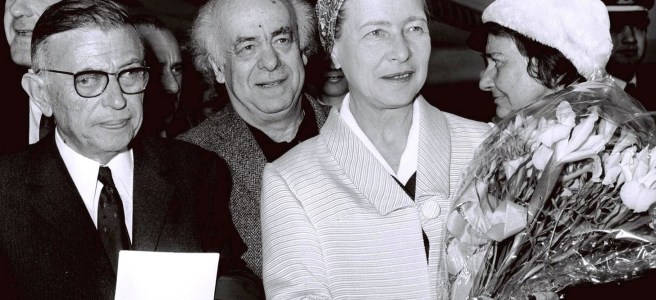


 EXIT! in English