The Monetary Sin

Robert Kurz

Just as every doctrine of salvation produces its orthodox dogmatists, neoliberal economic theology does not lack this type. Principles over facts is the motto. With Bundesbank President Weber, yet another conservative apostle of respectability has thrown in the towel. Weber, recently considered Chancellor Merkel’s preferred candidate for the post of outgoing ECB chief Trichet, left his patroness in the monetary policy dispute. As a member of the same economic church, Merkel is more inclined to pragmatic muddling through. Weber presents himself as a strict guardian of money against the ECB’s easing policy and a “transfer union” that is to be used to plug the rampant debt. His steadfastness has only the flaw that he confuses cause and effect. It was not a lax monetary policy that brought about the crisis but, conversely, the crisis forced a lax monetary policy. The fall from grace of neoliberalism already took place under former Federal Reserve Chairman Greenspan in response to the dotcom crisis in 2001. Since 2008, the ECB, too, has gone against the wisdom of its own bible and turned to money glutting. The crisis respite bought with it threatens to turn into uncontrollable inflation in textbook fashion. If Weber, who is faithful to the Bible, had prevailed, however, the euro would have blown up long ago. Merkel wants to sit out the debt crisis through political horse-trading. The euro bailout fund is to be drastically expanded, contrary to earlier declarations of intent. In return, a vaguely conceived “competitiveness pact” is planned. The problem behind this is that the deficits, which have reached their limits, are nothing more than the flip side of Germany’s export surpluses. Regular debt relief would cause these one-sided exports to collapse and, at the same time, put the major German and French banks in trouble, which are sitting on mountains of junk bonds issued by the deficit countries. Thus, inflationary policy appears to be the lesser evil. The dogmatists of economic theology are right against the pragmatists and vice versa. That is why they must fail together.

Originally published in Freitag on 02/17/2011

The Political Economy of Education

Robert Kurz

The capitalist mode of production is rich in internal self-contradictions. The field of education and training is no exception. Knowledge in itself does not produce surplus value, but it is a factual necessity for capital under the dictates of productive force development. Since in this society every expense must appear in the form of money, the education system is a “dead cost” in the capitalist sense, i.e., a deduction from social surplus value. Therefore, the need for educational investment is invoked everywhere in the name of location competition, but at the same time the production and distribution of knowledge is put under enormous cost pressure.

This contradiction has intensified historically. The same development of productive power that forces that expansion of knowledge and education has, on the other hand, thinned out the real value-added producing sector (especially the industrial base) by making labor superfluous there to an increasing extent. While the famous “productive” working class relatively declined and today forms a social minority, the largely “unproductive” new middle classes of the education and knowledge sector grew in mirror image. In capitalist terms, this development could only be represented as increasing credit financing of the corresponding “dead costs,” an aspect of the general financing crisis that has hardly been addressed.

According to the laws of the labor market, the massification of higher education (in the FRG today, about half of a cohort graduates from high school) and thus of the supply leads to a devaluation of the qualified labor force. In conjunction with the cost pressure on the entire capitalistically “unproductive” education system, this has led to even the academically educated strata progressively being made to live in precariousness. The old educated middle class is doomed. Added to this is the discrepancy between qualification and cyclical requirements. Since the social context is not subject to joint planning but to blind dynamics, some qualifications suddenly become superfluous or oversupplied, while others are lacking. Training, however, is only possible in the long term, while the requirement profiles in global competition change by leaps and bounds.

In the meantime, we are dealing with the same problem worldwide. There are similar names in all countries for the condition that is called “Generation Internship” in this country and illustrates the true social imbalance of “Generation Facebook.” Precisely because the educational gap between the capitalist centers and the periphery has been partially leveled, the lack of prospects for the educated young generation in the poorer countries is particularly drastic. This (along with the explosion of food prices) is one of the backgrounds for the current revolts in the Arab world. But also in China or India, mass qualification and employment are diverging. It is not a matter of so-called democratic deficits, but of a capitalistically insoluble structural contradiction in the relationship between education and economy.  The question is whether the globally masculinized “academic proletariat” translates its precariousness into the idea of a new social emancipation for all, or whether it merely wants to assert itself in capitalism and ideologically processes the necessary disenchantment. In the second case, the worst is to be expected.

Originally published in Neuen Deutschland on 03/07/2011

A Hero of The Postmodern World

A Small Follow-Up to an Exemplary Affair

Robert Kurz

Baron Karl Theodor zu Guttenberg has attracted attention by his contemporary behavior. The surprise may be called all the more a pleasant one, as it had been said of him from ill-wishing sides that he suffers from anachronistic and pathological mental states such as intellectual honesty, independent thinking or reliable diligence. Some cultural conservatives are even said to have imputed originality to him. All of these slanders have proven to be groundless. As a jogging and surfing media literate under forty, the noble scion is flesh from the flesh of the Facebook generation. Copy and paste is not considered shamelessness to him (what is that?), but cleverness; nothing postmodern is alien to him. Why should one still think anything oneself, when one has always been a patented queer and self-thinker anyway? So this sympathetic bearer of the zeitgeist succeeded in an exemplary way in expressing the ideas he didn’t have, not even in his own words. No one can take that away from him.

All those who copied the postmodern theorem of the “death of the author” from whomever knew how to put their name over it with grandeur. This subtle irony was also immediately understood by the Baron. In times of individualization, the author and the authoress do not disappear to make way for an anonymous collective of intellectual factory production. Only the names change like the doorplates in a prefabricated building. What dies is the myth of origin, that someone once actually thought and invented, researched, developed and formulated something that had to be quoted. Texts are simply there like the universe. Or like the apples on the tree that you only have to pick. To put it better and less naturalistically: The world is in any case one big text in the form of a virtual self-service supermarket, into which one may log in if one happens to be in the mood for reputation.

Every thought has already been there and stored in postmodern nirvana. All you have to do is gain technical access. That is why the habitual reduplication will not stop in the remote text regions of the Neue Zürcher Zeitung or the Frankfurter Allgemeine Zeitung, but will hack into the central treasure troves of the West, the East, and all intelligent worlds in general. The Baron belongs to the forerunners of a far higher second-hand thinking than he himself could display. Let’s take as a simple example the theorem of the so-called Pythagoras. This origin myth is cracked, when the so far still unrecognized 23-year-old Emil Backe states the theorem in a term paper for the University of Cologne and puts his name above it. Of course, Backe’s theorem cannot have a long stock of originality either, but that is not the point. The postmodern time horizon is getting shorter and shorter anyway. This is also true when Backe, who is now already 25 years old, presents the “Faust” that he has painstakingly downloaded. For a quarter of an hour, it is discussed in the community as his most mature work to date, and you really can’t ask for more than that.

Perhaps some eternalist now claims that in this way nothing new would come about and at some point the human copy machines would have to run out of material. Anyone who thinks this way doesn’t know the remix process. It is by no means just about the repetitive and serial appropriation of individual works, but even more about the combination of as many different text modules as possible. Therein lies the actual creativity of the original forgery. And the Baron’s dissertation also provides an example of this, although it cannot yet be called quite classical in this sense. Conceivable, for example, would be a remix of Shakespeare’s “As You Like It,” essays by Kurt Gödel, and the autobiography of Oliver Kahn; reconfigured as a retirement work by Emil Backe, which he blogs at the age of 29. The variety of remix possibilities is almost unlimited. Thus, at last, everyone becomes a celebrity and, beyond the copy work, the subject of his own electronic Yellow Press, tweeting every day with patience interesting messages about the composition of his dinner.

Basically, the copied state of mind could be completely automated. Why should one still download and remix oneself when the computer can do it much better on demand? The difference is a quantitative one, not a qualitative one. It is only about the speed with which the ars combinatoria is to be accomplished. Nowhere is anyone at home in the thinking room, neither with the intelligent robots nor with their masters. Who still needs an ego today, when everyone has long since been individualized? Admittedly, one single basic qualification remains indispensable: the subject being copied should still be able to write his or her name. Entering three crosses would not be individual enough. So much literacy is necessary, even in the postmodern copy store. The Baron, for example, could clearly spell his name, otherwise it would not be on the title page of the dissertation. He could have gone into business with it. Or into nuclear physics. The fact that he preferred jurisprudence, however, indicates a certain narrow-mindedness. The future will bring the individual universal copier, before which the universal geniuses of the Renaissance would have to pale.

So the artificial excitement of worn-out cultural seniors, who want to recognize in all this a decadence of the de-skilled intellectual business, is quite superfluous. The dynamic avant-gardists at the base are of a different opinion: “We should be careful with such judgments and deep indignation…because copying, copying, decorating with false feathers on a small scale is our daily business.” Who copied this down from the universe of texts? No one other than the head of the “Names & Careers” department in the “Handelsblatt” newspaper, who can also write her name for professional reasons. She knows where the bartel gets the cider; and that’s why she adorns herself not with other people’s feathers, but with false ones. There are no real ones left. This is the way it is with the work of art in the age of its mechanical reproducibility, as Emil Backe once expressed it in his imitative way, when he had just had a particularly good copying day on a somewhat larger scale.

The fact that the Baron, despite his enormous and sacrificially cultivated copying skills, can no longer perform the job of defense minister, which was tailored to his body like any other scientifically demanding job, makes him a hero and a martyr of the postmodern idealistic overall state of mind. As the deconstructivist left marches at the forefront of digital progress, it should recognize the kindred copy-soul in the Upper Franconian minor nobility. It seems all the more strange when some representatives of the free software and free culture movement try to distance themselves. They would not have meant it that way. It is only surprising that there was never such an objection, when in the alternative leaf forest of their own milieu the “lustful copying” was declared to be an emancipatory act. At least the “Gegenstandpunkt” appreciates that the Baron has behaved in a pleasingly non-proprietary manner. This statement cannot have been copied from a Marxian text. But perhaps diversity has finally arrived even among the oldest new leftists.

In general, the left-wing postmodern scene can study the secret of the state it has always longed for but never achieved: namely, to be popular and to be loved by the people. The Baron was considered by the people of the country to be swell; not because, but in spite of the fact that he presented himself as a conceptual thinking being. The heroes of the everyday mind, however, have a keen sense of when there is a good core hidden behind a deviant shell. Thus, the supposed unmasking only washed away one last blemish by proving what was always to be suspected: He is not an intellectual at all! He has merely copied all the outlandish stuff without thinking much about it. Since then, he has been doubly and triply loved for this very reason, no matter what else he may publish, be it the “Grundrisse” or “Finnegans Wake.” The postmodern regulars may say to themselves: nevertheless, he is one of us. The fact that he can write his name is not in itself a matter of honor. After all, we as normal people can do that, too, if we make a little effort. The Post-Left should appoint the Baron as its honorary member not only for factual reasons, but also for propaganda reasons; perhaps then a little of his charisma will fall on them.

Originally published on the exit! website in 2011.
Business Management as a Gamble

Robert Kurz

For the common man, the most evil villain in the country is not the slanderer, but the speculator. The “gambling casino” of financial capitalism has long been held responsible for all economic and social crisis phenomena. Thus, the banker has become the prototype of the irresponsible gambler and is considered the number one enemy of all well-behaved philistines. The same consciousness, however, can find a lot of good in the industrial capitalist, who does not hang around in the airy financial superstructure but has material things produced and needs jobs in the process. One does not criticize capitalism at all, but would like to distinguish between dubious financial gambling and down-to-earth real economy.

But is real economic capital with its material basis really so far removed from speculative thinking? Even industrial profit is not fixed from the outset, but must first be won in competition. Because there is no collective planning of social production, no enterprise knows whether it can sell its goods at all. Therefore, material production is also a gamble on the field of universal competition and the real business manager is just as much a gambler as the investment banker. Only the stakes are different: not paper financial securities, but machines, raw materials and people.

For a long time, economic science did not want to associate risk competition with the concept of gambling. Corresponding attempts to apply mathematical game theory to economic behavior came only from outsiders. It was not until 1994 that John F. Nash (Princeton), John C. Harsanyi (Berkeley) and Reinhard Selten (Bonn) received the Nobel Prize as representatives of economic game theory. This change in perception has not only something to do with the postmodern mentality that wants to turn everything and anything into a “game.” Nor is it merely an ideological reflex of the financial bubble economics since the 1980s. Rather, the use of risk in the real industrial economy has also changed dramatically.

As is well known, the trump card in the competitive game is business cost reduction. In the real economy, this also involves risk-taking in a highly material sense. This applies not least to safety standards in the handling of hazardous natural substances and processes. The competitive pressure that has intensified in crisis capitalism has long since taken hold of this sensitive area. The flip side of the same development is the use of ever larger aggregates of production and ever less mature and controlled techniques. For example, according to the official investigation report, the huge oil spill in the Gulf of Mexico in 2010 was due to a rigid business strategy of saving time and money at the corporate conglomerate involved. The same policy has come to light in the Japanese nuclear disaster; not to mention that nuclear energy in itself carries unmanageable risk burdens.

The financial speculators at least play with paper, the big industrial gamblers with nature, with the life and health of people. Who is more irresponsible? The chain of industrial catastrophes caused by business management has become just as dense as the chain of financial catastrophes in the last 30 years. And the next one is sure to come. The game must go on.

Originally published in Neuen Deutschland on 04/04/2011

Starvation Inflation

Robert Kurz

It was common knowledge that the huge government rescue packages and economic stimulus programs since the crisis collapse in 2009 contain inflationary potential that must be unloaded after a transition period. In fact, inflation is on the rise worldwide – especially in the global growth drivers China, India and Brazil, but to some extent already in the euro zone.

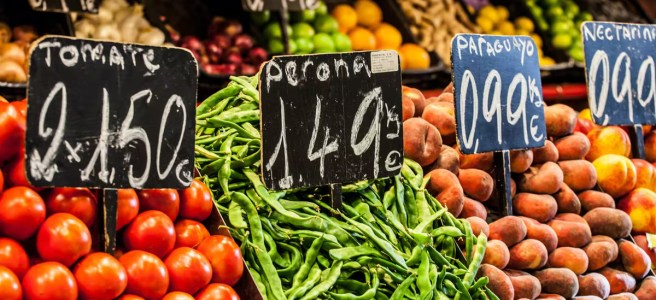
However, there are differences between the production sectors. Everywhere, food prices are outstripping all others. The official inflation rate in China is currently 5 percent; in the food sector it is 10 percent, and in real terms it is estimated at 19 percent. The price explosion for basic foodstuffs is even worse in India and other parts of Asia, in Africa and Latin America. Food price increases in the U.S. and the EU have also far exceeded the general inflation rate in recent months. According to the Food and Agriculture Organization (FAO), rice, corn, wheat, meat, vegetables and luxury foods have become more than 30 percent more expensive on average globally since the beginning of the year.

Why are food prices in particular exploding? Obviously, several causes of capitalist economic logic are intertwined here. Government programs and a flood of money from central banks lead to the actual devaluation of money, which affects all sectors. In the case of food, however, special factors are added. The increasing production of biofuel has a particularly serious effect: Oilseeds are being burned for fuel and acreage is being lost for this purpose. At the same time, however, the price of fossil energy has risen and with it the cost of diesel and fertilizer in agricultural production. This development is escalating because high oil prices make the conversion of agricultural products into fuel all the more attractive. Finally, such a situation in agricultural commodities attracts speculative mobile money capital, which bets on further rising prices and makes this process a self-reinforcing one.

The social impact of record food prices depends entirely on the proportion of income that has to be spent on food and drink. The majority of people in Asia, Africa and Latin America spend between 60 and 90 percent of their income on food. In China, the figure is still 30 to 40 percent, despite growth successes. In Europe, the figure is 5 to 10 percent. But these figures are deteriorating dramatically in all parts of the world. In the wake of the global economic crisis, which has by no means been overcome, global poverty has spread like wildfire, albeit unevenly. In many regions of the world, the incomes of large masses of the population have fallen to rock bottom. Now the price of, of all things, basic foodstuffs is surging. As early as 2010, the World Bank warned of new hunger revolts. The unbearable rise in food costs is playing a major role in the uprisings in the Arab region. And Spain shows that something similar is brewing in the crisis countries of the euro zone. Although no one here has to starve yet, in view of the rampant youth unemployment, the patience of the generations that are able to fight may be wearing thin if many can no longer afford even the cultural goods and technologies that have become a matter of course because food alone is becoming more and more expensive as budgets shrink.

Originally published in Neuen Deutschland on 05/30/2011

Postnational Chain Reaction

Robert Kurz

In capitalism, it is not people who are socialized, but dead things: money and commodities. Therefore, the perception of the world is reduced to a point; to the single individual, the single company, the single state. The consciousness of time is just as atomized. What counts is always only topicality. Everything else is yesterday’s snow or the Flood that follows. We don’t think in terms of epochs, but in terms of the time horizon of the “daily news.” It is true that we somehow know that there are complex global connections, especially economic ones. But the more there is talk of “networking,” the more isolated the facts appear. Globalization is all well and good, but isn’t it a topic of the day before yesterday?

Ever since the states put together their rescue packages, people everywhere want to put on their national glasses again. The fact that the bankruptcy of Lehman Brothers (was there something?) triggered a chain reaction that for a moment revealed the worldwide network of bad loans is seen as an excess of some paternalistic financial markets. Under the protective umbrella of the government and within the four walls at home, people like to believe that they are in a world of loud patriotic economies. In reality, the same transnational flows of goods and money, the same global imbalances and deficit cycles as before are now subsidized by government loans instead of commercial financial bubbles. And the state money itself is anything but national.

Because capitalism is considered indestructible anyway, and the new quality of globalization tends to be suppressed, the only question that seems to arise is that of up-and-comers among corporations and national winners and losers. Will China replace the U.S. as the economic and political world power? This “grand narrative” of the media is completely blind to reality, because we no longer live in a century of independent national empires. The Chinese export surpluses vis-à-vis the U.S., which are increasing again from month to month, are financed by the money glut of the U.S. Federal Reserve. Conversely, the Chinese feed their state-enforced domestic growth from astronomical foreign exchange reserves, primarily in dollars. The interdependence is so great that any stumble by one brings down the other. Neither individually nor jointly do they control their contradictory interdependence.

In Europe, people pretend that the debt crises of Greece and the other wobblers are homegrown problems that can be dealt with by national austerity efforts. In fact, the deficits in the EU are the flip side of Germany’s export surpluses. If the German economy had to focus on the national domestic market, it would collapse immediately. So far, the draconian austerity measures in Southern and Eastern Europe, and for that matter in Great Britain, have largely only been proclaimed. If they are fully realized, we can expect a European recession with global repercussions. And if Greece goes bankrupt, just when it is saving itself to death, people will wonder where Greek government securities are stashed everywhere. It’s not much different than the Lehman certificates, and it applies to bad government debt everywhere. Capital in all its forms is international.

Originally published in Neuen Deutschland on 06/27/2011

Savings Terror and Revolt

Robert Kurz

German export chauvinism believes itself to be on the island of the blessed, where no crisis exists anymore. It is true that mass poverty and slum conditions have continued to rise in this country as well. But that is not an issue when the economy is booming all the same. China and the USA are not the only ones buying big in Germany thanks to government aid. Together with cars and machine tools, the crisis was mainly exported to the less blessed parts of the EU for the time being. The euro makes it possible because it favors the high-tech export roller. And that’s why it has to be saved. The regulars get artificially excited about alleged gifts of billions for the “lazy Greeks.” But the gifts are not gifts at all, but additional loans that are to be serviced by hook or by crook. This is only possible if Greece saves itself to death and literally cuts the costs of the euro bailout out of its citizens, including the middle class. It is no longer just militant young people who are taking to the streets against this, but also conservative housewives, doctors and teachers, grandpas and grannies.

As is well known, the social pain threshold is not only being exceeded in Greece. For similar reasons, the austerity terror is also raging in Spain, Portugal, Ireland and elsewhere; even in Great Britain, which, although not part of the euro zone, had to save its own banks and is now making its own population pay for it. Everywhere, a revolt is brewing against the selling off of the last public resources, which, although so far aimless in sociopolitical terms, will soon be containable only by force. Suddenly, “Arab conditions” are looming in the middle of the EU. Whereas the uprisings there have so far been perceived by the media as crucifixive “democratization movements,” the social misery is now emerging as the true motivation on the ground of the European democracies themselves. At the center, here as well as there, is the dramatic mass unemployment of the academic youth, which, by the way, has long been noticeable in China and the other Asian boom countries.

It was the central banks’ flood of money and the global government bailout programs that led to new financial bubbles, rampant inflation or, as in the euro zone, to the brink of currency collapse. The extremist austerity policy is the about-face to escape these consequences. However, this is the only way to manifest the crisis in its full extent. Greece, currently the weakest link in the chain, shows after Arabia the future of the capitalist economy and its world of states. If, after the young, the older generation also suffers the consequences of the crisis as a result of state intervention, the legitimacy of the political system will collapse. This is not only a social and political problem, but also affects capital itself. After all, the mania for austerity against the consequences of the bailout mania is also stifling the global economy again in the end. It is absurd to imagine that the FRG can bask in the glow of its successful crisis exports while the world around it is on fire. It will be interesting to see how the supposed winners of the crisis react socially and politically when the misery finally reaches them.

Originally published in Freitag on 07/07/2011

Toxic Waste Dumps of Credit

Robert Kurz

Anyone who still has a vestige of memory might wonder what happened to the huge masses of bad loans for which the search was on after the financial crash of 2008 to find as inconspicuous a resting place as possible. Nothing has been paid off; on the contrary, the imaginary liabilities have continued to swell. The game of apparently servicing old loans with new ones, and servicing them again with new ones, has long been exhausted in the private sector. On the other hand, the notorious “toxic papers” were not allowed to be written off in full because of their sheer mass, apart from a few cosmetic operations by the banks. According to the financial gurus themselves, this would have meant the famous “meltdown” of the global financial system. In balance sheet terms, the banks were allowed to offload their toxic waste. But even the “bad banks,” which were supposed to temporarily cushion the collapse of the shadow banking system after the bursting of the real estate bubble with the help of government guarantees, have gone quiet.

Officially, hopes and expectations were raised that the government guarantees could soon create enough new “confidence” to bring the long worthless securities back to a halfway decent price. The prerequisite for this would have been that the U.S. real estate sector, from which the shock wave had emanated, recovered strongly. There is no evidence of such a recovery. But the government guarantees did not come due either. This was simply not allowed to happen, because otherwise the “meltdown” would have taken place via the detour of the state budgets. So where has the highly toxic waste of the financial system gone? A final repository has indeed been found, namely the central banks. As is well known, they are currently flooding the world with dollars, euros, etc., in order to breathe life into what is actually a clinically dead global economy. Officially, they are not yet dropping the money from the helicopter, but are giving it to the commercial banks as a loan; albeit at low or even zero interest rates. As with any loan, the banks have to deposit “collateral” for it. And what does this collateral consist of? In the masses of toxic waste paper that the central banks take in their stride as if they were the crown jewels.

Less than three years have passed since the crash of the financial markets, and already the public finances of more and more countries are running out of steam because they were overstretched in the course of the anti-crisis policy. Basically, the same development is repeating itself with government securities as with private financial securities. A growing part of the barely serviceable debt has been transferred to shadow budgets. More and more government bonds are turning into toxic waste like real estate mortgages before them. And central banks are also becoming grateful customers for this. The Asians are buying less and less U.S. bonds? No problem, the U.S. Federal Reserve itself is asking for them like grain during a famine. The European sovereign debt crisis would also have worsened, despite all the rescue packages, if the European Central Bank had not long since started buying up worthless bonds of the crisis states en masse. Of all things, the central banks, the supposed guardians of the Grail of financial stability, have become toxic waste dumps of the global financial system. This is the final disposal site because there is no longer any authority behind it that could, in turn, relieve the central banks of their burden. The façade of normality that has been put up since 2008 consists of the adventurous policy of money creation based on the “safety net” of bad loans.

Originally published in Neuen Deutschland in 07/25/2011

End of The Automotive Fairy Tale

Robert Kurz

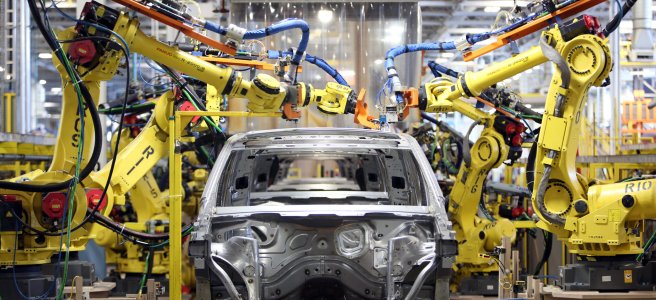
Despite all the talk of a service society, industrial production is still the basis of real capitalist value creation. And the auto industry still forms the core sector. A wide range of suppliers and services depend on it. That is why the auto companies were the preferred recipients of state aid alongside the banking system during the major crisis slump in 2009. They were given a helping hand in the form of direct state investments (General Motors), rescue measures and guarantees, as well as subsidies for car sales worldwide. In this country, there was the infamous scrappage premium. This was sorely needed, because it was precisely in the auto industry that the largest global overcapacities had built up, which threatened to melt away like snow on the sun after the collapse of the fictitious purchasing power fed by the financial bubbles.

Within a very short time, car companies everywhere were miraculously deemed to have been saved. The central banks’ flood of money did the rest to cushion the crashing economy. And car sales also benefited from this to a considerable extent, because the rolling tin can is now the preferred object of desire in this world. The next dream of anyone who has just escaped starvation is a car. China in particular experienced a car boom with almost fantastic growth rates. A few months were enough to make the country shine as the most important new export market for German carmakers. A warning sign could have been that it was not small and medium-sized cars that made up the bulk of the export miracle, but the extremely expensive premium class. It was not solid mass consumption that matured here, but rather the need for ostentation on the part of crisis profiteers – not least on the airy basis of the Chinese real estate bubble, which (along with government programs) had replaced the U.S. one as the driving force of the economy.

As is well known, public finances around the world are now running out of steam. The debt crises in the USA and the EU are already having an impact on the economy. In China, galloping inflation and the central bank’s so far inadequate dampening measures indicate a slowdown. Just as the auto industry was one of the first beneficiaries of the rescue packages, it is now likely to be the first to be hit by the increasingly likely return of the global recession. The recovery was too fast and too lush to be true. As early as the second quarter of 2011, the global passenger car market entered a period of stagnation. Forecasts are being revised downward, from 65 to 60 million cars for 2012. The end of the automotive fairy tale will also soon put the substantially unsolved problem of global overcapacity back on the agenda. The old bankruptcy candidates are also the new ones, with General Motors at the forefront. If the robust business feigned with the help of government injections dissolves into the old misery, the fate of GM’s German subsidiary Opel will also once again be on the line. The rumors about a possible sale of Opel a few months ago already spoke a clearer language than any success stories. The only thing is that no one will want the company in the event of a new economic slump. The tame eagle of the subsidized upswing could soon mutate again into the bankrupt vulture of the crisis. In any case, the development of the auto industry is an example of the development of the global economy.

Originally published in Neuen Deutschland on 08/22/2011

Economic Doping

Robert Kurz

Crises come and go, but capitalism remains. Liberal and left-wing theorists alike are convinced of this. How is a major economic crisis overcome? By devaluing surplus capital in all its forms (means of production, labor power, commodities, money capital). After that, it can supposedly go on and on. The economics professors call this “adjustment,” the academic leftists “cleanup.” Since the fall of 2009, it has generally been said that the new global economic crisis is already over. But the great devaluation or shakeout has not taken place at all. Instead, there has been “rescue” by hook or by crook. According to the official economists’ own views as well as those of their leftist colleagues, this would prove that the real devaluation shock has yet to come.

Perhaps the pragmatists were wiser than the theorists because they sensed that only economically scorched earth would remain after the global shakeout. Admittedly, their rescue measures only push the elementary problem in front of them and let it grow into ever greater dimensions. For more than 20 years, the global economy has lived mainly on financial doping. For a long time, it was the financial bubbles that created purchasing power without a real basis, then, since the turn of the century, the central banks and state budgets. The mobilization of labor in China, India and Europe was based solely on one-sided deficit cycles. Ultimately, the production processes stimulated in this way are “invalid.” They must end with the devaluation of all their components. Thus, while the theorists will be proved right, no new prospects for global capital valorization will follow from this.

One can speak of a paralysis of economic theory and economic or monetary policy. This is also evidenced by the fierce controversies in the economic guild and in governments. The neoliberal hardliners, such as the ECB chief economist Jürgen Stark, who has just resigned, want to accept an end of the horror because they believe their ideology more than reality. The pragmatists, on the other hand, want to extend fiscal policy doping excessively, even though in doing so they are always piling up new fuel for the inevitable devaluation shock. At present, government stimulus programs are coming to an end everywhere, and immediately growth rates are falling at a remarkable pace – just like a doped-up runner runs out of air when he runs out of dope. The next global recession is just around the corner. In the USA, President Obama already wants to put together a new mega stimulus package without knowing where he is going to get the money for it.

The unsolvable capitalist dilemma can also be formulated differently. As long as only the thoroughly ailing financial system is propped up with ever new measures, the crisis will remain in abeyance, so to speak. But as soon as insubstantial money creation turns into real demand, demonetization, which was still limited as long as only the economic slump of 2009 was bridged, will march on. Nevertheless, inflation, which can hardly be curbed in the emerging markets, is also on the doorstep in the EU; in the UK, it has already reached the 4.5 percent mark. Like the British administration, the ECB, the Sarkozy and the Merkel governments have apparently opted for inflation as the supposed lesser evil. This is leading to political and economic turmoil. In reality, it is a systemic issue, but no one wants to admit that.

Originally published in Neuen Deutschland on 09/19/2011