No Water in The Desert

Why The Search For Purchasing Power Comes To Nothing

Robert Kurz

What does capitalism need now like a man dying of thirst in the desert needs a watering hole? Solvent demand! But its own mechanisms of operation have dried up this demand. It is the old song of internal contradiction, intoned in increasingly shrill tones: People who are subject to the laws of the logic of valorization should work for God’s wages until they are exhausted, save like world champions to secure their old age and their future, and at the same time spend money as consumers with their hands full.

Neoliberal supply policies dealt with this contradiction in their own way, by demanding cost reductions no matter what. The cheapening of supply was supposed to lead to growth in accordance with the laws of the market. This was to apply not least to the supply of the commodity labor power on the labor markets, whose deregulation everywhere lowered real wages and forced the expansion of the low-wage sector. The problem of demand was seemingly solved by creating insubstantial purchasing power through financial bubbles in the U.S. and elsewhere (for example, through the infamous mortgage loans), despite the long-term erosion of real wages for the broad middle class. The result was a global deficit economy with a one-sided export orientation, with the U.S. being the largest recipient of these exports.

As this construct begins to give up the ghost after the global financial crash, Keynesian demand policy seems to be being rediscovered. The state is supposed to revive the collapsing purchasing power of consumers by means of economic policy. But far away are the times when, under much more comfortable conditions in the old FRG, the “concerted action” of government, business associations and trade unions produced a Keynesian surge in demand that was eventually eaten up by inflation. Today, there is no trace of “concertation”; the opposing theories are mixed up like turnips and cabbage.

With the scrapping bonus, the government directly subsidized an important consumer sector for the part of the middle class that was still able to accept the gift. It is common knowledge that this emergency measure was just a flash in the pan. The other economic stimulus packages remain too weak because the bailouts of the financial sector alone are already threatening to bring public finances to the brink of ruin; a problematic blow to the entire banking system that was unthinkable in Keynesian times. The mirage of the black-yellow promise of tax cuts to create purchasing power has little to do with Keynesian demand policy, but is nothing more than neoliberal nostalgia. The tax cut, especially for the upper middle class, was one of the flanking measures of supply-side policy that no longer works. First, it cannot be financed, and second, it would fizzle out because, given the crisis situation, it could not be used for investment or consumption. That is why the glorious coalition partners are having a family row after only three weeks in government.

The desperate search for demand with purchasing power is all the more contradicted by the situation in the factories. The workers of companies threatened with insolvency are outbidding each other in concessions to management, driven by fear for their jobs. It is not only at Opel and Arcandor that forgoing wages, vacation and Christmas bonuses is the order of the day. At Quelle, it has already been to no avail. And the wave of bankruptcies has only just begun. The wage cuts negotiated by the works committees to save the company are likely to spread further. It fits into this picture that the trade unions, with their usual sense of responsibility for everything bad that happens during the crisis, are starting to prepare for a wage freeze in the 2010 collective bargaining negotiations. When this voluntary supply policy for labor, born out of necessity, is praised in a honeyed way, it is a blatant contradiction of a demand orientation, but that is just the way things are.

In this situation, the demand for a general, sufficiently high legal minimum wage has receded into the background; and there can be even less talk of increasing welfare payments that have fallen below the subsistence level. On the contrary, low wages are beginning to spread to the core workforce through wage sacrifice, and the lower middle class is melting away. The flash in the pan of government demand policy is being supplemented by a continuation of supply policy by other means on the labor markets. This trump card in the game of global competition should not be relinquished. The caravan of cheaper and cheaper labor should continue to move forward even without a watering hole. That is why the elites are staring at China like a rabbit at a snake, although it is more than doubtful that a new global deficit economy can be started from there as a reversal of the previous one-sided export flows. When belief in miracles replaces demand concepts that are no longer viable, the next economic slump is predestined. Then the downward spiral will continue with nothing but emergency rations.

Originally published in the print edition of the weekly newspaper Freitag on 11/19/2009

Sand in the Gearbox

Robert Kurz

It’s not just bankruptcies that are on the rise, but also the breakdowns. And it is not just the onset of winter that is causing airports to close temporarily or ICE trains to be cancelled in droves. The cold season also existed in times when trips and appointments did not have to be cancelled en masse because of it. Besides, Berlin’s suburban train service was already breaking down when people could still walk around in T-shirts. And when the Nuremberg subway stops more and more frequently en route, it’s not because it’s snowing into the tunnels. In reality, airlines and airports have cut back on maintenance and staffing, as have railroads and local transit authorities. In Nuremberg, it’s the new “driverless” subway trains whose much-touted full automation is causing gridlock. Apparently, for cost reasons, technology that is not yet fully developed is being used. Organization and information are constantly overstretched because staffing levels are getting thinner everywhere.

It is by no means a coincidence that a series of breakdowns has been noticeable for years, particularly in the transportation and energy sectors. Privatized or commercially managed public services systematically negate their character as an infrastructure for society as a whole, whose extensive interrelations are, after all, personnel-intensive. The adventure stop in the middle of the route, the timetable chaos, or the power failure only make sense if purely economic cost rationality prevails. In terms of financial policy, crisis Keynesianism has replaced neoliberalism as emergency management, but in terms of business management, neoliberal cost-cutting policies are maintained and even promoted at all costs.

This also applies to the industrial, retail and banking companies, which have so far kept their heads above water by cutting corners despite massive sales slumps. If one person has long been expected to do what three did before, they are now expected to take over the tasks of four. Or else safety and repair capacity are being slashed altogether. Recalls of brand-new cars due to design and manufacturing flaws are on the rise, as are the defects in new buildings and friction in payment transactions, most recently due to malfunctioning credit cards and ATMs. Queuing at the supermarket checkout is becoming a habit because the cashier must stock the shelves at the same time. One hardly dares to ask about the conditions in the food industry. How wonderful it is that the staff of state and municipal inspection authorities is also being cut; presumably even more so in the wake of tax cuts and the subsequent decline in revenues.

Where once the resistance of recalcitrant employees was the sand in the gears of capitalism, the movers and shakers have now discovered that employees and customers alike will let them do almost anything. The pressure to perform is up, sick leave is down and fear reigns supreme. Soon, buyers will likely be voluntarily cashing in on themselves. The financial policy of a quasi-war economy corresponds to the everyday stress of a quasi-war economy. But all willingness and obedience are useless if the impossible is to be done immediately. From a practical and organizational point of view, nothing works anymore, because socially and economically, everything works. The sand in the gears of business administration is business administration itself.

Originally published in Neues Deutschland on 01/08/2010

Serfdom Instead Of Unemployment?

Robert Kurz

In the wake of the global economic slump, Germany may not appear to be an island of the blessed, but it is the industrialized country that has best absorbed the threat of additional mass unemployment. Although companies have been cutting staff for months, the unemployment rate has only risen moderately so far. The solution to the riddle is that, thanks to statutory regulations, this country has the largest low-wage sector in Western Europe, which is continuing to expand during the crisis. The drugstore chain Schlecker has just been allowed to demonstrate how employment can be maintained: A large part of the workforce was handed over to a temporary employment agency and rehired on much worse terms. The freshly minted Minister of Labor questioned whether everything was above board here. This concern is hardly credible because she herself announced greater pressure on Hartz IV recipients a few days earlier. The direction was given by the council of experts of the Federal Government, the so-called economic wise men, who had already suggested in December, just in time for Christmas, a decrease of the standard rate by 30 per cent to 251.30 euro per month. That would be the previous rate for children from 6 to 13 years. In order to implement this, the additional income borders are to be raised. The Hartz IV receivers could then use forced cheap labor to – perhaps! – achieve a starvation income at the same level as the old standard rate. Last week the economic wise man Wolfgang Franz upped the ante by introducing forced community service for the annoyingly superfluous as a supplement. The wisdom apparently consists in the fact that “wages and bread” is understood as the deliberate creation of a caste of serfs of the labor administration and the cutthroat Klitschen. If there is better food in jail than millions of “working poor” can afford, one hopes to have emerged “strengthened from the crisis” – if the world market does not put a spoke in the wisdom-soaked wheel.

Originally published in the print edition of the weekly newspaper Freitag on 01/14/2010

Scorn for The Minimum Wage

A court ruling and its consequences

Robert Kurz

It is a familiar refrain within the eternal processing of the contradiction between wage labor and capital: To pay even the value of labor power would be the downfall of the Occident. As is well known, Deutsche Post had negotiated minimum wages of between 8 and 9.80 euros per hour with the Verdi trade union. When this regulation was made generally binding for the postal industry by the then Minister of Labor Scholz through a legal ordinance, the private postal service providers ran up a storm against this “diktat.” They argued that this would undermine the “longed-for competition” in favor of a monopoly. This happily proved that competition among private infrastructure companies is only possible on the basis of starvation wages. Now the Federal Administrative Court has overturned the ordinance. They ruled that it was a procedural error not to involve the postal competitors. This is a feat, since they had founded the competing employers’ association Neue Post- und Zustelldienste (NBZ). Its president, Florian Gerster, who, interestingly enough, is the former head of the labor administration, has made a name for himself as a trendsetter for low wages in Germany.

Private delivery companies such as TNT or PIN (a subsidiary of the Holtzbrinck Group) were already allowed to ignore these regulations. For this, they have now received a first-class acquittal. What is a legal regulation to the “natural laws” of competition? The ruling fits in with the political climate since the start of the black-yellow coalition government. In order to conceal the situation on the labor market under crisis conditions, the devaluation of the labor force, which had already been initiated by all previous governments, is to be accelerated once again. The privatized infrastructure companies are particularly suitable as shock troops. The railroad has shown the way with its subcontractors, whose hourly wages of 3 euros for Eastern European track construction workers were described as “immoral” even by CDU members. Now the door is open for the creeping generalization of such conditions, especially since the black-yellow coalition agreement provides for more difficult procedural rules for new minimum wage applications.

As an aside, it is becoming known that the private delivery services tend to want to compete less in one respect, namely when it comes to investing in additional postal networks. The private sector wants profitable mail delivery to be possible without comprehensive infrastructure. In this respect, Deutsche Post has once again set an “example” by unrestrainedly expanding the delivery areas for its employees. Fewer personnel for larger areas, that is the first commandment of business management. The capitalist ideal of a combination of performance hustle and cheap wages is striving toward its realization in yet another corporate sector. What does it matter if the mail comes only rarely or in patches and there are no longer any post offices, but only subcontracted dubious small businesses? The main thing is that “competition” has been saved, thanks be to God and the Federal Administrative Court.

Originally published in print and online edition of the weekly newspaper Freitag on 02/04/2010

State Bankruptcy and Bank Robbery

Robert Kurz

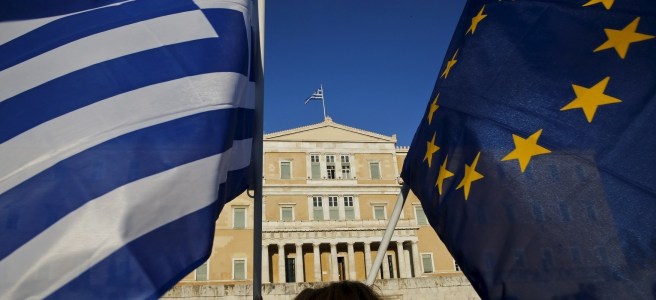
The worst is over, is the official incantation. In reality, only the horizon of perception has shrunk. People no longer want to think in terms of cyclical periods (let alone historical ones), but only in monthly figures. The subject of structural interrelations on the world market and in the relation between the state and the economy is also frowned upon. All that is required are supposedly successful reports on individual companies and economic sectors. But it is no use burying one’s head in the sand. The “Greek case” has brought it to light that the crisis worm is now gnawing away at state finances, hardly surprisingly. The first de facto insolvency of an important EU state is a portent for further developments. Spain, Portugal, Ireland, Italy and, of course, Eastern Europe are not the only candidates for the next wobbles. There are whispers that the financial situation of the capitalist centers of the U.S., Great Britain, France and Germany could also come to a dramatic head. The consequences of the unprecedented rescue packages and stimulus programs, which were supposed to stimulate and simulate a return to growth, threaten to rebound on the financial system and the economy in the short and medium term.

The EU wants to cover up the cracks in the woodwork by putting the Greek state budget under curatorship. Drastic austerity measures are to be enforced from quarter to quarter. In this already troubled country, this amounts to the collapse of the social systems and the domestic economy. If an example is made here, one can predict what will come sooner or later to all central countries within as well as outside the EU (including the Chinese miracle economy). In the FRG, the tightening of the health insurance contribution screw is only a small foretaste. A new wave of the dismantling of state social systems and infrastructures would combine with the wave of corporate bankruptcies and the impending wave of layoffs. Greece can be the forerunner in this respect as well.

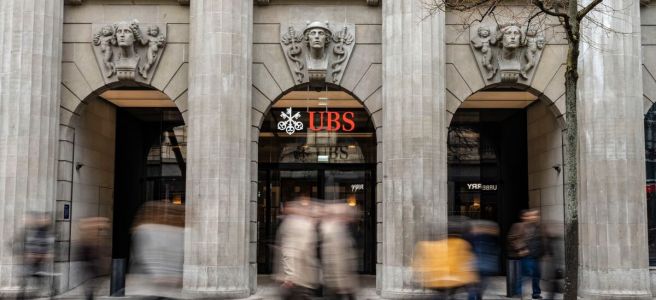
At the same time, the euro area is heading for a test of endurance. It is turning out to be an illusion that the artificial construct of the euro, which was created in the course of globalization competition on the basis of completely different national levels of accumulation and productivity, could rise to become the new world currency. The emergency brake on Greek finances highlights how fragile the European monetary system really is. In their predicament, the EU states are resorting to crude means to curb the long-tolerated tax havens in their ranks. An agitated discussion on Germany’s First Television about the recent “bank raid on Switzerland” speaks volumes. After Steinbrück, Schäuble would like to empty the Swiss vaults all the more. In view of the mountains of debt on the order of trillions of euros, the state “bank raid,” which is likely to bring in 200 million at best, can only be described as an act of desperation. However, this also reveals the contradictions in the national and international legal system. On this point, the problems are now being played out in the flesh, so to speak. The global economic crisis is far from over. After the financial markets, public finances are the next catalyst for economic destabilization, in which the general devaluation of capital is gradually taking hold.

Originally published in Neues Deutschland on 02/05/2010

The Crisis Has No Masters

With Bundesbank President Axel Weber, a monetary policy hardliner is favored to become chair of the European Central Bank

Robert Kurz

Jean-Claude Trichet’s term of office does not expire until the fall of 2011. But a tug-of-war has already begun over who will head the European Central Bank (ECB) in the future. At first glance, it appears to be a typical jockeying for position in the arcane Byzantine world of the European institutions. Since the ECB is supposed to be independent from the direct influence of national governments, there is all the more haggling, jockeying and trickery when it comes to filling the most important positions. After the Dutchman Duisenberg and the Frenchman Trichet, the German government now apparently wants to elevate the current president of the Bundesbank, Axel Weber, to the chair of the ECB.

In any case, Chancellor Merkel, a student of Helmut Kohl’s power politics, is pulling out all the stops in her skillful backstage maneuvering to enthrone her preferred candidate. In the personnel merry-go-round of the EU commissions, the staid Günther Öttinger, who does not speak much English, was relegated to the energy portfolio, which is considered to be less important, instead of claiming the currency portfolio. A German in the latter position would have blocked Weber’s path to the top of the ECB. For the same reason, Merkel pushed through the nomination of Portuguese central bank chief Vitor Constâncio as vice president of the ECB. Under the EU’s unwritten rules of regional proportionality, a “northern European” is entitled to the presidency if a “southern European” is vice president (and vice versa). The Portuguese’s appointment is seen as Merkel’s deal with French President Sarkozy to clear the way for Weber. At least in terms of proportional representation, this would take out of the running the head of the Banca d’Italia, Mario Draghi, who had previously been considered a rival candidate. Draghi has also been incriminated for allegedly helping the Greek finance ministry falsify its balance sheets in his former capacity as a bank manager at Goldman Sachs.

Weber’s candidacy is far from over. “Friendly fire” is even coming from Merkel’s own party. CDU MEP Werner Langen has openly spoken out against his chancellor’s favorite. This crossfire may have something to do with the fact that Weber’s success would lead to another shift in seats. Under the same rules of proportional representation, the current German chief economist of the ECB, Jürgen Stark, would then have to hang up his hat and make way for a Frenchman. This, in turn, could have been Merkel’s deal with Sarkozy.

The unpleasant tug-of-war over national sensitivities and personal cliques, which would have taken place anyway, has been given an explosive background by the objective crisis situation. What is at stake here is an orientation of monetary and currency policy that has long since ceased to be self-evident. The so-called monetarist doctrine of monetary stability at any price has long since had its fall from grace. In the wake of the global financial and economic crisis, the money glut of the U.S. Federal Reserve presidents Greenspan and Bernanke was followed by the ECB under Trichet. When it comes to an exit strategy, the only choice is between plague and cholera. In the Anglo-Saxon countries, the option of “controlled inflation” is now being openly discussed as a means of getting countries out of the debt trap. This trend is in line with the traditional fiscal policy of the southern Europeans, which has already torn apart the euro in the cases of Greece, Portugal, Spain, Italy (and Ireland).

Axel Weber is no master of the crisis, but he is seen as a hardliner of an anti-inflationary exit option at all costs. While the southern Europeans would rather avoid harsh cuts that could lead to social uprisings in order to soften further social cuts through inflationary policies, the “German” strategy seems to rely more on a directly politically enforced mass impoverishment to keep the euro stable. This policy does not have a stable foundation, because the FRG’s public finances are basically just as strained as elsewhere. But Germany already has the largest low-wage sector in the EU. The further constriction of domestic consumption also favors a one-sided export orientation with respect to the rest of the EU, while social resistance here at home is expected to be negligible.

A Weber presidency of the ECB would thus flank a hard exit strategy that would have to come at the expense of most of the other euro states. Therefore, lazy compromises and horse-trading cannot be ruled out. This is all the more true if France is one of the victims. In any case, the objectivity of the new dimension of crisis, which has now shifted to public finances everywhere, cannot be undermined by institutional personnel policy. However, Weber’s appointment sets the course for a development that could lead to the breakup of the euro zone and its shrinking into a core zone with a northern European focus. The question is whether the EU can go along with a monetary policy along the lines of “Germany versus the rest of the world.” There is agreement, to be sure, that social pain must be inflicted on an unprecedented scale. But the opposing prescriptions will add fuel to the fire in the coming years.

Originally published in the print edition of the weekly newspaper Freitag on 02/25/2010

From The Euro Crisis to The Global Currency Crisis?

Robert Kurz

For more than a year now, the state has been seen as a knight in shining armor in the global financial and economic crisis. In its capacity as “lender of last resort,” it has formed rescue lines all over the world by means of a flood of money from central banks, quasi-war economy mega-debt, rescue packages and economic stimulus programs, without, however, any new autonomous accumulation of global capital itself being in sight. The state, however, only has a formal competence to create money; substantially it remains tied to the real valorization of capital. Everyone knows that an enormous inflationary potential is built up when state programs replace real value creation. How is this potential expressed in economic terms?

Greece’s impending sovereign default is currently the weakest link in the chain. As is well known, similar cases are lurking in the background. People console themselves with the fact that states, unlike companies or banks, cannot really go bankrupt. But what does that mean? A look at history shows how sovereign bankruptcies are resolved: Either the states deleverage themselves out of necessity through inflation or, in a more incremental form, through a currency devaluation. But since Greece, like the other euro countries, no longer has its own currency, its problem becomes that of the entire currency area. First of all, the external value of the euro, against which the big funds are already speculating, is falling. This is not the malicious arbitrariness of financial sharks, but the immanent consequence of every state’s inability to pay.

If other cases follow, the decline in external value will turn into a decline in internal value. The reason is obvious: with a currency devaluation in the air as a last possible “deliverance” by the central bank, companies are forced to rapidly raise their prices in order to escape the devaluation of their commodity capital. This is a self-perpetuating process, because it would intensify the compulsion to devalue the currency. The danger of a euro crash is thus self-evident. Despite all protestations to the contrary, the central euro states must be liable for Greece and other bankruptcy candidates. But if they prop up Greece in order to save the euro, they will put themselves in a similar position, since they themselves are already reaching the limits of their regular financing capacity. The famous “loss of confidence” vis-à-vis the banking system is repeated vis-à-vis the currency. This is not a merely “psychological” matter, but a consequence of hard economic facts.

But a euro crash would have a devastating effect on the world economy and the other currency areas. A general devaluation of assets and incomes through inflation or a currency devaluation would not only strangle the EU’s domestic economy, because globalization has created a far greater degree of interdependence among all economic areas than in the past. In any case, the public finances and thus the currencies of the U.S., Japan and China are up to their necks in water. The “controlled inflation” of no more than 6 percent, which the Anglo-Saxons and Southern Europeans have brought into play as a means of curbing public debt, is threatening to get out of hand before it has even begun. Like Greece within the eurozone, the eurozone as a whole is the weakest link in the currency structure of the capitalist centers because of its fragile construction. The fact that all currencies have already depreciated dramatically against gold is an indication of the crisis of the monetary system in general.

Originally published in Neues Deutschland on 03/05/2010

The Chinese Bubble

Robert Kurz

As is well known, it was the real estate bubble in the Anglo-Saxon countries and in parts of the eurozone that first fed the global deficit economy and then, when it burst, triggered the biggest financial and economic crisis in more than half a century. The battered housing markets are now on state-financed life support. Government guarantees and subsidies have cushioned the threat of a collapse in real estate prices. The aim is to prevent further dramatic asset losses and bank failures. But as long as the market shakeout is artificially delayed, the entire sector will hang like a log on the leg of the global economy. In any case, it is not obvious where a new fuel for future deficit booms will come from. Since real estate prices have not yet bottomed out due to government intervention, the de facto zero interest rate policy of the central banks is of no use. It will not be possible to conjure up a consumption miracle from a credit-financed real estate boom on either side of the Atlantic any time soon.

Hopes are now pinned on China. There, huge credit-financed government stimulus programs have temporarily offset the slump in exports. The central bank’s policy of low interest rates, which commercial banks (unlike in Europe and the U.S.) had to pass on to companies and private individuals on government orders, is also contributing to this. This not only finances dangerous overcapacities in industrial production and in infrastructure as future investment ruins. An increasing part of the cheap money is flowing into the stock markets in Shenzhen and Shanghai, but above all it is flowing into real estate speculation. According to official figures, housing prices rose by 10.7 percent in a year. The Shanghai economist Wang Jianmao even claims that these “harmonious statistics” are faked. According to his own calculations, the real rate of increase was 23.5 percent. In China, the next big real estate bubble is obviously inflating. China’s record growth, supposedly unaffected by the global economic crisis, may turn out to be a sham. For the same mechanism of a financial bubble economy that had previously driven the global economy and Chinese exports to an inevitable crash is now repeating itself in China’s domestic economy.

But there are significant differences. The part of the middle class involved in real estate speculation is nowhere near as broad as in the U.S., for example. There is a lack of people who, in the face of constantly rising real estate prices, borrow against houses they have bought with no equity and then convert these loans into consumption. So the Chinese bubble will not lead to a consumption miracle. Certainly not to the extent that the country’s own export surpluses could now be consumed domestically and, in addition, the world’s commodity surpluses could be absorbed (as the U.S. had done before). A speculative increase in housing prices does indeed create a boom in the construction industry, which supports a growing part of the economy. But all that is being built are uninhabited ghost settlements. The second boost to the economy from mass consumption through the mortgage loans to small home builders has failed to materialize. Therefore, the Chinese bubble is expected to burst much sooner than the American one. If the usual mass of bad loans remains, it will no longer be possible to finance the immense excess production capacities. Then the Chinese miracle would also have to give up the ghost.

Originally published in Neues Deutschland on 04/02/2010

An Ambiguous Assessment

Robert Kurz

After the forecasting embarrassments of recent years, the spring report of Germany’s economic research institutes already reverts to an ambiguous assessment in its title: “Recovery Continues: Risks Remain High.” The economic success story relates primarily to the labor market, where, in contrast to the U.S. and other EU countries, a major slump has so far failed to materialize. This is due to subsidized short-term work, an expansion of part-time and temporary employment, a further decline in wage levels and an increase in precarious self-employment among the skilled middle class. Employment has fallen, as have working hours; no new hiring is expected. All in all, the price paid for temporarily averting a labor market catastrophe is lower incomes, which do not point to a recovery of the domestic economy.

This is by design, though, as the report cites rising foreign demand as the sole factor in the recovery. But not only is it far below pre-crisis levels, it is also expected to weaken again later this year as government stimulus programs for trading partners come to an end. This already shows that the positive assessment is being made without taking globalization and the government subsidization of demand into account. It is the “risks” themselves that are driving this modest “recovery” as the problem of deficit spending has shifted from financial bubbles to government credit. According to the expert report, the federal government alone must reduce its deficit by about 10 billion euros per year by 2016. The chain reaction of drastic savings in all public sectors (the report cites “personnel costs” and “health care” as potential areas for savings) will set in motion, through the back door so to speak, the rise in mass unemployment that has been avoided so far. The alternative would be an inflationary policy with unpredictable consequences.

The institutes themselves say that the upcoming austerity policy could stifle a weak economic spring. But this does not only apply to the FRG. If, as before, foreign demand is supposed to save the day, the problem within this zone will merely be externalized. The FRG’s trade surpluses continued to grow even in the crisis year of 2009, not least thanks to its home-grown low-wage policy vis-à-vis its most important neighbors. The Pacific deficit cycle between Asia and the U.S. has its counterpart within the EU between the FRG and the countries of Western and Southern Europe. This cycle is now only financed by precisely the increased government deficits which, in the case of Greece, have already led to the brink of bankruptcy. How is it possible for these countries to strangle their domestic economies with even greater austerity and at the same time absorb the export surpluses of the FRG? Such a squaring of the circle cannot succeed. The foreseeable limits of the government programs and the threat of a second wave of global crisis will tear the eurozone apart. The spring report prefers to remain silent about this.

Originally published in the weekly newspaper Freitag on 04/22/2010

Golden Times of Crisis?

Robert Kurz

“Afraid for our money!”: The tabloid headlines once again speak from the commodity souls of the people. Yesterday, it was the shock of the real estate crash and the subsequent global financial crisis; today, it is the shock of the imminent bankruptcy of the Greek state that is increasing general insecurity. With each new case, the chain of bad loans proves to be so far-reaching that there are still victims far away. It is no coincidence that the intensification of contradictions is concentrated on money as the medium and end in itself of capitalist “abstract wealth” (Marx). This once again raises the long-suppressed question of the substance and institutional anchoring of money itself. Until World War I, this was not an issue because of all central currencies were pegged to gold. In the war economies and the Great Depression, this peg had to be broken. Necessity was made a virtue; Keynes called gold a “barbarian relic.”

After World War II, the Bretton Woods monetary system was initially anchored to the dollar as the world’s money, which was the only currency still convertible into gold. After this last peg was removed in 1973, the global monetary system shifted to floating exchange rates with increasing uncertainty. Keynesianism collapsed in the face of inflation, which until then had only been known as a consequence of the war economies. The monetarist doctrine of neoliberalism still promised strict limits on the money supply, but even this purely formal commitment was abandoned in the wake of the bursting of financial bubbles since the turn of the century and replaced by a de facto “zero interest rate policy” of the central banks. Now, the money glut that fueled the deficit booms is culminating in a nascent crisis of financial markets and state finances. A growing number of economists are flirting with a “re-monetization” of gold in order to restore monetary stability in a kind of deliverance.

But the clock cannot be turned back. As Marx already showed in the second volume of Capital, gold production as the basis of the monetary system is an unproductive burden, which today would amount to about 5 percent of gross domestic product; roughly the size of the military-industrial complex, which is also capitalistically unproductive. But the problem goes deeper. The decoupling of money from its value substance corresponds to the decoupling of commodities from their labor substance. The price system is only formal and hangs in the air, so to speak. This is just another expression of the fact that the productive forces can no longer be represented in the form of value, as Marx had predicted. After a long period of incubation since 1973, this state of affairs is now breaking through to the surface as a burgeoning crisis of the money medium itself. It is no coincidence that the crisis of the financial markets has rapidly shifted to the state guarantors of money. As always, the weakest links break first, but the problem is a general one. Since socialism beyond the logic of valorization and its medium currently appears unthinkable in the public consciousness, the emergency measures will only open up new contradictions that will assert themselves with increasing speed. The return of the “barbarian relic” could not gild the crisis period, but only bring the fetish character of the ruling mode of production to final recognition.

Originally published in Neues Deutschland on 04/30/2010