Comments on a Misunderstanding of Asia
The reciprocal influence of economics and culture in the broadest sense has long been a topic in the social sciences. Two main schools of thought can be observed: One assumes the general laws of capitalism and shows how traditional cultures are decomposed by the modern economy; the other, conversely, assumes a diversity of cultures and shows how capitalism is in turn culturally reshaped and how very different versions of its general logic emerge from the major cultural circles. This link between economics and cultural history, which has been cultivated particularly in Germany since Werner Sombart and Max Weber, has given rise to the concept of “economic styles” (Bertram Schefold). Today, this approach is highly regarded in the West. The French sociologist Pierre Bourdieu speaks of “cultural capital,” and the U.S. historian Samuel Huntington even sees a “clash of civilizations” on the horizon following the collapse of state socialism. At the same time, the new self-confidence of Asian capitalism invokes its own “cultural identity,” which is superior to that of the “decadent West.”
Max Weber, who is often regarded as the forerunner of this economic thinking in cultural categories, did not, of course, have the idea of capitalism in cultural plurality in mind when he wrote his sociology of world religions and examined the relationship of religiously determined cultures to modern capitalism. He was much more concerned with the historical emergence of capitalism itself and the question of the transition to modernity. For in all pre-modern societies, including in Europe, the social and economic motives were religiously determined and therefore incompatible with the abstract calculation of “homo economicus.” The theory had to explain why capitalism had emerged authentically only in Western and Northern Europe, while this mode of production had been imposed on other parts of the world from the outside. As is well known, Weber came to the conclusion that the religious ideology of Protestantism was the only one suitable for a transition to a capitalist mentality, while the other religious cultures, including Buddhism and Confucianism, could not provide a suitable cultural underpinning for the development of capitalism.
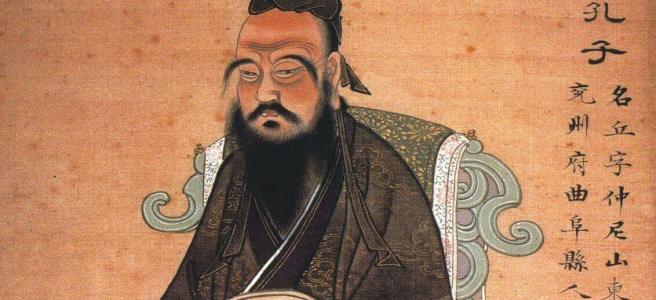
It is interesting to note how Weber justified this thesis. He was well aware that both Puritan Protestantism and Confucian ethics favored a strong work ethic and rationalist thinking. Why then should Confucianism not be just as suitable as Protestantism for bringing about capitalism? For Weber, as he writes in his “Economic Ethics of World Religions,” the decisive difference was the importance of social relations outside the economic system in the narrower sense: “The Confucian ethic intentionally left people in their personal relations as naturally grown or given by relations of social super- and subordination. Confucianism hallowed alone those human obligations of piety created by inter-human relations, such as prince and servant, higher and lower offical, father and son, brother and brother, teacher and pupil, friend and friend. Puritan ethic, however, rather suspected these purely personal relationships as pertaining to the creatural; but Puritanism, of course, did allow for their existence and ethically controlled them so far as they were not against God. The relation to God had precedence in all circumstances. Overly intensive idolatrous relations of men per se were to be avoided by all means. Trust in men, and precisely in those closest to one by nature, would endanger the soul. […] From this, very important practical differences of the two ethical conceptions resulted even though we shall designate both of them as rationalist in their practical turn of mind and although both of them reached ‘utilitarian’ conclusions.”
If one replaces the puritanical “God” with economic value or simply money, then the Western economic-liberal conception of man as an isolated egoist who sacrifices all personal social ties on the altar of abstract economic rationality and purely individual success becomes immediately apparent. And because Confucianism is fundamentally opposed to this impulse, Max Weber considered it unsuitable for capitalism, in contrast to Protestantism. It may be debatable whether the specific Protestant religiosity became secularized and thus gave rise to capitalism, or whether the emerging capitalism took advantage of the Protestant ideology and tailored it to its own image. In any case, it is certain that only this European amalgam of Protestantism and capitalism gave birth to the modern world of the total market, whereas in the much older cultures of China, Japan and the rest of Asia, capitalism was only imported together with foreign, European ideas and not developed from within.
In this historical sense, Max Weber can no longer be refuted. Nevertheless, his thesis about the incompatibility of capitalism and Confucianism (but also of Buddhism and the Asian mentality in general) is now regarded as false, because China, Japan and the “little tigers” today seem to be creating a specifically Asian capitalism that differs fundamentally from the Western version, draws on its own cultural traditions, and is regarded as extremely successful. So, is economic individualism without social ties, committed only to the “god” of money, perhaps not essential to the capitalist mode of production? Are we seeing the birth of a different, even superior capitalism in Asia, which draws on the “cultural capital” of personal and social loyalty? Recently, this idea has also been championed by the U.S. political scientist Francis Fukuyama, who became famous with his thesis of the “end of history.”
I believe that we are dealing with a great illusion here, which can only be explained by the historical non-simultaneity of development. Asian capitalism is not creating a new model, but is merely passing through a stage of capitalist development that was not alien to the West in the past. All pre-modern and early modern societies, including European ones, were characterized by a structure of authoritarian deference from the bottom up, by a system of personal loyalties and dependencies, and by rigorous morality. This is not an Asian specialty, but a general characteristic of the transition from agrarian societies to capitalism. If only the individualistic ideology of Protestantism was able to produce its own authentic capitalism, then it can hardly be assumed that the Asian countries, which have merely imported capitalism, will be able to preserve the stage of authoritarian ties and personal loyalty through cultural forms that did not accommodate capitalism in the first place. The new self-confidence of Asians is a self-deception, because they have already given up their independence by adopting capitalism.
The fact that the structures of Asian capitalism are historically backward and cannot economically withstand the world market in the long term may currently be concealed by short-term competitive advantages, which to a certain extent form the (temporary) “windfall profits” of historical asynchrony; but only for minorities in a few countries. The main factor here, however, is not specifically Asian forms of “cultural capital,” but high growth rates simply due to the low starting point, as was the case with other industrial newcomers such as the Soviet Union in the 1930s, without this becoming a permanent new “model for success.” Only against this economic background can authoritarian loyalty relationships play a supporting role in success for some time.
If both the relationship of individual citizens to the state and the relationship of wage laborers to entrepreneurs is reinterpreted as a kind of personal and reciprocal relationship of loyalty from “prince to servant,” then this is merely a mask for the capitalist objectification and anonymization of all social structures. Early European capitalism also knew patriarchal companies in which social dependency still appeared quasi-feudal as a relationship between “lord” and “vassal.” Similarly, the authoritarian intervention of the state in the economy and the promotion of corporatist associations in the service of the “nation” from absolutism to the modernizing dictatorships of the 20th century was only a pupal phase of modern capitalist democracy and its abstract individualism, which corrodes all social loyalty. Insofar as it favors a strong state moderation of the economy and a sealing off of its internal markets, Asian capitalism repeats the mercantilist epoch of the West, and a certain uniformity among citizens, the constant singing of the national anthem, etc. form at most a superficial cultural and habitual accompaniment to this process.
The transfer of such ritual exercises to the business management level in Japan, such as the quasi-military joint morning exercise of employees or the ceremonial singing of “company anthems,” has been misunderstood to the point of ridicule in the West as the “new secret weapon” of Asian management philosophy and mimicked by concepts of “corporate identity.” In reality, however, these are mere transitional phenomena from the feudal to the capitalist mentality. Under the pressure of globalization, state-moderated corporatism and patriarchal business loyalty are already in decline throughout Asia. The logic of competition is prevailing on the domestic markets, and the Asian “corporate identity” is being inexorably replaced by the arch-capitalist principle of “hire and fire.”
In the long term, things will not be any better for close blood ties and obligations, which are
also not specifically Asian. To this day, “large families” and clans remain to a greater or lesser extent as fossils of the history of modernization all over the world, in Arabia, Africa and Latin America just as much as in China or Singapore, without representing a “capitalist model.” Confucian familial small-scale capitalism in China may be responsible for some of the growth today, but it remains limited to secondary services and cannot replace state industry. In the medium term, it will be more of an obstacle to export industrialization according to world market criteria. Even the Asian immigrants in the U.S., who are praised as examples of successful entrepreneurship, for the most part only occupy economic niches in the retail and hospitality industries, which are by no means independent forms of capitalism. The principle of this success is simple: family loyalty is brutally exploited, including child labor and work without pay, in order to offer cheap prices. The same principle is often followed by southern European immigrants from Turkey, Greece, Spain, etc. as restaurateurs or grocers in Germany. But how many generations will this structure of family slavery last? Not much will remain of it.
The process of capitalist individualization, which is destroying the family bond, as Marx and Engels wrote in the “Communist Manifesto,” has now also reached the metropolitan centers of Asia. And it will not stop at the code of the Confucian moral police. In Singapore, I read, spitting on the floor and peeing in elevators is punished with caning. One wonders: Had the inhabitants of Singapore peed in the elevators as a habit before? Such regulations are fatally reminiscent of the German police regulations of the 16th century, when the European world was still on its way to the (capitalist) “process of civilization” (Norbert Elias) and even intimate life was regulated by the police. Late capitalist individuals do not pee in elevators even without the threat of the police; but just as they control their intimate reflexes, they also calculate their sexual lives beyond rigid, old-fashioned morality. It is not intoxication and uninhibitedness that have taken their place in the West, but the commercialization of sexuality and even feelings. It is absurd when the Asian newcomers, of all people, who are known to live not only from the export of their cars and chips, but also from sex tourism, want to establish capitalism based on Confucian morality. Together with the automatic subject of money, McDonalds and Hollywood, they have long since caught the virus of “Western decadence” themselves.
The United States in particular, but now also Europe, are demonstrating today that the final stage of capitalism is the complete dissolution of society into autistic, abstract individuals. More than 150 years ago, Alexis de Tocqueville predicted that modern society would collapse as a result. Republican presidential candidate Bob Dole is not alone in invoking pre-modern and early modern ideals to avert this danger. Francis Fukuyama meanwhile looks to Asia in search of support for unrestrained capitalism “through certain aspects of traditional culture.” He wishes for a capitalism that is “infused with cultural traditions that spring from non-liberal sources”: a tempering of the pure market with the “social capital” of voluntary, civil corporations and a “general mutual trust.” Pious wishes, cold coffee. There will be no pious, vegetarianized Confucian capitalism because the secularized puritanical god of money does not tolerate other gods alongside him in any culture and directly binds naked individuals to himself. Max Weber will probably be right with his thesis of a lack of capitalist compatibility between Confucianism and Buddhism, not only for history but also for the future.
Originally published in Folha de São Paulo on 09/15/1996
 EXIT! in English