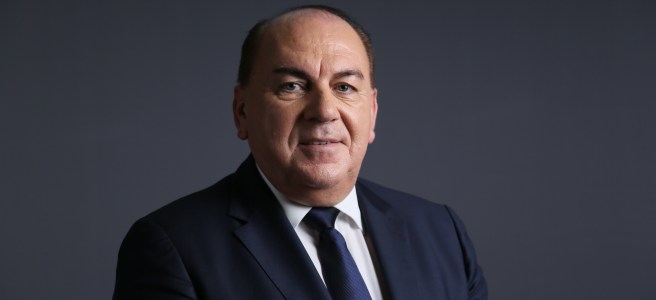
With Bundesbank President Axel Weber, a monetary policy hardliner is favored to become chair of the European Central Bank
Jean-Claude Trichet’s term of office does not expire until the fall of 2011. But a tug-of-war has already begun over who will head the European Central Bank (ECB) in the future. At first glance, it appears to be a typical jockeying for position in the arcane Byzantine world of the European institutions. Since the ECB is supposed to be independent from the direct influence of national governments, there is all the more haggling, jockeying and trickery when it comes to filling the most important positions. After the Dutchman Duisenberg and the Frenchman Trichet, the German government now apparently wants to elevate the current president of the Bundesbank, Axel Weber, to the chair of the ECB.
In any case, Chancellor Merkel, a student of Helmut Kohl’s power politics, is pulling out all the stops in her skillful backstage maneuvering to enthrone her preferred candidate. In the personnel merry-go-round of the EU commissions, the staid Günther Öttinger, who does not speak much English, was relegated to the energy portfolio, which is considered to be less important, instead of claiming the currency portfolio. A German in the latter position would have blocked Weber’s path to the top of the ECB. For the same reason, Merkel pushed through the nomination of Portuguese central bank chief Vitor Constâncio as vice president of the ECB. Under the EU’s unwritten rules of regional proportionality, a “northern European” is entitled to the presidency if a “southern European” is vice president (and vice versa). The Portuguese’s appointment is seen as Merkel’s deal with French President Sarkozy to clear the way for Weber. At least in terms of proportional representation, this would take out of the running the head of the Banca d’Italia, Mario Draghi, who had previously been considered a rival candidate. Draghi has also been incriminated for allegedly helping the Greek finance ministry falsify its balance sheets in his former capacity as a bank manager at Goldman Sachs.
Weber’s candidacy is far from over. “Friendly fire” is even coming from Merkel’s own party. CDU MEP Werner Langen has openly spoken out against his chancellor’s favorite. This crossfire may have something to do with the fact that Weber’s success would lead to another shift in seats. Under the same rules of proportional representation, the current German chief economist of the ECB, Jürgen Stark, would then have to hang up his hat and make way for a Frenchman. This, in turn, could have been Merkel’s deal with Sarkozy.
The unpleasant tug-of-war over national sensitivities and personal cliques, which would have taken place anyway, has been given an explosive background by the objective crisis situation. What is at stake here is an orientation of monetary and currency policy that has long since ceased to be self-evident. The so-called monetarist doctrine of monetary stability at any price has long since had its fall from grace. In the wake of the global financial and economic crisis, the money glut of the U.S. Federal Reserve presidents Greenspan and Bernanke was followed by the ECB under Trichet. When it comes to an exit strategy, the only choice is between plague and cholera. In the Anglo-Saxon countries, the option of “controlled inflation” is now being openly discussed as a means of getting countries out of the debt trap. This trend is in line with the traditional fiscal policy of the southern Europeans, which has already torn apart the euro in the cases of Greece, Portugal, Spain, Italy (and Ireland).
Axel Weber is no master of the crisis, but he is seen as a hardliner of an anti-inflationary exit option at all costs. While the southern Europeans would rather avoid harsh cuts that could lead to social uprisings in order to soften further social cuts through inflationary policies, the “German” strategy seems to rely more on a directly politically enforced mass impoverishment to keep the euro stable. This policy does not have a stable foundation, because the FRG’s public finances are basically just as strained as elsewhere. But Germany already has the largest low-wage sector in the EU. The further constriction of domestic consumption also favors a one-sided export orientation with respect to the rest of the EU, while social resistance here at home is expected to be negligible.
A Weber presidency of the ECB would thus flank a hard exit strategy that would have to come at the expense of most of the other euro states. Therefore, lazy compromises and horse-trading cannot be ruled out. This is all the more true if France is one of the victims. In any case, the objectivity of the new dimension of crisis, which has now shifted to public finances everywhere, cannot be undermined by institutional personnel policy. However, Weber’s appointment sets the course for a development that could lead to the breakup of the euro zone and its shrinking into a core zone with a northern European focus. The question is whether the EU can go along with a monetary policy along the lines of “Germany versus the rest of the world.” There is agreement, to be sure, that social pain must be inflicted on an unprecedented scale. But the opposing prescriptions will add fuel to the fire in the coming years.
Originally published in the print edition of the weekly newspaper Freitag on 02/25/2010
 EXIT! in English