Can the state, through its command, override the internal contradictions of the capitalist economy? The state and the market are indeed institutionally opposed to each other. But they have a common basis. The state machine must be financed, as must capital investment or the cultural enterprise. That is why money forms an overarching medium. It is the material expression of “abstract wealth” (Marx) and is universal only because it represents the capitalist end in itself of making two euros out of one. In this way, the medium of money is tied to the accumulation of capital. Its labor substance, in turn, depends on the social standard of productivity as enforced by competition. It follows that the state can regulate the substantive accumulation of capital, but cannot conjure it up or even replace it. In the absence of sufficient autonomous capital valorization, there is nothing left to regulate.
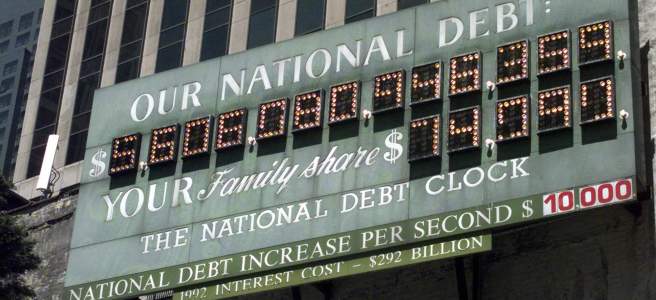
The state is a machine of money insofar as it guarantees the external framework of valorization. Precisely for this reason it has no command over money. It can only regularly obtain its own money by taxing the real production of surplus value (profits and wages). It is misleading to speak of state investment as if it were a contribution to growth. When the state builds roads and schools or finances education and research, this is social consumption because the purchasing power for it was previously deducted from real surplus-value production. The same applies to the activities of construction companies, educational institutions, etc., to the extent that they are financed by government spending. As soon as the state borrows through bonds because its regular revenues are insufficient, it is thereby subject to the same conditions as companies and private individuals. However, the servicing of the loan (interest and repayment) presupposes a capital-productive application, which does not take place in the case of the state. It is as if an enterprise did not produce value, but only consumed. That is why Marx, in the 3rd volume of Capital, presented the state debt, traded in the form of securities, as a special form of “fictitious capital,” illusory from the outset. Nor does the state character of the central bank as the “lender of last resort” give the state any real command over money. The central bank’s authority is purely formal, but not substantive. Its creation of money out of nothing can only represent the real value substance of capital accumulation. If more money is injected than corresponds to the real value relations, this results in the devaluation of money itself. Of course, this is all the more true if the state no longer submits to the terms of credit, but instructs its central bank to transfer money directly to it. On the one hand, states all over the world are currently resorting to this desperate measure. On the other hand, they are trying to contain the consequences through a rigid austerity policy. In doing so, they are moving in a circular contradiction that can only lead to new distortions. If state failure and market failure are joining hands at ever shorter intervals, this points to the crisis of the overarching medium itself. It is just another expression of the fact that the productive forces have outgrown the form of “abstract wealth.” This is as much a disgrace to faith in the state as it is to faith in the market.
Originally published in Neues Deutschland on 05/28/2010
 EXIT! in English