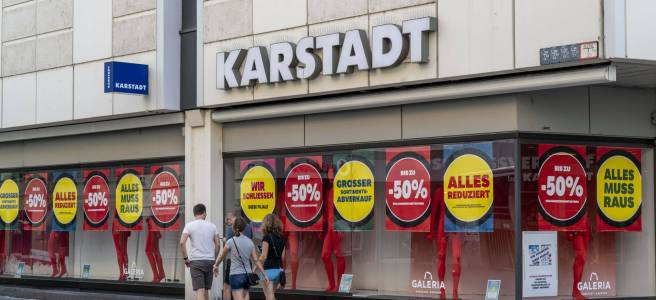
Like Opel, Karstadt remains a borderline case of devaluation
Too big to fail? In terms of risk to capital as a whole, this question first arose in the case of banks classified as “systemically important,” which led to expensive bailouts by the state. For different reasons, the car company General Motors was considered too important to be completely scrapped. Here, the state stepped in out of concern for the industrial regions and their respective votes. Now that the dust has settled a bit on GM’s bankruptcy, state aid to its German subsidiary Opel has become doubtful. But there are also cases that do not qualify for the Good Samaritan approach of the state. These include the bankruptcy of the Arcandor Group, which gobbled up well-known retail brands and gambled itself away in the process. Of the candidates for bankruptcy, the Quelle mail-order company found no favor with the state or investors. The former showpiece of the economic miracle was put to sleep; the central complex in Nuremberg-Fürth is now a ghost town, like the old halls of Grundig and AEG. By contrast, the Karstadt department store group with its 25,000 employees, which was also swept away by the Arcanador crash, no longer attracted the eye of Father State after a lean period of bankruptcy administration, but it did attract the covetous gaze of investment companies.
It’s nothing new for entrepreneurial bargain hunters to scoop up devalued real and commodity capital for pennies on the dollar during a crisis, before they themselves go over the edge or a general upswing comes along. Three bidders have been found for Karstadt: a consortium called Triton, a private investor named Nicolas Berggruen, and the Highstreet Group (majority controlled by Goldman Sachs and Deutsche Bank). This does not inspire confidence, nor do the conditions. For example, the 98 municipalities with Karstadt stores were forced to forego business tax revenues. Berggruen won the bidding because he is the only one willing to take on all the employees. But he will only go through with the deal if Karstadt’s landlords (none other than the Highstreet Group, which was involved in this poker game) agree to drastic rent reductions.
If it works out, the bankruptcy administration simply had the right timing. While Quelle was swept away by the crisis maelstrom in 2009, Karstadt is now keeping its head above water in the environment of the economic stimulus programs. And although trillions of dollars and euros were burned in the financial crash, the flood of money from central banks has since provided investment funds with liquidity again. That’s why bankrupt properties are arousing increased buying appetites; whether it’s out of an interest in trading the organs of the corpses of companies or a more genuine interest in continuing operations. However, austerity programs and currency crises with new economic slumps as a consequence could put a damper on both options. Like Opel, Karstadt remains a borderline case of capital devaluation. The future of the company and its employees is supposed to be secure, but these days the future may only have the scope of a reprieve.
Originally published in the weekly newspaper Freitag on 06/10/2010
 EXIT! in English