The crisis, whether it is now contained for the time being or will soon return in an aggravated form, is at its core a so-called debt crisis. But what does that mean? Production capital borrows money through the banking system. Therefore, it then has to share its profit with finance capital, which receives interest from it as the price for the borrowed money. However, if the production capital cannot make a sufficient amount of profit, there is a crisis for both the debtor and the creditor. The “popular prejudice” (Marx) likes to blame the “greedy” finance capital, which wants to enrich itself unproductively. But the question is why production capital needs to borrow money at all in order to be able to pay for the means of production. That is the crux of the matter, not “evil” finance capital.
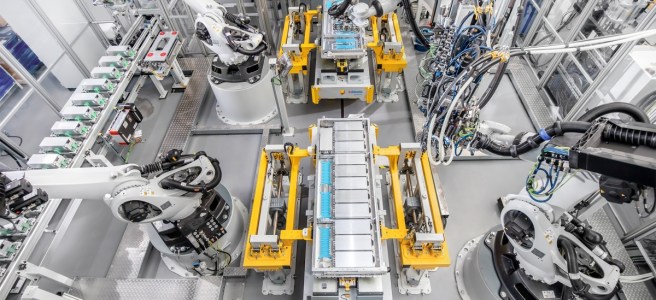
Competition forces a constant increase in productivity, and this is only possible through the use of an ever larger scientific-technical aggregate. Marx showed that in this process the share of dead material capital, which does not create new value, increases more and more in relation to the share of labor power, which alone creates additional value. Bourgeois statistics say the same thing when they state that the cost of a job is constantly rising along with capital intensity. In other words, the dead upfront costs of production capital can no longer be financed from current profits. Hence the resort to credit to pay for the growing physical capital. In the 20th century, the debt problem has spread from production capital to government and households. Even government spending on infrastructure and private consumption can no longer be financed out of current real income, but only by credit.
But mega-debt at all levels is nothing more than the anticipation of future profits, wages and taxes from real production processes. This “future consumption” becomes a general crisis when it has been advanced too far and the credit chains break. This applies to all actors, including the state. There is now talk of “deficit sinners” and dubious financial behavior. We must not live at the expense of future generations, they say. What is needed is a new “domestic paternalism” with an iron will to save. In reality, however, it is not future food, clothing, housing and equipment that are being consumed, but only increasingly illusory future monetary income, in order to be able to use currently abundant material resources at all.
This absurdity points to the fact that capitalism is an end in itself of abstract money multiplication and has nothing to do with the efficient satisfaction of needs, as its apologists claim. Money is not a real resource, but the fetishistic form of real resources. And the global debt crisis is the result of the desperate attempt, through inflated “future consumption” of money revenues that will never come again, to forcibly keep the vast productive forces within the limits of capitalist self-purpose, even though they have long since grown beyond it. Because capitalism has already consumed its own future, we are now supposed to live worse and to downgrade intact resources, up to and including medical care. It is not only in Greece that the pain threshold has already been reached. But the social consciousness has not yet learned to use the “devalued” resources according to a different logic.
Originally published in Neues Deutschland on 01/10/2011
 EXIT! in English